Garden edging
Design
Requirements for the design, manufacture and installation of embellishments
Good design
See the following corporate documents to identify relevant project design requirements:
Sunshine Coast Planning Scheme regulates the way land, buildings and structures are used and developed on the Sunshine Coast.

Sunshine Coast Design contains 10 design principles that guide good project planning and design outcomes, that are appropriate for the Sunshine Coast.
The LIM provides further overarching design advice, refer:
- Introduction and Design Principles - e.g. sustainability, CPTED, accessibility
- Preliminaries - environmental management, tree sensitive design and site set up.
Embellishment requirements
- Universal access.
- Comfortable and suitable for the average person.
- See 'Positioning' and 'Equal access' sections for the corresponding LIM category.
- Made from materials that will be durable and can be suitably protected from exterior elements, such as salt spray and UV exposure.
- Robust and sturdy to withstand constant public use and be resistant to vandalism.
- Fixings are to be 316 marine grade stainless steel (unless otherwise stated).
- Tamper proof fixings should be used
- Graffiti protection coatings applied (where applicable)
- Fire retardant (where applicable).
- Warranties should be as listed below.
- Easily repairable or replaceable.
- Sourced locally and use standard fittings.
- Reputable suppliers should be used who keep a supply of stock parts on hand for the life of the product.
- Use sustainable materials, although sustainability needs to be considered over the lifetime of the embellishment.
- Install on paved, concrete or other hard surfaces (where applicable).
- Manufactured to engineering specifications (where applicable).
- See the 'Standards' section for the corresponding LIM category.
Warranty and asset life
Product/embellishment | Warranty (minimum) | Asset life (typical useful life) |
Timber edging | N/A | 15 years 2 |
Concrete edging | N/A | 15 years 2 |
Paver edging | N/A | 20 years 2 |
Stone edging | N/A | 25 years 2 |
Recycled material edging | 10 years | Not available |
Source 2: Sunshine Coast Council Asset Management Plan 2017/18-2022/23 – Parks and Gardens (figure based on current data, subject to change).
Garden edging
Once the location of the garden edging has been decided, based on the Environment and Liveability Strategy (ELS) and Recreation Parks Plan (RPP) guidance, consider the appropriate embellishment level to suit the selected site.
Overarching design considerations:
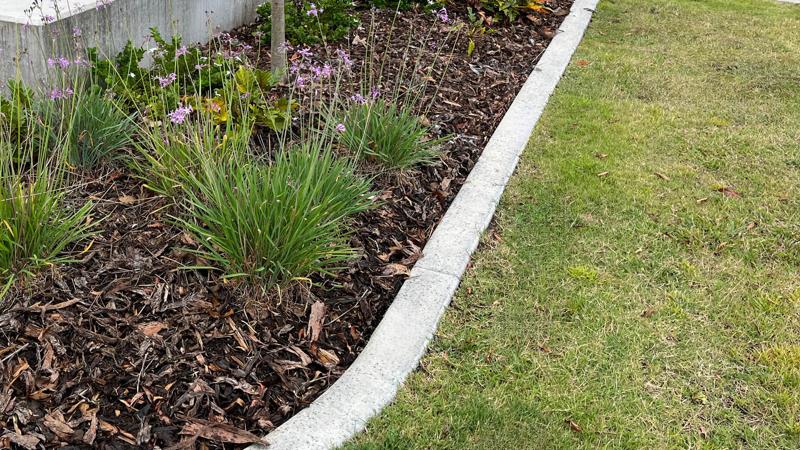
- Materials selected for garden edging will depend upon the finished outcome required.
- It is important that an appropriate width, depth and installation method is selected, to ensure an effective containment and/or decorative result.
- Planted areas are defined and enhanced by garden edging which also provides a barrier to inhibit grass from encroaching into the garden bed.
Design of garden edging
Material types
Concrete edge (preferred)
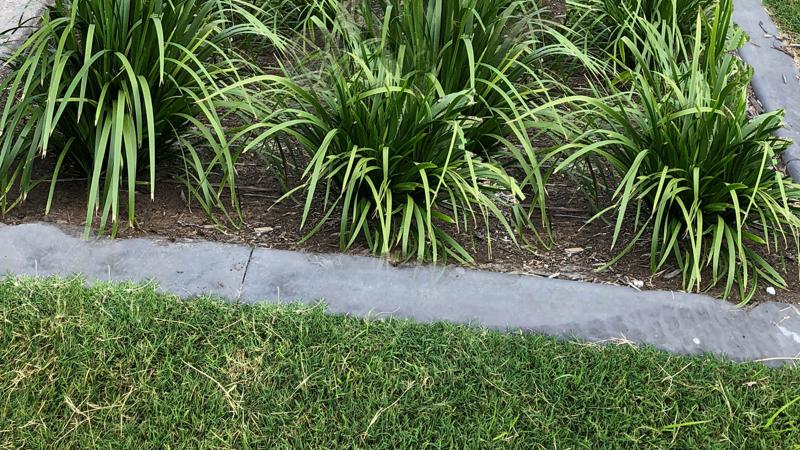
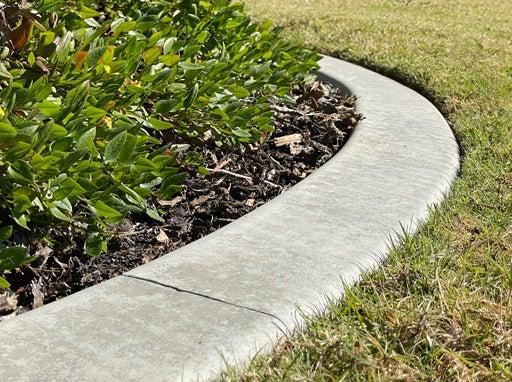
- Slip resistant concrete is the Council preferred standard edging due to low cost, longevity and low maintenance properties.
- Must be reinforced. Council preferred – fibre reinforced or reinforced rod centrally placed.
- Can be coloured concrete, to blend with the natural environment (i.e. black oxide may be used).
- Extruded concrete garden edge with crusher dust sub base, to withstand maintenance mowing machinery and vehicle loads.
- A brass marker should be installed to each side of concrete edge to indicate the position of underground services.
Stone or paver edge
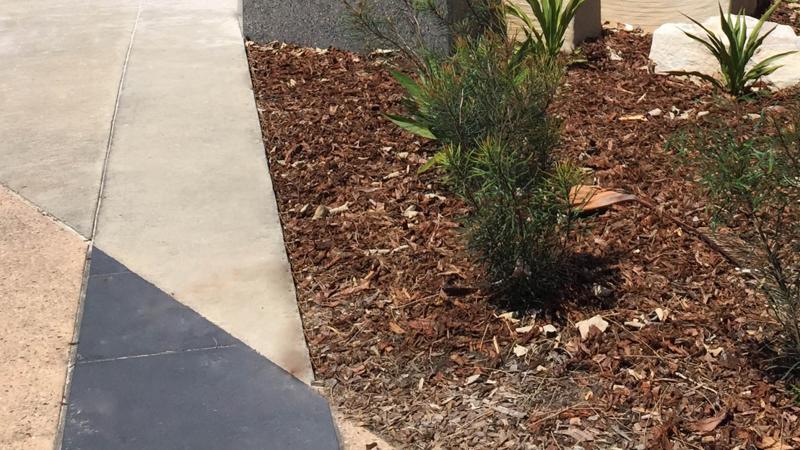
- To be placed on a concrete haunch.
- Must be able to withstand maintenance vehicle loads and mowing machinery.
- Segmental concrete paver design, specification and detail according to T44 Concrete Masonry Association of Australia: Concrete Segmental Pavements – Guide to Specifying.
- Must be slip resistant.
Timber edging (not preferred)
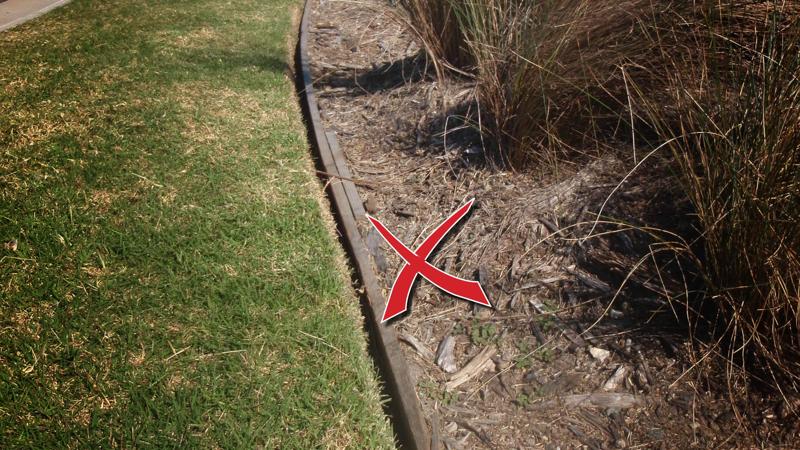
- Timber edge to be treated softwood, secured by posts.
- Turf to finish below top of the timber edge.
- Timber edging is not preferred due to maintenance.
See LIM Bollards the following for further guidance on timber selection and treatment.
Spade cut edge (not preferred)
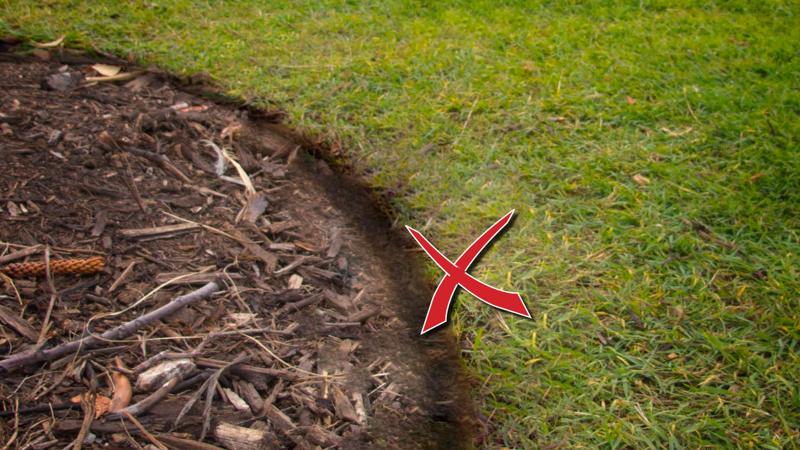
- Create ‘v’ shaped swale to prevent lawn or weeds from spreading into garden bed.
- Spade cut edging is not preferred due to maintenance, however, when approved, can be used where the site is level, is not flood prone and there are no tree roots.
Recycled plastic edging (not supported)
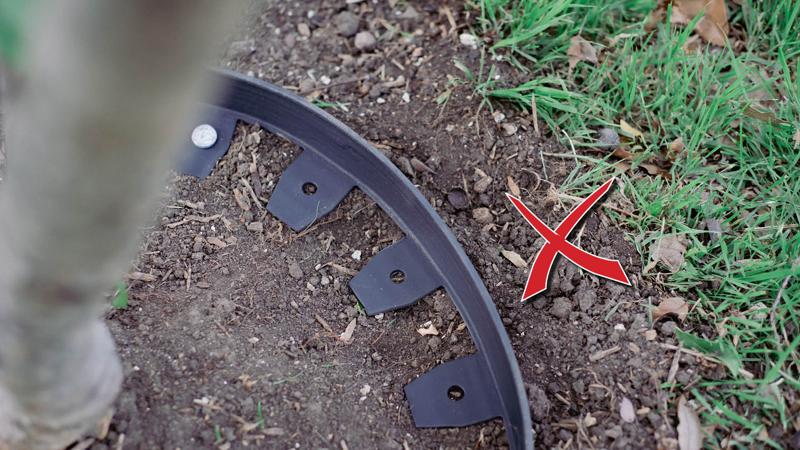
Recycled plastic edging is NOT supported, due to increased maintenance costs.
Maintenance
- Where grassed areas and mulched areas abutt each other, spraying is to be done on the mulched edge to minimise overspray into grassed areas.
- Sprayed edges are used in highly embellished areas, formal and annual beds.
- Sprayed edges are the most used edge treatment on the coast.
This component is currently in development