Planting (landscape)
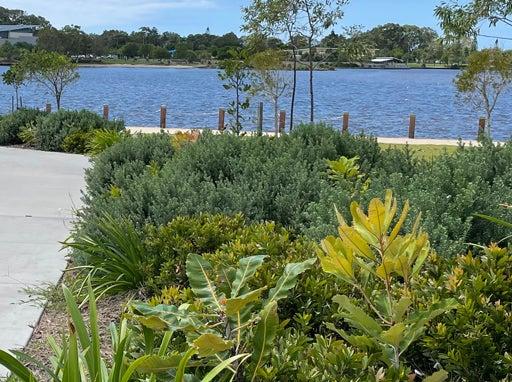
Design
Requirements for the design, manufacture and installation of embellishments
Good design
See the following corporate documents to identify relevant project design requirements:
Sunshine Coast Planning Scheme regulates the way land, buildings and structures are used and developed on the Sunshine Coast.

Sunshine Coast Design contains 10 design principles that guide good project planning and design outcomes, that are appropriate for the Sunshine Coast.
The LIM provides further overarching design advice, refer:
- Introduction and Design Principles - e.g. sustainability, CPTED, accessibility
- Preliminaries - environmental management, tree sensitive design and site set up.
Embellishment requirements
- Universal access.
- Comfortable and suitable for the average person.
- See 'Positioning' and 'Equal access' sections for the corresponding LIM category.
- Made from materials that will be durable and can be suitably protected from exterior elements, such as salt spray and UV exposure.
- Robust and sturdy to withstand constant public use and be resistant to vandalism.
- Fixings are to be 316 marine grade stainless steel (unless otherwise stated).
- Tamper proof fixings should be used
- Graffiti protection coatings applied (where applicable)
- Fire retardant (where applicable).
- Warranties should be as listed below.
- Easily repairable or replaceable.
- Sourced locally and use standard fittings.
- Reputable suppliers should be used who keep a supply of stock parts on hand for the life of the product.
- Use sustainable materials, although sustainability needs to be considered over the lifetime of the embellishment.
- Install on paved, concrete or other hard surfaces (where applicable).
- Manufactured to engineering specifications (where applicable).
- See the 'Standards' section for the corresponding LIM category.
Warranty and asset life
Product/embellishment | Warranty (minimum) | Asset life (typical useful life) |
Metal tree guards (permanent) | 1 year | 25 years 2 |
Timber tree guards (permanent) | 15-25 years | 25 years 2 |
Tree grate | 1 year | 25 years 2 |
Plants | N/A | Plant specific |
Source 2: Sunshine Coast Council Asset Management Plan 2017/18-2022/23 – Parks and Gardens (figure based on current data, subject to change).
Planting
Once the location of the planting has been decided, based on the Environment and Liveability Strategy (ELS) and Recreation Parks Plan (RPP) guidance, consider the appropriate embellishment level to suit the selected site.
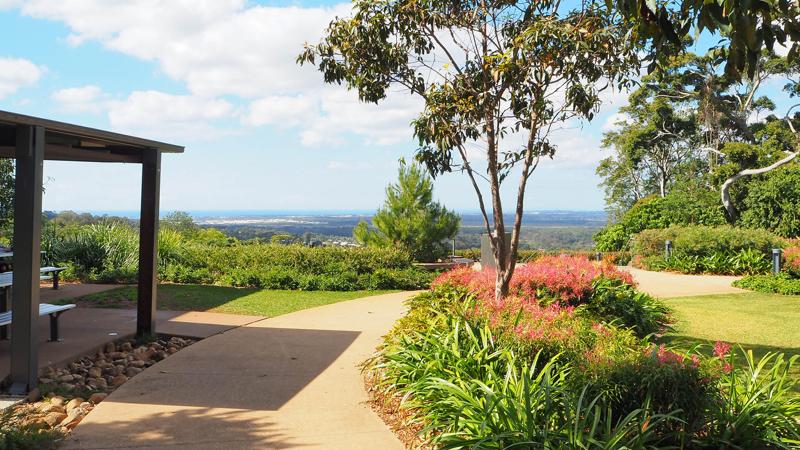
Overarching design considerations:
- Plant selection is important for shade provision, aesthetics, maintenance, and to create a liveable and comfortable environment
- Plan for future mature height of trees and shrubs, and for clearances over pathways and roads.
- Ensure plant selection is locally responsive and reflects the character of the area
- Design planting for environmental benefits, for human and wildlife wellbeing, and to create aesthetic open spaces.
Benefits of planting trees, shrubs and grasses
Environmental
Landscaping projects create benefits for the environment and for the wellbeing of humans and wildlife. When plants use energy from sunlight, they release oxygen critical to human health and environmental quality.
Climatic effects resulting from landscape planting generate benefits such as:
- shade and cooling,
- protection from wind,
- flood mitigation.
Carbon dioxide is an important greenhouse gas. One strategy to combat global warming is to increase the amount of carbon stored in plants (carbon sequestration) by increasing plant life or adding plant types that store the most carbon.
Environmental benefits of planting includes, soil binding/erosion control, run off reduction, stormwater filtration and particulate pollution capture.
Planting provides habitat and food source, shelter and food for wildlife as well as supporting and forming symbiotic associations with soil microorganisms.
Natural turf cools urban heat islands by emitting water as part of photosynthesis, and pulls pollutants from the air. Absorption of carbon dioxide and release of oxygen helps reduce global warming.
Amenity
Hard landscapes are softened and buffered by the provision of a sense of scale, the addition of visual interest, lead ins, gateways and a frame for views.
Planting provides shade and climatic buffering which enhances sustainability by extending the life of hard landscape assets.
A sense of place is created by plants which can define or add to the character of an area, to landmarks, meeting points and legacies from the past. The result is a strengthening of ‘sense of community’ or community spirit.
Documented social and psychological wellbeing benefits of plants include a calming influence on humans.
Plant selection
Council preference is plant species selected from:
Hierarchy of plant species (in preferred order) is as follows:
- Sunshine Coast natives
- Australian natives
- Non-invasive exotic species
- Plants not included in the ‘Planting Index’ (see LIM Planting palette).
The ratio of Sunshine Coast native, Australian native and non-invasive introduced species will vary between projects.
When selecting landscape planting species, do not use plants that:
- Have large thorns or spines
- Are capable of triggering severe allergic reactions
- Are poisonous.
- Are a declared or environmental weed as specified in the Sunshine Coast Planning Scheme.
- Classified Weeds of National Significance 2012 (WONS), Department of Agriculture and Fisheries.
All plant stock must:
- Conform to the stock selection criteria outlined in AS 2303:2018 – Tree stock for landscape use.
- Be free of nutrient deficiencies and disease
- Be acclimatised to conditions similar to those expected on the development site (i.e. full sun, wind, salt spray).
- For specific requirements for plant selection see LIM Planting palette.
Preparation for planting
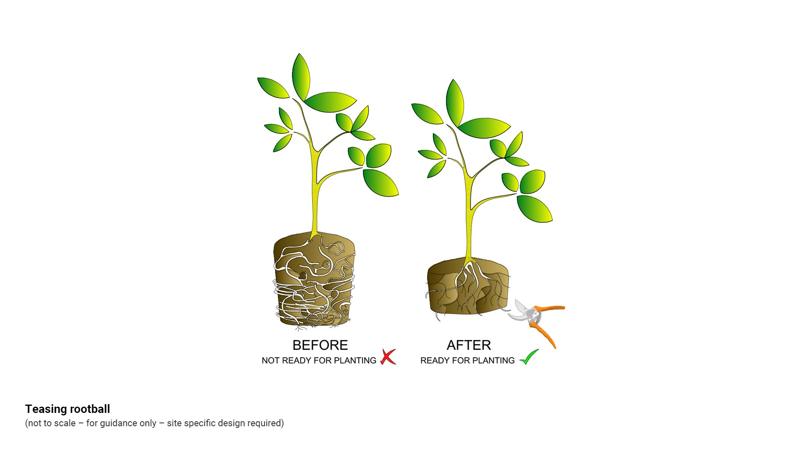
In preparation for planting, tease the rootball as follows:
- Loosen root balls where necessary and tease out roots at the base of the pot.
- If coiling (circling) is significant around the sides of the pot, gently slice and tease as per figure below, trimming off the large, thick roots, keeping the younger healthier looking roots intact.
Maintenance of plants
To ensure plantings receive the right amount of maintenance, species choice and planting design shall consider the following:
- Group plantings to ensure species with similar water and nutrient requirements are co-located.
- Avoid plants which have high maintenance and irrigation needs, are short lived or require regular replacement (with the exception of short-lived pioneer species in revegetation works).
- Position plants according to their growth habits to minimise ongoing pruning, clean up of debris and unnecessary maintenance.
- Consider placement near infrastructure (existing and future), to minimise potential maintenance and removal.
Plants
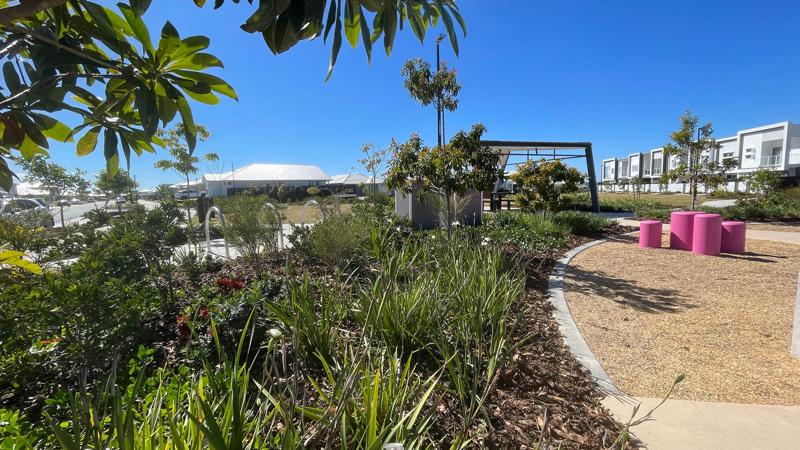
Trees
Trees provide the following:
- Amenity – soften and buffer the hard landscape; provide a sense of scale and visual interest through form, texture and variations in seasonal colour, lead-ins, gateways and the framing of views.
Tree planting should consider the following:
- 25 L sized tree stock is preferred, as they overcome initial transplant shock, establish faster and generally overtake the growth of the 45 L stock within 2-3 years.
- Mulch should be spread around the base to the edge of the canopy to a depth of between 75-100 mm. Mulch must not touch the tree trunk nor exceed a depth of 150 mm.
- Hardwood stakes should be used where necessary. Stakes must not be driven through the root ball.
- While trees develop a better trunk structure with no stabilisation, stakes can provide protection from vandalism, car doors and mowers. Two stakes is the standard requirement, however three or four stakes may be needed in high wind or vandal prone areas.
- Council approved ties must be used to prevent wounding the tree.
- All small nursery stakes and ties which come with new stock, must be removed at planting, to remove risk of damage or deformation of the root system.
- Good quality friable soil should be installed in the tree pit.
- Water crystals should be mixed through the soil where specified.
- Fertiliser should be placed in the tree pit where specified.
- A tree pit should be as deep as the root ball and three times the width of the root ball to allow for root growth.
- Trees may be used to replace bollards where appropriate.
- Deciduous trees are not to be planted over shelters and other structures, where possible.
Food trees
Food trees provide the following:
- Shelter, habitat and movement opportunities for fauna.
Koala food tree planting should consider the following:
- Plant Koala food trees (Eucalypts) where the site is deemed to be safe and appropriate.
- It is parks and gardens preference to preserve koala preferred food trees where possible.
Other food tree installation should consider:
- Planting food trees such as she-oaks (Casuarina, Allocasuarina spp.), for other threatened species e.g. Glossy Black Cockatoo.
Mass planted areas
Mass planted areas provide the following:
- Variety of different plant types, sizes and species
- Visual amenity
- Different vegetation levels for wildlife habitat.
- Understory for trees.
Mass plantings should consider the following:
- Choose plant varieties that do not require irrigation after establishment.
- A mowing edge is required around garden beds.
- Pot sizes should be as follows:
- A minimum of 140 mm pot size for garden bed shrubs, tufting plants, vines and garden cover.
- A minimum of 50 mm tube size for macrophytes and re-vegetation stock.
- Existing site topsoil should be used where possible, to retain microbes, soil structure and nutrients.
- Stabilise steep slopes with a biodegradable geotextile such as jute mesh (fibre made from the stems of the jute plant), which will hold soil during plant establishment.
- Stabilise steeper slopes and areas where high surface water runoff is expected, by coir mat (made from husk of the coconut).
Shrubs
Shrubs provide the following:
- Visual amenity including contrast and colour.
- Screening and buffers (where appropriate)
- Habitat for wildlife both within shrubs and in the provision of access to trees.
Shrub planting should consider the following:
- Plants are to be a consistent height, width, form and maturity when plantings occur in pairs, groups or lines.
Groundcovers
Groundcovers provide the following:
- Protect the soil and suppress weeds safely, while providing small animal habitat.
- Stabilise slopes and act as a living mulch reducing evaporation, resulting in less water use.
- Keep soil temperatures cooler in summer and warmer in winter.
- Visual amenity.
Groundcover planting should consider the following:
- Setbacks from pathways and hard infrastructure.
- Spacing and centres to consider mature dimensions.
Turf
Landscape turfed areas should consider the following:
- Provision of sufficient space and room to manoeuvre ride on mowers, with the use of smooth flowing lines to allow machinery to manoeuvre around assets.
- Turf slopes should be no greater than 15 degrees to allow for safe maintenance.
Turf provides the following:
- Turfed areas reduce runoff, soil erosion and provide dust stabilisation due to the root mass stabilising the surface soil.
- Turf can function as a vegetative filter strip which reduces sediment water pollution which would otherwise be transported into surface streams, rivers and oceans.
- Turf protects groundwater quality. More water infiltrates and filters through the soil/turfgrass ecosystem, enhancing groundwater recharge.
Turf installation should consider the following:
- Select a good quality turf, free from paspalum (Paspalum dilatatum), nut grass (Cyperus rotundus), oxalis (Oxalis spp.) or other weed species.
- Ensure there is a well prepared sub-grade and imported free draining, sandy loam topsoil.
- Provision to prevent laid turf from drying out
- Rolling of laid turf to ensure adequate contact is made with under base material.
- Visual amenity.
Weed management
Weed management provides the following:
- Management of weed species assist retention and enhancement of Sunshine Coast natives (indigenous plants) and natural values.
Weed management should consider the following:
- Declared plants and environmental weeds (where natural values are threatened), should be cleared in an ecologically sustainable manner minimising weed regrowth and encouraging natural recruitment.
- Weed removal should be staged throughout the maintenance period to maintain existing habitat values or prevent erosion or slippage.
- The application of pesticides to target specific vegetation types.
Plant media
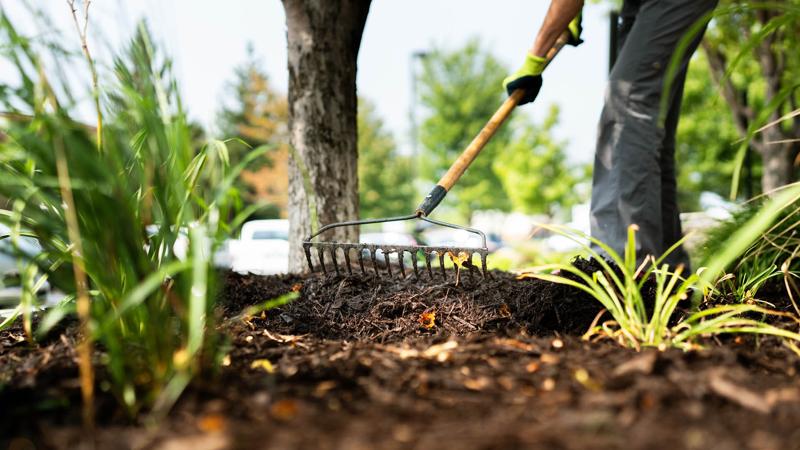
Mulch
Mulch provides the following:
- Amenity
- Helps to suppress weed growth.
- Improves soil structure and nutrition, and protects soil from evaporative moisture losses.
- Helps regulate the temperature in the ground.
Mulch application should consider the following:
- Mulch should be free from damaging material and decomposed material.
- Aged a minimum of 2 months after chipping, before being spread on site.
- Be placed on site as soon as possible after planting to prevent weed growth, retain moisture and it also may help to minimise erosion.
- Spread to an approximate depth of 100 mm after settling, clear of plant stems.
Rock mulch application should consider the following:
- Rock mulches should only be installed where:
- There is low/no risk of contaminating adjacent turf and becoming projectiles during mowing.
- There is low/no risk of rocks being removed and used to damage nearby infrastructure
See Table 1: Placement of rocks and rock mulches in landscaped areas for further guidance.
To maintain a natural look and feel, and to preserve hydrological flows:
Selection, placement and embedding of rocks into concrete is to be undertaken onsite, under the supervision of the designer.
The use of colour oxides in concrete is encouraged to provide a more natural look.
Table 1: Placement of rocks and rock mulches in landscaped areas
Risk assessment should be undertaken to determine suitability of site for the use of rocks and rock mulches. All situations require consideration prior to placement of rocks and rock mulches.
Application/potential issues | Key consideration for using rocks/rock mulches | Solutions |
Pandanus
Potential issue:
|
| see below table |
Playgrounds
Potential issue:
|
| see below table |
Turfed areas and adjoining garden beds
Potential issue:
|
| see below table |
Turfed areas and adjoining garden beds
Potential issue:
|
| see below table |
Lighting
Potential issue:
|
| see below table |
Solutions to the above applications |
For further guidance see the following: |
Soil (topsoil)
Topsoil provides the following:
- Substrate for plant root growth.
- Plants with vital moisture and nutrients.
- An environment that is conducive to microbes (soil microorganisms).
Topsoil application should consider the following:
- Should be an appropriate profile, porosity, pH and nutritional level.
- Should be free of contaminants.
- Should have an organic level range suitable for the application.
Soil wetting agent (surfactant)
Soil wetting agent provides the following:
- Retains moisture around the roots longer.
- Assists root development and plant establishment.
- Reduces the need for frequent watering.
Soil wetting agent application should consider the following:
- Avoid placement under the rootball.
- Spread evenly through the soil.
- Should only be used as required.
Soil improver (treatments and methods)
Soil improver/methods provide the following:
- Improves soil properties.
- Improves structure, aeration and enriches the soil by releasing ‘locked’ nutrients.
- Maintains soils in peak condition.
- Improves soil water retention.
- Helps plants establish.
- Enhances good root development.
- Reduces the need for frequent watering.
- Reduces transplant shock and combats stress.
- Soil improvers/conditioners are distinguished from fertilisers by having only indirect effects on nutrient status. Fertilisers provide nutrients directly to the soil, while soil tonics mostly stimulate soil microorganism activity.
Soil improver application/methods should consider the following:
- Avoid placing under the rootball.
- Spread evenly through the soil.
- May include organic (plant and animal residues, humates, sawdust) or mineral (gypsum, lime) conditioners, depending on site requirements.
- Should only be used as required.
- Soil testing is recommended.
Fertiliser
Fertiliser provides the following:
- Organic fertilisers
- Animal manures are excellent at improving soil structure, but the nutrient value is relatively low and variable. These materials condition, rather than fertilise the soil.
- Pelletised poultry and sheep manures are compressed into pellets and dried. When the pellets break down, the nutrients are released gently over a long period.
- Inorganic fertilisers
- Available in different formulations to suit different plant types.
- Usually contain a high proportion of soluble nitrogen, so can be very damaging to roots unless there is plenty of water available to assist the nitrogen to dissolve.
Organic and inorganic fertilisers can be found as the following product types:
- Liquid fertilisers
- Rapidly dissolve in water and are applied directly to plants.
- Have a more rapid effect and easier coverage.
- Slow and controlled release fertilisers
- Only require applying once at the start of the growing season.
- Are traditional fertilisers encapsulated in a shell that degrades at a specific rate.
- More efficient in utilisation of the applied nutrients.
- Reduces impact on the environment and contamination of groundwater.
- Reduces the problem of burning the plants due to excess nitrogen.
- Fertiliser application should consider the following:
- Should only be used as required.
- Soil testing is recommended.
Tonics
Tonics provide the following:
- Tonics are not fertilisers, they are additives that help the soil in some way. Seaweed, fish emulsion, compost tea and worm liquids are the most common forms.
- Tonics stimulate soil organisms improving the number, diversity and balance of beneficial soil organisms, which form symbiotic relationships with plants. They directly assist plants in water and nutrient uptake, improve soil structure and condition soil via nutrient cycling.
- Tonics contain plant growth regulators (hormones) which stimulate root development and strengthen cell walls.
Tonic application should consider the following:
- Soil testing is recommended.
Auxiliary planting embellishments
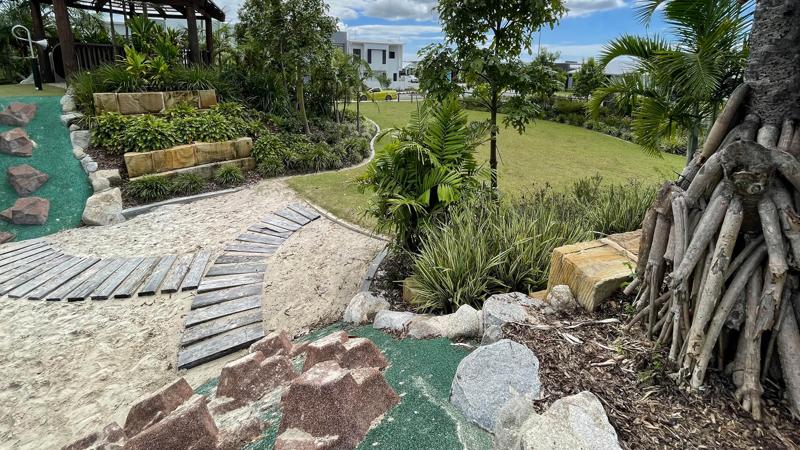
Boulders and blocks
Consider the surrounding environment before selecting between boulders and blocks. Sandstone blocks can be installed for both seating as well as vehicle deterrence. Boulders are better suited for natural settings and vehicle deterrence.
Boulders
Boulders provide the following:
- Landscape amenity
- Natural play.
Boulder installation should consider the following:
- Minimum weight of 40 kg, to prevent unwanted movement.
- Boulders are to be embedded a minimum of 1/3 into the soil.
- Boulders should be placed in a garden bed where possible to reduce maintenance issues.
- Boulders should be locally sourced and appropriate to the site. The boulders should blend into the surrounding landscape.
Sandstone blocks
Sandstone blocks provide the following:
- Natural play
- Seating (where 150 m gap/cut-out is included for rising).
Sandstone blocks must be laid as follows:
- Graining must be horizontal as in nature, to prevent weathering, expansion and splitting.
- Minimum block weight 40 kg to prevent unauthorised removal.
- Place block in a natural, stable or supported position.
- Place multiple blocks with enough space between to prevent entrapment issues.
See LIM Walls for further guidance
Tree grates
Tree grates provide the following:
- Tree grates cover tree root systems in shared use planting situations, providing space for the tree and a hard surface for pedestrians.
- protects the tree roots and base.
- reduces potential trip hazards for pedestrians.
- Maximise infiltration of water and nutrients.
- Suppress weed growth.
Tree grate design and installation should consider the following:
- Tree roots may lift tree grate.
- Trunk expansion, causing tree to choke within tree grate.
- Level of the crown of the root ball.
- Ways to reduce litter accumulation i.e. cigarette butts.
- The maximum hole size in a tree grate must be 8.0 mm to resist entry by high heeled shoes.
- Tree grates must be bicycle safe to avoid trapping or ‘tramlining’ cyclists.
- They must be made from robust materials that are vandal and corrosion resistant (particularly in coastal areas):
- suitable for the coastal corrosive environment.
- suitable for use in the public open space environment.
- manufactured to engineering specifications (where applicable).
- The orientation of tree grate openings so that the longest dimension is primarily perpendicular to direction of pedestrian travel.
- Transition must be flush between the tree grate and the adjoining surfaces to prevent trip hazards.
- Council is currently investigating various designs and applications for tree grates.
- For any advice on tree roots and specific treatments contact a qualified arborist.
Tree guards
Tree guards provide the following:
- Permanent or temporary tree protection solutions.
- Assist in tree establishment (permanent or temporary)
- Protect trees from damage in high activity areas such as parks near shopping centres and streetscapes (permanent).
Tree guard design and installation should consider the following:
- They must be made from robust materials that are vandal and corrosion resistant (particularly in coastal areas):
- suitable for the coastal corrosive environment
- suitable for use in the public open space environment.
- manufactured to engineering specifications (where applicable)
- Permanent tree guards should be attractive and balanced with the planting.
- Temporary tree guards are generally made from timber, permanent tree guards are generally made from steel.
- Temporary tree guards must be removed after 12 months or when the tree has established independently.
Tree rootball guying
Tree rootball guyings provide the following:
- Enables trees with large rootballs to be held in position after transplantation.
Tree rootball guying design and installation should consider the following:
- Underground rootball guying is preferred to above ground methods, due to the potential of pedestrians tripping over cables.
- below ground methods enable visual amenity to be retained.
Root barrier
Root barrier provides the following:
- Redirects new tree roots away from infrastructure.
Root barrier design and installation should consider the following:
- Root barrier is generally not preferred as tree roots may eventually grow over or under the barrier.
- Where root barrier is to be installed it should be installed adjacent to new trees, not existing trees.
- Should be positioned in location that won’t potentially present a trip hazard to pedestrians.
- Should not encircle a tree planting installation.
- Should consider mature dimensions and anchoring requirements of tree root systems.
- For any advice on tree roots and specific treatments contact a qualified arborist.
See LIM Preliminaries for further guidance.
This component is currently in development