Planting palette
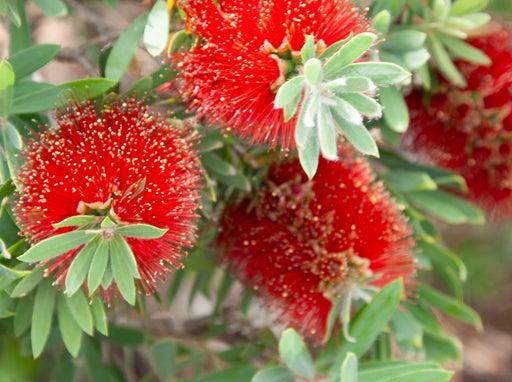
Revegetation planting
Guidance for revegetation planting projects
Revegetation planting is generally undertaken as part of ecological restoration works (reconstruction or fabrication).
Their respective objectives for site and circumstances will determine the most appropriate species to be used. The South East Queensland (SEQ) Ecological Restoration Framework Manual provides a guide to species selection and sourcing of plant stock.
Species selection
- Selecting plant species for reintroduction to a site requires the following:
- Site examination to determine which species may have historically grown there.
- Research of regional ecosystems, historical records, and anecdotal information to gain ideas about previously occurring vegetation.
- Consideration of site climatic and micro-climatic conditions – susceptibility to frost, heat, drought, wind and sea salt spray – as plants vary in their tolerances to these and must be chosen to suit the conditions. Less tolerant plants can be planted in sheltered niches or be introduced during a secondary planting after the vegetative structure has been created.
- Pioneer and early secondary species (fast growers adapted to colonising disturbed areas) are ideally suited for reintroduction planting because of the following characteristics:
- Quick formation of canopy – e.g. Macaranga (Macaranga tanarius) and Brown Kurrajong (Commersonia bartramia) in rainforests; and Acacias, Eucalypts and Casuarinas in sclerophyll communities.
- Fixing of atmospheric nitrogen in the soil (such as Acacia species).
- Rapid growth, resulting in early ‘capture’ of the site.
- Early senescence, making way for other late secondary and mature phase species to establish and eventually dominate.
- Mature-phase species (representative of the climax vegetation) may in some circumstances be introduced during the initial planting. However, these plants are slower growing and may not exhibit rapid bursts of growth until changing site conditions become right for them (e.g. site senescence of pioneers).
- Early flowering and fruiting species will attract birds and bats to the site, resulting in the introduction of seeds that promote natural regeneration.
- Species should include all vegetation layers (i.e. trees, shrubs and ground covers). However, ground covers can be difficult to maintain and often establish naturally on a site, so it may be better to rely on their natural regeneration.
- Lead-in to planting must be planned carefully to ensure that good-condition plants grown from locally collected seed are available.
- The plant species list may not necessarily reflect the expected composition of the climax community. Ecological restoration techniques ensure that birds, bats, insects and other animals will assist in the reintroduction of seeds to the site over time. Species selection for fabrication works will not have an historical basis, so the goal (as with assisted natural regeneration and reconstruction works) is to create a functioning system. However, this system will not necessarily represent the site’s previous or original vegetation.
- There are two ways of achieving the required functionality:
- Copy an existing vegetation community if conditions are suitable.
- Create a vegetation community based upon vegetative elements and conditions that could be expected to interact together to produce a self-sustaining system.
Sourcing plant material
Limited resources such as time, finances, and available skill-base will determine whether to propagate plants or purchase them commercially. In all but the largest organisations, purchasing plants from a commercial native plant nursery is more usual as it draws upon reputable seed-collection, propagation and plant raising expertise. A nursery may also be engaged ‘contract grow’ for a specific suite of plant species well before planting as this allows procurement of the exact species required. Using a specialist native plant nursery has the following benefits:
- Awareness of genetic considerations when collecting seed and plant material.
- Experience with breaking dormancy mechanisms in hard-to-germinate seeds.
- Highly successful propagation techniques
- Ability to provide high-quality stock to order
- Wide range of stock for purchase
- Ability to draw on the resources of Greening Australia’s Florabank for best-practice native species seed management.
It is advisable to check the quality of the plants to be purchased, for example:
- Plant provenance – whether seed or vegetative material for propagation was collected from within the same catchment as the planting site, and generally within a 10km radius.
- Plant size – pots or tubes.
- Plant health – whether plants are in good condition, free of pests and disease, vigorous without having overgrown their pots, and with a well-developed root system without being pot-bound.
- Sun hardening – whether plants have come straight from a shade house. If so, sun hardening for a minimum of 2 weeks prior to planting is necessary in order to minimise transplant shock.
- Coastal exposure hardening (if applicable) – whether plants have been exposed to coastal wind and salt spray conditions typical of the site in which they are to be planted.
This component is currently in development