Barbecues
Design
Requirements for the design, manufacture and installation of embellishments
Good design
See the following corporate documents to identify relevant project design requirements:
Sunshine Coast Planning Scheme regulates the way land, buildings and structures are used and developed on the Sunshine Coast.

Sunshine Coast Design contains 10 design principles that guide good project planning and design outcomes, that are appropriate for the Sunshine Coast.
The LIM provides further overarching design advice, refer:
- Introduction and Design Principles - e.g. sustainability, CPTED, accessibility
- Preliminaries - environmental management, tree sensitive design and site set up.
Embellishment requirements
- Universal access.
- Comfortable and suitable for the average person.
- See 'Positioning' and 'Equal access' sections for the corresponding LIM category.
- Made from materials that will be durable and can be suitably protected from exterior elements, such as salt spray and UV exposure.
- Robust and sturdy to withstand constant public use and be resistant to vandalism.
- Fixings are to be 316 marine grade stainless steel (unless otherwise stated).
- Tamper proof fixings should be used
- Graffiti protection coatings applied (where applicable)
- Fire retardant (where applicable).
- Warranties should be as listed below.
- Easily repairable or replaceable.
- Sourced locally and use standard fittings.
- Reputable suppliers should be used who keep a supply of stock parts on hand for the life of the product.
- Use sustainable materials, although sustainability needs to be considered over the lifetime of the embellishment.
- Install on paved, concrete or other hard surfaces (where applicable).
- Manufactured to engineering specifications (where applicable).
- See the 'Standards' section for the corresponding LIM category.
Warranty and asset life
Product/embellishment | Warranty (minimum) | Asset life (typical useful life) |
Electric barbecue cabinet (stainless steel) | 10 years | 10 years 2 |
Hot plate unit and electrical | 2 years | 10 years 2 |
Tea stain prevention coating for stainless steel | 5 years | n/a |
Source 2: Sunshine Coast Council Asset Management Plan 2017/18-2022/23 – Parks and Gardens (figure based on current data, subject to change).
Barbecues
Once the location of the barbecue has been decided, based on the Environment and Liveability Strategy (ELS) and Recreation Parks Plan (RPP) guidance, consider the appropriate embellishment level to suit the selected site.
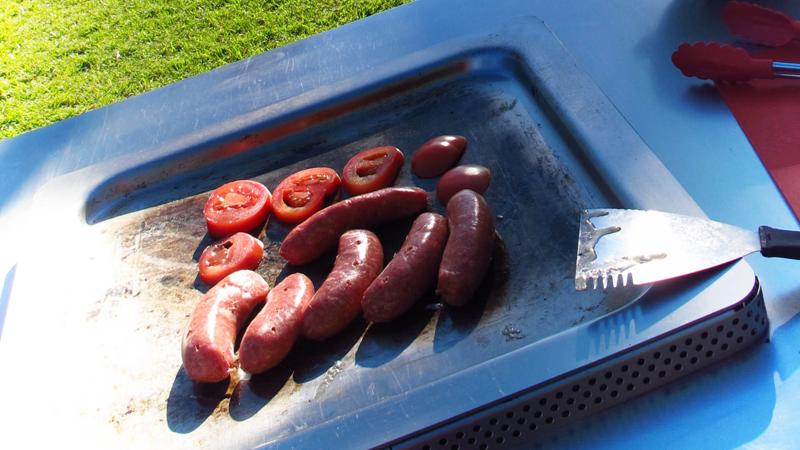
Overarching design considerations:
- All open spaces should include universal access (e.g. height of work bench and hotplate, and manoeuvrability around these items)
- Safety features
- Maintenance and servicing requirements
- Cabinet and hotplate must be 316 marine grade SS and to food grade requirements.
Barbecue design
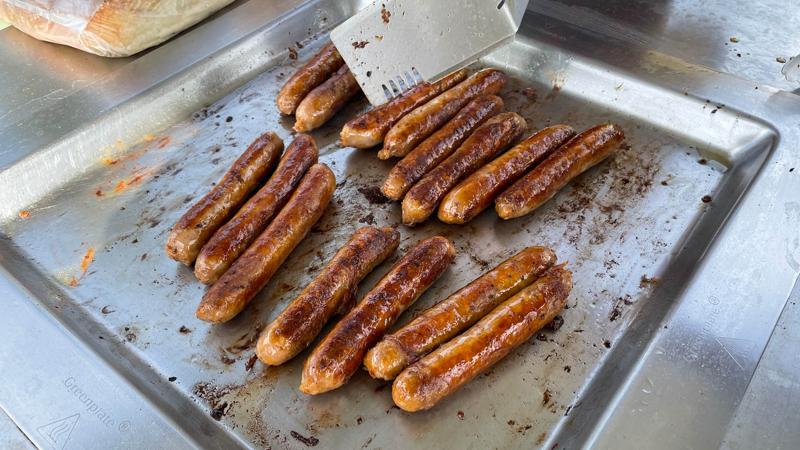
Cabinet and hot plate
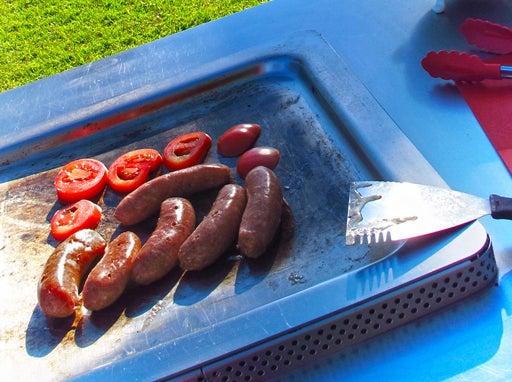
- All barbecue cabinets and hotplates must be 316 marine grade stainless steel, with a high quality polish finish
- Stainless steel offers superior corrosion resistance.
- Hotplate must be polished to food grade finish.
- Easier to maintain and clean than other surfaces.
- A high polish finish reduces maintenance, discolouring and tea staining as well as increasing the life of the product.
- Protective coatings to stainless steel finish are not supported.
- Barbecue cabinets must be flat surfaced. 'Mini Orb' corrugated sheet is not to be used as it is difficult to clean resulting in the development of tea staining and a diminished appearance.
- Bolt down cabinet to the finished surface for ease of replacement. All fixings are to be 316 marine grade stainless steel.
- Rounded corners are required on a stainless steel barbecue workbench.
- Cabinet must include a bucket (fat collection tray). Bucket and waste bags supplied inside the cabinet.
- Optional windbreak shield around the hot plate for exposed locations. (Note that a wind break shield reduces wheelchair access to three sides of a barbecue).
- Security key access: Lockable doors to secure the cabinet. Fort knox 201 cylinder lock, Council Parks 201 key. Security key access.
- Ventilation louvres are to be provided in the cabinet body.
- Universal access barbecue designs, should consider both the height of the work bench and hot plate, must incorporate small child safe reach heights and include Australian Standards for access and mobility requirements.
- Where the height of the barbecue work bench is lowered for equal access reasons, the risk of a small child reaching the activated hot plate increases (based on data sets from accredited ergonomist).
See Figure 3: Equal access requirements and small child design inclusions (See LIM Barbecues - Equal access).
Activation buttons
Location
- Must be positioned for ease of use (not under workbench and on access door).
- Do not locate buttons horizontally on top of the barbecue cabinet as food particles gather in recesses and pose a safety risk and maintenance issues.
Requirements
- Install a child safe push and hold activation button.
- Audible alarm at the start and finish of cooking cycle.
- High visibility LED light to indicate power is on. Blue 'heating' and white 'on' barbecue activation button. These colours are more readily identified by people with low vision, than red and green.
- A shutdown feature to enable the unit to be turned off early, rather than waiting until the full cooking cycle is complete. Shutdown feature enables:
- efficient maintenance by cycling on/off for testing
- reduced electricity use
- users may elect to turn off the unit once cooking is complete.
Labels
- A push button start instruction label must be positioned for ease of use (not under workbench).
- Barbecue instructions label must clearly visible at all times. The signage must prominently placed on the same side of the cabinet as the push button start.
- An 'asset numbering system' (currently under development) for asset management, maintenance, and servicing purposes. This sign is to be positioned discreetly on the outside of the barbecue cabinet.
- Attach a maintenance and fault reporting sticker to all barbecue cabinets. The sticker must be prominently placed on the same side of the cabinet as the push button start.
- Cleaning instruction sign (currently under development) to be installed on the inside of the cabinet door, to address the following issues:
- cleaners must not use a high pressure cleaning hose on the inside of a barbecue cabinet.
- cleaners must always turn the thermostat back up (if they have turned it down for cleaning).
- Do not locate labels on top of the barbecue as food particles gather in recesses and pose a health risk, and maintenance issues.
Smart technology
Counter meter
- A 'barbecue cycle counter meter' must be installed as a permanent device, to the inside of each barbecue cabinet. This counter is designed to collect cycle usage data. The counter will aid in the asset management, maintenance and servicing of the barbecue.
See LIM Smart technologies for further guidance, including key considerations for installation.
Electrical (including internal cabinetry)
- Electrical connection is to be installed as per manufacturer’s recommendations.
- Installer is to be a licensed electrical contractor.
- Where there is no power on site a 'supply availability request' is to be obtained – contact Energex.
- All barbecues to be cabled separately to different RCDs.
- Avoid 'long run' electrical wiring from point of origin to barbecues (where possible) due to severe corresponding reduction in hotplate heating/cooking performance.
- Power save electrical switch.
- Audible electronic start with incorporated shut down feature.
- Thermostat on barbecue (inside cabinet).
- Circuit breaker/residual current device (RCD) in main switchboard. RCD is NOT to be located in barbecue cabinet. Comply with AS/NZS 3000:2018 Electrical installations for location of RCDs. Refer to LIM Electrical for further guidance.
- Circuit wiring from switch board to GPO with Clipsal 56 series switched socket (or equivalent).
See LIM Electrical for further guidance.
Ancillary embellishments
Utilise the Environment and Liveability Strategy (ELS) and Recreation Parks Plan (RPP), to determine what ancillary facilities should be provided with a barbecue.
Bins
- Provide waste and recycle bins in the vicinity of a barbecue.
See LIM Bins for further guidance.
Taps
- Health regulations require a public use tap to be installed near a barbecue for personal food preparation hygiene and for council maintenance wash down. Install an equal access tap.
- For maintenance of barbecues, a dedicated maintenance tap should be installed alongside the public access tap.
- Taps should not be located on the main slab as it can create a slip hazard e.g. from users washing greasy barbecue utensils.
See LIM Taps for further guidance.
Picnic tables and benches
- Consider picnic tables and benches near a barbecue, with sufficient wheelchair manoeuvre area around and between furniture.
See LIM Picnic tables and benches for further guidance.
Shelters
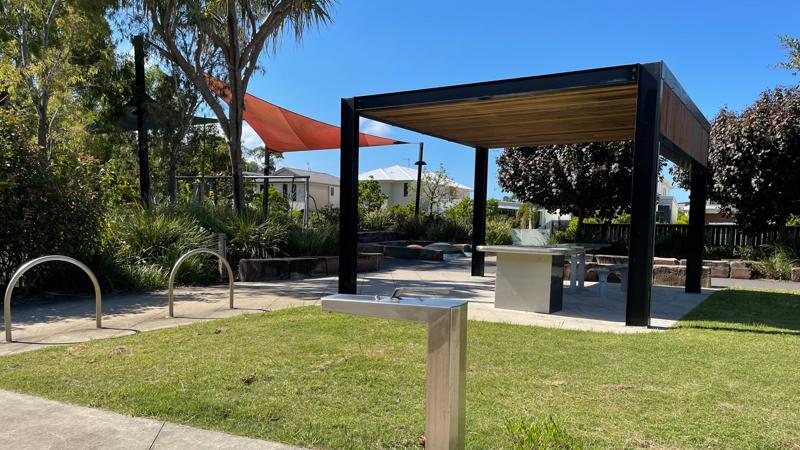
- Barbecues must be installed under a shelter to minimise maintenance.
- Shelter cover reduces safety issues and potential overflow hazards created by rain entering fat retention drum and prevents health risks arising from bird droppings on food preparation/cooking surfaces.
- Shelter support posts should not impede approach for wheeled mobility devices to access a barbecue.
- Supplement barbecue shelters with shade tree planting.
- Where appropriate, consider shelter lighting over the barbecue to enable night use.
See LIM Shelters for further guidance.
This component is currently in development