Shelters
Materials, fixings and finishes
Best practice guidance for the selection of materials, fixings and finishes
All materials, fixings and finishes must be made from robust heavy duty materials that are vandal and corrosion resistant (particularly in coastal areas) and suitable for use in public places.
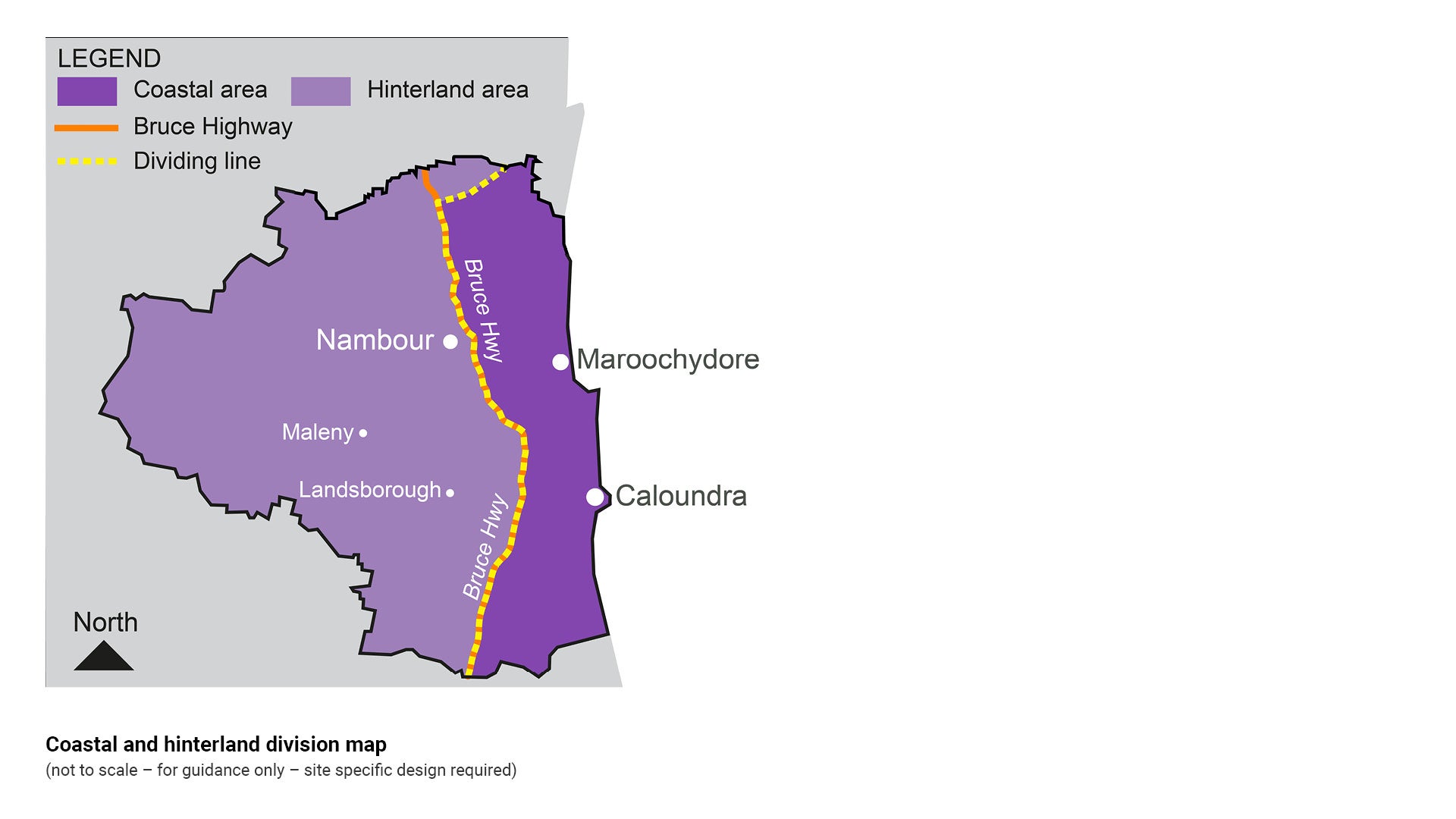
Council has adopted the Bruce Highway as the dividing line between the highly corrosive environment of the coastal zone, and the more benign environment of the hinterland.
See Figure 10: Coastal and hinterland division map.
Figure 10: Coastal and hinterland division map
Materials
Select materials based upon the location (coastal or hinterland), together with factors such as the required design finish.
Timber
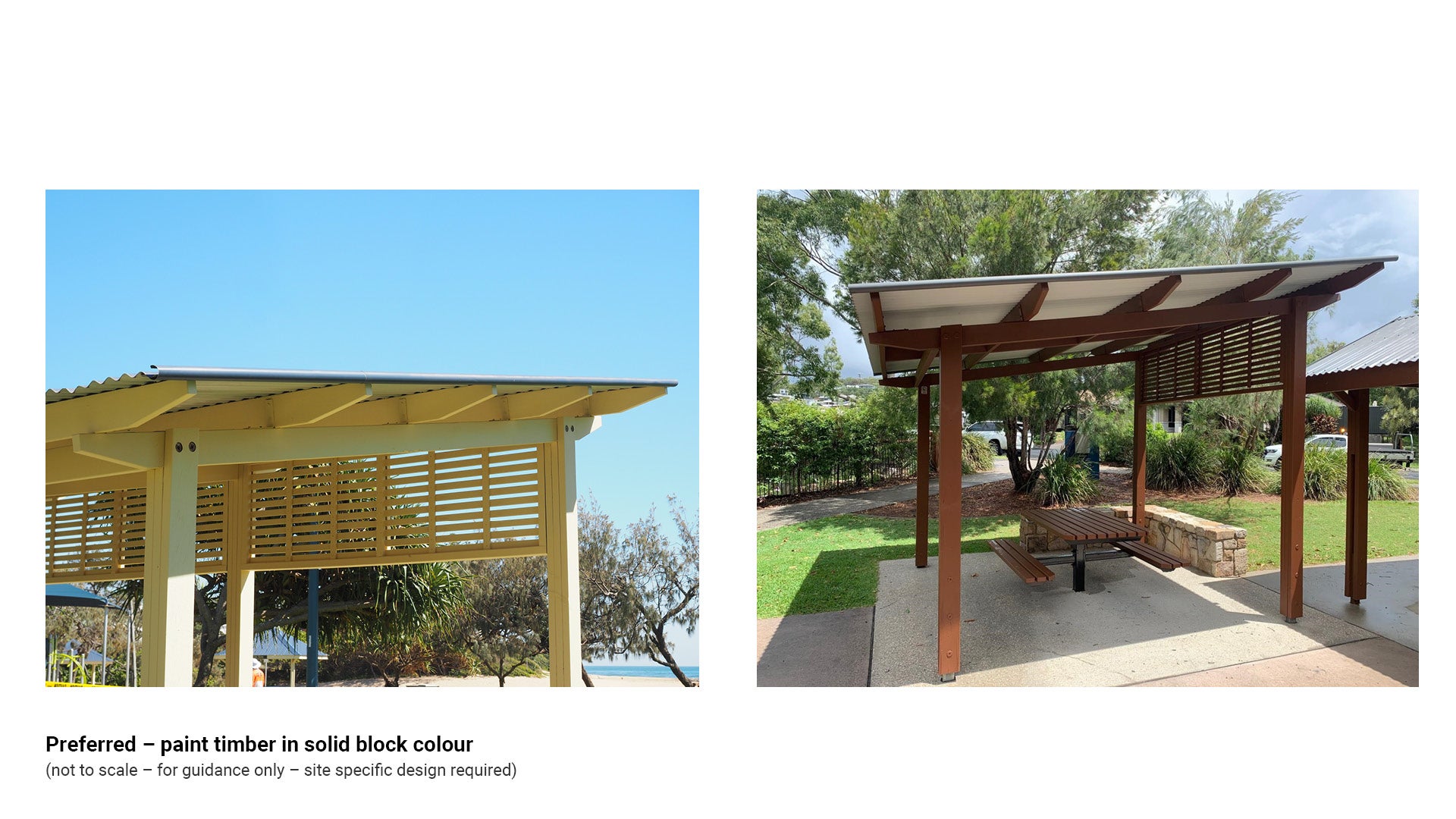
- If timber is used, Council prefer solid block paint colours to minimise maintenance. See Figure 11: Preferred – paint timber in solid block colour.
- If timber stains are used, a minimum of 3 coats should be applied, to manufacturers application direction.
- Where possible structural timber on the underside of roofing are to be the same colour as the underside of the roof.
- Avoid timber protrusions outside of a shelter roofline. Install stainless steel caps over ends of timber protrusions to prevent water damage.
- Hardwood timber is preferred (appropriate species and treatment), free from defects. A protective coat treatment is required where it is exposed to weather.
- Skin forming (non-penetrative) polyurethane coatings should not be used, due to the long preparation and drying time. Although the end quality is high, fade, wear and de-lamination can occur. This requires sanding and heavy preparation for re-application.
Figure 11: Preferred – paint timber in solid block colour
Aluminium
- Suitable for use in corrosive coastal environments
- Lightweight, low maintenance material. Easy handling and installation.
- May be powdercoated, painted or anodised.
- 100% recyclable.
Steel
- Robust, durable, vandal resistant and suitable for high use areas
- Low maintenance material.
- 316 marine grade stainless steel is preferred.
Finishes for metal
Milled vs polished stainless steel
Polishing of stainless steel:
- improves the consistency and appearance
- conceals minor blemishes
- makes cleaning easier.
Mill finish stainless steel is not suitable for decorative applications (unless specified), as it has a dull, matte finish, and tea stains easily.
Finish should be selected by the designer to suit the site character and function.
'2 pack' acrylic enamel
A paint system involving an acrylic paint and a hardener resin. 2 pack is the preferred steel coating.
- Provides a better final finish, but is more expensive
- Requires more preparation prior to application
- Has the ability to be touched up on site.
Powder coating
Powder coating of steel is not preferred for shelter construction. Consider:
- Problems with the metal substrate may affect pre-treatment and the final powder coating.
- Powder coating is more difficult to touch up when damaged and requires removal from site for repairs.
- Powder coating breaks down more quickly if it is outside in harsh environments. Bore water and coastal conditions can also affect the condition of the powder coating.
- Powder coating can be porous on a microscopic level, reducing the effectiveness of the finish as a corrosion barrier.
This component is currently in development