Design principles
Accessibility
An overview of accessibility design principles
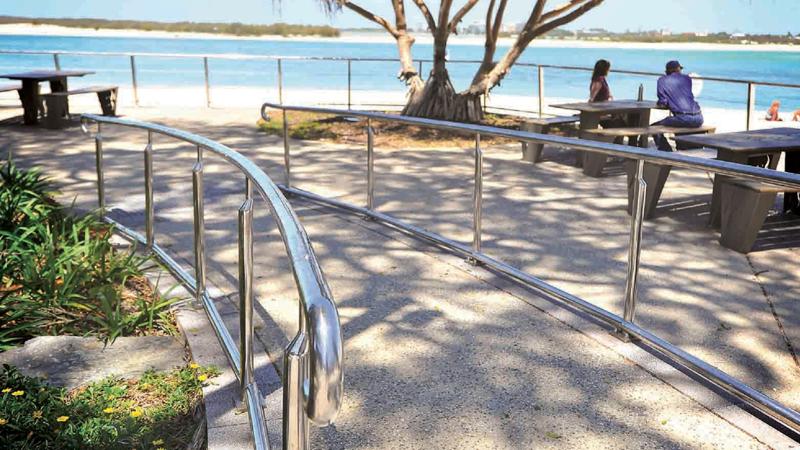
The LIM is based on the principle that best practice design aims to seamlessly incorporate universal access (equal access) in the built environment.
Accessibility principles
Designers should consider how to install embellishments to provide universal access for people with a broad range of abilities.
LIM information sheets provide illustrated equal access and positioning design guidance to enable designers to transpose dimensions and ideas into their designs. This information has been reviewed by an accredited access consultant.
See the following document for additional equal access advice:
- Sunshine Coast Community Strategy 2019-2041 (2024 Refresh and Action Plan 2024-2029)
Disability Discrimination Act (DDA)
The LIM is in keeping with the intent of the Disability Discrimination Act 1992. This Act makes it unlawful to disadvantage someone because of that person’s disability in the way that access is provided to the built and urban environment.
Further legislative requirements are contained in the Anti-Discrimination Act 1991 (Qld), and technical guidance is found in Australian Standards – 1428 Design for Access and Mobility set.
Definitions of premises
The Disability Discrimination Act (DDA) 1992, definition of premises includes:
- 'a place (whether enclosed, or built on, or not)'.
This definition includes parkland, recreation areas, playgrounds, transport vehicles, all pedestrian infrastructure, and could apply to non building elements such as furniture and fittings.
The purpose of the Disability (Access to Premises – Buildings) Standards 2010 under the DDA is to:
- 'ensure that dignified, equitable, cost effective and reasonable achievable access to buildings and facilities and services within buildings is provided for people with a disability'.
Universal access (equal access) legislative hierarchy
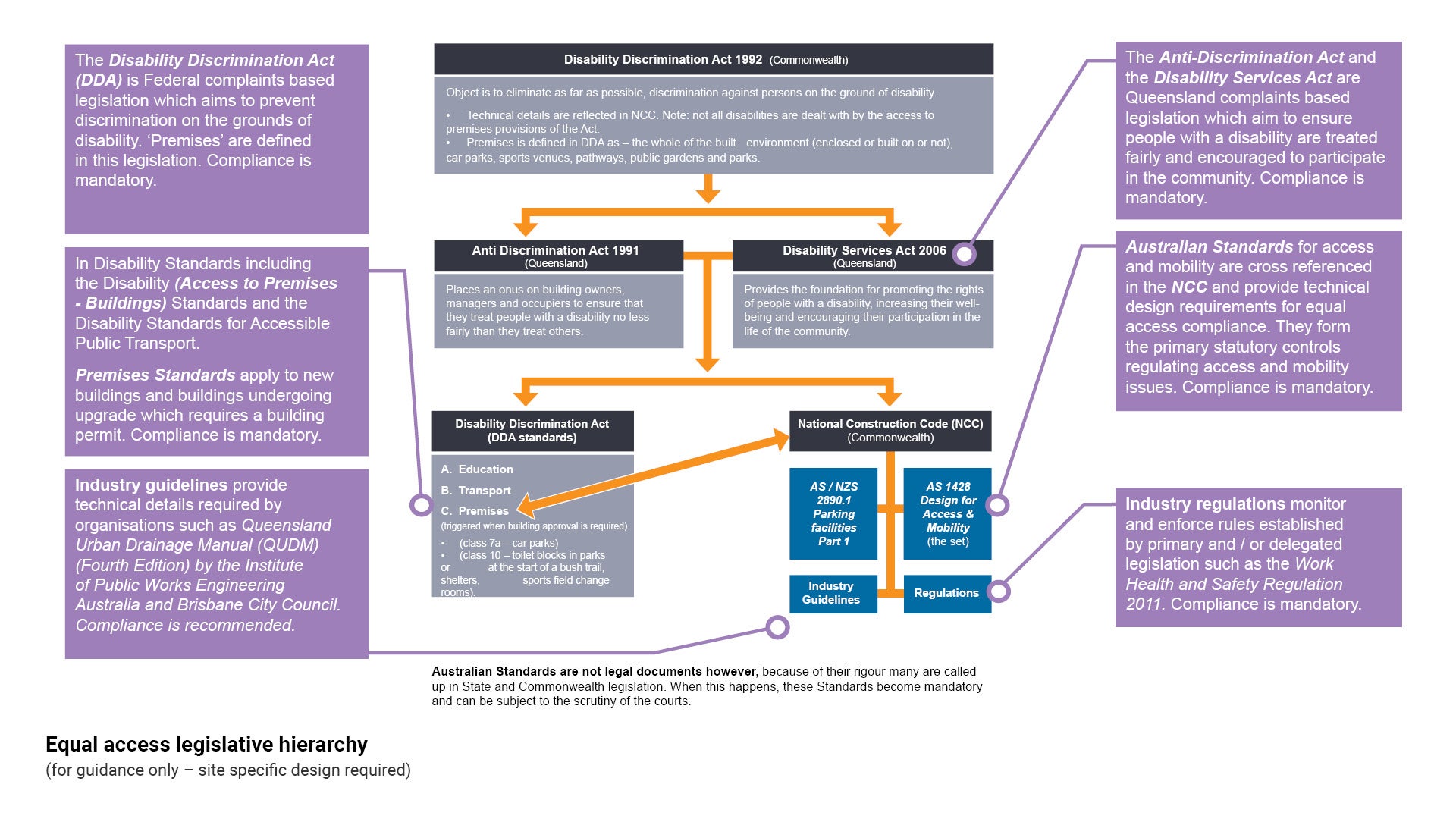
The following figure illustrates the rank, relative authority (hierarchy) and the content for Federal overarching law and Queensland law as it applies to universal access (equal access).
Figure 1: Equal access legislative hierarchy
Aspects of disability
The definition of disability as described in Disability Discrimination Act 1992:
Disability, in relation to a person, means:
(a) total or partial loss of the person’s bodily or mental functions; or
(b) total or partial loss of a part of the body; or
(c) the presence in the body of organisms causing disease or illness; or
(d) the presence in the body of organisms capable of causing disease or illness; or
(e) the malfunction, malformation or disfigurement of a part of the person’s body; or
(f) a disorder or malfunction that results in the person learning differently from a person without the disorder or malfunction; or
(g) a disorder, illness or disease that affects a person’s thought processes, perception of reality, emotions or judgment or that results in disturbed behaviour; and includes a disability that:
(h) presently exists; or
(i) previously existed but no longer exists; or
(j) may exist in the future (including because of a genetic
predisposition to that disability); or
(k) is imputed to a person.
To avoid doubt, a disability that is otherwise covered by this definition includes behaviour that is a symptom or manifestation of the disability".
The Australian Bureau of Statistics (ABS) Survey of Disability, Ageing and Carers (SDAC) 2018 uses the definition of disability as - "any limitation, restriction or impairment which restricts everyday activities and has lasted, or is likely to last, for at least six months".
The ABS uses the following broad headings to describe disability groups.
Disability groups
"Disabilities can be broadly grouped depending on whether they relate to functioning of the mind or the senses, or to anatomy or physiology. Disability groups may refer to a single disability or a number of broadly similar disabilities. The Survey of Disability, Aging and Carers (SDAC) module relating to disability groups was designed to identify six separate groups based on the particular type of disability identified.
These groups are:
Sensory
- loss of sight (not corrected by glasses or contact lenses)
- loss of hearing where communication is restricted or an aid is used
- speech difficulties.
Intellectual
- difficulty learning or understanding things.
Physical
- shortness of breath or breathing difficulties that restrict everyday activities
- blackouts, seizures or loss of consciousness
- chronic or recurrent pain or discomfort that restricts everyday activities
- incomplete use of arms or fingers
- difficulty gripping or holding things
- incomplete use of feet or legs
- restriction in physical activities or in doing physical work
- disfigurement or deformity.
Psychosocial
- nervous or emotional condition that restricts everyday activities
- mental illness or condition requiring help or supervision
- memory problems or periods of confusion that restrict everyday activities
- social or behavioural difficulties that restrict everyday activities.
Head Injury, stroke or acquired brain injury
- head injury, stroke or other acquired brain injury with long-term effects that restrict everyday activities
Other
- receiving treatment or medication for any other long-term conditions or ailments and still restricted in everyday activities
- any other long-term conditions resulting in a restriction in everyday activities".
Source: Australian Bureau of Statistics, Ageing and Carers, Australia: Summary of Findings 2018 (Appendix - disability groups).
Other considerations for equal access design
Other broad groups to be considered when designing access for public places are as follows:
- children and youth
- older people
- parent/care giver with pram.
Children and youth
Child and youth disability includes a diverse range of health conditions. The type and degree of disability will influence all of the day to day activities in which they participate.
Incorporating equal access principles is important in play spaces, skate parks and sporting and games areas. Identifying barriers and designing facilities that provide an inclusive and safe environment are extremely important to enable families to access these open space areas. Facilities and play elements should provide social, emotional, physical and cognitive play development elements.
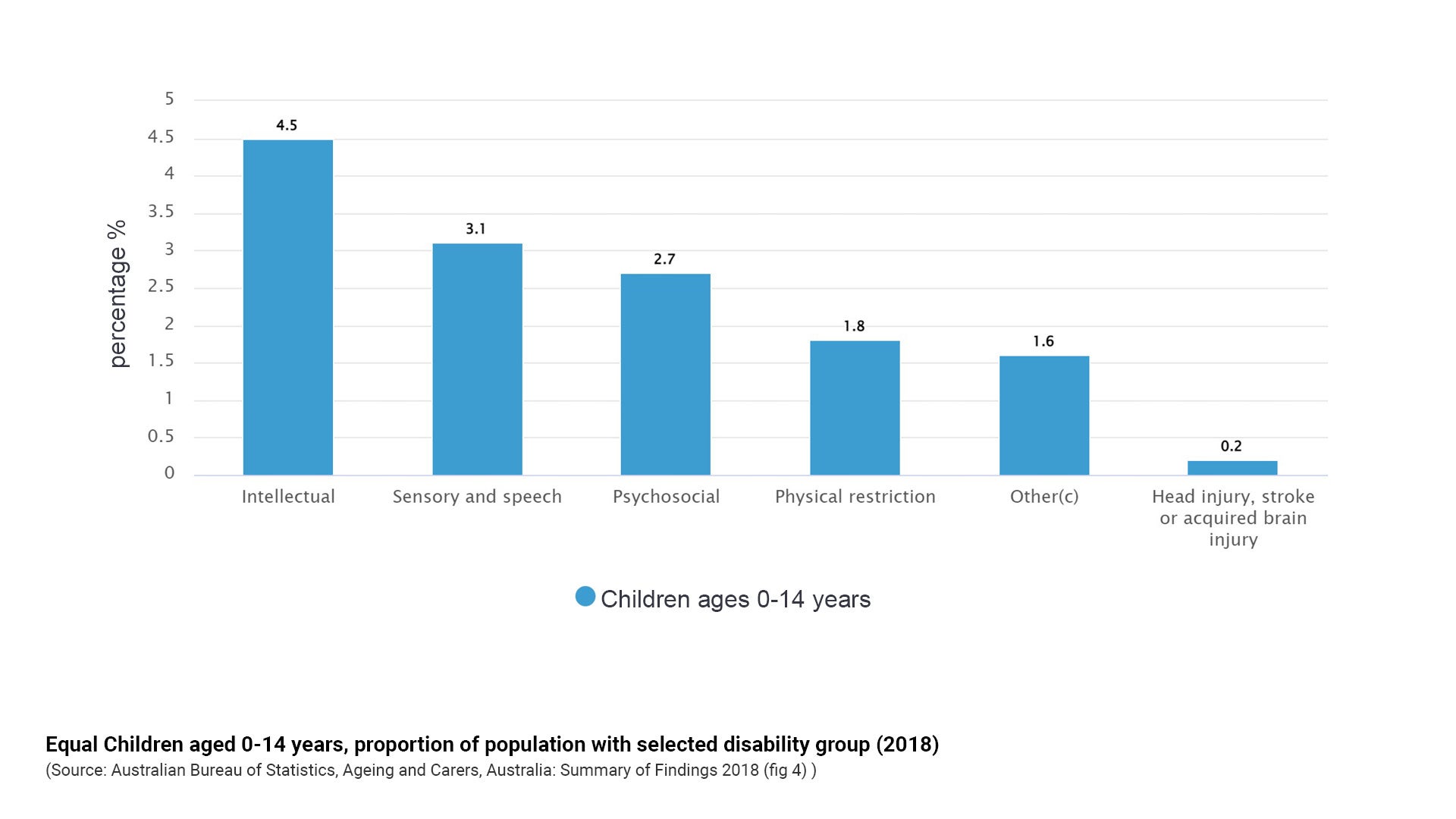
The following figure from the Australian Bureau of Statistics demonstrates a range of disabling conditions which exist in Australian children aged up to 14 years.
Figure 2: Children aged 0-14 years, proportion of population with selected disability group (2018)
Older people
Integrating universal access (equal access) design is an important consideration for the Sunshine Coast Council given the demographics of the population. The Sunshine Coast has a high proportion of older residents.
Provision of accessible recreation facilities promotes the health of all Coast residents, in line with Sunshine Coast Community Strategy 2019-2041. It also makes the region attractive for those looking for an accessible holiday destination, and with Australia’s population rapidly ageing, these numbers are expected to increase.
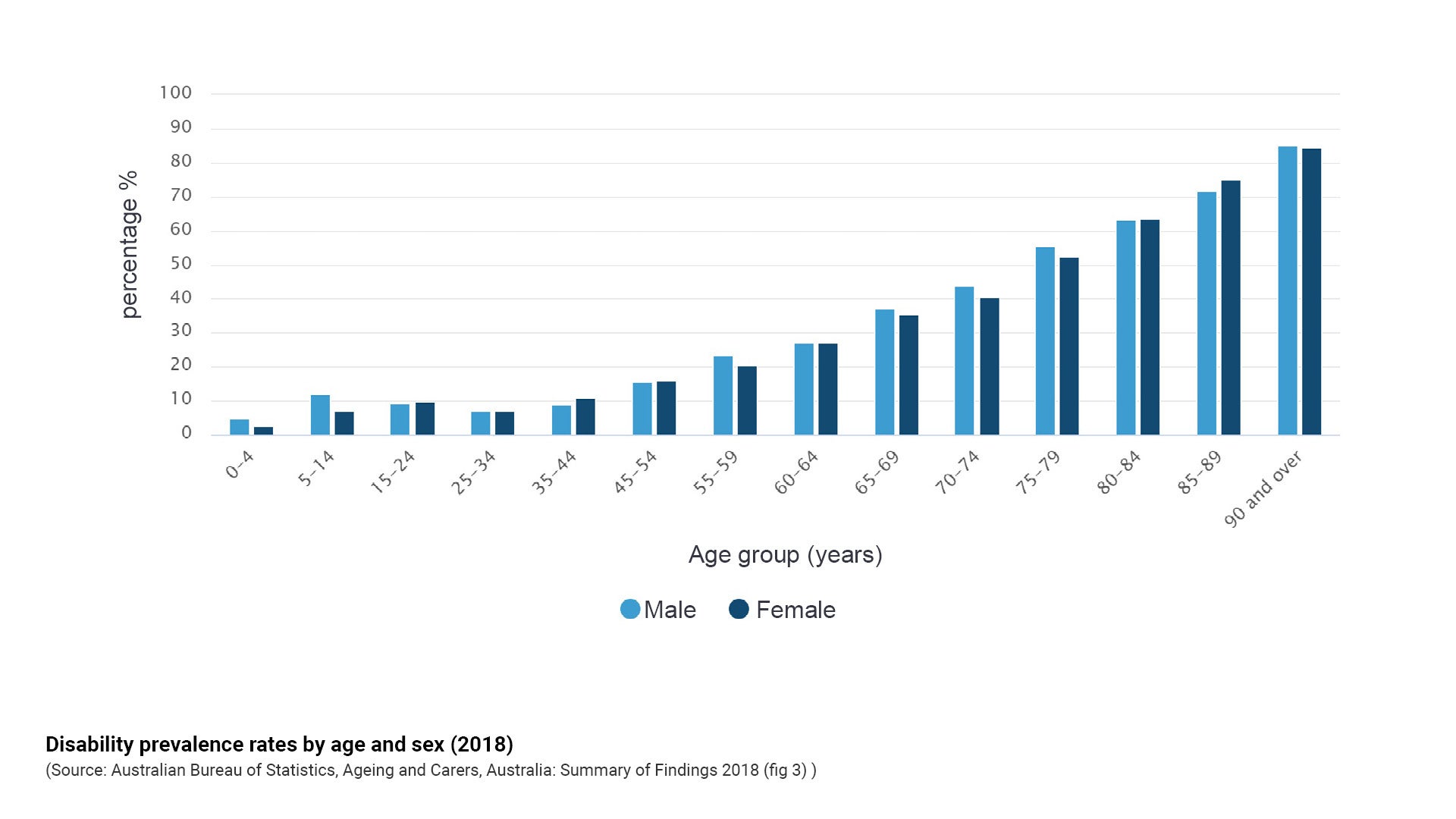
The rate of disabilities generally increases with age, see Figure 3: Disability prevalence rates by age and sex 2018.
Figure 3: Disability prevalence rates by age and sex 2018.
Parent/carer with a pram
Consideration needs to be given to parent/carers with a pram in relation to:
- manoeuvring/circulation space around embellishments
- space to park a pram of the path of travel i.e. space beside a seat.
Temporary medical condition
Consideration also needs to be given with regards to a person with a temporary injury/condition which may impact their usual function.
Application of universal design (equal access)
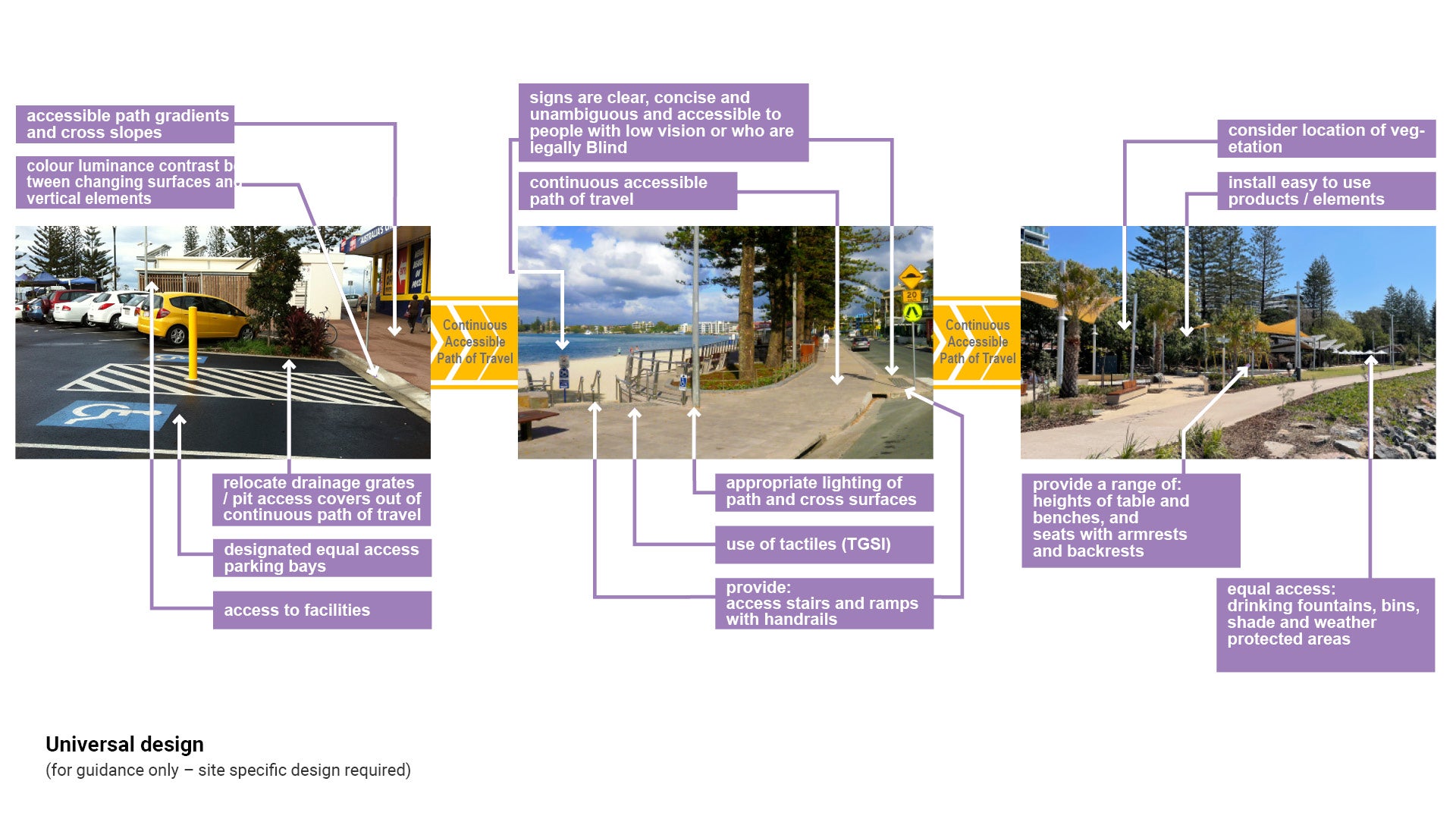
The following figure illustrates how universal design (equal access) plays an integral part in the design of our open spaces. In addition, inclusion of uniform treatments assists users with special requirements such as; mobility impairment, low vision, balance etc. See Figure 4: Universal design.
Figure 4: Universal design
This component is currently in development