Introduction
How to use the LIM
Sections and interpretation of the LIM
Sections of the LIM
This manual is divided into sections and colour coded as follows:
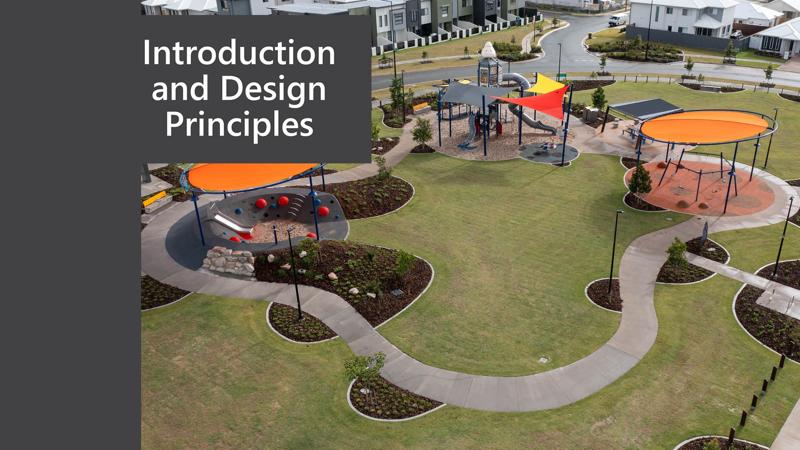
The Introduction and Design Principles provide guidance on the purpose of the LIM manual and relationship within legislative framework, as well as council’s strategic framework. It also outlines the purpose of each section of the document and how to use it.
The design principles section outlines the philosophy behind the development of the LIM, and its themes of sustainability, innovation community engagement and equal access.
Topics in this section include:
- Legislation, standards and corporate documents – these are specific to each embellishment topic and aim to provide the designer with key reference documents.
- Sustainability – is a key theme throughout the manual and research will continue to identify products which enhance the natural environment and are environmentally friendly. As this research continues and innovative approaches and materials are identified, new products will continue to be profiled and trialled.
- Accessibility – a key principle of the LIM is to design parks and open space embellishments with equal access, for people of all ages and abilities.
- CPTED – incorporating crime prevention through environmental design principles will help create safe public spaces.
- Place-based design – creating identity and character in our communities.
- Community engagement – provides direction for community engagement activities.
- Asset management and operations – asset management plans.
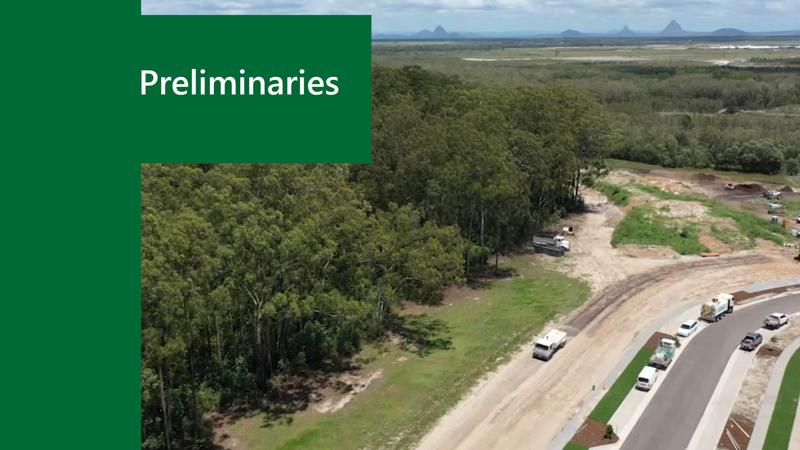
The Preliminaries section provides guidance on overarching topics such as environmental management, tree sensitive design and site set up.
It is designed to provide information about the processes that council value, such as ensuring that trees are protected on a development site in line with the Australian standards.
Each Preliminary category has a webpage. Content within each webpage contains tabs for ease of navigation and access to relevant information quickly. Some categories also contain:
- Technical Drawings (DWGS)
- Specifications (SPECS).
Each category is broken down into the following documents (where applicable):
- Information Sheet (INFO)
- Technical Drawings (DWGS)
- Specifications (SPECS).
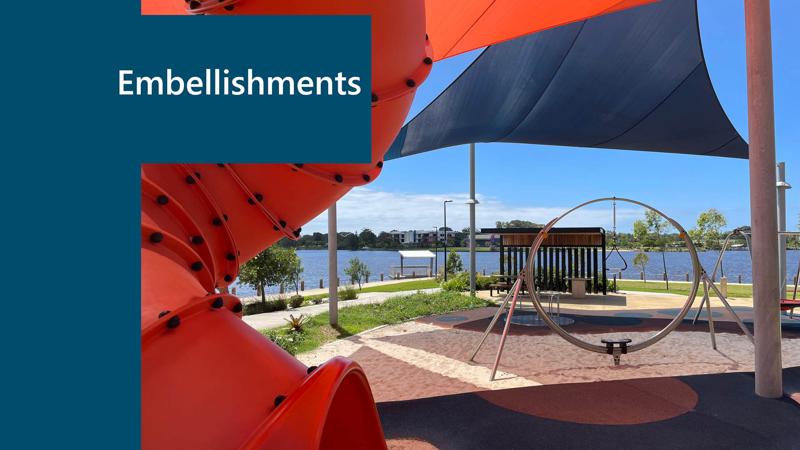
The Embellishments category provides guidance on products which are sustainable, comply with legal requirements, Australian Standards, and meet council needs for longevity and to minimise maintenance. New products have also been profiled to allow designers scope for innovation.
Each Embellishment category has a webpage. Content within each webpage contains tabs for ease of navigation and access to relevant information quickly. Some categories also contain:
- Technical Drawings (DWGS)
- Specifications (SPECS).
Each embellishment category webpage contains the following information (where applicable):
Breakdown of each Embellishment category:
- Webpage – the category webpage contains guidance material for the design, development and delivery of assets (they will also assist with maintenance). It contains performance criteria as well as drawings that depict installation and positioning guidance material, to allow designers to quickly locate preferred dimensions. References are also provided to relevant legislation, Australian standards and council documents.
- Technical drawings (DWGS)
- Technical drawing index – this section has an embellishment index which profiles the products which match council’s performance criteria. It provides the details of the product model, company, fixings and finishes and warranties.
- LIM drawings – The drawings attached are either best practice installation methods for generic items (e.g. garden edging), or they are profiles of products which match council’s performance criteria.
- Specifications (SPECS) – these have been provided to assist with design and project management and provide details of the requirements for construction.

The Palettes provide materials guidance to assist designers in the selection of appropriate site specific materials.
Topics in this section include:
Palette categories contain the following:
- Materials and fixings
- Planting palette - contains a downloadable excel spreadsheet.
- Colour palette.
- Information sheets (INFO) – palette information sheets contain guidance on appropriate materials, their applications and attributes, products, colours and plants selection for a variety of site specific requirements such as:
- Coastal
- Hinterland
- Under surface materials.
- Index (INDEX) – a comprehensive list of products, materials and plant species:
- A variety of materials palettes and finishes are profiled to achieve outcomes and a sustainable level of finish required by council.
- Planting palette details information to assist designers in the selection of appropriate plant species for various planting applications.
Interpreting the LIM
The guidance material in the LIM is not intended to take away the designer’s role of designing for a site-specific response. The designer should include choice of colour, material, layout and selection of unique character products in line with place-making principles and in consultation with the local community. The LIM provides a basic platform from which to build. It guides selection of robust and accessible products, as well as illustrates design standards that have been researched by council, thus saving time on selecting standard elements.
When using the LIM, it is important to note that all drawings are not ‘for construction’ and are intended for guidance only. All products referenced in the LIM are identified to satisfy the prescribed performance criteria for a particular embellishment. However, the LIM is not prescriptive, and any equivalent product that satisfies these criteria will also be accepted. All products, whether directly referenced by the LIM or not, much be purchased though the relevant procurement policies.
Council is constantly in the process of trialling new products and designs for best practice solutions, as such, the LIM is a dynamic and evolving document, updated annually. Any recommendations, updates or comments can be forwarded to Council for consideration in a future LIM update.
Please ensure you have the current version. Refer copyright and disclaimer (at the bottom of each page) for further information.
Mapping
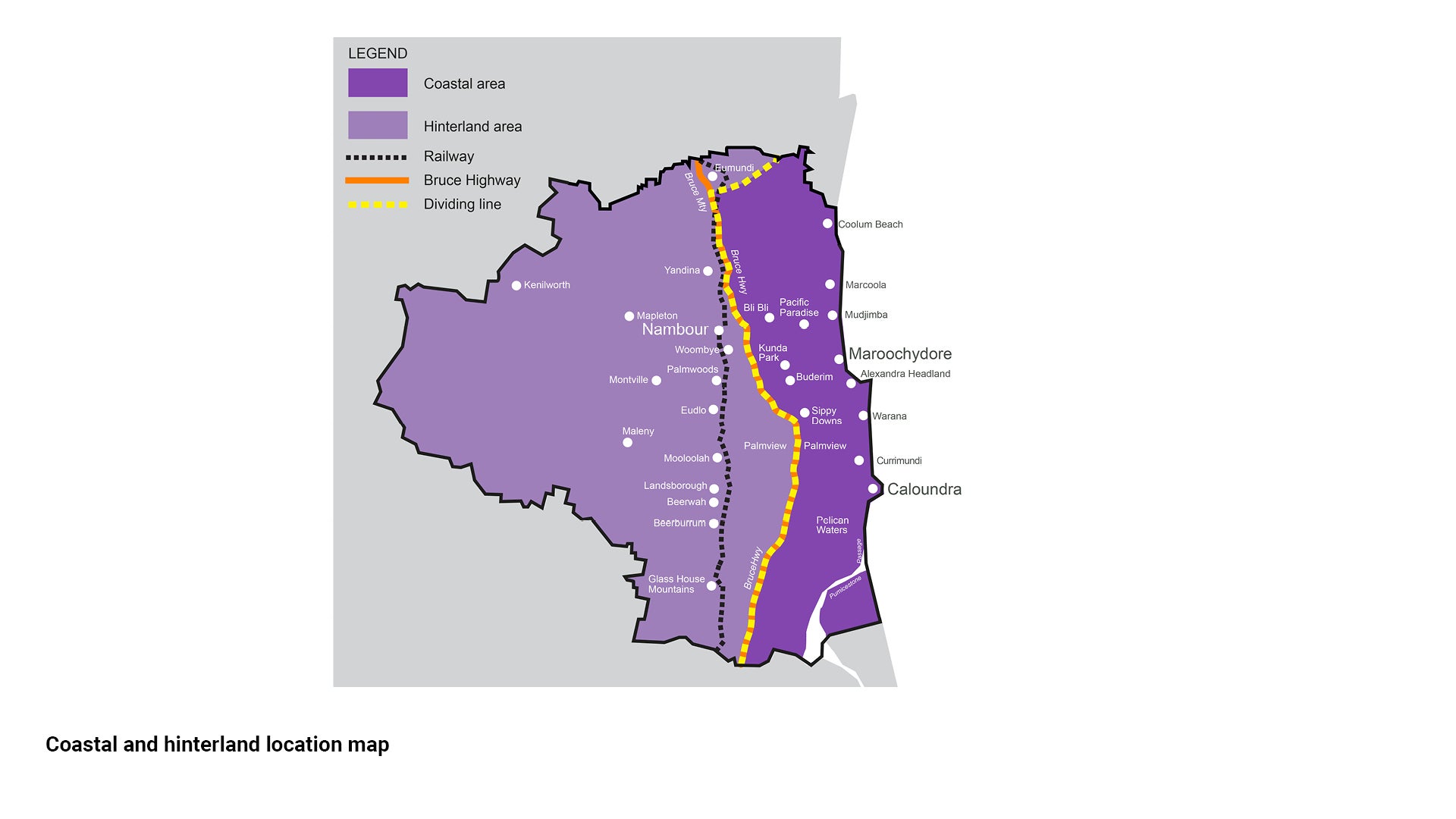
The LIM delineates two distinct design environments for the Sunshine Coast region:
- Coastal
- Hinterland.
The main dividing line between these two environments is the Bruce Highway as illustrated in Figure 3. Generally, the coastal environment is on the east of the Bruce Highway and the hinterland environment is on the west.
The two areas feature differing environmental conditions, landscapes characteristics and existing architectural contexts, and the LIM reflects this by incorporating different design considerations and requirements in each area.
Please note, it is particularly important to ensure that metal elements of embellishments in coastal environments use fixings/materials that are Marine grade 316 stainless steel (or equivalent) due to high exposure to salt laden winds (unless otherwise specified).
Figure 3: Coastal and hinterland location map
This component is currently in development