Site set up (including tree protection)
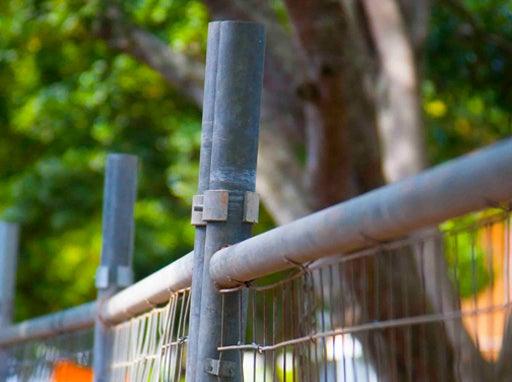
Tree protection zones
Guidance for establishing tree protection zones
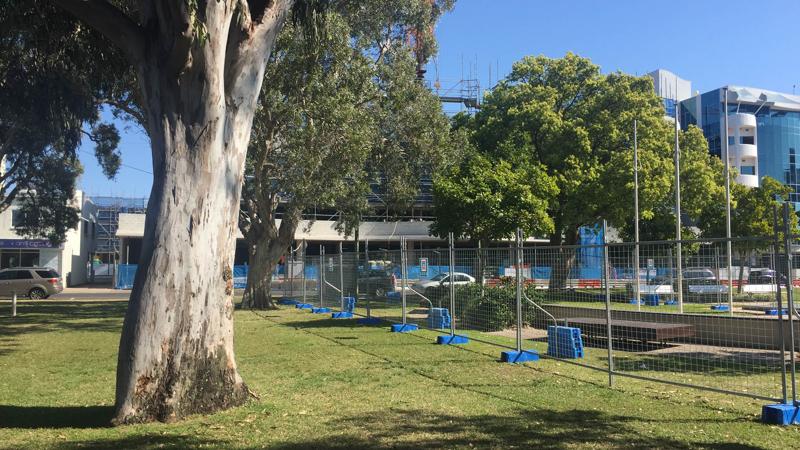
Establishing Tree Protection Zones (TPZs) effectively prevent damage to trees on construction sites.
Excluded activities
TPZs exclude all above and below ground construction activities, from a tree's critical root zone.
See Table 2: Activities to be excluded from a TPZ.
Table 2: Activities to be excluded from a TPZ
No. | Activities that must be excluded from a TPZ |
1 | All construction activities especially machine excavations and erection of slabs, footings or built structures |
2 | Storage or dumping of any rubbish or clean materials (fill) |
3 | Compaction of surfaces including indirect compaction that occurs as a result of parking or moving plant and vehicles throughout the site |
4 | Temporary or permanent installation of utilities and signs |
5 | Open trenching for underground services or sediment fencing |
6 | Soil level changes including battering |
7 | Refuelling, preparation of chemicals, mixing of cement, wash down of equipment |
8 | Physical damage to the tree including nailing or affixing any item to the trunk or branches of a tree |
See AS 4970 – Protection of trees on development sites for further guidance.
TPZs - how to establish
The optimum and preferred method of calculating the radius of a Tree protection zone follows the Australian Standard AS 4970: Protection of trees on development sites.
Where this is not possible, establishing a TPZ on the edge of the tree canopy (drip line) may be acceptable.
AS 4970 method
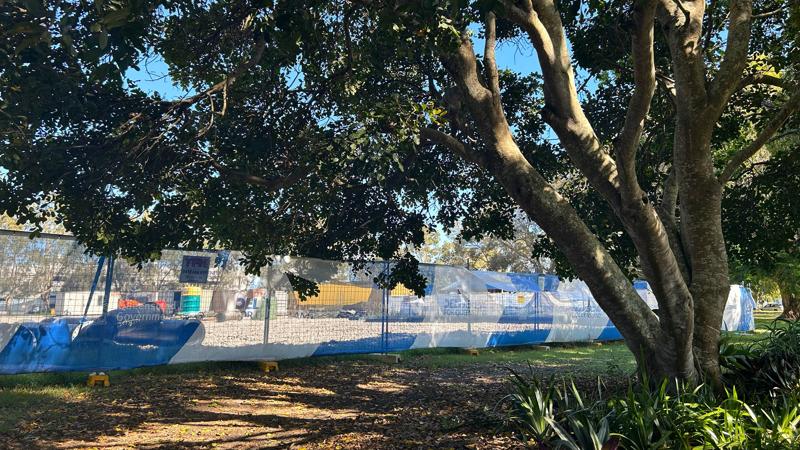
The Australian Standard, AS 4970: Protection of trees on development sites recommends establishing a TPZ according to trunk diameter - DSH (diameter at standard height) formerly known as DBH (diameter at breast height).
See Table 3: AS 4970 TPZ calculation for further guidance.
Table 3: AS 4970 TPZ calculation
To determine | Calculation |
Calculation TPZ (tree protection zone – radius) | = DSH x 12 |
DSH (diameter at standard height) | = trunk diameter measured at 1.4 m from ground level |
Dripline method
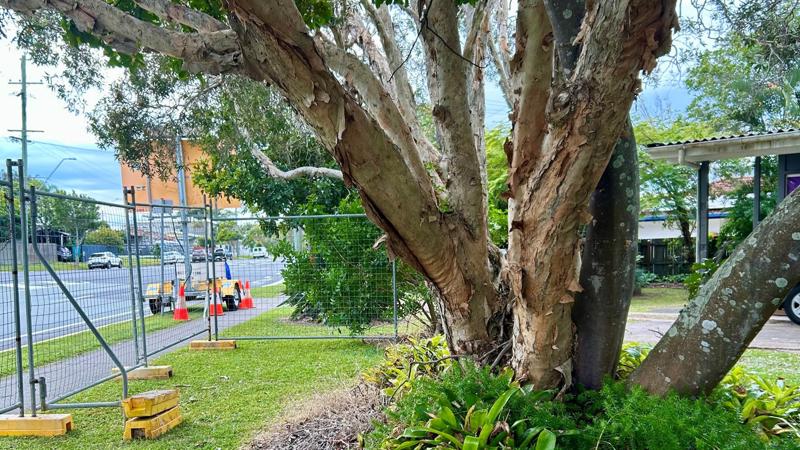
The dripline method of TPZ establishment, looks to protect all above and below ground parts of a tree within its canopy area only.
The dripline method does not protect the entire root system of a tree and therefore the condition and species of a tree must be considered before using.
The dripline method is not suitable for conical or especially narrow-crowned trees. The dripline method is also unsuitable for use with old, vulnerable trees and injury sensitive species including eucalypts (Eucalyptus sp), banksias (Banksia sp) and Norfolk Island pines (Araucaria heterophylla).
The project arborist must approve the method of determining the extent of a TPZ. Any variations to the agreed TPZ, must also be approved by the project arborist.
Formal exclusion of a TPZ
The TPZ should be formally excluded from all site activities prior to commencement of works (including demolition), by erection of a barrier on the outer edge of the TPZ.
Tree protection barriers should:
- Prohibit all access into the area within.
- Display a sign stating that there is to be no access into the area.
- Be of a type/material that is reflective of the value and relative tolerances of the subject tree(s), and their potential for damage (to be determined by the project arborist). Barrier types include:
- temporary fencing
- barrier mesh
- bunting attached to capped star pickets
- water barriers
- rocks
- sandbags.
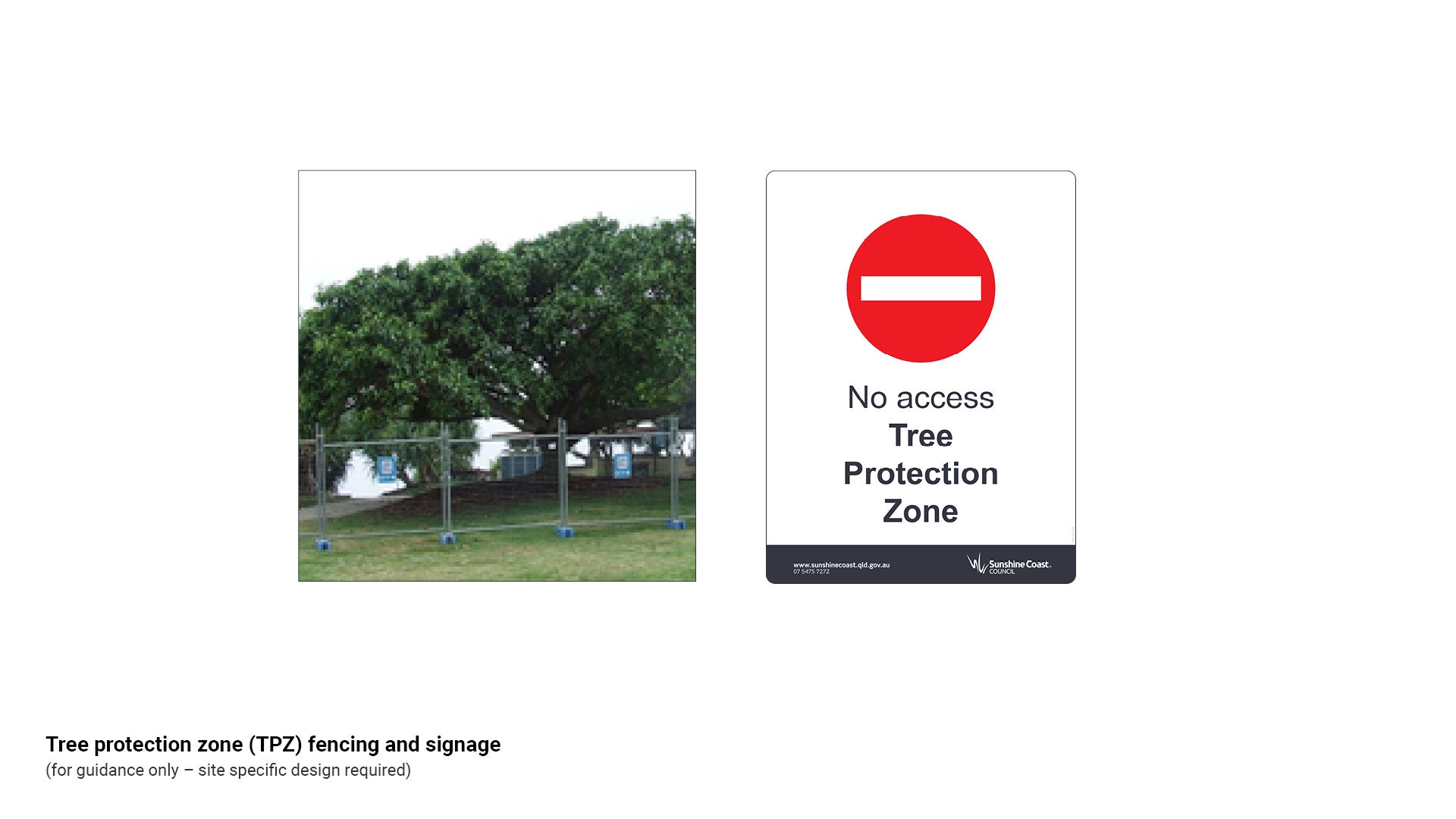
Tree protection zone (TPZ) fencing examples
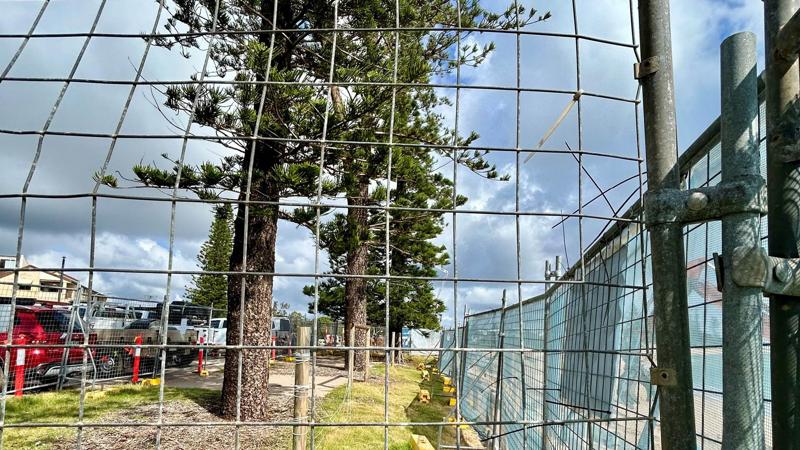
Temporary fencing/wire panels
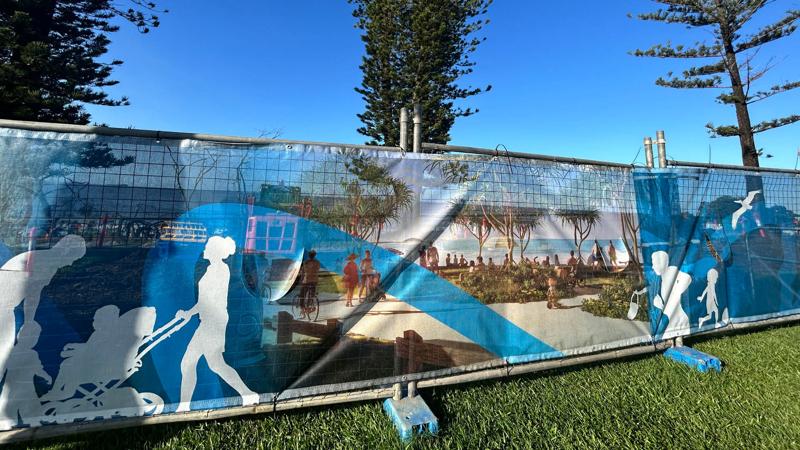
Temporary fencing with shade cloth
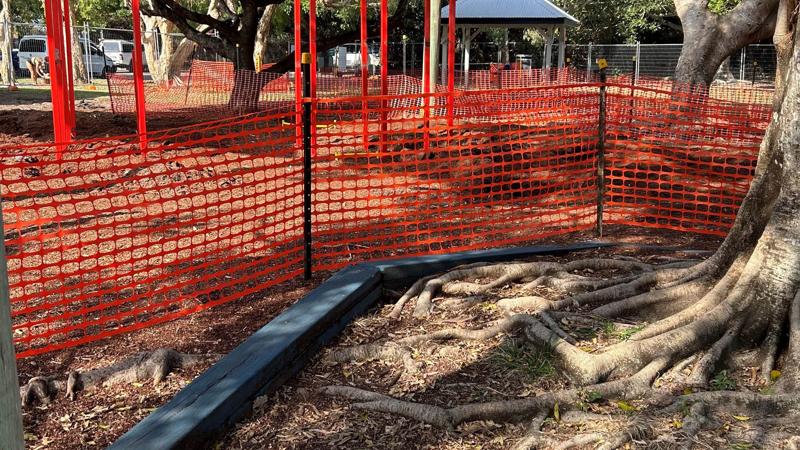
Barrier mesh
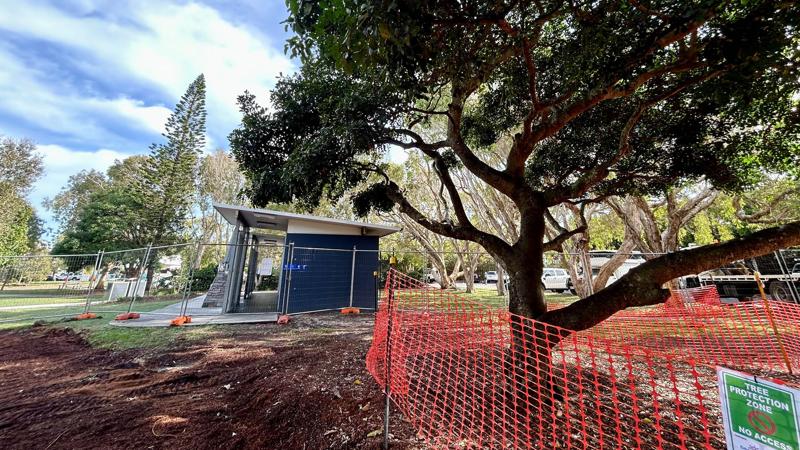
Tree protection zone signage
Figure 5: Tree protection zone (TPZ) fencing and signage
Ground and trunk protection
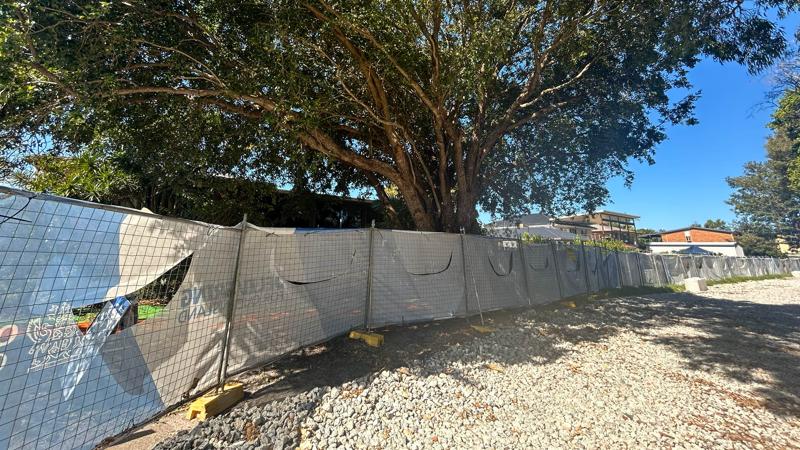
In situations where the entire TPZ cannot be cordoned off, ground protection may be required to facilitate movement of heavy equipment through the site.
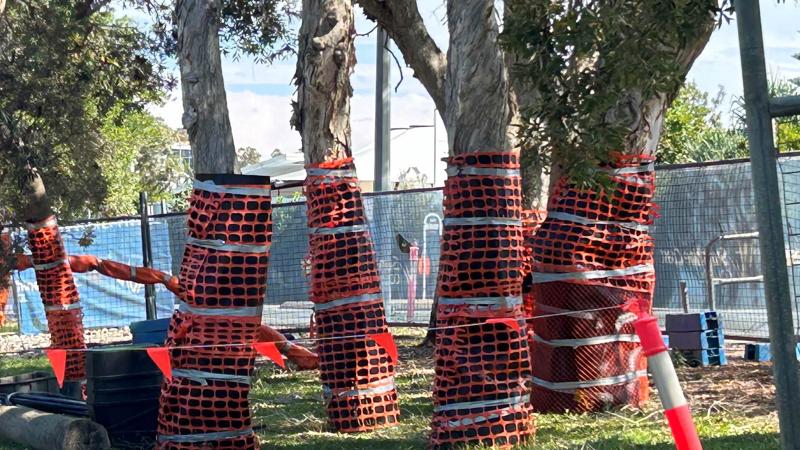
Trunk wrapping and the tying back of branches may also be required in such situations.
See LIM Site set up (including tree protection) - Specifications for further guidance.
TPZ maintenance
All tree protection barriers must remain in place for the duration of site works.
- Ideally, a layer of mulch approximately 100 mm deep should be spread over the tree protection zone (or as much of it as possible) prior to commencement to assist with soil moisture preservation.
- In dry periods, watering of the area is also recommended.
Should access to a TPZ be required for any reason, the project arborist must be contacted prior to entry to the area in order to approve and/or supervise works within.
TPZ responsibility
It is the responsibility of the project officer/superintendent/site foreman, to ensure that no trees are damaged during construction.
Costs associated with the protection of existing trees should be factored into the project budget.
If all parties involved are aware of the types of activities that can be harmful to trees and why a 'no go' zone is necessary, it is less likely that damage will occur.
Methods for tree sensitive work
The way construction works are carried out can significantly enhance tree protection outcomes. Ancillary or incidental works often cause the greatest amount of damage (for example excavator buckets wounding tree roots when moving poorly placed material stockpiles). Accidental damage can be significant and sometimes irreparable.
Site storage and yard set up
- Site yard/storage areas should consider trees in the immediate area, as well as those near access points.
- Demountables should not be set up over tree root zones as they may impede water and air flow. Where temporary buildings must be located over TPZs, these should be for short periods only, and mounted on blocks to ensure continued air flow through the soil.
- Stockpiles and storage should be kept away from trees due to the risk of damage to roots when they are moved (excavator grabs and buckets can easily damage tree roots when moving materials or spoil).
- Washdown and refuelling zones should be located with consideration to run off and spills that have the potential to pollute soils in tree root zones
Equipment access and movement
- The passage and movement of vehicles or machinery through the construction sites should be minimised at all times with only equipment necessary for carrying out construction works allowed to enter (passenger vehicles for example must not enter open space areas at any time).
- The same path of travel should always be used for heavy equipment.
- The smallest possible machinery capable of undertaking the job should be selected to minimise ground disturbance and the potential for damage to above ground tree parts.
- Machines with a long reach should be used where existing trees conflict with work zones to keep set up points as far from trees as possible.
- Any works where movement of equipment beneath the canopy of the tree cannot be avoided should be supervised by the project arborist at all times.
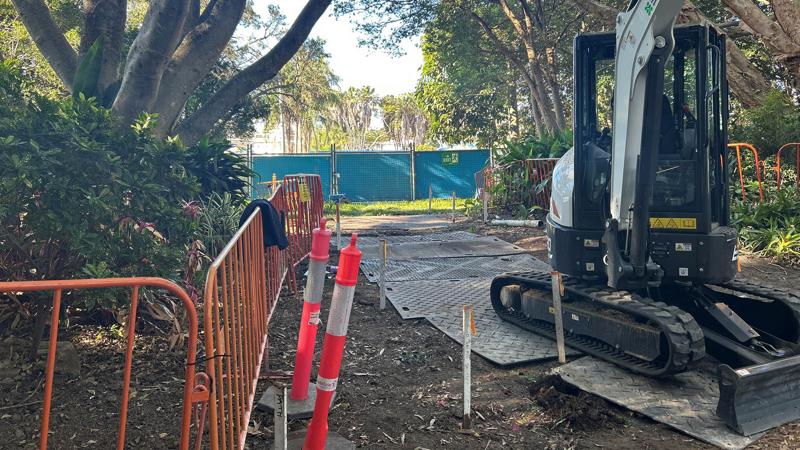
- equipment movement using ground mats for tree protection
Ground protection
- Ground protection is to be established prior to equipment movement through TPZs.
- Ground protection materials include geofabric overlaid with mulch drainage aggregate or rumble boards and must be approved by the project arborist.
See LIM Site set up (including tree protection) - Technical drawings for further guidance on ground protection
Demolition
- Below ground infrastructure should be left in place where possible (posts, footings, tap plumbing etc.) to save further ground disturbance as an outcome of extraction.
- Hand demolition should be utilised where possible (using crow bars, sledge hammers, etc.) and wheelbarrowing materials out of the TPZ.
- Where equipment is necessary (for example slab removal) the smallest sized equipment capable of undertaking the necessary works should be selected to minimise damage to root zones and above ground tree parts.
- Existing hard surfaces should be left in place for as long as possible and used to support and spread equipment loads (once hard surfaces are removed the risk of compaction is far greater).
- Equipment should work from outside the drip line of trees at all times to avoid direct conflict between equipment and branches, as well as minimising soil compaction and damage to the tree root zone.
Earthworks
- All approved works within a TPZ must be supervised by the project arborist.
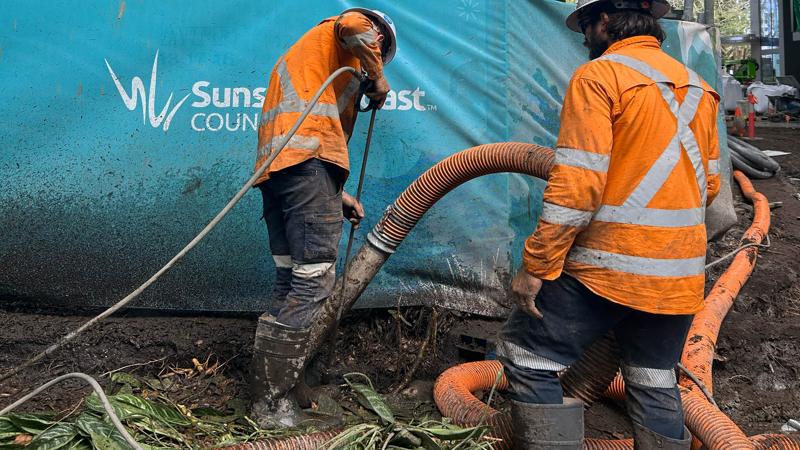
- It is often useful to hand trench or vacuum excavate, on the edge of the work area and cleanly cut any unearthed roots before using machinery to complete excavations (under project arborist supervision).
- Where hand work has been specified, initial excavation works are to be undertaken with hand tools only, to avoid tearing or fracturing of roots beyond the works area.
- Where hand compaction is specified, tamp with hand tools only.
- Exposed roots must be temporarily covered with jute matting or hessian to prevent them from drying out. Matting is to be pegged in place and kept moist.
- Preserve soil horizons when backfilling trenches i.e. return soil to trenches in its natural order (friable soils at the top and heavier soils deeper).
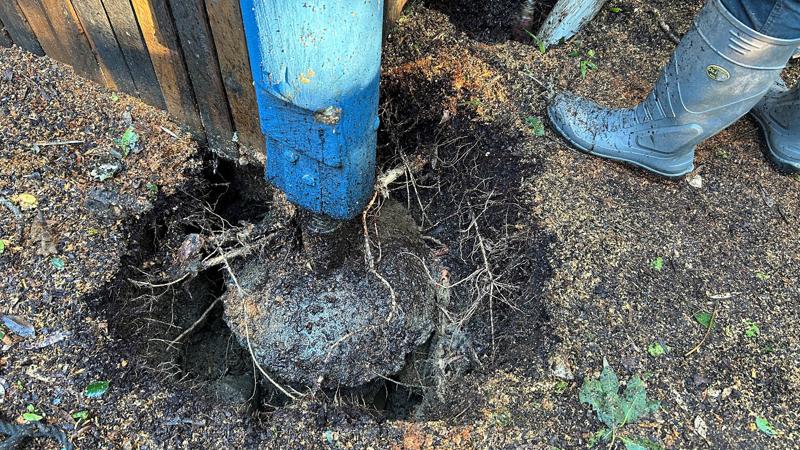
- Any conduits, service or irrigation lines to be installed within driplines of trees should be under-bored or installed via vacuum excavated trenches with roots kept intact and lines threaded beneath (under project arborist supervision). If this is not possible, conduits should be rerouted around trees.
- Vacuum excavation should ideally be performed via pneumatic (air-based tools). Where a hydro (water-based) method is used, water pressure must be low at all times to avoid damaging the bark of roots, preferably in the range of 10-15 kPa.
- Trenchless installation methods are highly recommended for mature specimens of tree root sensitive species. These include eucalypts, banksias and Norfolk Island pine trees.
Run off management
- Care should be taken during acid wash down of exposed aggregate pathways or wash down of standard concrete pathways and potential leaching of lime into surrounding soils. Where threats to existing trees have been identified, the area should be covered prior to cleaning and runoff caught with sawdust, an absorbent berm or similar.
Landscaping
- Planting beneath existing trees should be carried out with hand tools only to prevent damage to existing root systems.
- Where fibrous roots present significant conflicts, under-planting works should not be carried out without further direction from the contract administrator or project arborist.
- Turf renovation beneath existing trees should ensure no sub-grade cultivation, and hand removal of the existing turf layer to preserve as much of the top layer of the soil horizon as possible.
- Where required, relief of sub-soil compaction should be made with a spike aerator or similar manually operated device, as opposed to deep cultivation of soils.
- Where topsoil is added, finished levels should be no greater than 100 mm above the existing soil level.
- Mulch depth should not exceed 100 mm.
This component is currently in development