Tree sensitive design (existing and new trees)
New trees
Tree sensitive design for new trees aims to provide adequate space for new trees to grow to their full potential. It also looks to safeguard infrastructure from potential conflict.
Design treatments to protect infrastructure from future damage
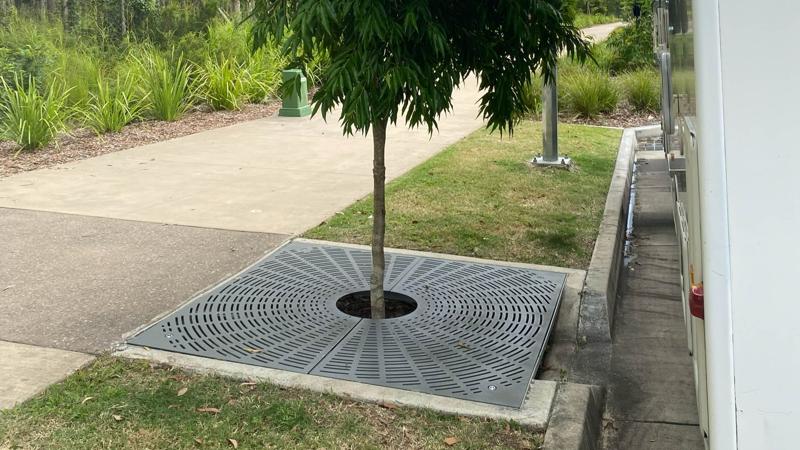
Tree roots travel the path of least resistance, preferring well aerated soils and good moisture levels. Ensuring conditions conducive to trees are available where roots are wanted, and not available where roots are not wanted, is a simple way of minimising the risk of future infrastructure damage.
Tree roots proliferate in soil conditions that are conducive to good growth, with:
- appropriate nutrient concentrations
- high oxygen levels (good aeration)
- warm temperatures
- high organic matter
- suitable moisture
- low penetrative resistance (low compaction).
Conversely, tree root growth is limited in the following soil conditions:
- very low or very high nutrient levels
- low oxygen levels (poor aeration)
- cooler temperatures
- low organic matter
- low or very high moisture
- high penetrative resistance (highly compacted soils).
To encourage root growth to a certain area, de-compaction of soils, irrigation, subsoil drainage, and; the appropriate use of mulch, fertilisers, soil tonics or compost can be beneficial.
In contrast, elimination of irrigation, mulch, compost and organic matter, compacting soils and applying deeper drainage layers to hard surfaces, are effective strategies to minimise root growth in areas where tree roots are not wanted.
Tree root damage to infrastructure can often be traced back to the quality of workmanship. Trees are opportunists and will take advantage of cracks, gaps and air pockets. Ensuring a quality finish in all construction treatments will significantly reduce the risk of future tree damage.
Treatments to protect infrastructure from tree roots
Simple methods to lead tree roots away from infrastructure may include:
- The use of irrigation where tree roots are desired and soil compaction (soil de-oxygenation) where they are not wanted.
- The installation of tree root trenches within verge spaces (lateral trenching) to provide a pathway for roots within existing green space. Filling these trenches with loose soil high in organic matter will encourage tree root growth within them. Usually these run parallel to keep roots away from the footpath or kerb and channel.
- Installing root cells within or adjacent to the planting site for tree roots to grow into.
- The creation of tree root paths to lead roots to areas of greater soil volume (i.e. under footpaths to garden beds). These can be constructed within the sub base 100 mm wide by 300 mm deep containing aeration/drainage strips.
- Incorporating tree root deflectors (where appropriate).
A range of the treatment options described in the existing trees section are also useful for preventing tree root damage to infrastructure as an outcome of new tree planting. These may include:
- Ensuring adequate setbacks between new trees and existing infrastructure
- The use of permeable surface treatments or deeper aggregate bedding layers below non-permeable treatments. Such treatments ensure moisture exists deeper in the profile encouraging tree roots to also stay deeper in the soil profile (as opposed to seeking out the condensation layer just below traditionally laid concrete slabs)
- The use of thicker concrete pathways with extra reinforcing and inclusion of dowel or control joints to either counter-act root heave or flex in join locations.
Tree sensitive design treatments for new trees include:
- using irrigation and compaction (to direct root growth)
- tree root trenches
- tree root barriers
- tree root deflectors
- lowered, aerated planting pits
- artificial environments (for tree roots)
- tree root paths.
Treatments to protect infrastructure from tree root damage
xxxx
Using irrigation and soil compaction (to direct root growth)
Tree roots travel the path of least resistance. One of the easiest techniques to keep tree roots from growing where they're not wanted is to heavily compact
soils. Similarly, by providing ideal levels of essential resources (e.g. water, friable and well oxygenated soils, and nutrients), away from infrastructure, tree roots can be encouraged to grow in the opposing direction, preferring to occupy areas with greater moisture, aeration and higher nutrient levels
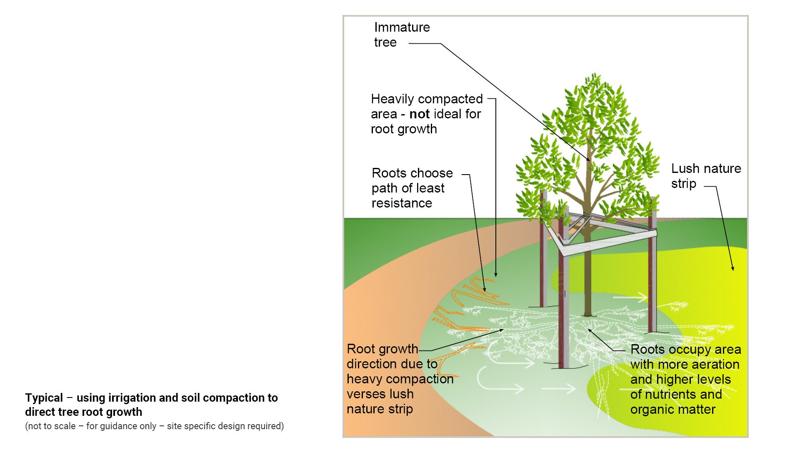
- Providing irrigation and nutrients away from infrastructure to encourage root growth
- Using compaction near infrastructure to deter root growth.
Tree root trenches
To prevent tree roots from growing towards and eventually underneath infrastructure, a trench is excavated in parallel alignment with the infrastructure, and backfilled with loose soil. Tree roots grow along the decompacted and oxygenated trench, in preference to uncultivated areas of soil with higher penetrative resistance.
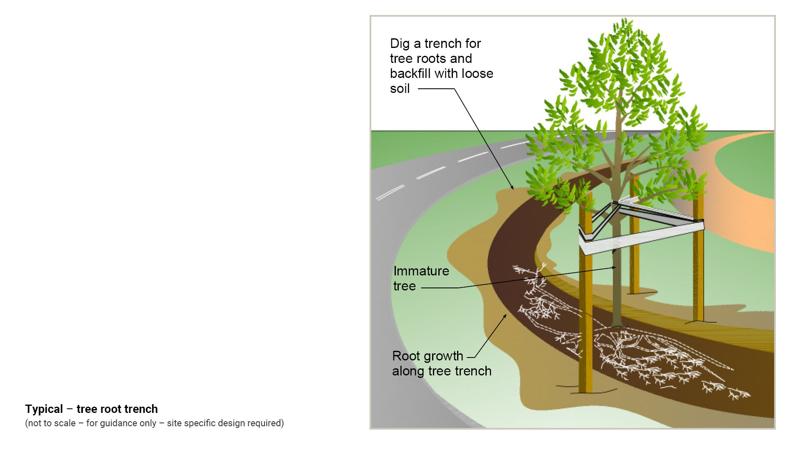
- Cultivating a tree root trench with soils higher in oxygen, nutrients and moisture concentration.
Lowered, aerated planting pits
Tree roots require oxygen to survive. With limited oxygen available in deeper soil layers (especially in heavy soils) tree roots tend to stay shallow, where they are more likely to conflict with infrastructure. In lowered aerated planting pits, oxygen is made available deeper in the soil profile, encouraging roots to grow and stay deeper in the soil profile, away from surface infrastructure.
Perforated flexible piping may be placed around the rootball at the time of planting. This can be used for irrigation where required, and at other times allows a passive flow of air around the root system.
Using a deeper drainage layer beneath the hard surface, may also assist in keeping lateral root growth at a greater depth.
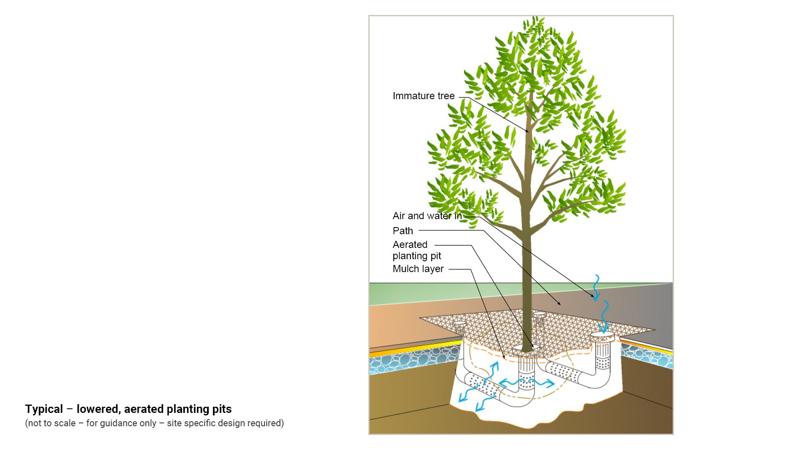
- Lowered, aerated planting pits with adjacent hard surfaces containing deeper drainage layers to direct moisture to deeper areas of the soil profile.
Tree root deflectors
Tree root deflectors are an alternative to tree root barriers, encouraging tree roots to grow down and outwards, away from surface infrastructure.
Tree root deflectors are more effective in well drained soils where tree roots are more likely to stay deeper in the soil profile as they grow laterally. In heavier soils, the incorporation of aeration systems and deeper drainage layers below the surface treatment may also assist in discouraging roots from returning to the surface.
Note: Council does not consider tree root barriers to be permanent solutions. Most research suggests that tree roots either grow under or over barriers over time. In many situations kerb effectively acts as a tree root barrier or director of tree root growth.
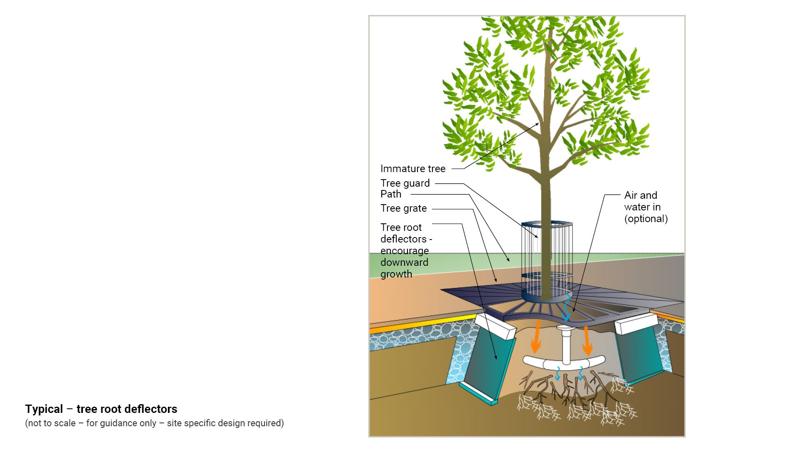
- Root deflectors deflect root growth downwards and outwards, away from the undersurfaces of infrastructure.
Treatments to extend space for tree growth
Trees in planting pits often fail due to roots being unable to grow beyond the designated planting space (which is usually extremely limited). This often happens as a result of road base or heavily compacted sub grades beneath the adjacent infrastructure restricting root elongation into the area. Conversely, when tree roots are able to access the soil beneath a hard surface, the roots will often collect immediately beneath. The roots are attracted to this zone due to a condensation layer forming and can easily lift or damage the hard surface as they enlarge over time.
Tree root spread in an unrestricted environment is often 2-3 times the radius of the tree canopy. Providing additional space for tree root growth assists trees in urban landscapes to reach their full potential.
Artificial environments (for tree roots)
Soil and surface treatments may be used to increase available space for tree root growth. Such treatments engineer the space beneath hard surfaces or modify the hard surfaces themselves so tree root growth can be supported beneath, without substantial risk of damage.
Soil cell systems
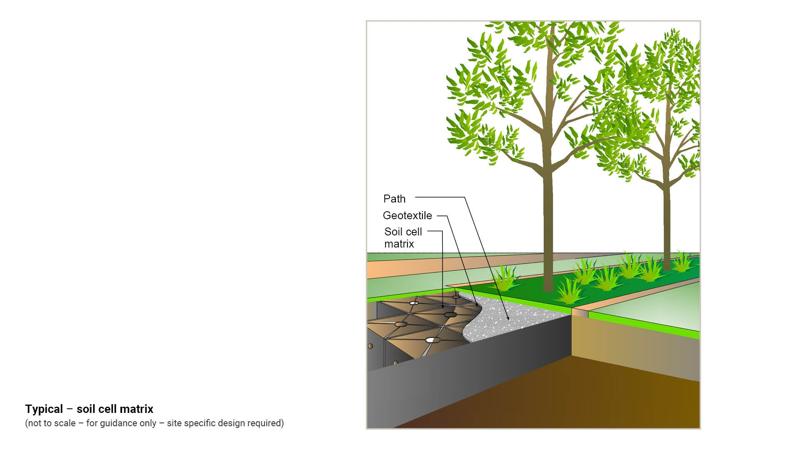
Installing artificial root environments in the form of structural soil vaults or soil cells beneath roads or footpaths is one way of increasing space for tree roots to grow into. The grid-like systems are designed to support vertical and lateral loads while soil media within the matrix supports tree root growth.
Structural soils
Structural soils blend artificial, compactable growing media (a stone matrix) with soil. Designed to support pavement without settling, structural soils also offer space beneath hard surfaces for tree root growth. The success of these treatments depends on the volume of uncompacted voids available for these structural soils to support tree growth requirements.
Shared root environments
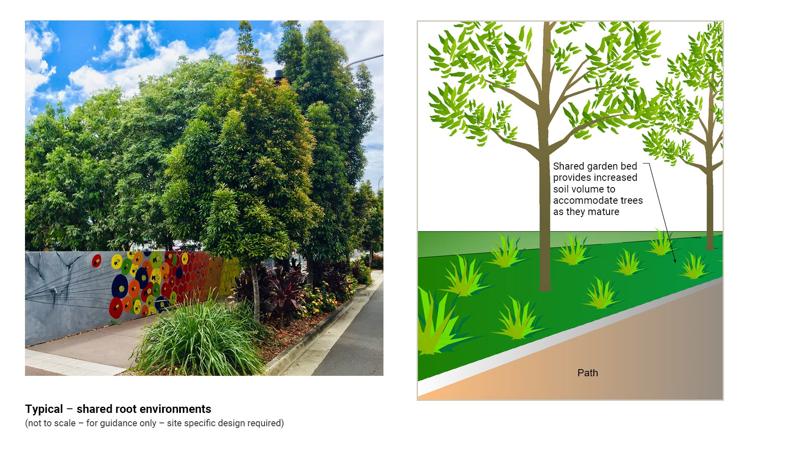
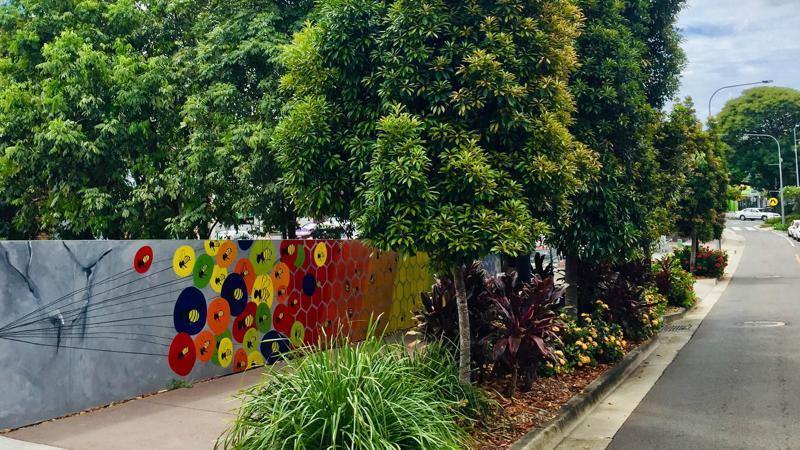
Planting new trees into one large garden bed as opposed to singular planting sites which are often highly restrictive is a simple way of increasing the available root space for a tree. Large garden beds provide greater soil volume and increased capacity for supporting trees than individual planting sites.
Permeable surfaces
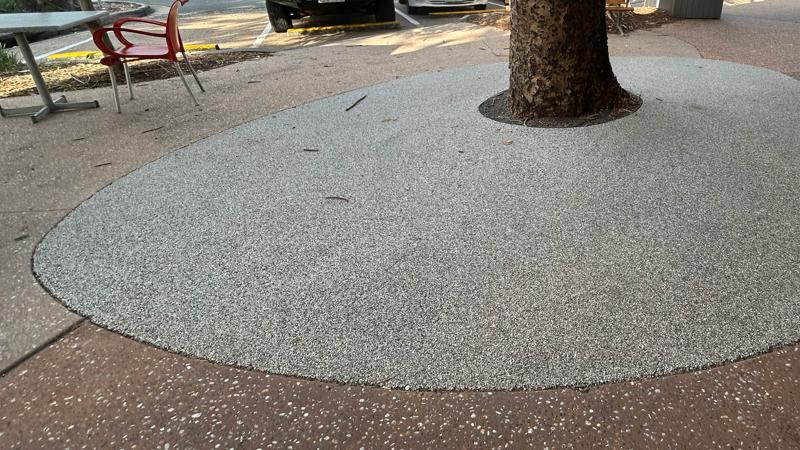
As with existing trees, permeable surfaces which allow water to filter through the surface to the soil beneath effectively extend functional root zones in environments shared with pedestrians and vehicles. Trees that can access more water are more likely to grow to capacity as well as remain healthy and vigorous throughout their lives.
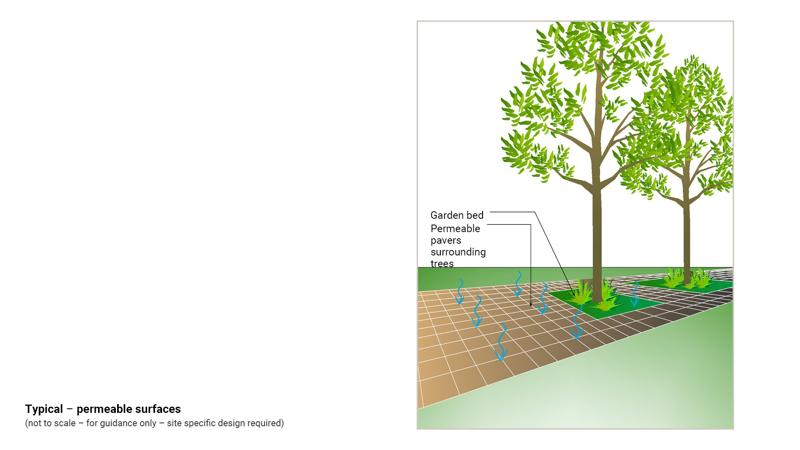
Permeable surface treatments suitable for use with new tree plantings include:
- Open graded (porous) asphalt
- Porous or permeable concrete (no fines concrete)
- Porous stone or porous concrete pavers (the paver itself is permeable)
- Block pavers with porous joints (the voids between pavers are permeable) for example concrete grid
- Interlocking pavers (units with open permeable spaces between them)
- Resin-bound aggregate porous paving
- Stabilised decomposed granite
- Bound recycled glass porous pavement.
For details on these permeable treatment types, see LIM Tree sensitive design – Existing trees.
Resin bound aggregate (permeable)
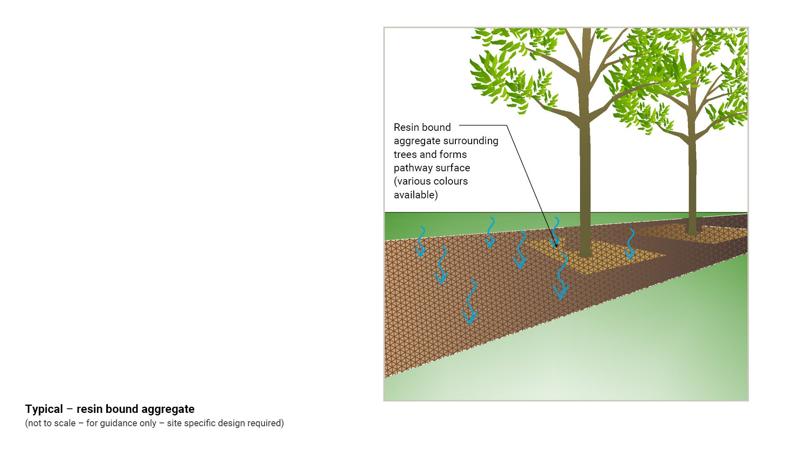
This permeable surface treatment, consisting of aggregate bonded with resin, is not suitable for use around existing trees on account of the excavated sub-base necessary for stabilization of the surface treatment. It is however effective when installed in conjunction with new tree plantings.
Treatments to extend space for tree roots
xxxx
Tree root paths
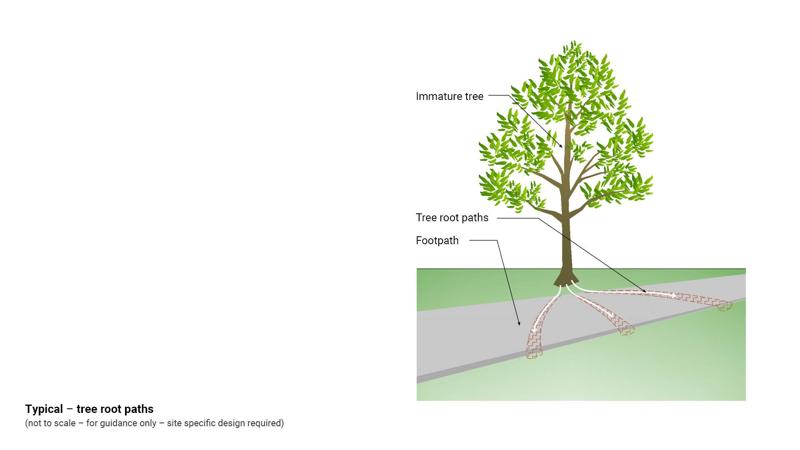
Creating channels for tree roots (usually under a footpath), is another treatment that can provide more space for tree root growth. Root channels provide an aerated path of travel, directing tree roots to areas of greater soil volume, garden beds for example, while safeguarding infrastructure from future damage. Root paths are typically constructed within a footpath sub-base and provide an uncompacted and oxygenated substrate for roots to elongate through. Compacting soils outside of root paths (if used in other applications) encourages roots to use the specifically designed spaces which lead tree roots to areas of greater soil volume.
Treatments to irrigate
xxx
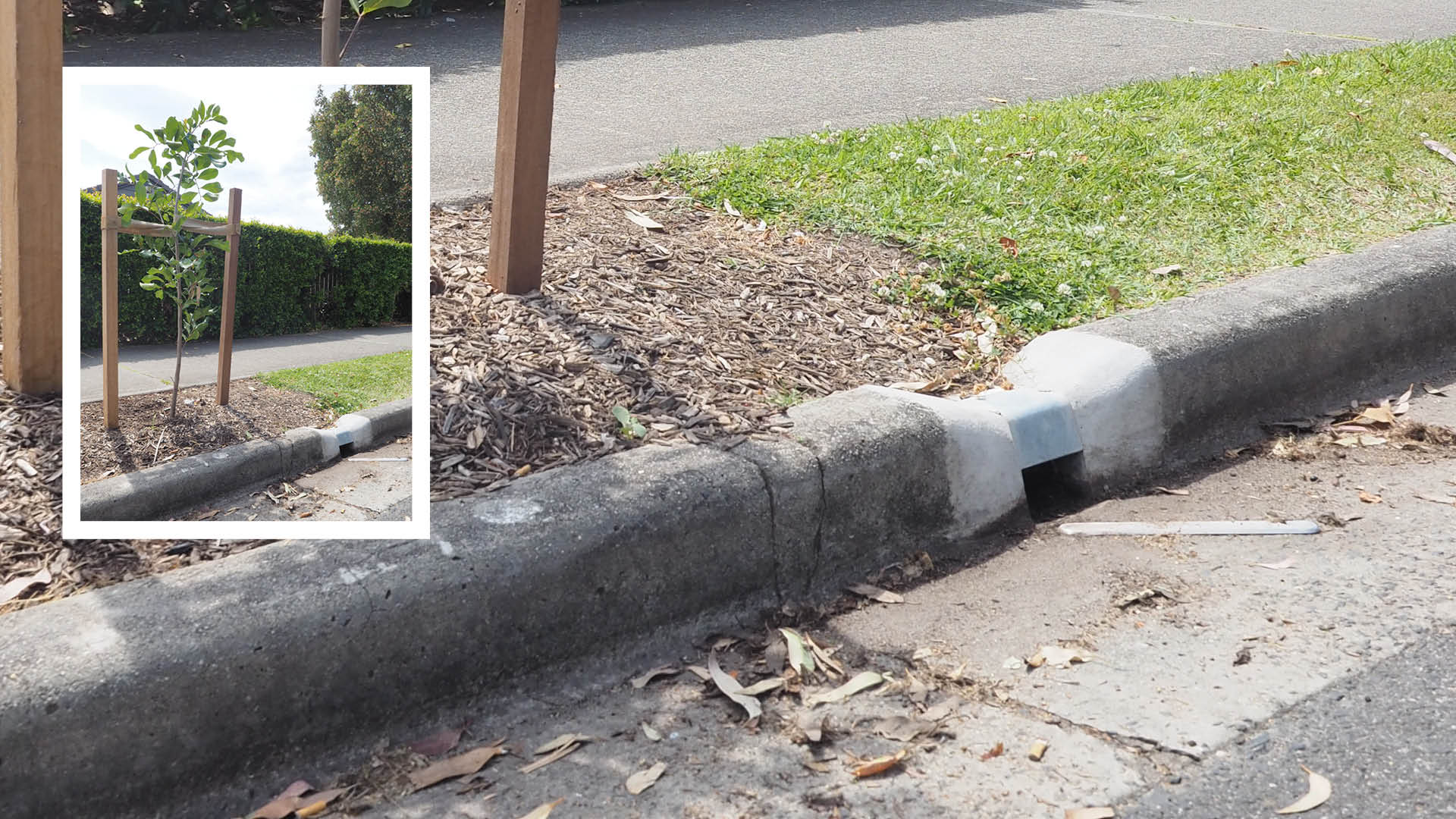
Passive irrigation - storm watered street trees
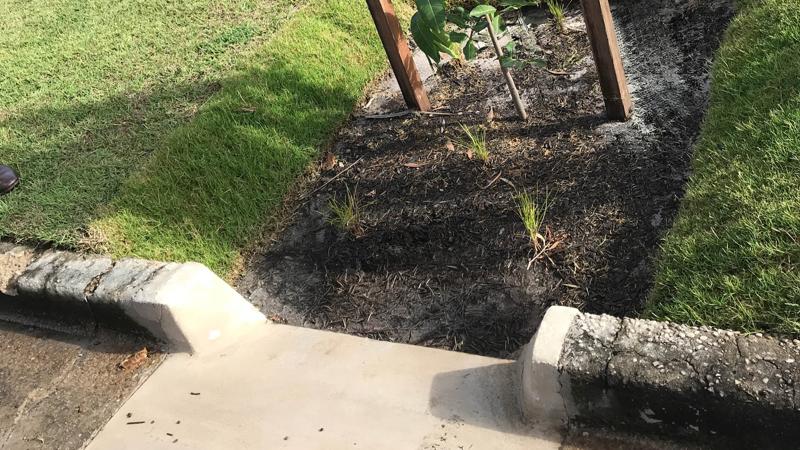
Council is currently trialling various arrangements to redirect stormwater runoff from our road pavements to our street trees for passive irrigation purposes.
Further learnings from these trials are shared in LIM Water sensitive urban design (WSUD).
Also see Figure 21 and Table xxxx.
Figure 21: Example methods of laying pipe for storm watered street trees
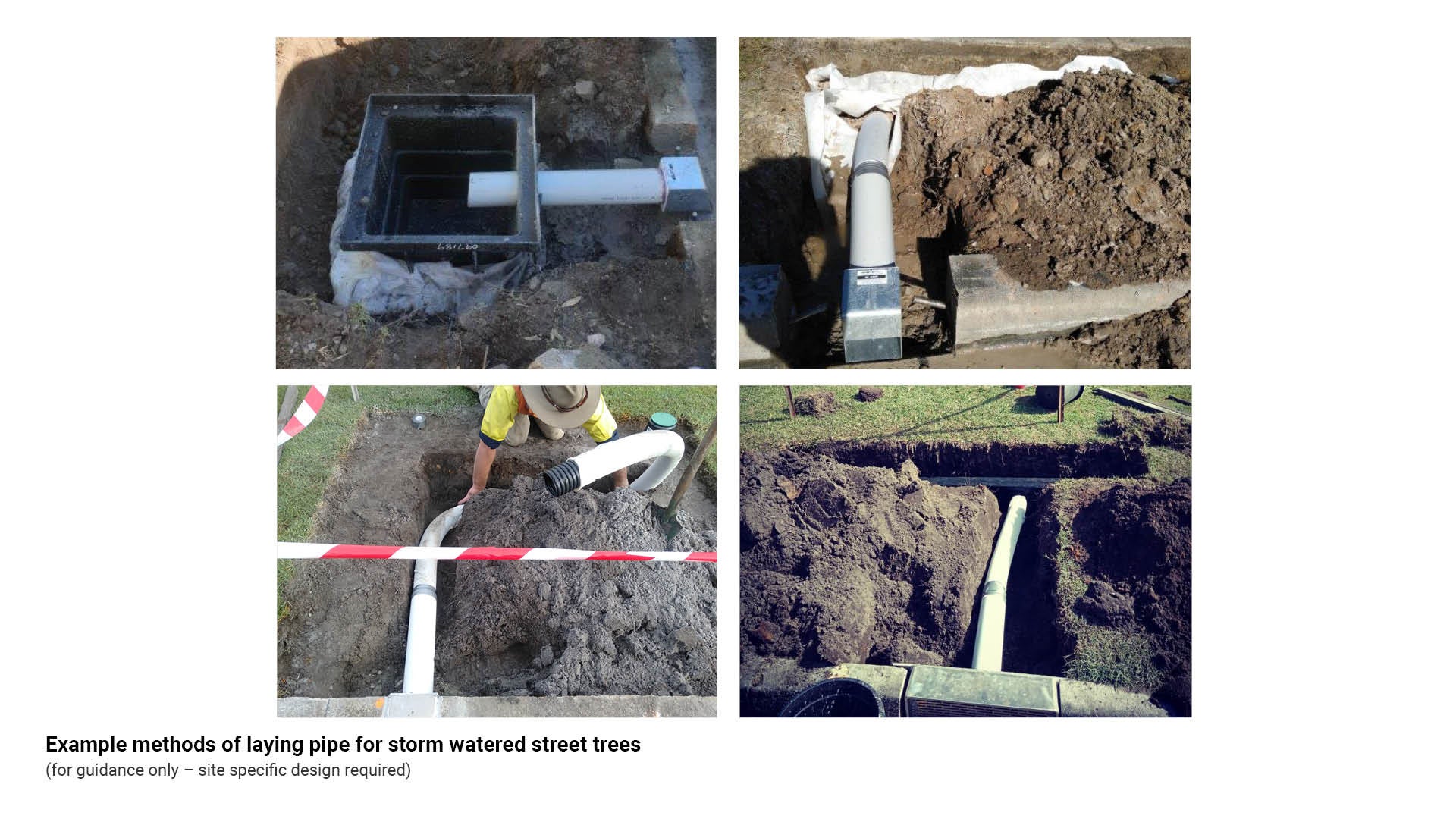
Table xxxxx: Trial examples of storm watered street tree treatments
Example of typical application | Treatment name |
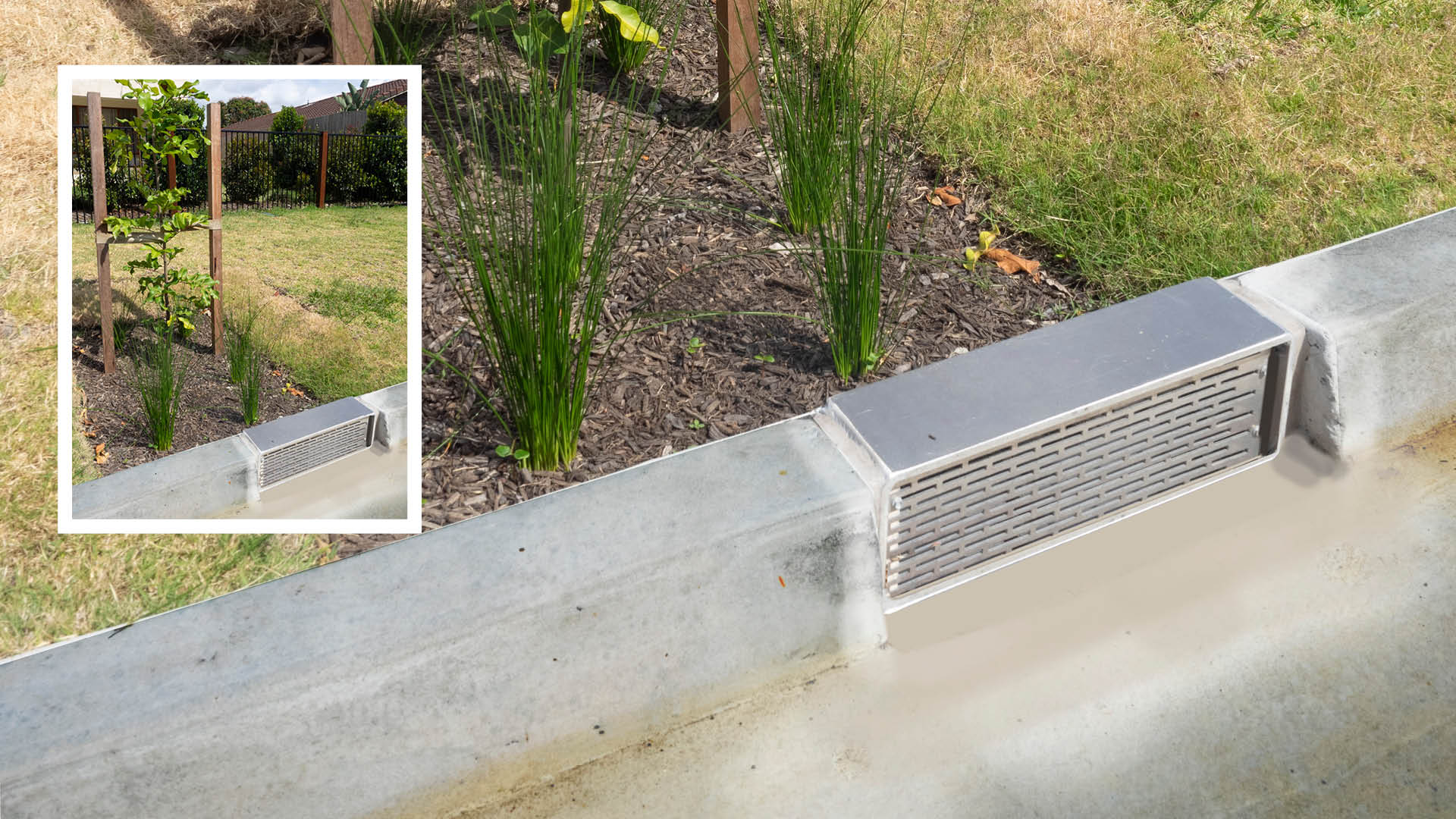 |
Rectangular inlet grate |
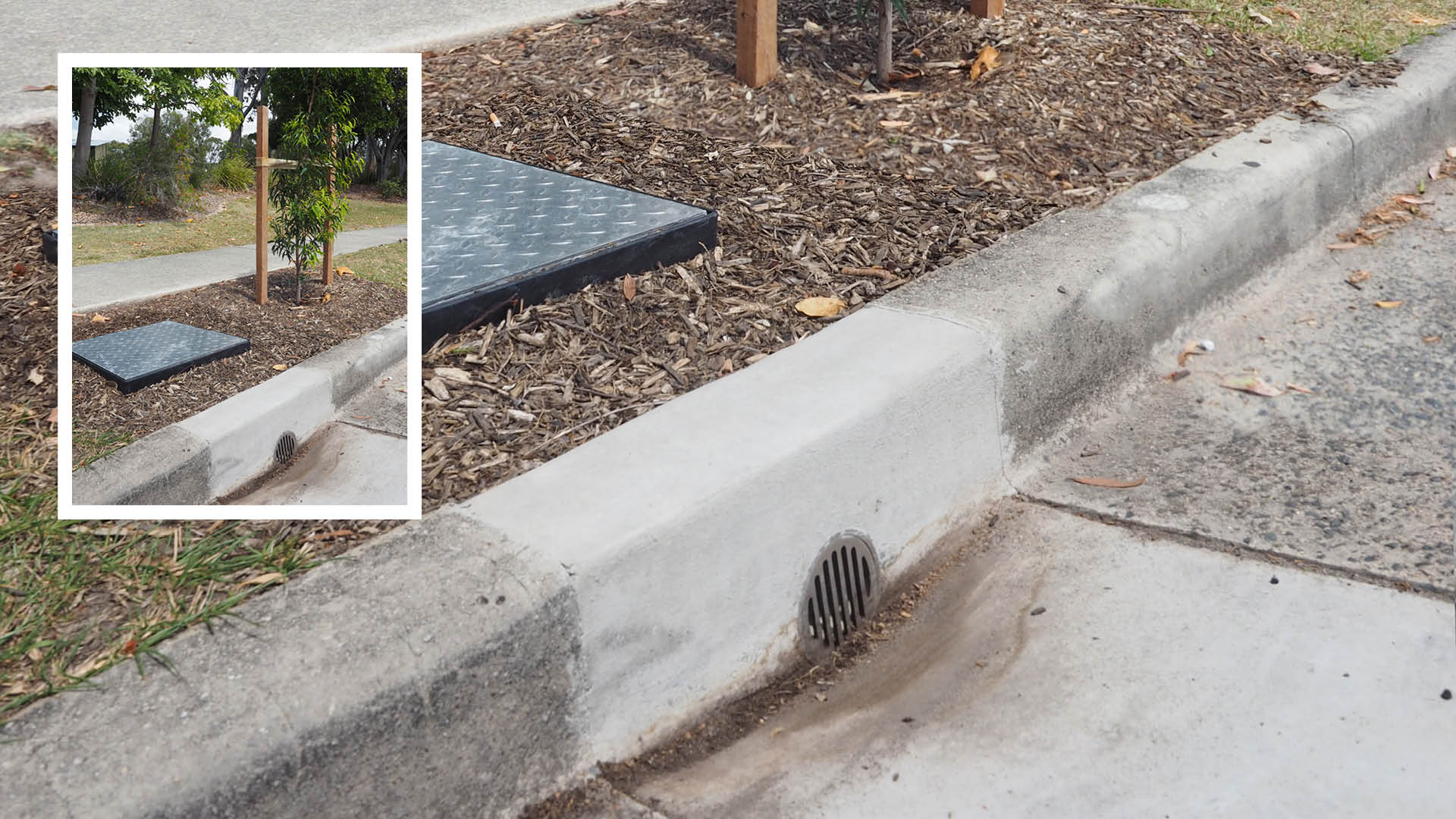 |
Round inlet grate |
 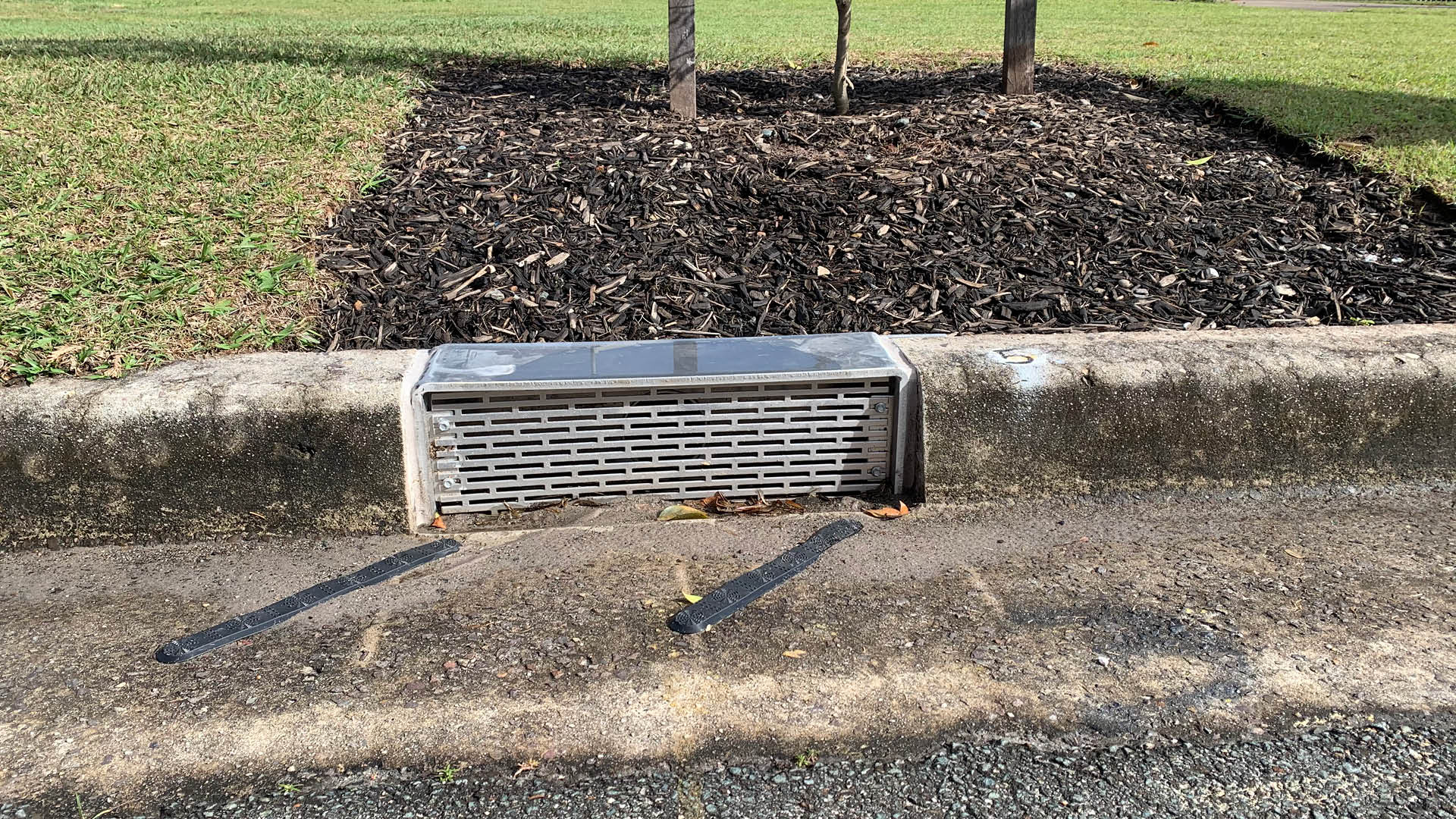 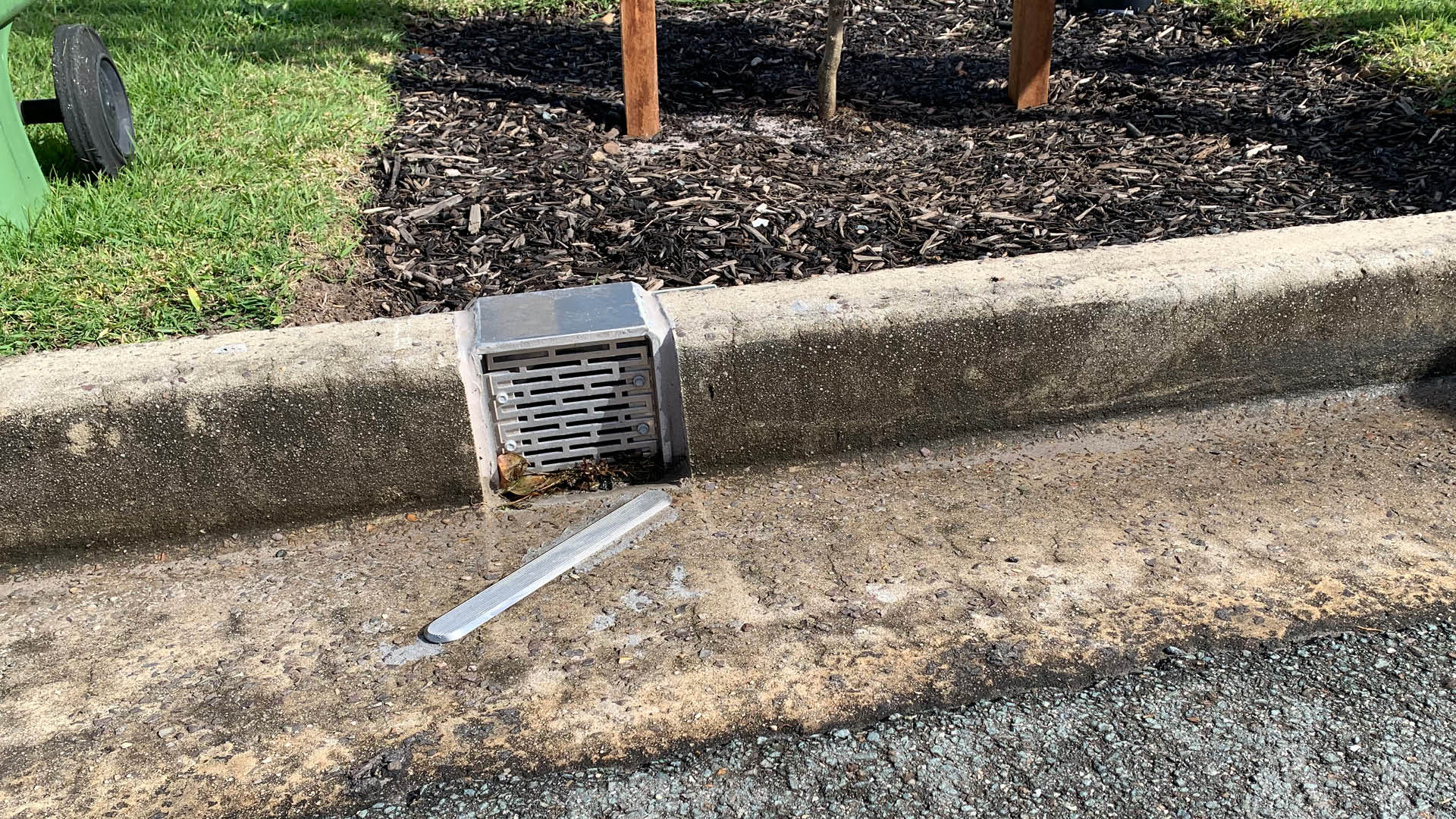 |
Single kerb inlets with directional tactiles |
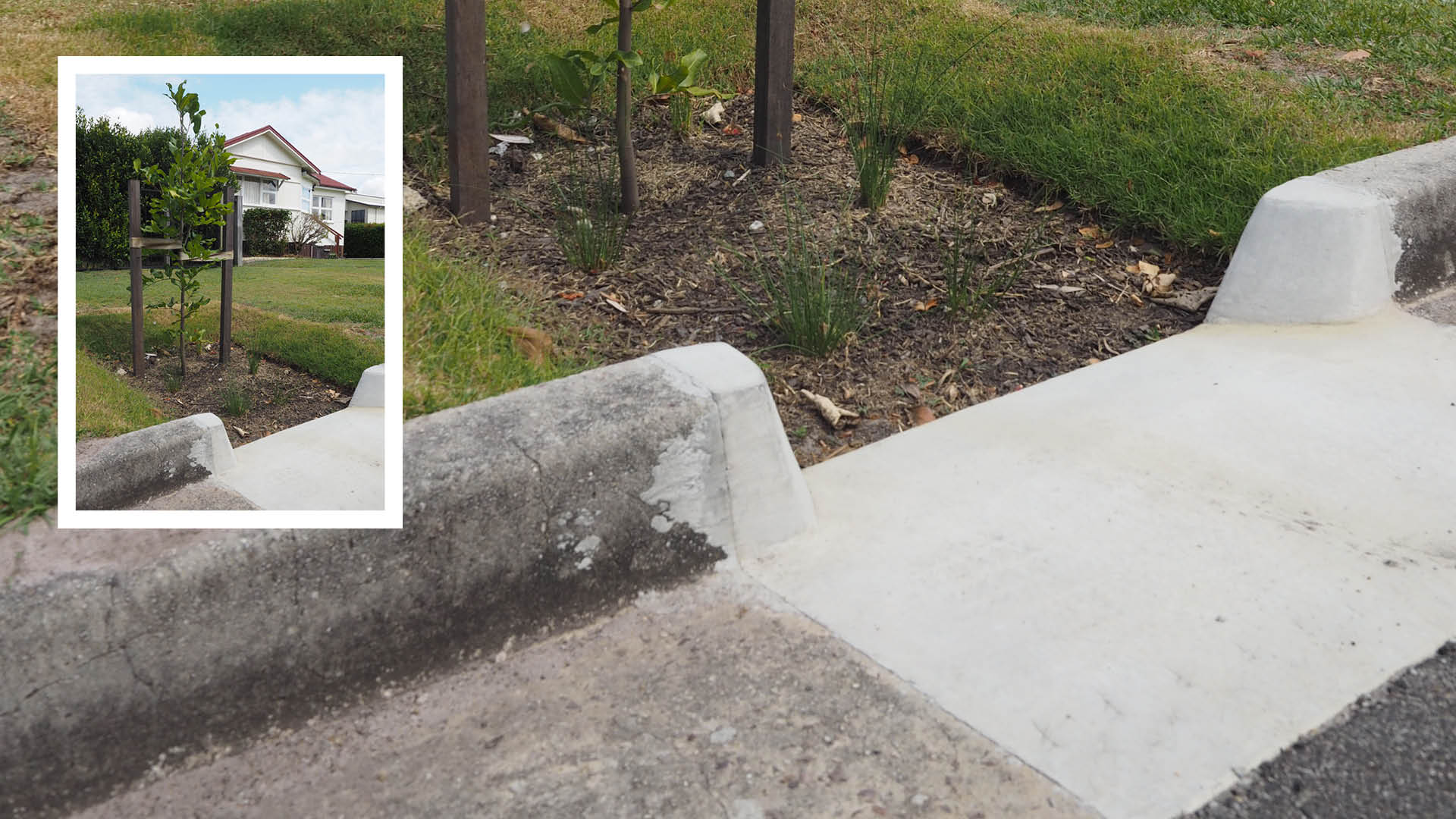 |
Large open kerb |
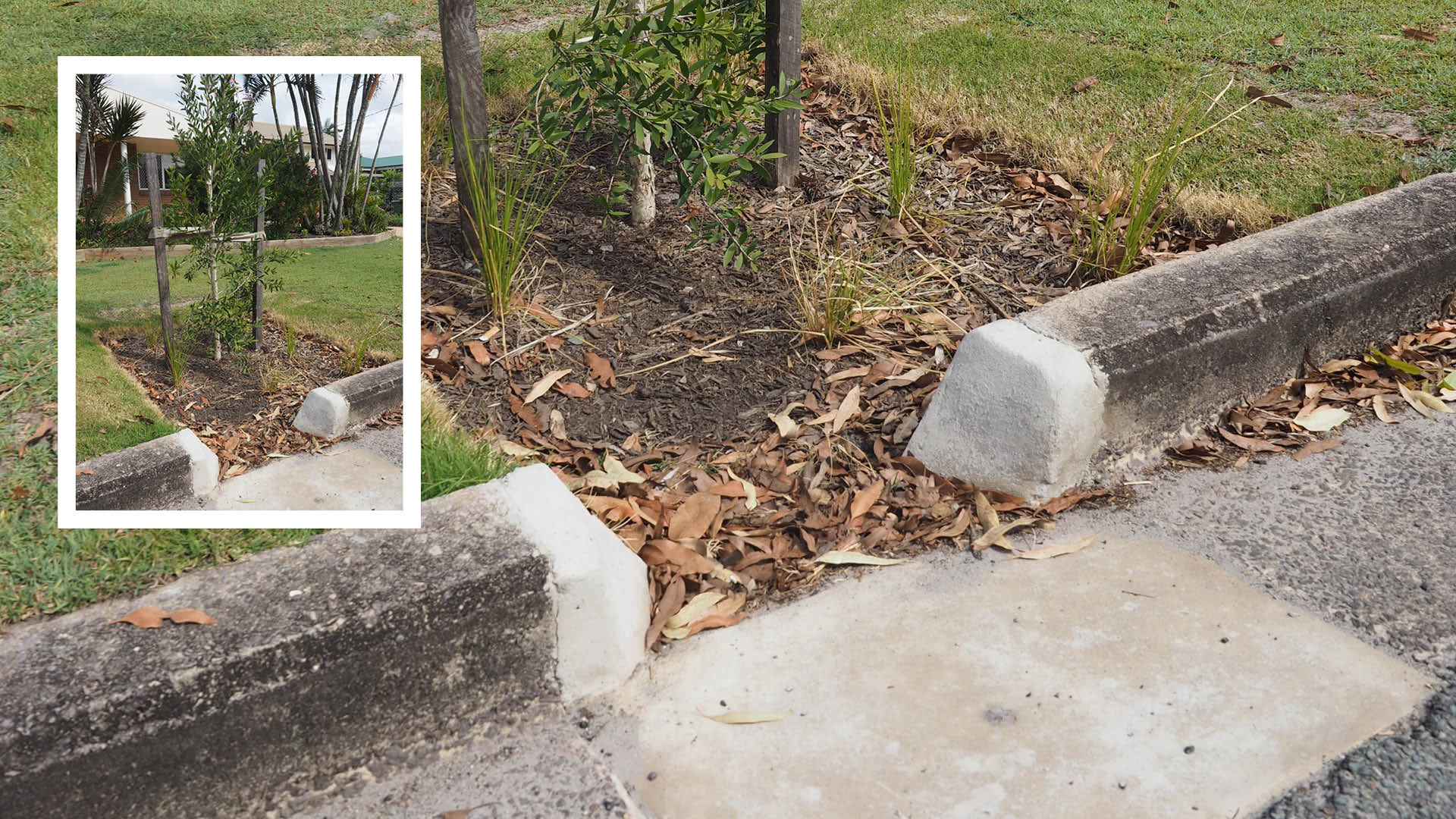 |
Small open kerb |
This component is currently in development