Tree sensitive design (existing and new trees)
Tree sensitive design
Guidance on tree damage and tree sensitive design

Tree sensitive design supports the way trees naturally grow and function rather than imposing a design that may harm them. It’s a site-responsive approach that prioritises the preservation and integration of existing tree assets while creating conditions for future tree growth.
Tree sensitive design treatments for existing trees consider how to maintain or improve conditions for tree root growth including the preservation of existing roots and the preservation of the structure and water regimes of surrounding soils.
Tree sensitive design treatments for new trees focus on creating spaces for tree roots to grow without conflict ensuring access to water nutrients and oxygen while protecting surrounding infrastructure.
Where tree roots grow
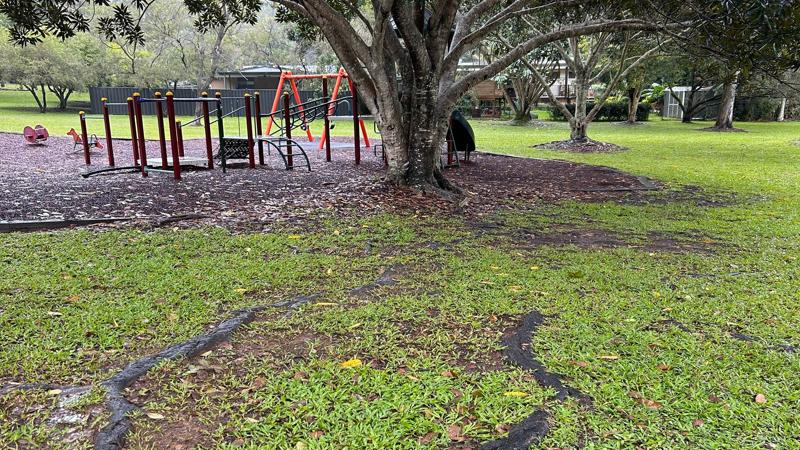
Trees exploit as much soil as possible by sending roots out in all directions, proliferating where the conditions are best for growth.
Most tree roots are found near the soil surface. Soils near the surface have high nutrient and microorganism concentrations and good aeration, so are ideally suited to root growth.
Deeper soil horizons typically have less nutrients and lower oxygen levels, as well as being much more difficult to penetrate due to decreased soil porosity and smaller soil particle size at greater depths. Although tree roots grow in all directions, those that experience the best conditions elongate and thicken.
How roots are damaged

Tree roots can be directly and indirectly damaged. Direct damage occurs via mechanical injury - for example, wounding, ripping or severing tree roots with earthmoving equipment. Indirect damage occurs when one or more of the basic requirements for tree growth - air, water or nutrients in the soil - becomes compromised.
Below grade (cut)

When tree roots are cut or significantly wounded the tree’s ability to access and take up water and nutrients from the soil is directly impacted. Energy reserves stored as carbohydrate may also be lost, and in extreme cases, whole tree stability can be compromised (see LIM Site set up (including tree protection)- Protection of trees - construction sites - Tree damage).
Above grade (fill)
Tree roots are also significantly compromised by activities that reduce or prevent the flow of oxygen through the soil such as, the introduction of fill profiles or activities that cause soils to compact.
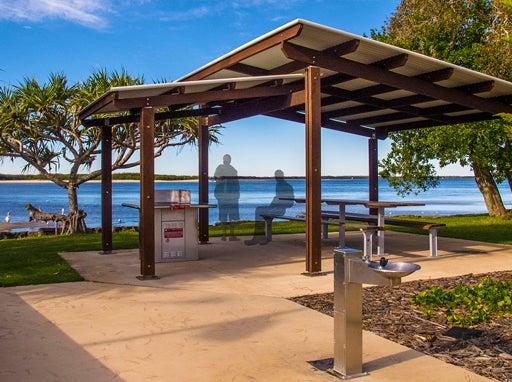
- Placing soil or other materials over root systems at depths greater than 100mm will impede air movement into and out of the soil and will invariably restrict air flow around roots.
- Compaction makes pore sizes smaller and not only reduces space for oxygen to move through the soil but effectively reduces the capacity for roots to grow through the soil.
- Roots respire and convert stored carbohydrate to sugars for energy. Waterlogged or compacted soils hold low levels of oxygen and prevent roots from respiring. This means a tree can’t access its stored energy when it needs to.
Poor soil aeration can stunt tree growth and in worst case scenarios cause a tree to die. When roots aren't functioning properly, they can't meet the ongoing nutrient and water requirements of the above ground portion of the tree. Growth slows, and if the situation does not improve (e.g. through intervention with gentle removal of fill, when new roots grow beyond the zone of fill, or when roots grow up into the more oxygenated fill profile), shoots or branches may die back in response to the shortage of resources. Where roots are severely compromised, the tree is likely to continue into a spiral of decline and die prematurely.
Poor air flow around root systems covered in fill soils can also lead to decay of structural roots, which may compromise tree stability. Where the affected tree has grown roots up into the fill profile (a common response to deoxygenation of the natural profile, where roots seek out aerated soil horizons) the tree may appear healthy with the canopy sustained by the active feeder roots but may ultimately be a hazard in its location due to decay of critical structural roots.
Factors influencing tree root damage
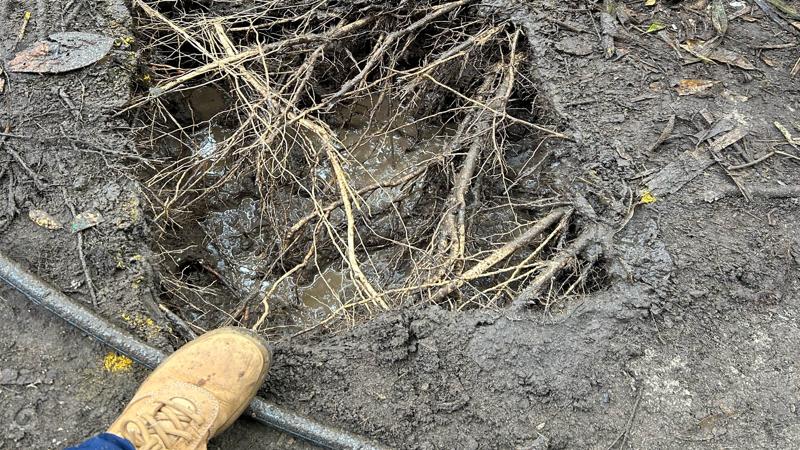
Any disturbance of the ground within the root zone of a tree may cause injury. Damage frequently occurs when new infrastructure is constructed too close to trees.
Factors influencing whether a tree will or won’t be damaged by construction include design and set back of works. The current health of the tree and relative tolerances of the species will also influence whether a tree is damaged or not. Paperbark trees can sustain a higher degree of root loss than Eucalypt trees for example, which are more sensitive to changes to soil moisture regimes.
The extent of damage caused, is generally determined by:
- species, condition and life stage of the tree
- existing conditions of the site
- construction setbacks and the amount of direct root loss sustained
- area of permeable space that will remain undisturbed
- resulting alterations to drainage patterns
- surface treatment
- construction method
- treatment of trees and surrounding soil during construction.
Factors influencing root damage to infrastructure
Correspondingly, infrastructure is frequently damaged by tree roots. Primary factors leading to infrastructure damage include:
- fast growing trees
- large maturing trees
- restricted soil volume
- limited top soil layer
- narrow setback from infrastructure to tree/s
- poor quality construction.
Ensuring adequate construction setbacks are provided to trees is the best method of protecting trees AND infrastructure. However, in many situations there isn't enough space to keep the two sufficiently apart.
Tree sensitive design aims to overcome conflicts between trees and built structures by considering the basic needs of trees and applying design treatments that ensure that these can be met, and also upscaling and strengthening infrastructure treatments.
Key principles of tree sensitive design

Tree sensitive design responds thoughtfully to the circumstances of a site’s existing or future tree assets and involves analyzing site-specific factors - such as soil health, root zones, hydrology, and microclimate- to ensure trees can thrive without compromising ecological integrity or design functionality. This approach supports biodiversity, mitigates urban heat, enhances cultural character, and reduces long-term maintenance and environmental costs.
Tree profile and site history
Consider the size, age, type/species and history if known of trees in and around the project area:
- Older trees are more vulnerable to construction damage and often have a delayed stress response (in terms of visually indicating stress). Younger trees are less likely to be significantly impacted or more likely to bounce back relatively quickly.
- Some species are tough – paperbark (Melaleuca sp.) is one such example. Others are particularly sensitive to any form of ground disturbance. Examples include Norfolk Island pine (Araucaria heterophylla), coastal banksia (Banksia integrifolia) and most eucalypt species (Eucalyptus sp.).
- Trees that have already suffered major disturbance in the past are less likely to tolerate further stress.
- Most trees can tolerate a small amount of encroachment into their root zones however disturbance to more than one side of a tree is more likely to have a lasting impact.
- A qualified arborist can determine the tolerance limits and specific needs of existing trees in a project area and can assist with strategies and design options that will secure the ongoing health and stability of trees.
Provide adequate setbacks
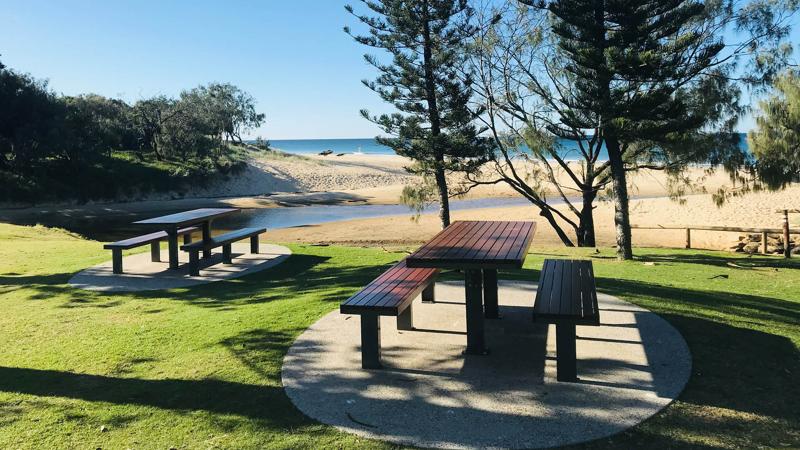
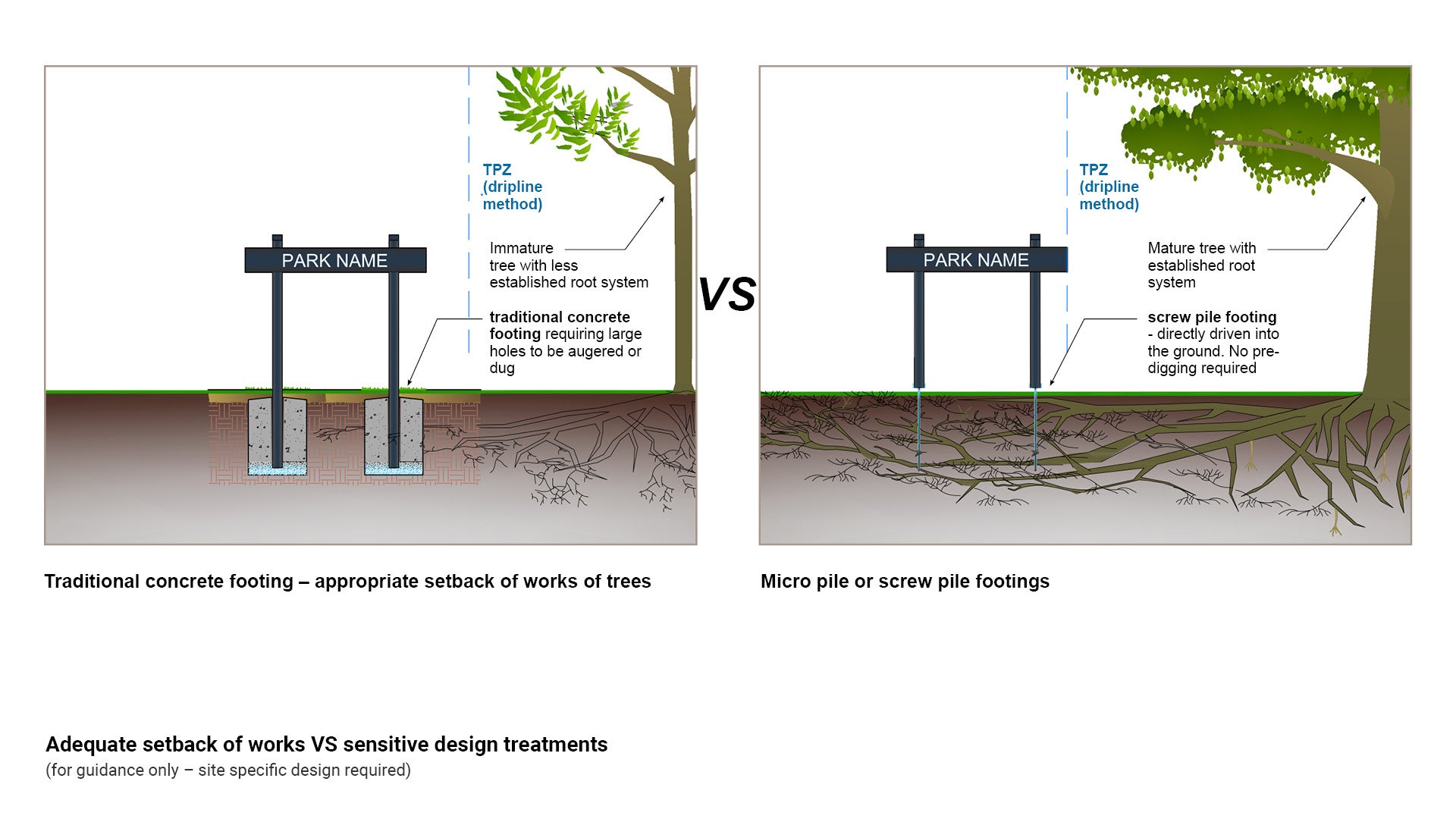
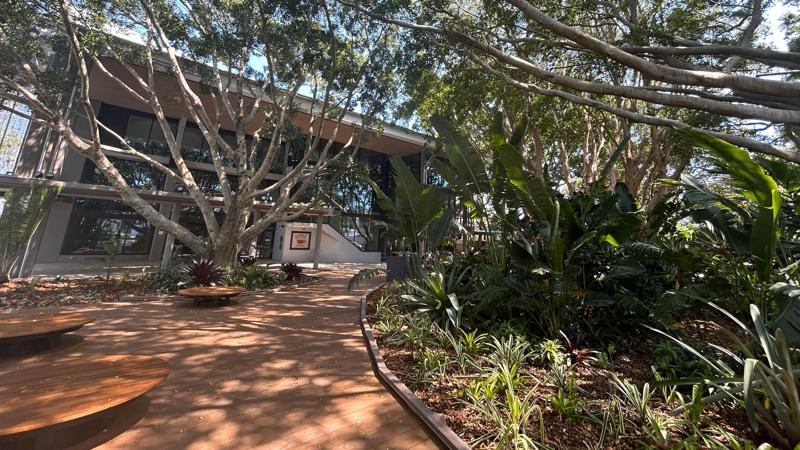
While there’s a critical need for shade in a warming climate and a desire to place infrastructure beneath existing trees, designers must prioritise the preservation of tree health and structural integrity in such scenarios. Failure to do so may result in trees becoming too compromised to provide the shade that was being sought, as well as other essential functions. As a general rule, no structures should be built or installed within the drip line (under canopy area) of existing trees.
- The closer works are to the trunkof a tree, the greater the damage will be.
- Design treatments should ensure cut and fill occurs as far from existing trees as possible (for example local steepening of batters or the use of porous materials for fill layers).
- Structures such as rock walls with deep, continuous footings or pipes or conduits that nmust be laid via open trenching are particularly damaging to trees and should be located outside TPZs. Boulders and similar embellishments that require embedding, and all elements and features that require excavated sub-bases should also be appropriately setback from trees.
See Figure 1: Adequate setback of works VS Sensitive design treatments.
Figure xxx - Adequate setback of works VS sensitive design treatmens
Minimise earthworks
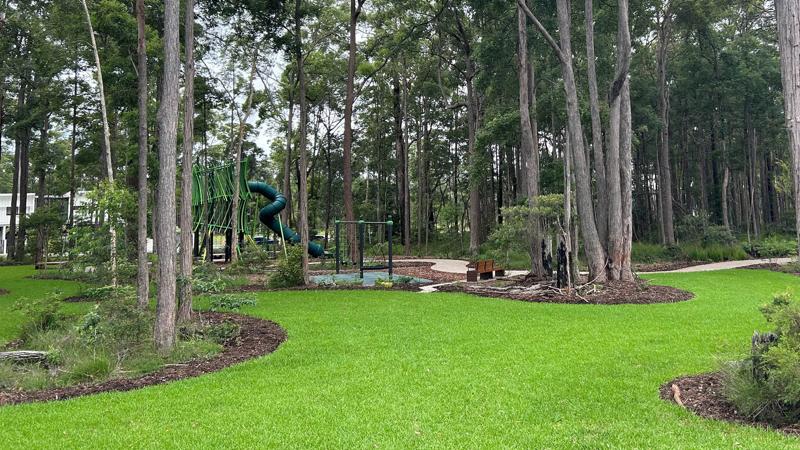
If adequate set backs cannot be achieved and critical root zones cannot be excluded from construction zones, ground disturbance should be avoided or localised.
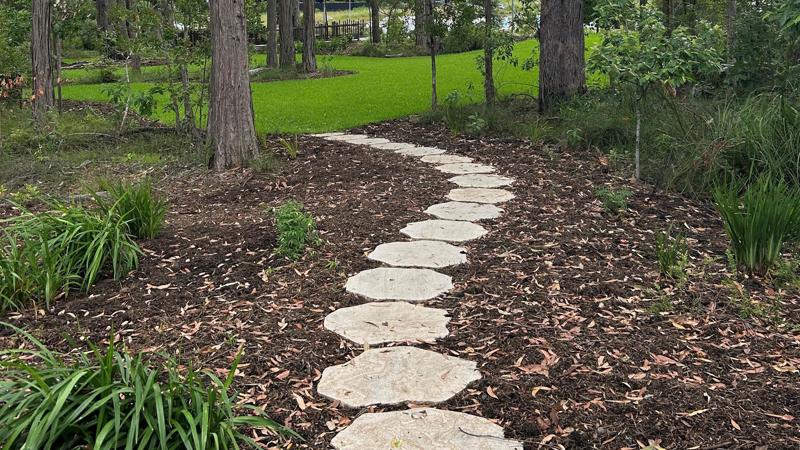
- The best hard surfaces to use near trees are permeable, require little to no excavation, and minimise soil compaction.
- Loss of load bearing support can be negated through the use of thicker concrete with additional mesh reinforcement for structural strength.
- Strip or continuous footings should be avoided wherever possible.
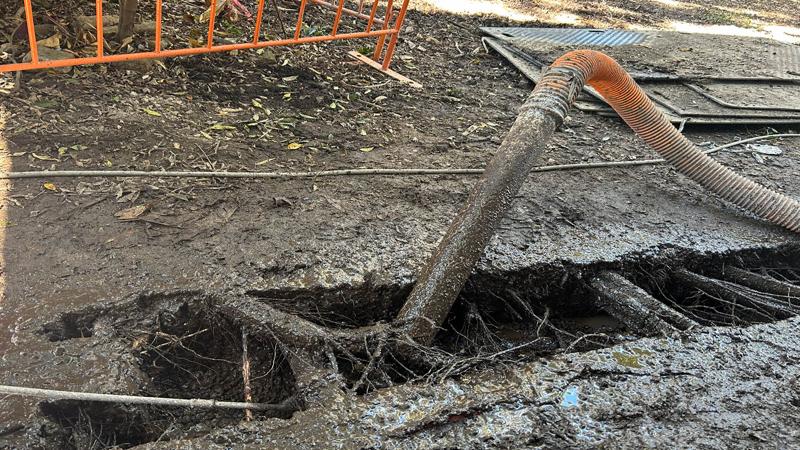
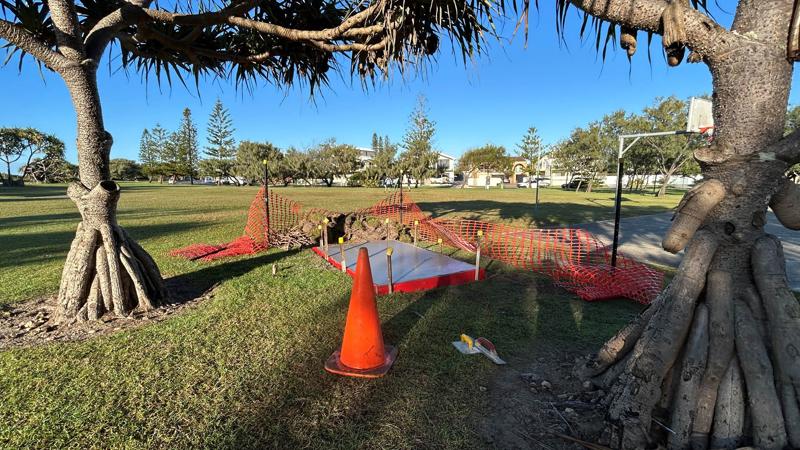
- Decks and elevated structures should be erected on well-spaced piled supports. Where open excavations are necessary footings, these should be hand dug or vacuum excavated near trees.
- If the soil grade is required to be raised over root zones, fill materials should be coarse and more porous than the underlying material (e.g. washed river stone).
- Top soil fill should be applied loosely and not exceed a depth of 100mm above existing grade.
Preserve permeable space
A mature tree needs a soil volume of 75 m³ for ideal growth and development.1
- Where impervious surfaces already exist near trees preserve the areas of undisturbed ground where tree roots are likely to grow.
- Build over already disturbed areas i.e. use an existing structure such as a wall, pathway or existing slab for new hard surfacing.
- Preserve existing soil moisture regimes (consider how structured drainage systems i.e. sub soil drains as well as general earthworks may change soil hydrology).
- As a general rule, mature and over-mature trees are much more vulnerable to the impacts of hard surfacing over root zones.
1 Lindsey, Patricia and Nina Bassuk, “Redesigning the Urban Forest From the Ground Below: A New Approach to Specifying Adequate Soil Volumes for Street Trees,” Journal of Arboriculture, 16 (1992):25-39.

Preserve the top soil horizon
The topsoil horizon - located just beneath the turf or mulch layer - is the most biologically active zone of the soil. It contains the highest concentration of nutrients and microorganisms essential for tree health and soil function. Trees form symbiotic associations with soil microorganisms. Tree roots provide a source of food to the microorganisms who assist roots to access water and nutrients in the soil in return. Five percent of healthy soils consist of bacteria, fungi and other soil microbes. These microorganisms, essential to the normal functioning of a tree, live in oxygenated soil horizons only and cannot survive deeper in the soil profile.
Avoid soil stripping (removal of the top layer of soil) in the vicinity of trees.
- Keep soil horizons in order when backfilling trenches. For example, the deeper clay profiles should be returned first with more porous soils returned to the top of the trench.
Re-route services or use trenchless methods
- Route new services for installation to outside of the TPZ/drip line of existing trees.
- Specify the use of trenchless technologies (directional drilling/under boring) where conduits cannot be rerouted away from critical root protection areas at a depth greater than 600 mm.
Where trenchless installation of conduits is not possible, specify the use of vacuum excavation instead keeping exposed roots intact) and threading the conduit beneath.
In some situations, vacuum excavation can also be used for exploratory purposes - to determine if critical roots exist in the cionstruciton footprint.
Minimise embellishment
- Keep under-planting to a minimum by reducing plant numbers and densities in order to prevent excessive competition for water and soil nutrients
- Match preferred growing conditions of under- plantings with those of existing trees (i.e. water loving with water loving plants).
- Use hand tools only for under-planting. For example pocket plant rather than machine cultivated garden bed preparation).
- Use mulch instead of turf or plants directly beneath trees.
- Where turf must be laid beneath existing trees ensure there is no deep soil cultivation and that imported top soil:
- does not exceed a depth of 100 mm above the existing grade
- is applied loosely
- batters down to tie-in to natural grade at the base of the tree trunk.
Other considerations
- Consider the maintenance requirements of existing trees and whether these will be increased as an outcome of the project.
- Consider whether placing furniture beneath trees will increase risk to users in fall zones of trees (dependent on species, condition and likely construction impacts).

Include additional or succession trees
- Sustain tree numbers into the future (increase where possible) through succession planting.
- Plant additional trees to bolster existing plantings (this is especially important in foreshore locations).
This component is currently in development