Handrails and balustrades
Design
Requirements for the design, manufacture and installation of embellishments
Good design
See the following corporate documents to identify relevant project design requirements:
Sunshine Coast Planning Scheme regulates the way land, buildings and structures are used and developed on the Sunshine Coast.

Sunshine Coast Design contains 10 design principles that guide good project planning and design outcomes, that are appropriate for the Sunshine Coast.
The LIM provides further overarching design advice, refer:
- Introduction and Design Principles - e.g. sustainability, CPTED, accessibility
- Preliminaries - environmental management, tree sensitive design and site set up.
Embellishment requirements
- Universal access.
- Comfortable and suitable for the average person.
- See 'Positioning' and 'Equal access' sections for the corresponding LIM category.
- Made from materials that will be durable and can be suitably protected from exterior elements, such as salt spray and UV exposure.
- Robust and sturdy to withstand constant public use and be resistant to vandalism.
- Fixings are to be 316 marine grade stainless steel (unless otherwise stated).
- Tamper proof fixings should be used
- Graffiti protection coatings applied (where applicable)
- Fire retardant (where applicable).
- Warranties should be as listed below.
- Easily repairable or replaceable.
- Sourced locally and use standard fittings.
- Reputable suppliers should be used who keep a supply of stock parts on hand for the life of the product.
- Use sustainable materials, although sustainability needs to be considered over the lifetime of the embellishment.
- Install on paved, concrete or other hard surfaces (where applicable).
- Manufactured to engineering specifications (where applicable).
- See the 'Standards' section for the corresponding LIM category.
Warranty and asset life
Product/embellishment | Warranty (minimum) | Asset life (typical useful life) |
Recycled plastic | 10 years | 25 years 2 |
Aluminium | Varies | 20-30 years 2 |
Timber | N/A | 20 years 2 |
Steel | Varies | 25 years 2 |
Stainless steel | Varies | 25 years 2 |
Source 2: Sunshine Coast Council Asset Management Plan 2017/18-2022/23 – Parks and Gardens (figure based on current data, subject to change).
Handrail and balustrades
Once the location of the handrail and balustrades has been decided, based on the Environment and Liveability Strategy (ELS) and Recreation Parks Plan (RPP) guidance, consider the appropriate embellishment level to suit the selected site.
Overarching design considerations:
- All open spaces should include universal access (e.g. heights appropriate to provide a safe barrier for all users).
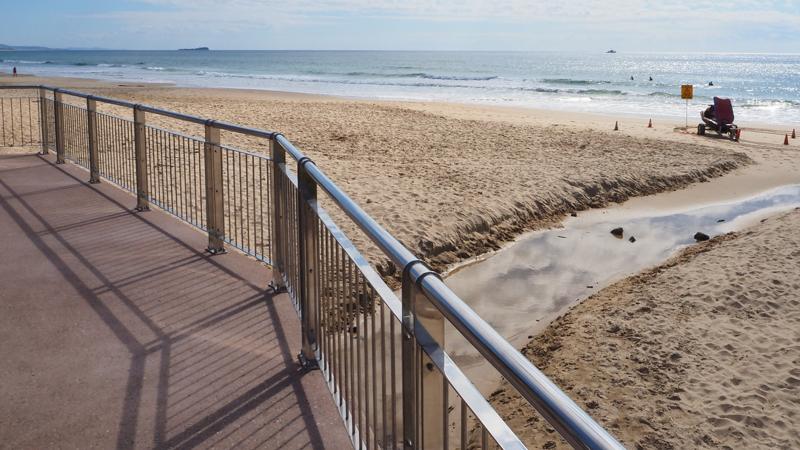
- A balustrade is typically a top rail and a row of balusters (posts) to support it. A balustrade can incorporate a handrail or be configured to act as a handrail.
- Handrails provide guidance and support. Balustrades are barrier devices used to protect people from the risk of falls from a height
- Handrails should be installed to both edges of walkways, boardwalks, ramps and stairs.
- Handrail and balustrade also provides security for an area by directing or excluding people to protect flora, fauna and their habitat.
- This document provides general guidelines only and does not cover comprehensive specific technical detail about the construction of handrails and balustrades.
Design for pedestrians
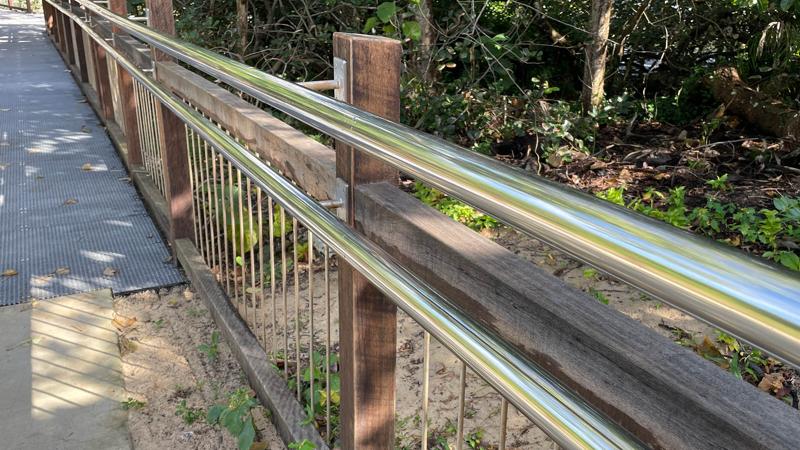
Handrails, leaning rails, barriers, and kerb rails must be designed and installed to meet accessibility, safety, and structural standards, ensuring user comfort, fall protection, and compliance with relevant Australian Standards.
Note: Handrail must comply with AS 1428.1:2009 and AS 1428.2:1992 Design for Access and Mobility.
Handrail
For handrail and balustrade associated with a building refer to Disability (Access to premises – buildings) Standards 2010.
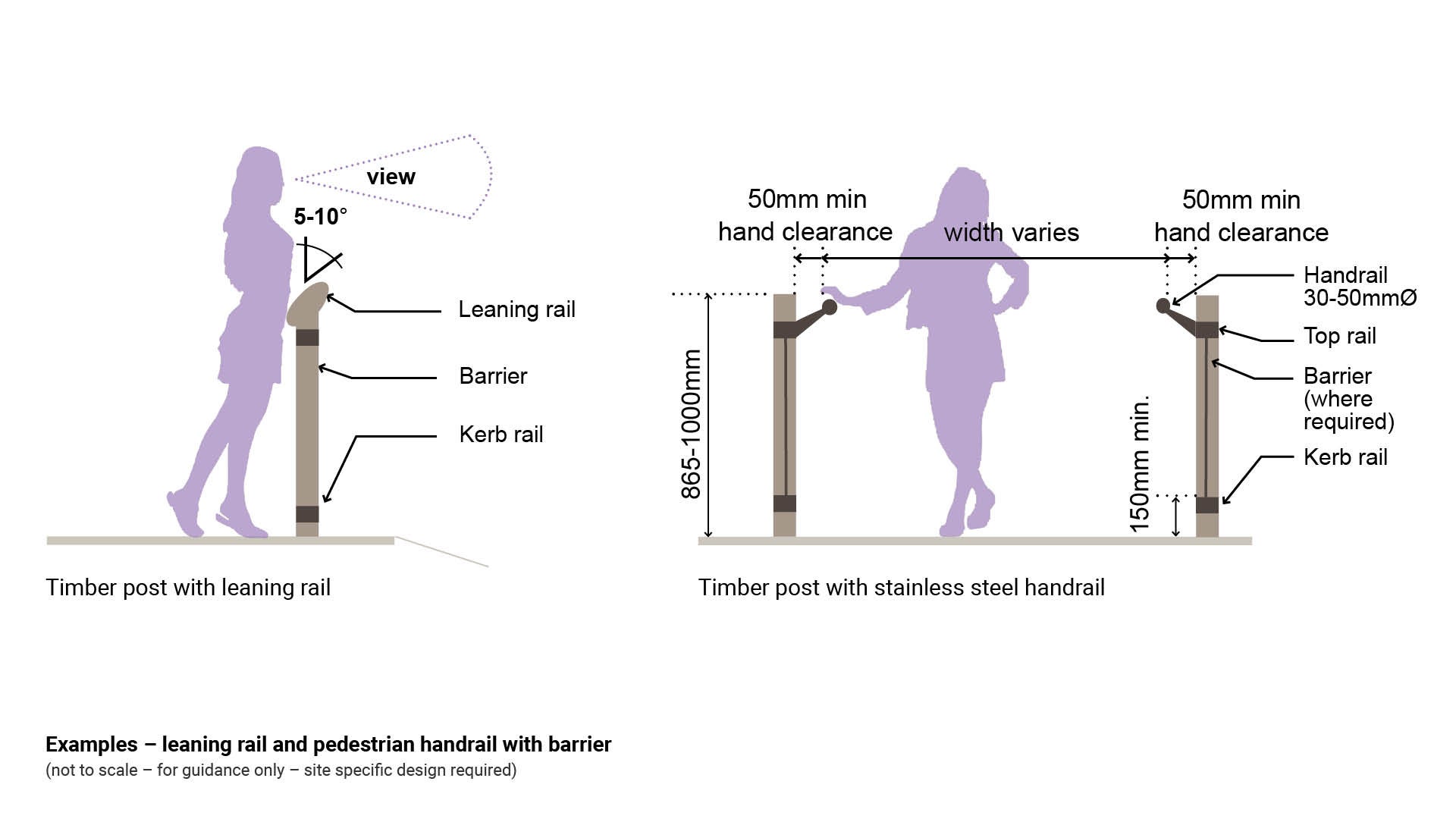
- Recommended handrail height is 1.0 m desirable, 865 mm minimum.
- Install a handrail to both sides of ramps and stairs.
- Handrail terminations must not protrude into a traverse path of travel.
- Cross section of handrails is to be circular or elliptical between 30 mm and 50 mm (50 mm is preferred).
- Handrails are to be firmly fixed and rigid and the ends turned through 180°, or to the ground, or returned fully to end post or wall face
- Clearance (hand space) between a handrail and an adjacent surface (such as a wall) is to be minimum 50 mm. This clearance must extend above the top of the handrail a minimum 600 mm.
- Handrails are to have no obstruction to the passage of a hand along the rail for the top 270 degrees of movement along the rail.
- The inside rail at landings must always be continuous.
- Design bolted handrail connections to allow for ease of replacement of worn components.
See Table 1: Handrail and barrier elements.
Leaning rail
Install leaning rails to the top of posts at locations such as viewing platforms or where people may wish to stop for a short term rest or to enjoy a view.
- Angle the lean rail at 5 to 10 degrees back towards the person using the rail, to allow a comfortably resting position.
- Select a smooth finished surface for the lean rail.
- Flat top rail also may be used for a top rail however a minimal angle is required to facilitate shedding of water.
Barrier
Barrier is to comply with AS 2156.2:2001 Walking Tracks infrastructure design (to be read in conjunction with AS 2156.1:2001 Walking tracks classification and signage).
- Install barrier where there is a risk of falls.
- Install barrier to reduce the risk of falling from a height, or onto adverse material such as rock or water.
- Risk assessment for each site as per WH&S Risk Calculator (see AS/NZ ISO31000). See LIM Walls for further guidance about risk of falls.
- Balustrade must be able to resist 70 Nm minimum allowable force in all directions.
Kerb rail (integrated)
Kerb rail is to comply with AS 1428.1:2009 Design for access and mobility.
Install kerb rails to both sides of a pathway to delineate the edges for white cane users and to prevent wheeled mobility devices, children's bikes and scooters from travelling off the edges.
- Recommended maximum height is 150 mm to the top of the kerb rail.
- See Figure 1: Examples - leaning rail and pedestrian handrail with barrier.
Figure 1: Examples – leaning rail and pedestrian handrail with barrier
Design for cyclists
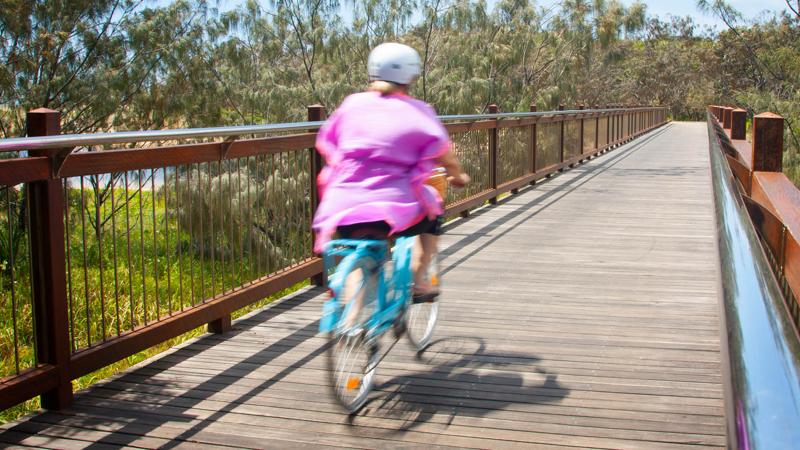
For cyclist safety, handrail and balustrade design requires appropriate rail and barrier design, clear offsets from hazards, and compliance with Austroads and Australian Standards to minimise injury risks.
Note: Cyclist rail adjacent to a road or in a clear zone is to comply with Austroads Guide to Road Design Part 6A: Paths for Walking and Cycling.
Rail
Consider the full spectrum of cyclists skills resulting from age, experience, physical ability, cognitive skill and vision.
- Install cyclist rail where there is a hazard adjacent a pathway that has the potential to cause injury to cyclists.
- Austroads absolute min. offset to a smooth fence beside a path is 300 mm.
- Austroads absolute min. offset to an obstacle beside a path (which could injure a cyclist) is 500 mm, preferred offset 1.0 m. On high speed paths an offset greater than 1.0 m is desirable. Consider the risk to cyclists. Fences can also be hazards.
- Where barrier fence termination points flare away from the path, the bar ends must not create a spearing hazard.
Barrier
Cyclist barrier in parks or open spaces is to comply with AS 2156.2:2001 Walking tracks infrastructure design and Austroads guide to road design Part 6A: Paths for walking and cycling. Cyclist barrier is required where injury might be expected if a cyclist were to ride off the path (based on risk assessment).
- Full or partial barrier fence is required where there is a batter or vertical drop.
- Recommended height is 1.4 m desirable, 1.2 m minimum.
- Consider a higher barrier such as 1.6 m where there is a severe hazard such as a vertical fall to rock.
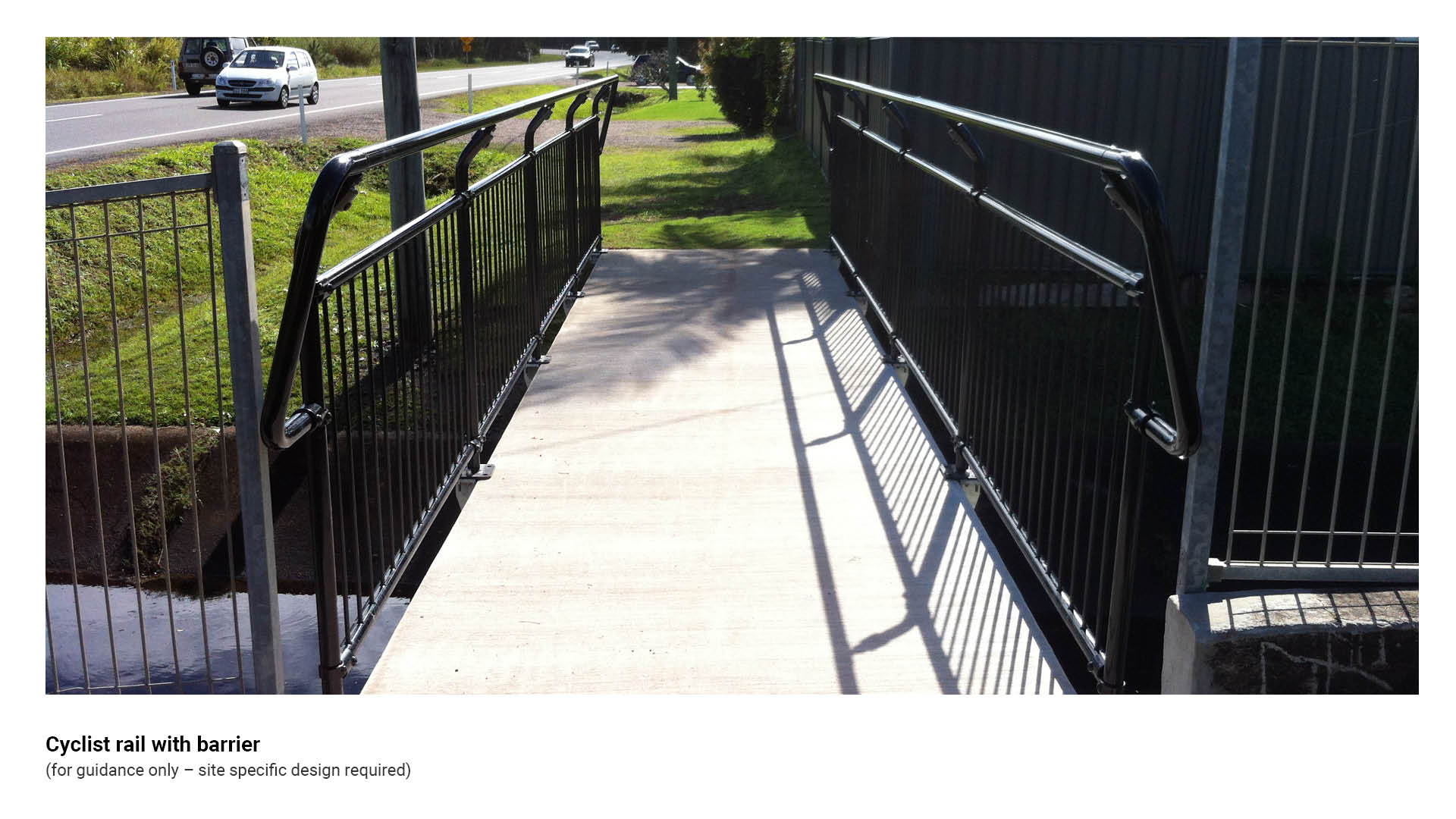
- Install cyclist rail and protective barrier to pedestrian bridges.
See the following for further guidance:
- Figure 2: Typical cyclist rail
- Figure 3: Cyclist rail with barrier
- Table 1: Handrail and barrier elements.
Figure 2: Typical cyclist rail
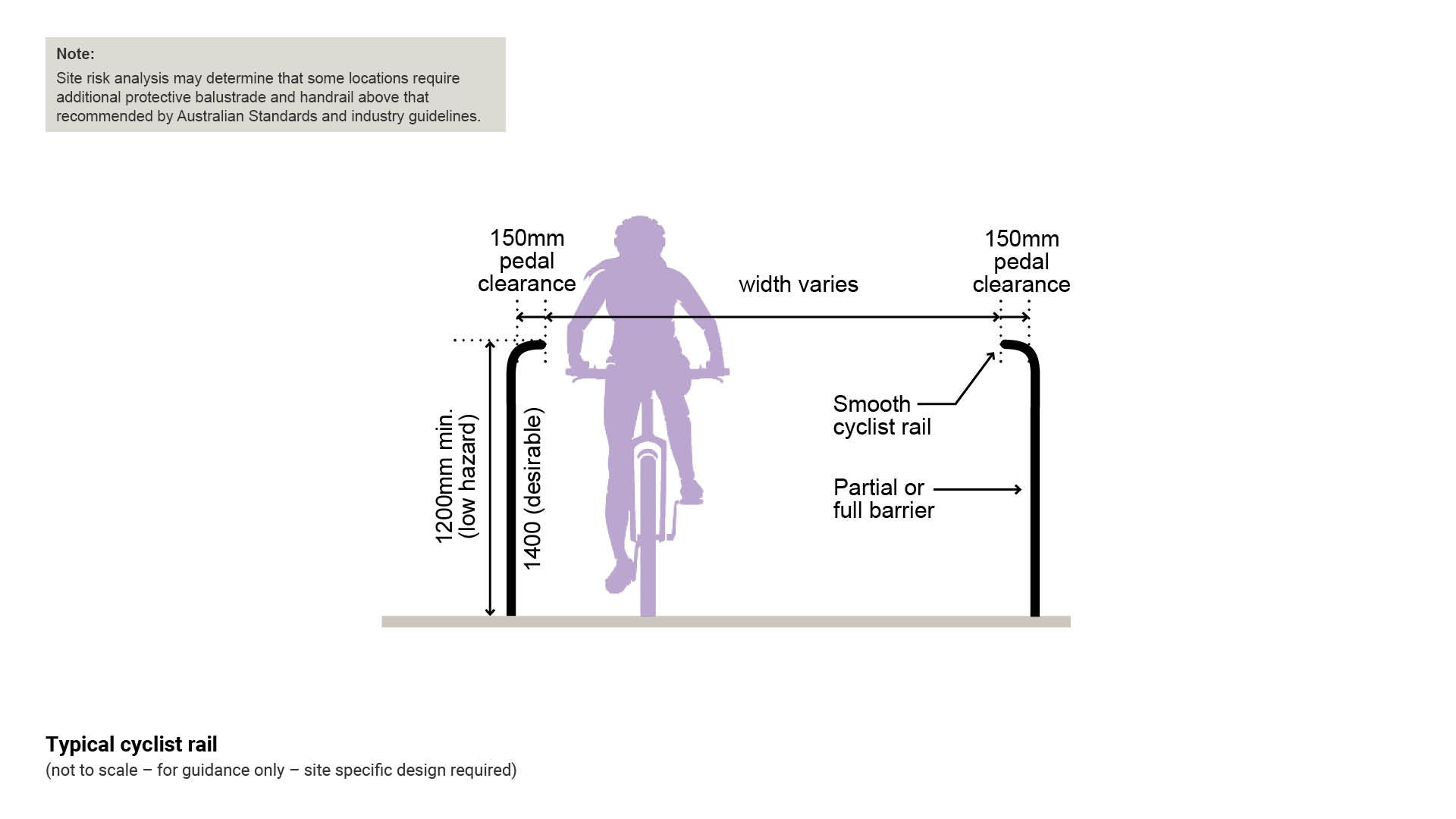
Figure 3: Cyclist rail with barrier
Design for both pedestrian and cyclist
Table 1: Handrail and barrier elements
Embellishment | Rail design/height/Ø | Handrail extension | Kerb or kerb rail | Barrier | Attributes |
Pedestrian handrail 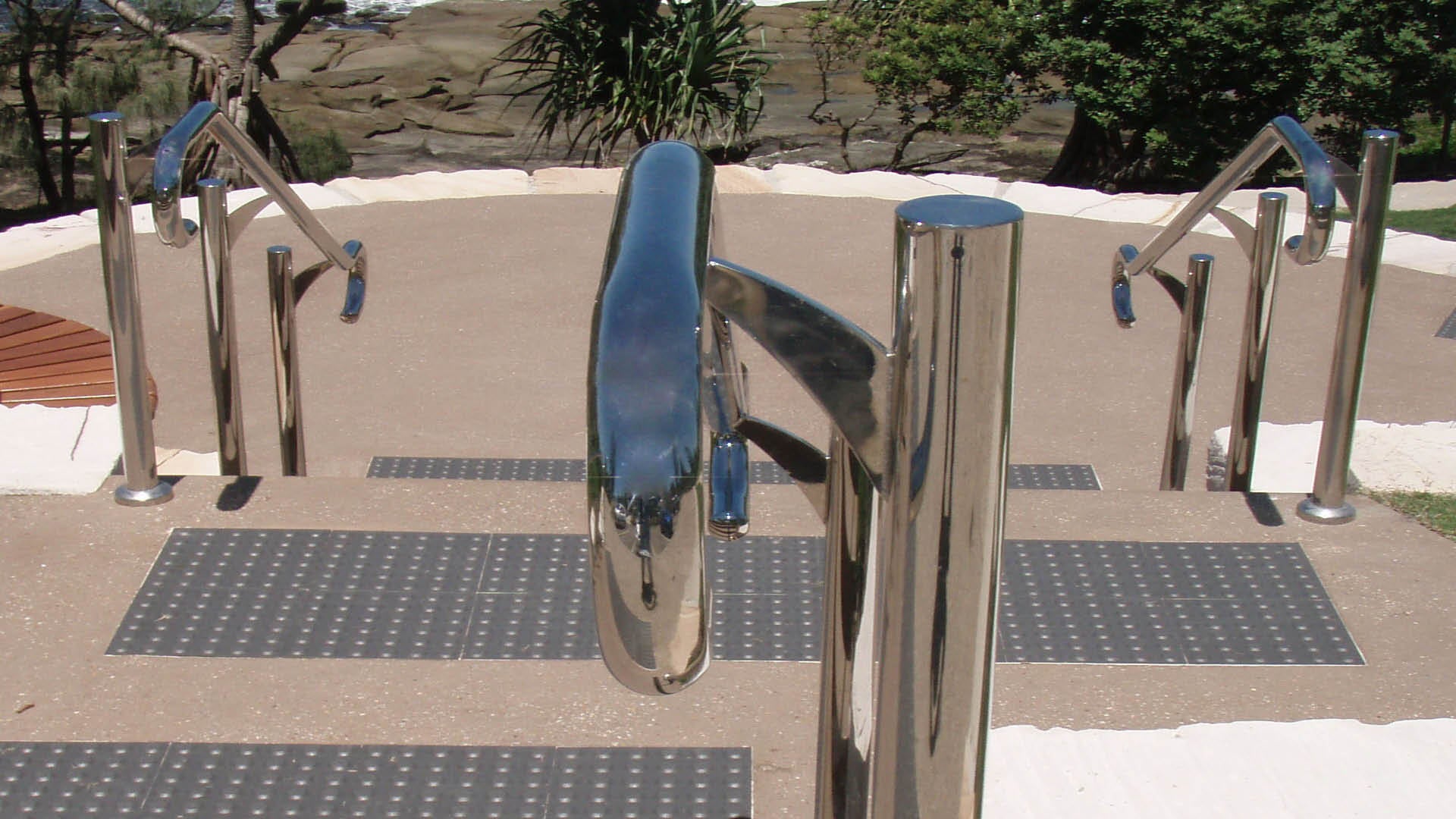 AS 1428.1-2009 Design for access and mobility Part 1: General requirements for access - New building work |
|
|
|
|
|
Cyclist rails 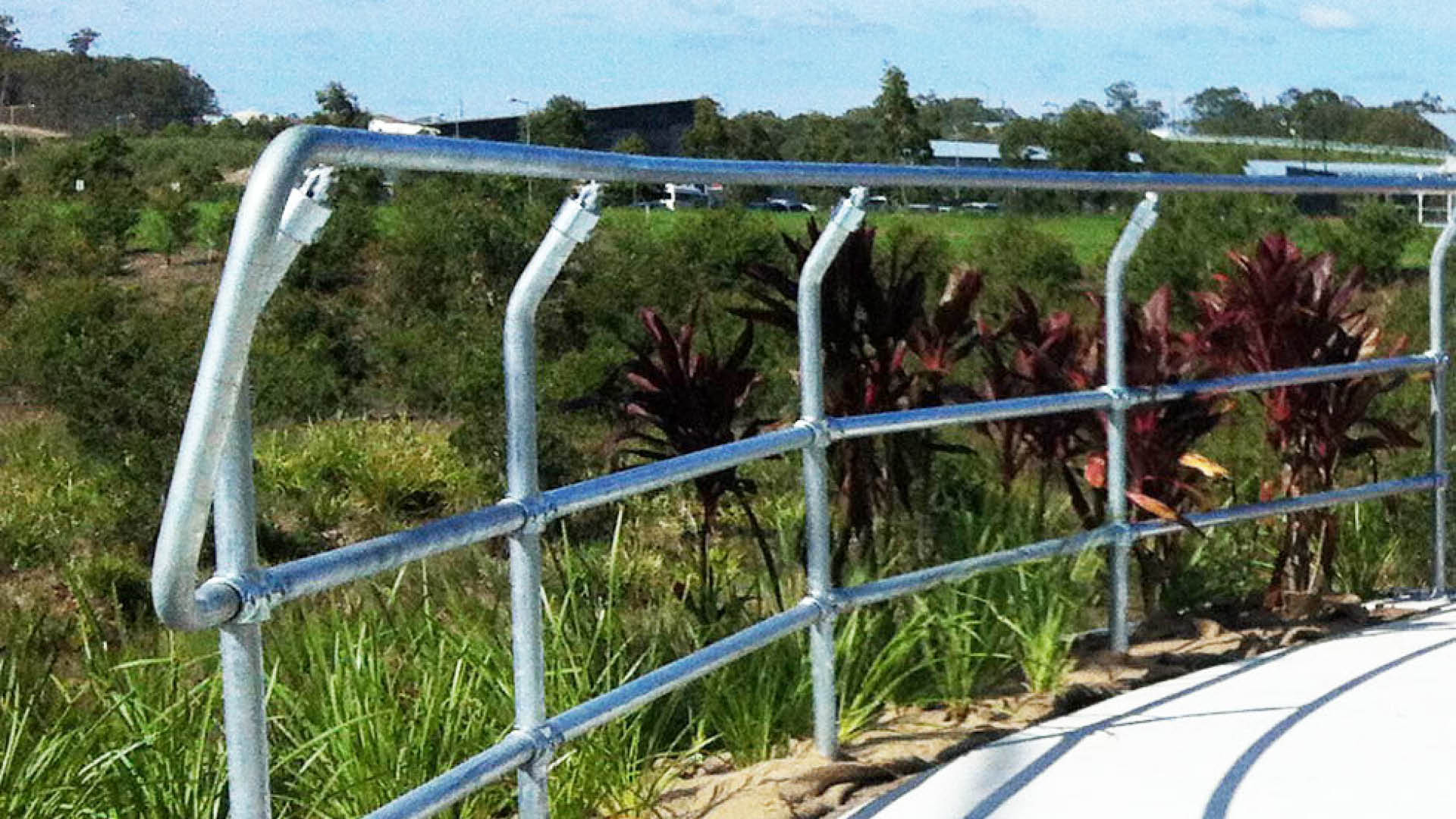 Cycling Aspects of Austroads Guides (2017) |
|
|
|
|
|
Note: Refer to LIM Play spaces for handrail and balustrade design Standards associated with playground equipment.
This component is currently in development