Electrical (including lighting)
Design
Requirements for the design, manufacture and installation of embellishments
Good design
See the following corporate documents to identify relevant project design requirements:
Sunshine Coast Planning Scheme regulates the way land, buildings and structures are used and developed on the Sunshine Coast.

Sunshine Coast Design contains 10 design principles that guide good project planning and design outcomes, that are appropriate for the Sunshine Coast.
The LIM provides further overarching design advice, refer:
- Introduction and Design Principles - e.g. sustainability, CPTED, accessibility
- Preliminaries - environmental management, tree sensitive design and site set up.
Embellishment requirements
- Universal access.
- Comfortable and suitable for the average person.
- See 'Positioning' and 'Equal access' sections for the corresponding LIM category.
- Made from materials that will be durable and can be suitably protected from exterior elements, such as salt spray and UV exposure.
- Robust and sturdy to withstand constant public use and be resistant to vandalism.
- Fixings are to be 316 marine grade stainless steel (unless otherwise stated).
- Tamper proof fixings should be used
- Graffiti protection coatings applied (where applicable)
- Fire retardant (where applicable).
- Warranties should be as listed below.
- Easily repairable or replaceable.
- Sourced locally and use standard fittings.
- Reputable suppliers should be used who keep a supply of stock parts on hand for the life of the product.
- Use sustainable materials, although sustainability needs to be considered over the lifetime of the embellishment.
- Install on paved, concrete or other hard surfaces (where applicable).
- Manufactured to engineering specifications (where applicable).
- See the 'Standards' section for the corresponding LIM category.
Warranty and asset life
Product/embellishment | Warranty (minimum) | Asset life (typical useful life) |
Lighting (poles, luminaires) | ||
LED luminaires | 5 years | 10 years 2 |
Ballasted luminaires | 5 years | 25 years 2 |
In-ground luminaires | 5 years | 3 years 2 |
Poles | 10 years | 25 years 2 |
Switchboard | 2 years | 25 years 2 |
Power outlets (GPOs) | 2 years | 25 years 2 |
Conduits | 1 year | 25 years 2 |
Cable pits | 2 years | 25 years 2 |
Source 2: Sunshine Coast Council Asset Management Plan 2017/18-2022/23 – Parks and Gardens (figure based on current data, subject to change).
Electrical
Once the location of the electrical systems has been decided, based on the Environment and Liveability Strategy (ELS) and Recreation Parks Plan (RPP) guidance, consider the appropriate embellishment level to suit the selected site.
Overall design considerations:
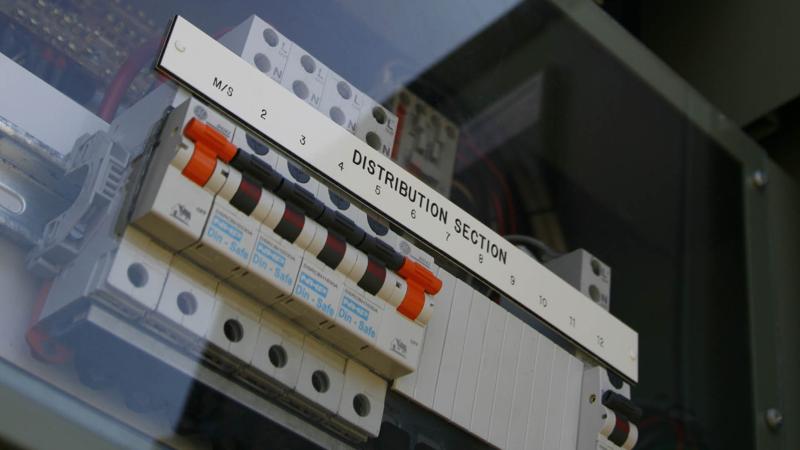
- Switchboards are to be waterproof, comply with security measures and labelling standards and suitable for event requirements (where appropriate)
- Cable pits are to be trafficable, lockable and vandal resistant
- General power outlets and accessories are to be appropriately rated and correctly mounted
- All lighting components, including poles and lighting controls are to comply with AS/NZS 1158.3.1 - Lighting for roads and public spaces - Pedestrian area (Category P) lighting - Performance and design requirements
- All lighting designs are to be signed of by an RPEQ (Registered Professional Engineer of Queensland).
Electrical design
The design of electrical systems includes the following components:
- Switchboards, meter panels and control gear enclosures:
- Switchboard labelling.
- Cables (wiring).
- Conduits.
- Cable pits:
- Lid selection.
- Load classification.
- General power.
- Lighting:
- Lighting poles.
- Lighting controls.
Electrical services
- Electrical services are to be installed as per the Electrical Safety Act 2002 and Electrical Safety Regulation 2013.
- Electrical works are to provide for all inspections and permits required by federal, state or local governments and authorities in furnishing and transporting materials, including:
- Electrical Safety Office (ESO)
- Electrical distribution supplier (e.g. Energex)
- Workplace Health and Safety Queensland.
- It is illegal to do electrical work in Queensland without a licence. The Electrical Safety Act 2002 requires a person who performs or supervises electrical work to hold a current electrical work licence which authorises the person to perform the work.
- An electrical contractor licence is required to provide work for others as a sole trader, in partnership or corporation. Eligibility requirements for electrical contractor licences are covered by the Electrical Safety Regulation 2013.
- Electrical connections to embellishments are to be installed as per manufacturer’s recommendations.
- Where there is no power on site, a ‘supply availability request’ is to be obtained – contact Energex.
- Always check Dial Before you Dig (DBYD) for underground cables before digging and be aware of overhead wires when carrying, moving or operating tall metal objects and machinery. See Energex brochure Look up and Live for further guidance.
Electrical design, manufacture and installation
The design, manufacture and installation of electrical components is to comply with the relevant Australian Standards, or best practice guidance where no standard exists.
- Components must be made from robust materials that are vandal and corrosion resistant (particularly in coastal areas):
- Suitable for the corrosive coastal environment
- Suitable for use in the public open space environment
- Manufactured to engineering specifications, where applicable.
- Products designed for sub-surface electrical use shall be suitable for buried applications.
- Products designed for electrical connections must be housed in a waterproof enclosure.
Electrical components
- All electrical components must be an appropriate quality and voltage rating for the electrical installation in which they are used.
- All electrical conductors, switches and accessories must be of a size capable of the maximum current which would normally flow through them, without their rating being exceeded.
- All electrical components must conform to the relevant Standards.
- All prescribed tests are to be carried out and certified.
- All electrical fittings and equipment must be safety approved for the intended use and installed as per manufacturer’s recommendations, by a suitably qualified and licensed person.
- Include best practice in the design, manufacture and installation of electrical equipment where possible, such as:
- Energy efficient devices to reduce energy consumption cost
- Power saving electrical switches with automatic cut off to reduce energy consumption cost
- Electronic start buttons
- Indicator light to illustrate that the power is on
- Push and hold activation buttons for child safety.
- Consider renewable energy sources such as wind power, solar power and wind/solar hybrid power where possible.
Switchboards, meter panels and control gear enclosures
A switchboard is an assembly of circuit protective devices, with or without switchgear, instruments or connecting devices, suitably arranged and mounted for distribution to, and protection of, one or more submains or final subcircuits, or a combination of both.
Where single phase power is connected, it runs with two wires – active and neutral. The neutral wire is earthed at the switchboard. Three phase power runs three incoming active wires and one outgoing neutral wire. The neutral wire is earthed at the switchboard.
The design of switchboards must include the following:

- Labels, circuit schedules and installation as per AS/NZS 3000 Electrical installations (known as Australian/New Zealand Wiring rules)
- Enclosures, panels and doors are to be designed and constructed in accordance with AS/NZS 3439.1 Low voltage switchgear and control gear assemblies
- Switchboard protection is to be in accordance with AS 60529 Degrees of protection provided by enclosures (IP code)
- Heavy duty design and materials suitable for open space applications
- Are to be fabricated in 316 stainless steel, powder coated in council preferred colour. Fixings are to be 316 stainless steel

- Must be waterproof with a tapered roof
- Vermin proof and vandal resistant
- Able to be padlocked, utilising a swing handle security latch
- Switchboard is to be divided into separate lockable compartments enabling specific access to different users.
- All parts of the switchboard must be above the level of the access panel opening, a minimum 300 mm above ground level.
- Consideration should be given to separate metering of lighting and power outlets. Separate sections for normal park use and events use can be utilised. Private metering, which can be accessed remotely, should also be considered in these situations. This will enable separate accounting of electrical costs for lighting and other uses during events (where required).
- Switchboards are to be installed on a concrete pad so water can drain away efficiently.
Switchboard labelling
All switchboards must have Traffolyte labels and an electrical plan showing the position of all electrical apparatus installed, in accordance with AS 3439 and AS 3000.
Labels are to be provided for switchboards and their contents, including:
- Instruments
- Controls
- Circuit designations and ratings
- Circuit protection devices
- Discrete devices
- Cabling
- Warning notices.
See the following figures for further guidance:
- Table 1: Switchboard types
- Table 2: Key and padlock types.
Table 1: Switchboard types
Product photo | Type of mount system | Key considerations |
Standard single phase switchboard 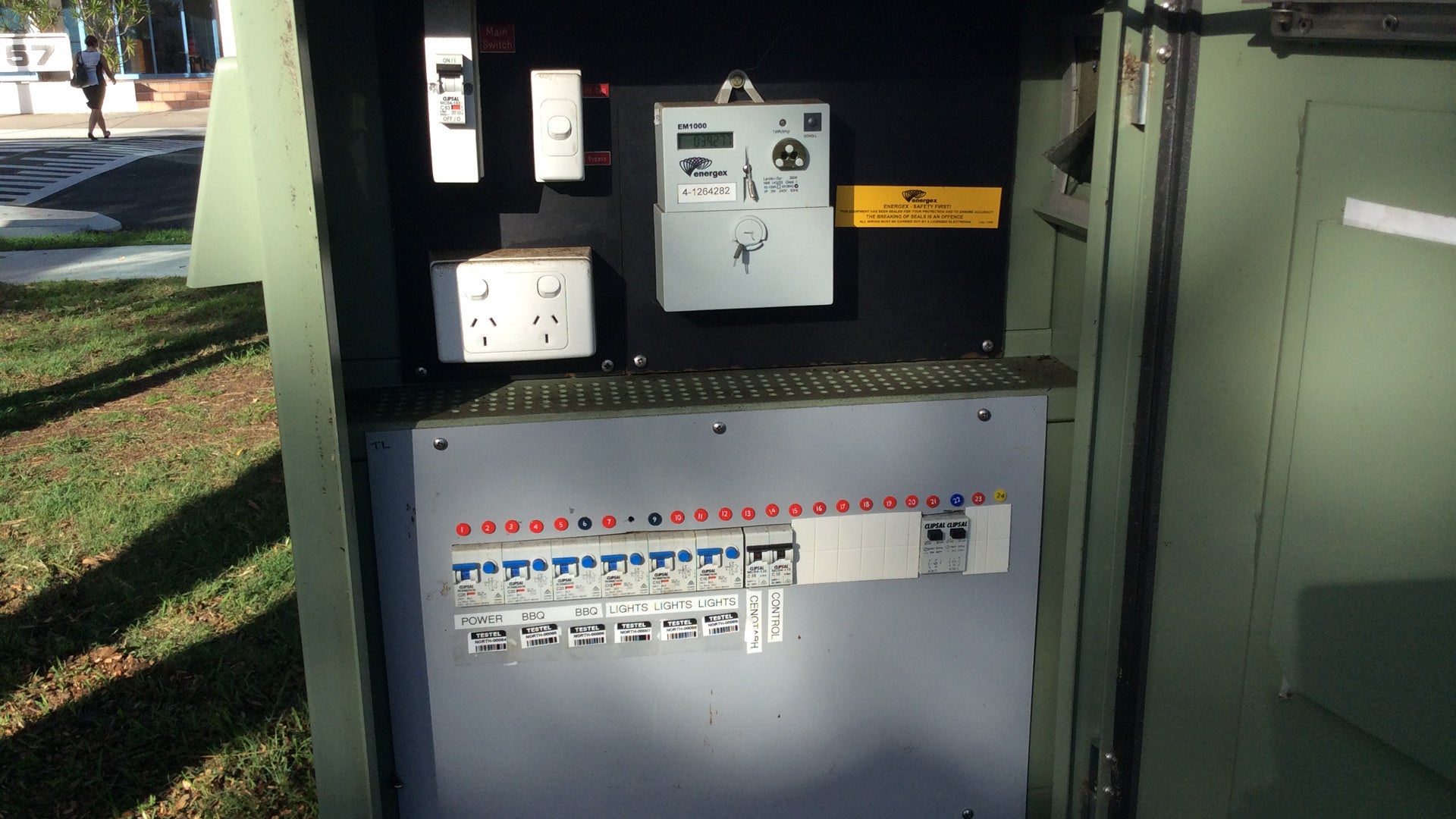 | Plinth mount |
|
Standard single phase switchboard 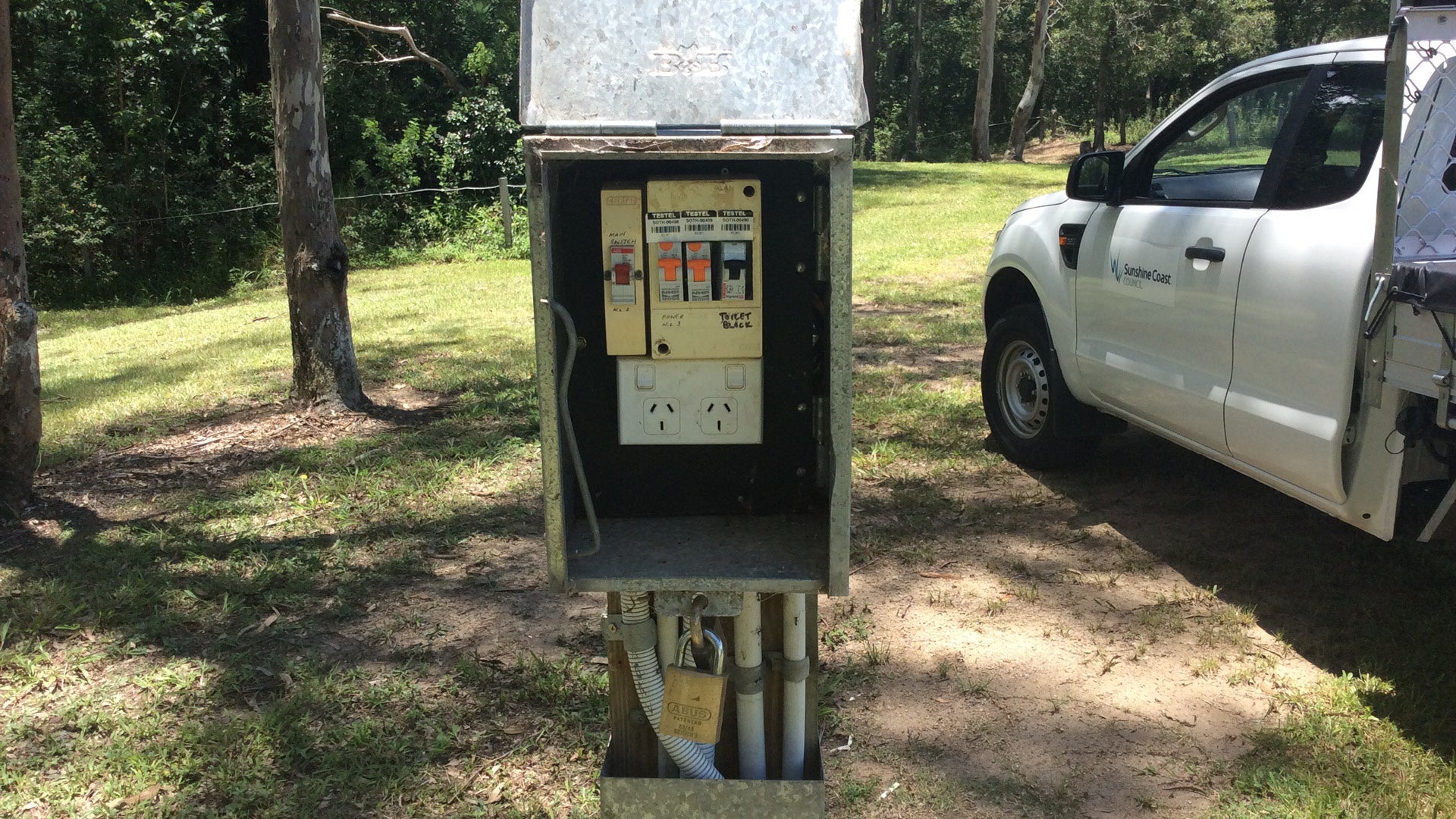 | Pole mount |
|
Standard three phase switchboard 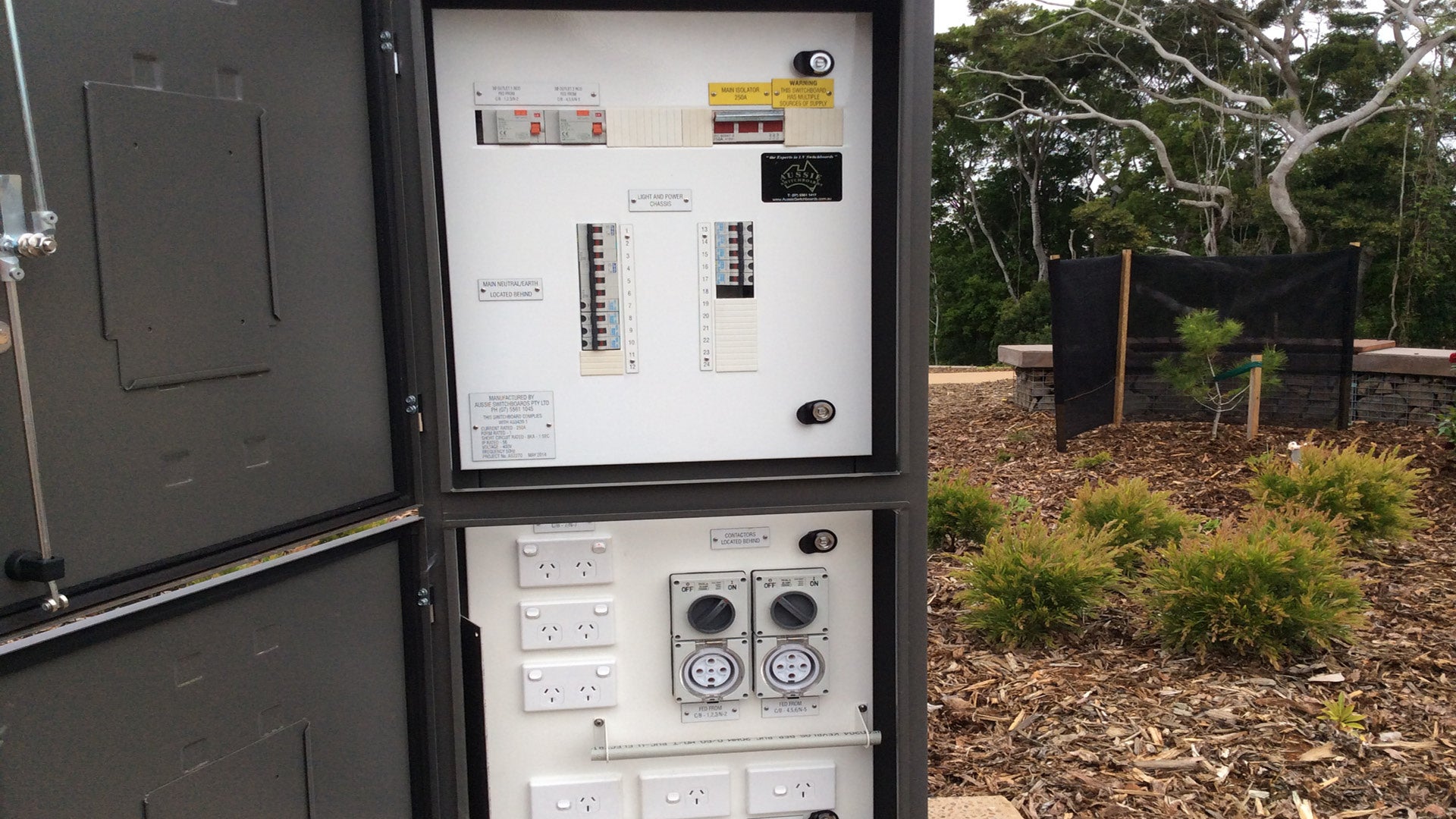 | Plinth mount |
|
Custom/events switchboard 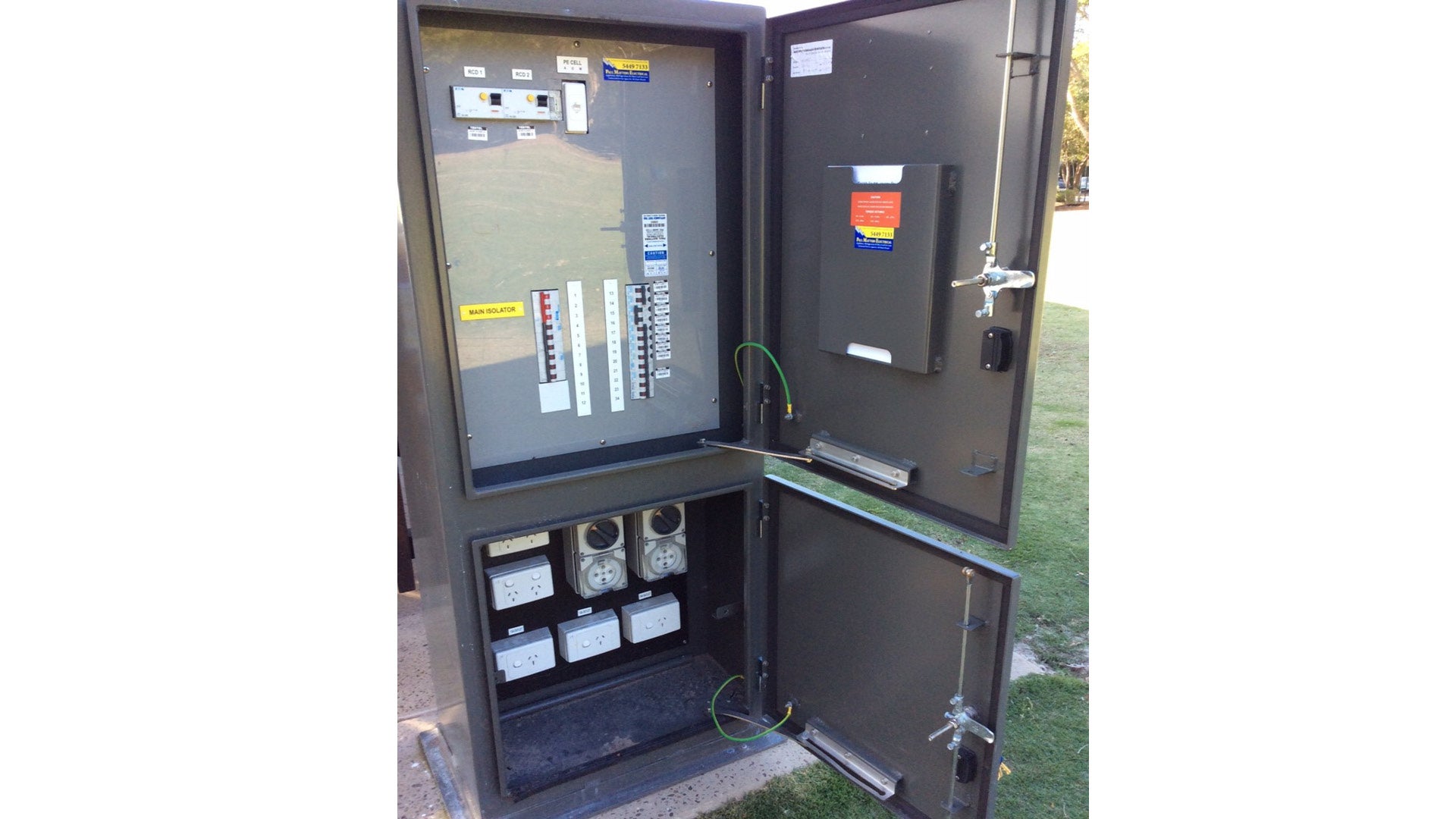 | Plinth mount |
|
Table 2: Key and padlock types
Key type | Key considerations |
Parks #30 key | Council officer access to switchboard |
Energex ELS929 | Energex access to metering panel |
Events key | Where public access during Council approved events may be required. Access to Events switchboards
|
Cables (wiring)
- Electrical wiring is to comply with AS/NZS 3000 – Electrical installations (known as Australian/New Zealand Wiring rules)
- To minimise voltage drop, avoid ‘long run’ electrical wiring from point of origin to embellishments as per AS/NZS 3000. For example, barbecue installation with long run wiring may cause a drastic corresponding reduction in hotplate heating/cooking performance.
- Design final sub-circuits for 1.5% maximum voltage drop from switchboard to final accessory.
- All cables must be sized to comply with EFLI requirements and shall not rely on RCD to provide automatic disconnection function.
- Cables are to be continuous and without joints. Any jointing is to be on terminals within the switchboard, behind outlets or within equipment.
- Park supply cables are to be minimum of 25 mm2 XLPE.
- All cables are to be selected in accordance with AS/NZS 3000 and AS/NZS 3008.1.1 – Electrical installations – Selection of cables - Cables for alternating voltages up to and including 0.6/1kV – Typical Australian installation conditions.
- XLPE/HDPE or elastomeric cables are to be encouraged where appropriate.
- Minimum cable depths are to be maintained in accordance with AS/NZS 3000 and AS/NZS 3002.
See LIM Electrical – Specifications – Cables for further guidance.
Conduits
- Where conduits are installed under pathways, install a brass marker to path or slab edges to indicate conduit location.
- Install electrical ready conduits under pathways to accommodate planned future electrical embellishments to AS/NZS 3000 category A.
- Conduits are to be heavy duty rigid, UV stabilised orange PVC.
- To prevent conduit separation during handling and the ingress of water, all conduits are to be primed and joined with PVC cement.
- In situations where there may be exposure to potential vandalism, mechanical protection is to be provided for all conduiting up to 2.4 m high. This shall consist of galvanised steel conduiting, or alternatively a heavy galvanised steel hat section.
- All exposed conduit is to be painted to match adjoining surfaces.
- All fixings and support brackets are to be 316 marine grade stainless steel, unless otherwise specified.
See LIM Electrical – Specifications – Cables for further guidance.
Cable pits
Electrical pits for installation to parks and open spaces must to be installed as follows:
- Materials must be vandal resistant.
- Pits must be lockable (where required).
- Ensure that pit materials are trafficable by both pedestrians and maintenance vehicles.
- Council’s preferred pit materials are:
- HDPE plastic
- Plastic/steel composite
- Steel reinforced concrete.
- Polycrete (polymer concrete) pits are not to be used as they:
- Require a concrete collar with a galvanised steel lid to withstand a person’s weight
- May not be cost effective
- Ground movement causes breakage
- Have an extended waiting period for parts
- From experience, products have a minimal asset life.
- Electrical pits should never be located in spaces where guidance or mobility requirements for people with disabilities may be required, such as where tactile ground surface indicators could be installed.
See Figure 2: Electrical pits – pathway and open space.
Lid selection
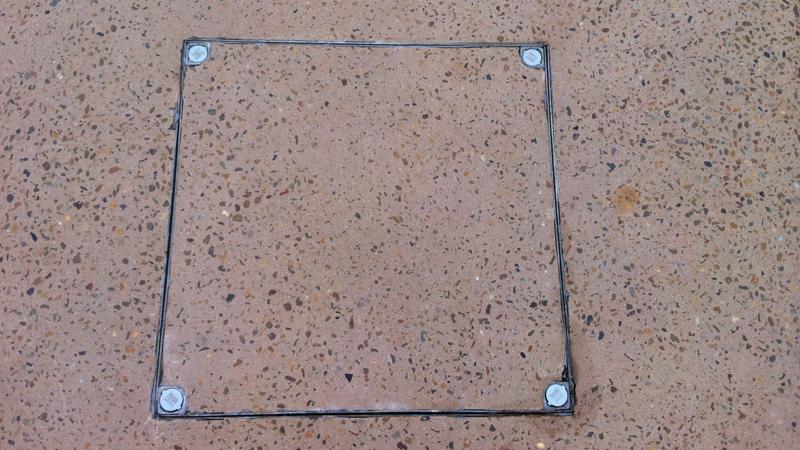
- Lid must be of composite or concrete type, and suit the intended load rating of the pit system installed.
- Galvanised steel/metallic lids should not be utilised unless otherwise unavoidable to suit the intended load rating of the pit system.
- Where the use of metallic lids is required, lids are to be coated in a heat resistant, pedestrian grade anti-slip coating.
Load classifications
- Council areas typically utilise the following load classifications from AS 3996 – Access covers and grates, dependent on project:
- Class B (light duty)
- Class C (medium duty)
- Class D (heavy duty).
- Design load is measured in kilonewtons (kN). 1 kN is equivalent to 102 kg force, approximately 100 kg of load.
See Table 3: Typical load classifications for further guidance.
Table 3: Typical load classifications
Class | Use | Serviceability design load |
A |
| 6.7 kN |
B |
| 53 kN |
C |
| 100 kN |
D |
| 140 kN |
E |
| 267 kN |
F |
| 400 kN |
G |
| 600 kN |
General power
All outlets and accessories must include the following:
- Exposed outlets and accessories are to be rated to a minimum IP56 (Clipsal 56 series, or equivalent)
- 240V, 10A minimum rating
- All 3-pin outlets are to be mounted with the earth pin in the 6 o’clock position.
Considerations should be made to install general power outlets to public areas via methods such as:
- Power bollards
- Master/slave switchboards.
These methods would be dependent on the particular project.
See LIM Electrical – Specifications for further guidance:
Lighting
Lighting in public places is provided to maximise use of and promote safe use of public places outside of daylight hours to:
- Enhance or highlight a space/view
- Provide visibility for pedestrians, motorists and cyclists
- Provide extended use of facilities
- Provide equal access use of facilities
- Facilitate wayfinding when natural light is insufficient
- Enhance safe use of facilities outside of daylight hours.
All lighting design, manufacture and installation must consider the following:
- All lighting designs are to be supplied with a Compliance Certificate for Building Design or Specification (Form 15) indicating the design criteria. All lighting designs are to be signed off by an RPEQ (Registered Professional Engineer of Queensland).
- Pathway and carpark lighting is to be designed in accordance with AS/NZS 1158.3.1 – Lighting for roads and public spaces – Pedestrian area (Category P) lighting - Performance and design requirements.
- Category P lighting is applicable to roads and other outdoor public spaces of which the visual requirements of pedestrians are dominant, and is acknowledged to be an effective counter both to the occurrence of crime and to the fear of crime.
- The following minimum P categories are to be used for differing lighting requirements, unless specified otherwise:
- Pathway lighting - PP4 for pedestrian and cyclist paths, PR3 or PR4 for local roads
- PA3 for ramps and stairs
- Site specific design is required for general carpark lighting
- PCD for disabled carpark lighting.
- To prevent areas becoming overlit, lux levels of lighting installation shall not exceed those stated in AS/NZS 1158 Lighting for roads and public spaces - Part 3.1: Pedestrian area (Category P) lighting - Performance and design requirements, unless otherwise specified.
- Impact protection (IK rating) covers measures including the use of safety glass and the ability to withstand vehicular and pedestrian traffic.
- Lighting infrastructure must be installed to ensure minimal interference with known turtle nesting areas.
- Wall lighting directed to target object is preferable to uplighting mounted in path or surround due to vandalism, damage and drainage issues. The use of decorative lighting should be minimised to reduce maintenance and remediation costs
- Anti-vandal guards are to be fitted over lighting fixtures, where appropriate.
- Install photoelectric (PE) cell or time clock to ensure lighting cannot remain operational during daylight hours.
- Installation of lighting design is to consider adequate access for maintenance and repairs.
See the following for further guidance:
- Table 4: Types of lighting (Open Space)
- Table 5: Key considerations for Open Space lighting
- LIM Electrical – Specifications – Lighting - lighting criteria and preferred luminaires.
Table 4: Types of lighting (Open Space)
Luminaire type | Application | Key consideration |
Uplights 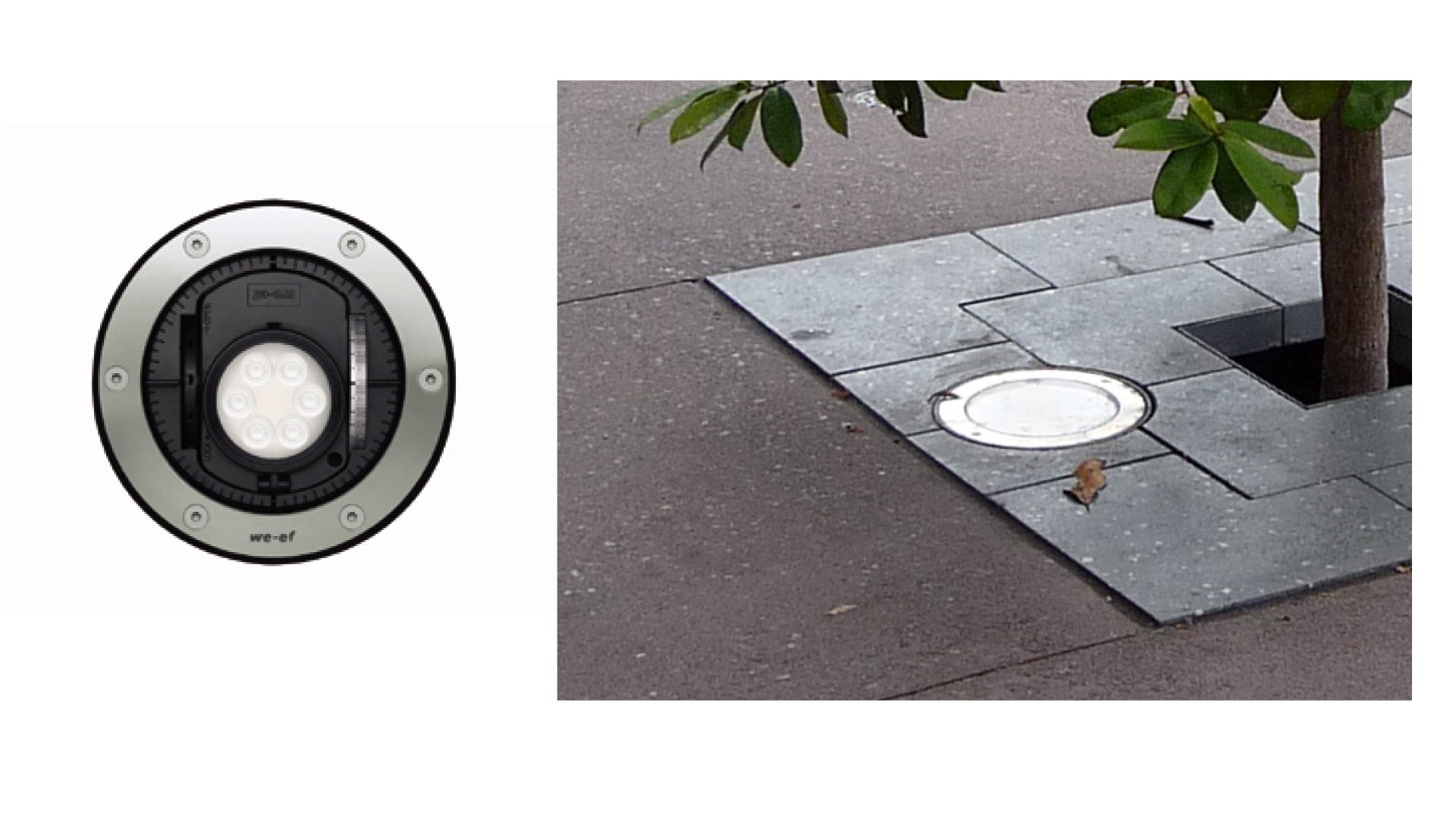 | Illuminate architectural features, trees, etc. |
|
Bollard lights 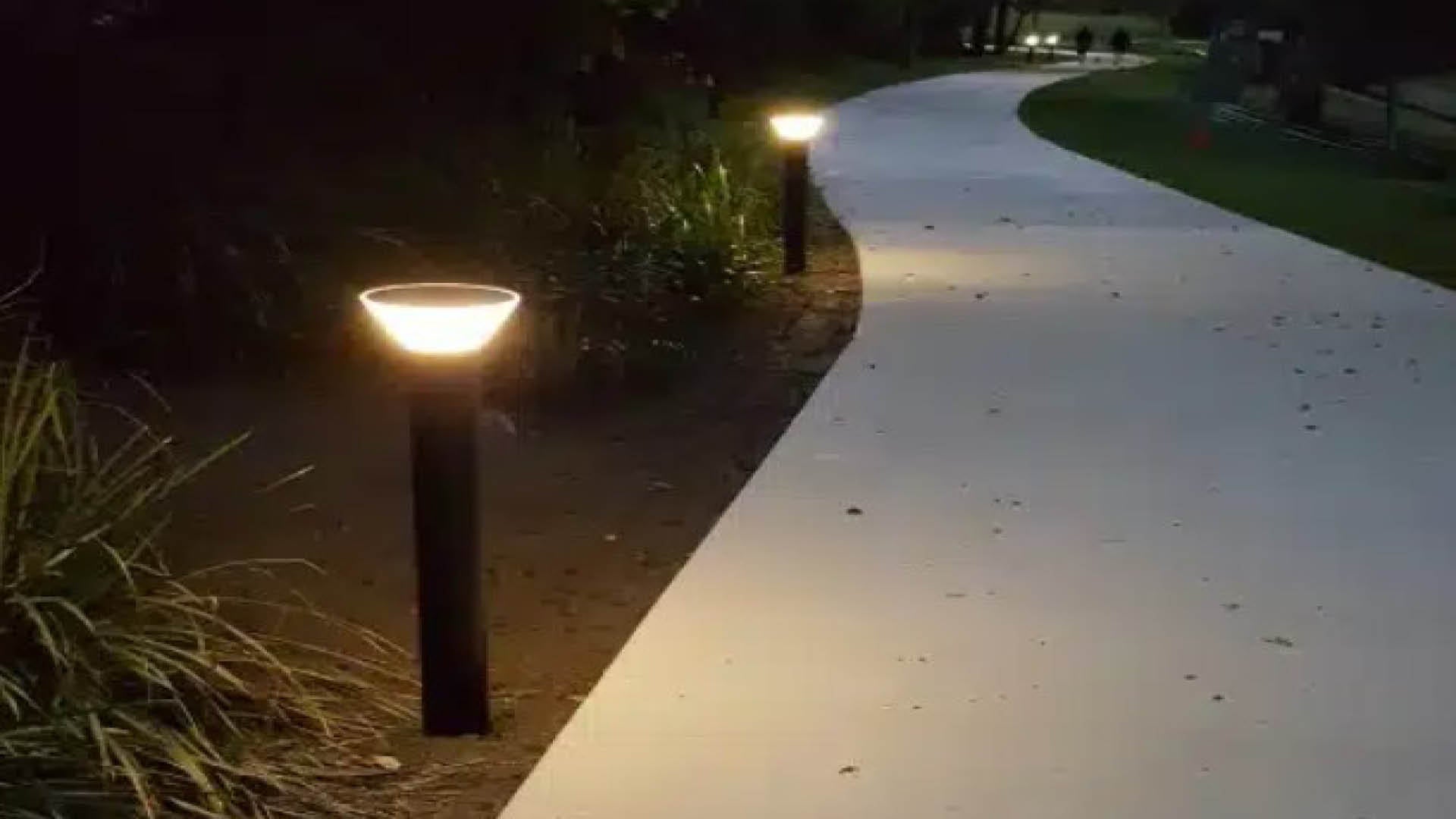 | At present, Council do not have a preferred bollard light type that meets LIM performance criteria for robustness. |
|
Wall lighting 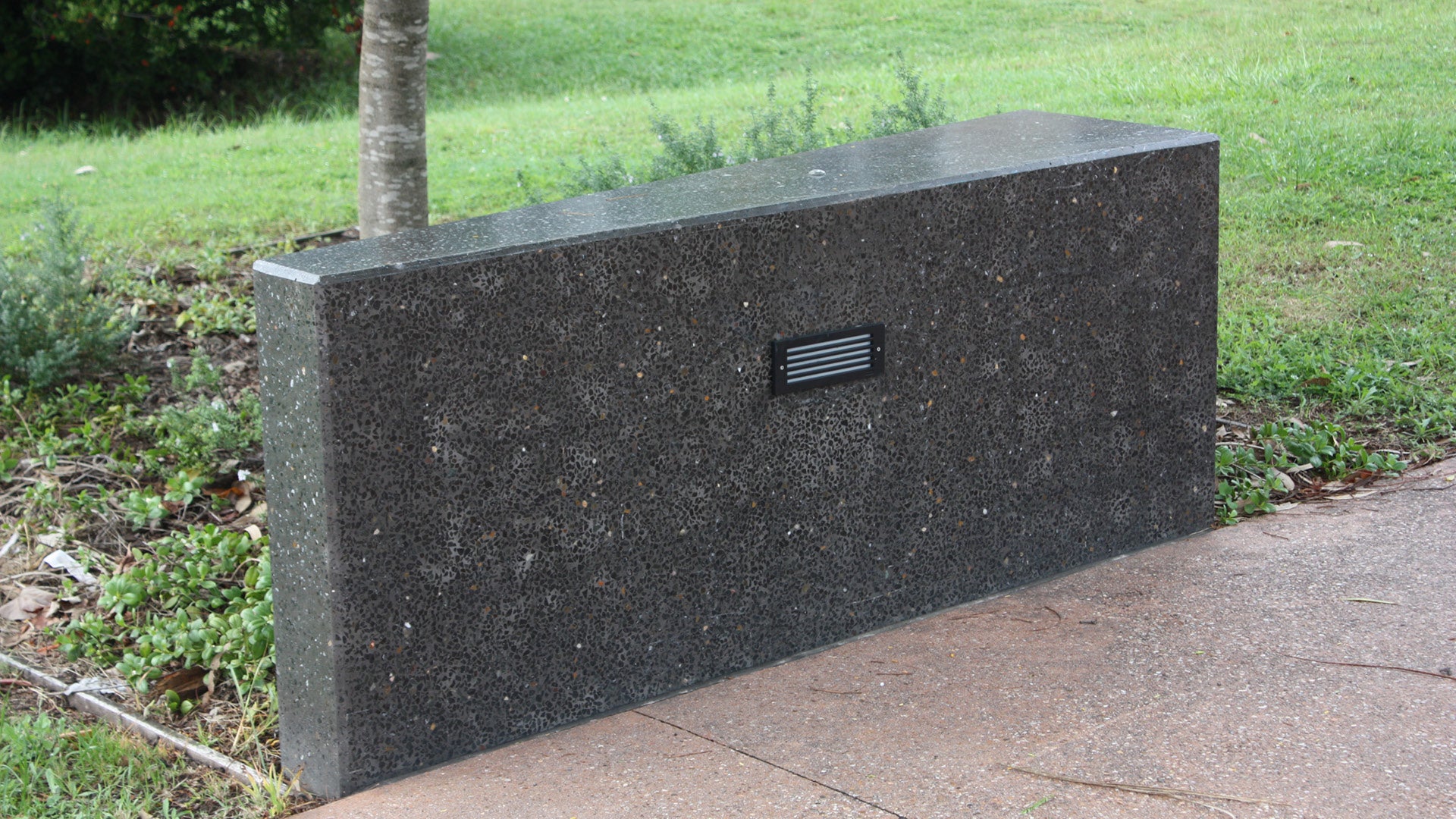 | Illuminate architectural features, walls, seats, etc. |
|
Pathway (post top) lighting 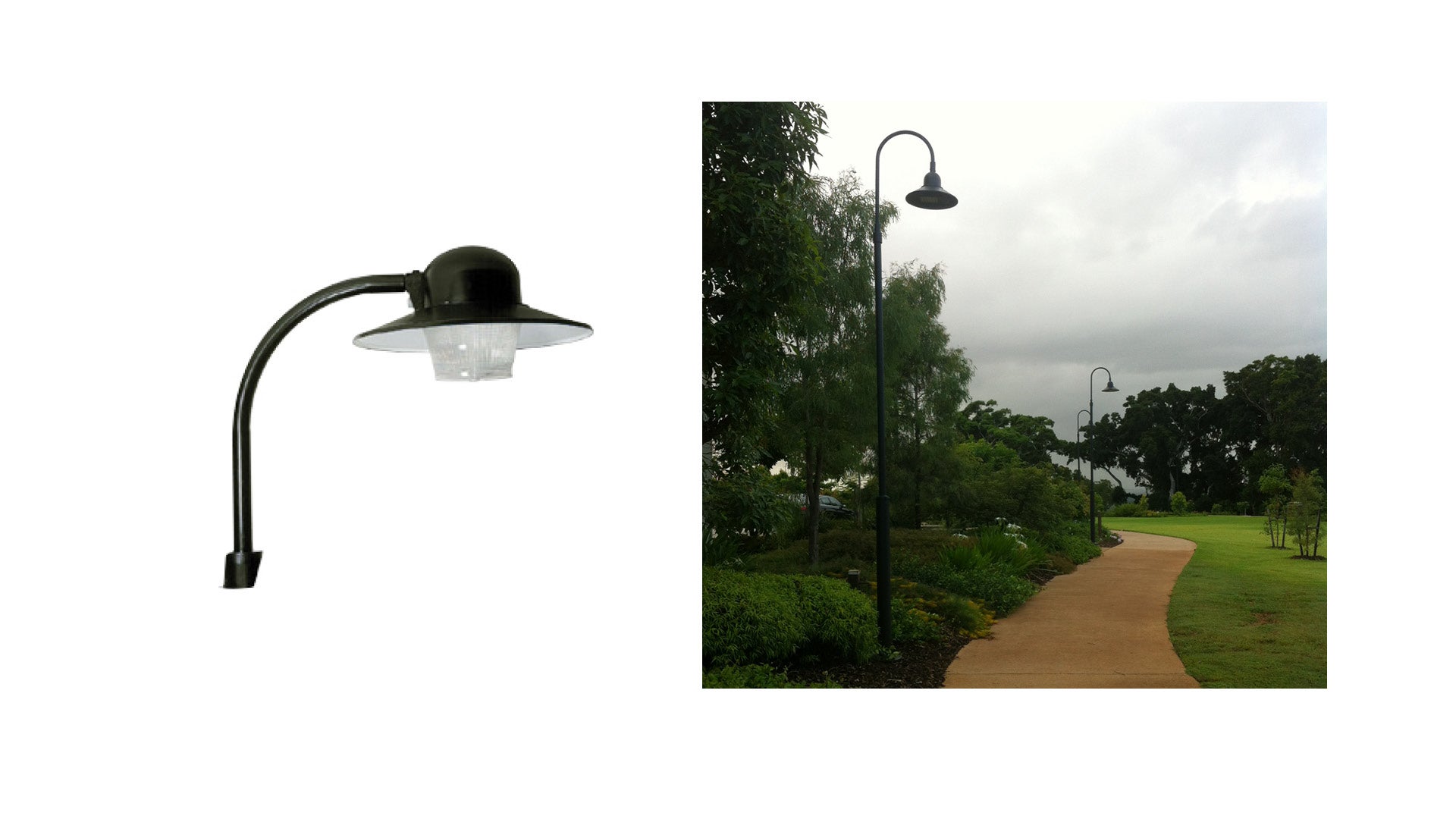 | Illuminate pathways and park areas |
|
Shelter lighting 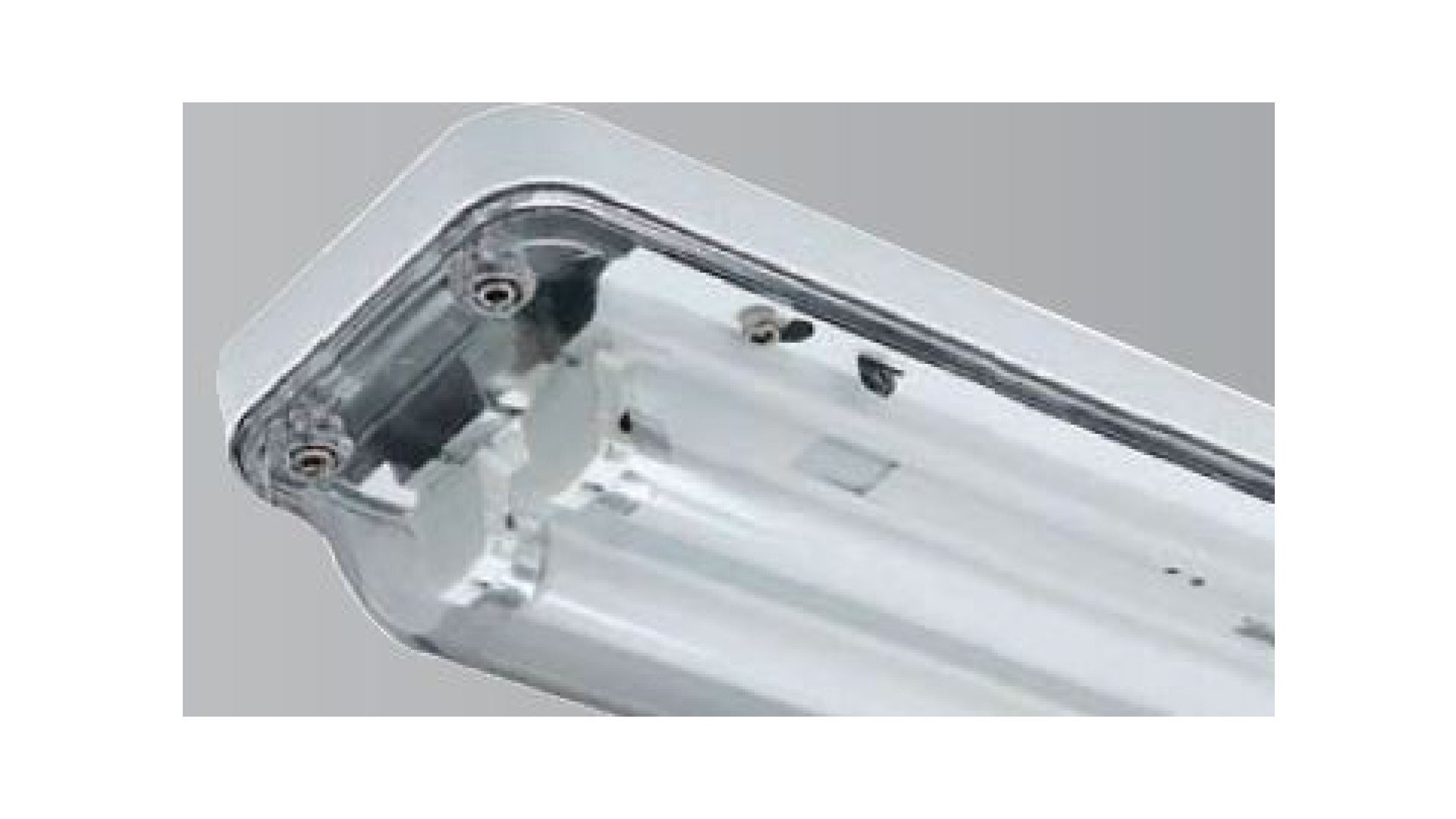 | Illuminate under shelter areas, particularly where barbecues and seating are located |
|
Illuminated signage  | Entry signage, park naming signage | Project specific. |
Table 5: Key considerations for Open Space lighting
Attribute | Key considerations |
Quality |
|
Output |
|
Quantity |
|
Source |
|
CPTED |
|
Unwanted light |
|
Glare |
|
Lighting poles
- All work performed is to comply with the appropriate Australian Standards, or in their absence, the latest British or International Electrotechnical Commission (IEC) Standards.
- The construction and manufacture of light poles shall comply with the Building Code of Australia (BCA) and the requirements of all relevant Australian Standards.
- Lighting poles are to have communications conduits through footing, where specified.
- Although not preferred by Council, hinged poles are cheaper to maintain, and may be acceptable where appropriate to fulfil safety in design (SiD) objectives.
See LIM Electrical – Specifications – Lighting poles for further guidance.
Lighting controls
- Lighting controls shall comply with the relevant BCA requirements.
- All control circuits and devices are to be located in the main switch board.
- User adjustable/operated devices shall be accessible without the need to remove the escutcheon panel.
- Control wiring, contractors and relays shall be suitably rated for the intended purpose.
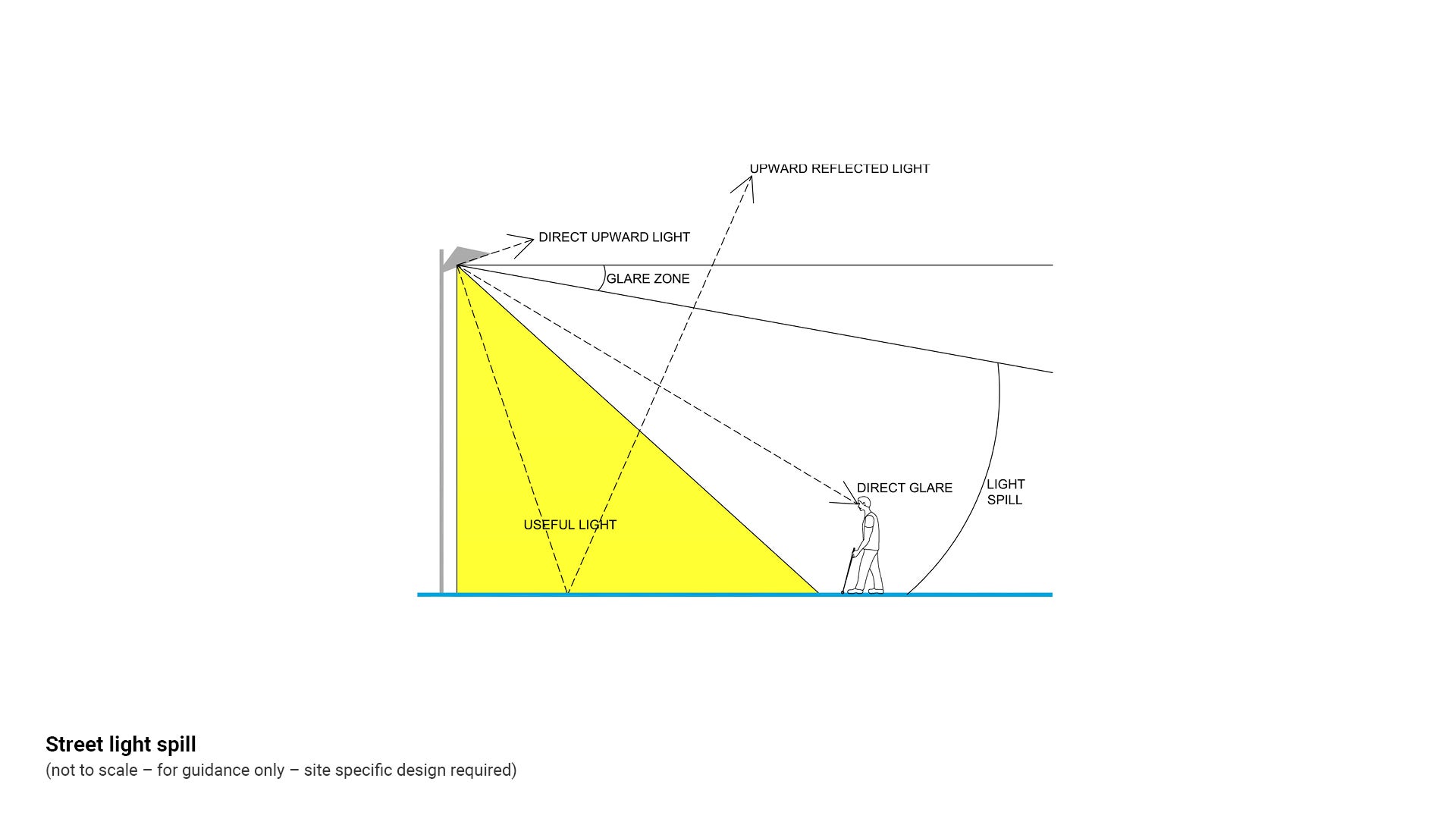
See Figure 4: Street light spill demonstrates the indirect sources of unwanted light and glare.
Figure 4: Street light spill
This component is currently in development