Electrical (including lighting)
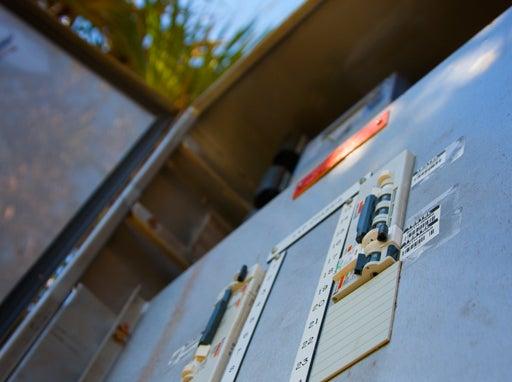
Specifications
Specifications for embellishments
This specification section addresses the following:
- Project specifications
- Technical drawings
- Glossary.
These electrical specifications are prescribed for open space ‘landscape design’ projects such as parks, landscaped areas and sports grounds.
For additional guidance relating to electrical installations of associated embellishments (including sportsfield lighting and barbecues) see the relevant LIM category.
Requirements for building electrical systems, communications cabling systems, public address systems and electronic security/CCTV systems are NOT covered in this category.
Preliminaries
Authorised Personnel
This section outlines the councils requirements for personnel undertaking landscape design projects:
- Minimum qualifications.
- Roles and responsibilities.
- Expertise.
See Table 1: Authorised personnel for further guidance on requirements for authorised personnel.
Table 1: Authorised personnel
Item | Requirement |
Electrical work Electrical work licences | There are 6 different types of electrical work licence. These are:
|
Electrical contractor Electrical contractor licence | An electrical contractor licence is required to provide electrical work for others as a sole trader, in partnership or corporation |
Electrical reticulation and lighting designs Electrical engineer or lighting consultant | All electrical reticulation and lighting designs require signoff by an RPEQ qualified engineer. |
Co-ordinating and supervising Landscape Projects Superintendent (for the purposes of continuity and clarity, the term Superintendent refers to the person supervising the Open Space project, e.g. construction Superintendent) |
|
Landscape Plans Landscape Design/Documentation, specifications and advice Landscape Architect |
|
Preliminary pre-start checklist
This section sets out council’s preliminary pre-start requirements for electrical works within landscape design projects:
See Table 2: Preliminary pre-start checklist (prior to commencement on site).
Table 2: Preliminary pre-start checklist
Task | Items | Date |
Pre-start meeting to clarify issues and establish management procedures, including relevant council officers and project team deemed necessary by the Superintendent, but not limited to: |
| insert date here |
Pre-start meeting items, including, but not limited to: |
| insert date here |
Tree Protection Zones (TPZ) for all trees requiring protection are confirmed by Project Arborist on site. Works are to comply with: |
| insert date here |
Tests and investigations | All underground and overhead services are to be located prior to commencement of works
| insert date here |
Where subject area is potentially contaminated by unexploded ordnance (UXO), search and clearance by a specialist UXO clearance contractor is required. | insert date here | |
Arborist report. | insert date here | |
Acid sulfate soils investigations supplied, where required. | insert date here | |
Aboriginal and Cultural heritage investigations supplied, where required. | insert date here | |
Soil tests where required. | insert date here | |
Electrical assessment where required. | insert date here | |
Plumbing assessment where required. | insert date here | |
Design | Schedule of finishes, specifications of materials. | insert date here |
Engineered design and any required certifications. | insert date here | |
Technical information – the manufacturer’s product, installation, inspection, warranties and maintenance information. | insert date here | |
Approvals, searches, compliant drawings and documentation – written compliance with relevant legislation, Australian Standards and corporate documents (including specifications and access and mobility requirements). | insert date here | |
General | Unusual requirements for handling or installation and competency requirements | insert date here |
Workplace health and safety plan, including:
| insert date here | |
Environmental management plan (EMP) and/or erosion and sediment control plan, where required. | insert date here | |
Preliminary site setup (refer LIM category) – general site induction, compliance with safety, tree protection, erosion and sediment control measures. | insert date here |
Hold points
All electrical works undertaken under a Council landscape works contract will require the following hold points to be adhered to. The contractor must ensure all hold points have been signed off by the appointed Superintendent prior to continuation of work. The Landscape Designer or Superintendent may determine that additional hold points are required.
See Table 3: Hold points for further guidance.
Table 3: Hold points
Hold point | Notice period | Required personnel | Certificates/drawings | Standard/detail | Date approved |
Switchboard technical drawing review | Contractor to provide required documentation to Superintendent and allow a minimum of 3 days to review. Manufacture of switchboard is not to commence until approval is provided by the Superintendent | Superintendent Contractor Consultant (if required) | Technical (workshop) drawings | Compliance with project specification, AS/NZS 3000 and AS/NZS 3439 e.g. construction materials, IP rating, vermin protection, fault levels, protection discrimination, segregation, colour etc | |
Light pole/s technical drawing review (including foundation) | Contractor to provide required documentation to Superintendent and allow a minimum of 3 days to review. Manufacture of light poles is not to commence until approved by the Superintendent | Superintendent Contractor Consultant (if required) | Technical (workshop) drawings | Compliance with project specification e.g. pole type, material, colour, luminaire mounting height, access doors, cable entry/exit, foundation details including structural compliance, etc | |
Setout inspection | 3 days notice to intended inspection date to be given by the contractor to the Superintendent | Superintendent Contractor Consultant (if required) | Findings report/approval | Compliance with project specification e.g. equipment/pole locations coordinated with existing and new services, setbacks compliant, orientation/aiming of luminaires correct, etc | |
Inspection of light poles delivered to site | 3 days notice to intended inspection date to be given by the contractor to the Superintendent | Superintendent Contractor Consultant (if required) | Findings report/approval | Compliance with project specification and shop drawings (refer above) e.g. free from defects | |
Cable trench and pit inspection (pre backfill), and conduit joining | 3 days notice to intended inspection date to be given by the contractor to the Superintendent | Superintendent Contractor Consultant (if required) | Findings report/approval | Compliance with project specification, e.g. conduit size/type/quantity correct, correctly primed and joined to manufacturer’s recommendations, depth to AS/NZS 3000 and/or AS/NZS 3002, segregation, pit installation, labelling, etc. | |
Cable trench and pit inspection (post backfill) | 3 days notice to intended inspection date to be given by the contractor to the Superintendent | Superintendent Contractor Consultant (if required) | Findings report/approval | Compliance with project specification, e.g. appropriate backfill material, pit lids flush, pit lid rating, service reinstatement | |
Energex inspection/approval | Minimum 3 days notice is required prior to energisation date | Energex | Energex approval/connection advice | Compliance with Energex requirements and connection process | |
Final commissioning inspection | Minimum 3 days notice is required prior to practical completion | Superintendent Contractor Consultant (if required) | Form 16 compliance certificate | Installation is to comply with project specification and all applicable codes/standards |
General requirements
All works are to be carried out in a manner consistent with:
- Accepted electrical practices for the Sunshine Coast area.
- The standards and guidelines presented in this document and standard drawings.
- Industry standards.
- Electrical best practice.
Authorities
Electrical works are to comply, and be performed in accordance with, all applicable laws, ordinances, rules and regulations required by authorities having jurisdiction over the works.
Works are to provide for all inspections and permits required by federal, state or local governments and authorities in furnishing and transporting materials, including:
- Electrical Safety Office (ESO)
- Energex
- Workplace Health and Safety Queensland
Accreditation
Electrical equipment and appliances sold in Queensland must comply with the following:
- Electrical Safety Act 2002
- Electrical Safety Regulation 2013
- Electrical safety code of practice 2013 – Managing electrical risks in the workplace.
Tests
For further guidance on testing requirements for electrical installations and equipment, see Section 14 Testing commissioning and training.
Certification
All lighting designs are to be provided with a Form 15 – Compliance certificate for building design or specification.
The certificate is to list the relevant codes and compliance with them, and must be signed by an RPEQ qualified engineer.
Form 15 is to be provided with tender documentation and prior to any construction on site.
The contractor is to provide a Form 16 – Inspection Certificate/Aspect Certificate/Queensland Building and Construction Commission (QBCC) Licensee Aspect Certificate upon completion of the project. This document is also to be included in the Operational and Maintenance manuals.
Safety in design
Safety in Design (SiD) means the integration of control measures as early as possible in the design process to eliminate or, if this is not reasonably practicable, minimise risks to health and safety throughout the life of the infrastructure being designed
The safe design of infrastructure will always be part of a wider set of design objectives, including practicability, aesthetics, cost and functionality. Sometimes these competing objectives need to be balanced in a manner that does not compromise the health and safety of those who work on or use the infrastructure over its life.
Safe design begins at the concept development phase of the infrastructure when making decisions about:
- The design and its intended purpose
- Materials to be used
- Possible methods of construction, maintenance, operation, demolition or dismantling and disposal
- What legislation, codes of practice and standards need to be considered and complied with.
For further guidance on Safety in Design requirements for electrical installations and equipment, see Sunshine Coast Council Safety in Design Management – Health and Safety Procedure.
Technical drawings
Technical drawings are to be provided for approval prior to manufacture for the following:
- Switchboards – these are to include general arrangements, construction details, equipment schedules and single line diagrams.
- Lighting control systems – where a programmable type control system has been used, provide single line diagrams and equipment schedules.
Materials, workmanship and warranty
- Unless otherwise specified, current relevant Australian Standards are to be observed.
- All equipment and materials used shall be new unless otherwise specified.
- Works are to be carried out by suitably qualified professionals.
- The contractor is to use appropriately trained personnel who are competent and experienced in the installation and operation of the systems and equipment covered by these works.
- Airborne dust is to be kept to a minimum.
- Ensure that no spillages or discharges of oil, fuel or other pollutants occur during servicing, refuelling or works operations.
- All contractors are to hold current licences required by the relevant authority.
- The contractor is to provide a minimum warranty of 12 months for installation under normal working conditions (including plant) from the date of practical completion.
- Should the installation or part thereof prove to be defective or fail to fulfil the requirements of this specification, the defective equipment shall be repaired or replaced by the contractor. Any associated costs are to be borne by the contractor.
- Council reserves the right to extend the warranty period depending on the project.
See Section 15 Practical completion and defects liability for further guidance.
Substitutions and variations
Measurements and dimensions are minimum requirements. Considerations for substitutions and replacements are to ensure the following:
- Alternatives to documented products, methods or systems must be accompanied by sufficient information to permit evaluation prior to approval.
- All variations or substitutions are to be approved by the Superintendent prior to commencement. If the substitution is for any reason other than unavailability, submit evidence that the substitution is:
- Of net enhanced value to the project.
- Consistent with the project drawings and is as effective as the identified item, detail or method.
- Any non-preferred equipment must be reviewed by council prior to specification and/or commencement of installation. Failure to do so may result in rejection of equipment and rectification of defect.
- Any specialist equipment required to maintain electrical installation, e.g. cherry picker, is to be included in the tender/construction cost. No variation will be accepted for equipment hire during the maintenance period.
Safety Data Sheets (SDS)
A Safety Data Sheet (SDS), previously called a Material Safety Data Sheet, is a document containing important information about a hazardous chemical which may be identified as both a hazardous substance and/or a dangerous good. The SDS provides health and safety representatives, employers, self-employed persons and workers with the necessary information to safely manage the risk from hazardous substance exposure.
Council requires the following:
- A current SDS be readily available in paper form for all substances that may be transported on a work vehicle and at sites where work is to be undertaken.
- The contractor and/or contractor’s staff engaged in the handling or use of chemicals have thoroughly read the product label and have ready access to a SDS for each chemical being used.
- The relevant SDS and product labels are to be onsite whenever chemicals are being used.
Plant and equipment
- Plant is defined by section 5 of the Workplace Health and Safety Act (OHS) 1995 as ‘any machinery, equipment or tool and any component thereof’.
- Before the movement of plants, plant products or related items, such as soil and machinery, relevant quarantine restrictions are to be complied with.
- Although the Council area is not within a fire ant (Solenopsis invicta) restricted area, care must be taken when transporting plants, planting material and/or equipment from a fire ant restricted area. For further information, refer to the Queensland Government Department of Agriculture, Fisheries and Forestry (DAFF).
Interruptions to electrical supply
- Any interruptions to electrical supply are to be approved by council prior to commencement of works.
- Contractor is to provide a detailed schedule indicating approximate shut down periods and arrange for standby generator as required to project specifications.
Site protection
- Ensure site is maintained in a safe, and as far as practicable, clean and tidy condition.
- In the event that other civil, electrical or hard landscape works are programmed for construction after the placement of turf, plants, trees or mulch during the landscape construction, the contractor is to protect soft landscaping works from damage using barricades and best practice techniques, or reinstate to approval of Superintendent.
- Driving and parking of vehicles within council parks and reserves is to be minimised.
- Unless absolutely necessary to carry out works, driving plant and equipment in the following areas is to be avoided:
- Turfed areas
- Irrigated areas
- Landscaped areas
- Tree root zones
- Council infrastructure areas.
- Access to open space areas for specific works is to be coordinated with the Council Superintendent.
Damaged surfaces
- Council is to be notified and to inspect any damage to infrastructure that occurs during the construction process, prior to any rectification works being undertaken.
- After inspection, any required repairs will be at the expense of the contractor.
Labelling
- Labels are to be made from metal, stainless steel or traffolyte, screw fixed to the escutcheon panel or pole.
- Labels larger than 75 mm x 25 mm are to be fixed with a minimum of 4 mounting screws.
- Normal labels are to be white text on a black background.
- Safety service labels are to be white text on a red background.
- Labels are to be engraved or laser etched.
- The following specific labels are required:
- Main switchboard
- Provide resuscitation sign in accordance with the Australian Resuscitation Council Guideline 8 – Cardiopulmonary Resuscitation (CPR).
- A main identification label shall be white text on a black background, including description (min 25 mm text) and supplied from an earth location (min 12 mm text).
- Functional labels for each compartment shall be provided with minimum 12 mm text height.
- Safety signage including Standard 415V Danger Sign and electrical pictogram is to be provided on each panel, in accordance with AS 1319.
- Distribution boards
- Provide identification labels at each distribution board.
- Description shall be 12 mm minimum text and fed from cable size and earth location shall be a minimum 6 mm text.
- Light poles
- Provide identification labels on each light pole to indicate point of supply, circuit reference and unique pole identifier.
- Pole identifier shall be 12 mm minimum text.
- Point of supply and circuit reference shall be minimum 6 mm text.
- Underground cabling and conduits
- Brass markers indicating ‘Electricity’ are to be installed where cables or conduits are located under pathways, concrete slabs, etc.
- Main switchboard
Operation and maintenance manuals
- Provide operation and maintenance manuals for the electrical services installation including the following:
- Operation Manual
- Safe working procedures for isolating or switching supply from the distribution system.
- Information for the long term operation and maintenance of the installation, including manufacturer’s recommendations.
- Maintenance procedures, recommended maintenance periods and procedures.
- Updated safety report outlining ongoing Safety in Design obligations.
- Technical Manual
- Copies of single line diagrams for the supply and distribution systems.
- Complete set of ‘as constructed’ drawings.
- Switchboard details (including technical drawings, schedules and equipment data sheets).
- Comprehensive list of equipment and warranty details.
- Copies of relevant certificates.
- Full list of testing reports.
- Digital copies of all of the above to be provided.
- Operation Manual
- All manuals are to be provided prior to practical completion and released at practical completion.
As constructed documentation
- On completion of physical works and prior to asset being accepted on maintenance, a current version ADAC XML file of the ‘As Constructed’ and a full set of the ‘Design Drawings’ with the ‘Marked Up’ As Constructed information is to be submitted for council review and acceptance.
- For further guidance on ADAC requirements for electrical installations and equipment, see Sunshine Coast Council Guidelines for Creation and Submission of ADAC.
- Prior to practical completion, council is to receive a full set of ‘as constructed’ drawings.
- Project drawings are to be prepared using the latest CAD software and are to be delivered to council as digital files.
- Any drafting required to update drawings from design to ‘as constructed’ is to be conducted in accordance with AS 1102.101 – Graphical symbols for electrotechnical documentation - General information and general index.
- ‘As constructed’ drawings are to be fully detailed drawings at the same scale as the design drawings.
- ‘As constructed’ drawings are to be a true and accurate representation of equipment locations on site, and are to include a full survey of conduit routes.
- Any variations and/or design changes during construction are to be included in the ‘as constructed’ documents.
- All ‘as constructed’ documentation is to be provided prior to practical completion. Where required documentation is not provided to council, the costs to obtain these will be passed from council on to the contractor and deducted from the contract value.
Electrical installation
Scope of works
- The contractor shall supply, install, test and commission all equipment necessary for the safe and efficient operation of the installation suitable for public activity areas. This includes all labour, supervision, plant, materials, transportation, testing and commissioning necessary to satisfy the delivery of the project.
- Contractor is to verify and check all dimensions. If there are any discrepancies between the design documents and site measurements, contractor is to notify the Superintendent prior to commencement of works.
- In the event of any delay in regards to plant and equipment, the contractor is to advise the Superintendent.
- All equipment is to comply with the Electrical Safety Act 2002 and Electricity Supply Authority requirements.
- The contractor is to pay all fees and charges associated with their works, including, but not limited to, Supply Authority and local authority charges.
- If no supply is available, temporary supply is to be sought from the supply authority, and any fees and charges paid by the contractor.
- The contractor is to make every reasonable effort to locate any existing services within the construction zone prior to any excavation. Contractor is to conduct a dial before you dig through all relevant authorities as well as any required cable locating. The contractor is responsible for all repairs/costs associated with damage to services.
- No live work is to be conducted on any installation.
Trenching
Undertake all required excavation works as follows:
- Excavate trenches to a depth of 100 mm below the required conduit depth to allow installation of suitable bedding material. Should suitable material occur naturally in the bottom of the trench, the Superintendent may approve the use of such material in situ, in which case excavation to invert only is required.
- During excavation, every care shall be taken to avoid damage to existing underground installations. Any damage caused shall be rectified at the contractors expense.
- Where trenches are left open, ensure they are protected by barricades, or in such a manner as to prevent creating a hazard.
- All excavation works in and around existing tree root zones shall be coordinated with the Superintendent and the project arborist. Works in these areas shall not commence without prior approval from the arborist. Typically, excavation in these areas will be via hydro-excavation or hand excavation methods.
- Trenches shall not be cut through roads, kerb and channel, concrete pavements or slabs without prior approval from the Superintendent. Appropriate traffic management shall be utilised and coordinated with the Superintendent where required for road/pathway excavations.
- After laying conduits, the trench shall be backfilled only after conduits have been inspected and approved by the Superintendent.
Backfilling shall conform to the following:
- Where pavements are to be built over the trenches, the backfilling material is to be sand, gravel, cement stabilised sand or similar approved material and brought to the level of the bottom of the pavement base course. This is to be thoroughly rammed by hand or mechanical tampers until a modified density of at least 95% of the maximum dry density is obtained.
- In all other circumstances the trench is to backfilled with approved material laid in 200 mm loose layers and compacted to the density of the adjacent soil. Stones of larger than 37.5 mm are not to be used.
- The top of the backfilling shall be flush with finished level surface treatment, unless otherwise specified.
- All excess excavated spoil removed from trenches and not required for backfill shall be removed from site and appropriately disposed of to the approval of the Superintendent.
- A 150 mm wide PVC marker tape with metal stripe for location bearing the words ‘CAUTION - BURIED ELECTRIC CABLES BELOW’ shall be laid in the trench directly above all underground electrical cable ducts, below the surface of the ground for the entire length of the underground cable ducts, in accordance with AS/NZS 3000.
Restoration and make-good shall conform to the following:
- The contractor shall restore bituminous penetration pavements to at least the standard of the original pavement, using approved materials to the satisfaction of the Superintendent. Such restoration shall be completed as soon as backfilling and compacting of trench has been completed for the full width of the existing pavement.
- Irrespective of the type of existing bituminous sealing, the surface shall be restored using an approved premix bituminous material placed in a single 50 mm thick loose layer and compacted to finish flush with the existing pavement. Prior to placing the premix, the trench edges shall be neatly trimmed square to the surface and primed for 150 mm width each side with standard bitumen emulsion or other approved material.
- Backfilling shall be completed as soon as practicable after other work is completed in each section, surplus soil, construction materials and waste cleared and surfaces existing improvements made good to the satisfaction of the Superintendent.
- Trenching in landscape or grassed areas shall be backfilled as above except the top 150 mm which shall be backfilled with garden topsoil and reloamed/revegetated.
- Road reinstatement is to be completed in accordance with the standard conditions and specifications outlined in Sunshine Coast Council Infrastructure Guidelines and Standards – Public Utility Services - Electrical Infrastructure within Road Reserves.
- For turf and garden bed reinstatement, refer to LIM Planting (Landscape).
Point of supply
Supply assessment
For modifications to existing installations, ensure that existing electrical infrastructure provisions have suitable spare capacity to satisfy the new requirements. This shall include assessment of:
Maximum demand of the proposed new electrical installation (taking guidance from AS/NZS 3000).
Existing capacity (amperes) of incoming and existing switchboard supplies.
Availability of spare supply take-offs, including consideration of overall protection discrimination throughout the installation.
Where existing infrastructure is deemed unsuitable to service new requirements, or where major non-compliances are identified with existing equipment, direction shall be sought from the Superintendent.
New supply requirements
- For projects where no existing supply is available or the existing supply is inadequate to support the new requirements, the contractor shall liaise with the supply authority (Energex) for a new / upgraded service.
- All new and modified supply infrastructure shall comply with supply authority (Energex) requirements. Enquiries can be phoned through to 13 12 55.
- Additional requirements are contained within the Queensland Electricity Connection and Metering Manual (available online).
- The Energex consultation and approval process can be lengthy, which may impact on project deadlines. Liaising with Energex shall commence as early as practicable so as to minimise project delays.
Underground supply
- Where underground supply is desired, a minimum conduit size of 100 mm is to be installed for consumers mains cabling from the supply authority pillar pole to the main switchboard.
- Final conduit sizing is to be in accordance with project requirements.
Overhead supply
- Where overhead supply is desired, a treated hardwood or galvanised steel property pole is to be provided for the receiving of overhead cables from the supply authority network. The type of pole is to be confirmed with the Superintendent.
- Approval details can be located within the Energex connection and metering manual.
- All overhead aerials are to be insulated bundled type.
Switchboards, meter panels and control gear enclosures
Design
- Switchboards shall generally comply with the layout, dimensions and construction details as shown in this document.
- Installation of switchboards is to comply with the current version of the Queensland Electricity Connection and Metering Manual.
- All switchboard segregation is to be designed in accordance with AS/NZS 3000 and AS/NZS 3439 and shall be as follows:
- Main Distribution – Form 2 (unless otherwise required by AS/NZS 3000).
- Sub-circuit Distribution – Form 1.
- Provide a fully graded system complying with the requirements of AS/NZS 3000, including coordination with existing upstream protection to the supply authority point of entry.
- Ensure all protection devices are rated such that required selectivity is maintained throughout the distribution network.
- Ensure protection devices are rated to withstand the prospective short circuit current (fault current) at each point in the network. This can be achieved via suitably rated protection devices, or alternatively through the implementation of a cascaded combination of breakers.
- If a cascaded system is proposed, provide evidence from the manufacturer that the proposed combination of devices has been tested for this application. Include details of any cascading protection arrangement in the operating and maintenance manuals.
- Provide RCD’s on all circuits as required by AS/NZS 3000.
- Provide a minimum of 25% spare pole capacity.
- All lighting and power circuits to be loaded to less than 75% of their rated capacity.
- The minimum degree of protection in accordance with AS 60529 is to be:
- IP44 for internal locations.
- IP65 for external/outdoor locations.
See LIM Electrical - Technical Drawings for further guidance.
Construction
- All switchboards shall be minimum 3.0 mm marine grade aluminium powder coated in approved colour (Dulux Woodland Grey or approved equivalent).
- All switchboard access doors are to be vermin proof with padlockable access to be as follows:
- Door to Energex meter cubicle – ELS 929.
- Door to Distribution and GPO cubicles – Council to lock (Council Parks 30 key).
- Specify lock types as follows:
- Type 30 for event section locks
- Type 929 for all other locks in the switchboard.
- Switchboards to be clearly labelled with an individual identifying number which also indicates the source of incoming supply.
- Custom switchboards are to be designed and certified by an RPEQ qualified engineer.
Installation
- Switchboards are to be installed in locations in accordance with AS/NZS 3000 and shall maintain the minimum clearances.
- A MEN earthing system shall be installed in accordance with AS/NZS 3000 and is to include a driven electrode to a minimum depth of 1800 mm. Electrode head and connection point are to be accessible and protected at all times
- Pole mounted switchboards are to be constructed as above and fixed to pole using stainless steel fixings and bracing.
- Where switchboards are to be wall mounted:
- Capacity of the wall to support the weight of the switchboard without compromising structural integrity is to be investigated.
- Provide additional studs, internal reinforcing or bracing as required.
- Construction details shall be site specific, and shall be approved by the Superintendent prior to installation.
- Wall mounted switchboards are to be secured into position by not less than four 316 stainless steel screws of a minimum 10 mm diameter.
- Use 316 grade stainless steel masonry anchors/dyna bolts for brickwork.
- Where switchboards are to be free standing (unless otherwise specified)
- Switchboard shall be mounted onto a suitably rated 100 mm high concrete plinth with provision for switchboard fixing points.
- Concrete plinth design shall be flat to ensure switchboard does not move due to any unevenness. Surface shall be sloped to prevent accumulation of water and maximise drainage.
- Plinth size shall be determined in conjunction with the switchboard dimensions to ensure that the switchboard sits wholly on the plinth, with no overhang.
- The distance between the extent of the switchboard cabinet and the edge of the concrete plinth shall not be more than:
- 300 mm.
- 600 mm where cabinet door opens.
- Gap between plinth and enclosure shall be of a size that is vermin proof and able to prevent corrosion of the enclosure or its fixings.
- Plinth shall make allowances for the type, size and quantity of conduits as nominated on the project documentation.
- Suitability of concrete plinth for mounting intended switchboard in accordance with project documentation shall be approved by an appropriately qualified civil/structural engineer.
- Free standing switchboards shall be secured using a minimum of four 316 grade stainless steel dyna bolts.
- All fasteners, screws, dyna bolts, etc, are to be 316 marine graded stainless steel. Self tapping/drilling screws will not be accepted. Nylon spacers are to be used between metals to inhibit corrosion.
- Switchboards shall be fixed level and plumb.
- Conduit entries to switchboards shall be via aluminium gland plates with threaded conduit bushes (nylon or stainless steel) and lock nuts.
- No conduit/cable entries are to be installed through the switchboard cubicle outer casing.
- All switchboards shall have bottom cable entry.
- A minimum gap of 100 mm must be maintained on each side of the switchboard to allow adequate ventilation.
Metering
- All retail metering installations shall comply with the Queensland Electricity Connection and Metering Manual (QECMM V10) which is available online at the Energex website. Any other project specific Energex requirements shall be as directed by Energex.
- Requirements for private metering shall be confirmed with the Superintendent.
- Where required, private metering shall be as follows:
- Multifunction, capable of measuring (at minimum) voltage, current, frequency, power factor, power (active, reactive and apparent).
- Minimum Class 1 accuracy.
- Make provision for mounting metering current transformers (CTs) and provide removable links, barriers and labels.
Lightning and surge protection
- As part of design/investigation works, undertake a lightning risk assessment in accordance with AS/NZS 1768.
- Provide results to the Superintendent, together with recommendations as per the outcomes of the risk assessment.
Labelling
- All controls, switches, etc, on switchboards shall be clearly labelled.
- All labels shall be engraved black on white traffolyte for general circuits, or white on red traffolyte for emergency circuits.
- All labels are to be fixed via 316 marine grade stainless steel screws or nuts and washers.
- Self tapping screws or glued labels will not be accepted.
- Labelling to include ‘Danger 415V’ or ‘Danger 240V’ on the escutcheon panel.
Circuit schedule
- Circuit schedules are to be typed and provided to all switchboard positions.
- Circuit numbering shall be continuous without segregation between lighting and power circuits to achieve maximum efficiency.
- Circuit schedules are to include:
- Circuit breaker size
- Circuit description
- Cable size
- Voltage drop
- Cable length
- Earth continuity
- Insulation resistance.
- Schedules shall be secured in position with clear PVC covered holders. Schedule shall also indicate supply source, cable size and cable length.
- An A4 copy and electronic copy of the circuit schedules are to be included in the Operational and Maintenance Manuals.
- Schedules shall be updated where works involve modifications to existing circuits.
Lock and keying systems
- Specify lock types as follows:
- Type 30 (Council Parks 30) - for event section locks, switchboard, irrigation and event boxes
- Type 929 - Energex metering and CT cabinet – ELS 929 Fort Knox padlock for all other locks in the switchboard.
- Allbro 10111P flush padlockable swing handles (or equivalent) with the provision for a padlock shall be installed, to enable padlock to be changed from ELS929 to an events padlock.
Cables
General
- All cables are to be installed, jointed and terminated in accordance with the manufacturer’s recommendations.
- Cables are to be continuous and without joints. Any jointing is to be on terminals within the switchboard, behind outlets or within equipment.
- All cables are to be installed with a bending radius not greater than the manufacturer’s recommendations and/or not less than 10 times the outside diameter of the particular cable.
- Provide cable support where required.
- Cable entries to switchboards and control gear enclosures to be bottom or rear entry and glanded to protect cables.
Note: No underground cable joints will be accepted
Consumer’s mains
- Consumer’s mains are to be sized in accordance with project requirements and standard switchboard technical drawings with an additional 25% spare future capacity.
- Council Park supply cables are to be a minimum of 25 mm2 XLPE.
Submains
- Submains are to be sized in accordance with project requirements with an additional 25% spare future capacity.
Cable type
- All cables are to be selected in accordance with AS/NZS 3000 and AS/NZS 3008.1.
- Ensure total voltage drop from supply to final sub circuits does not exceed 5%, or 7% where an onsite transformer is present, with a maximum drop of 1.5% in the consumer’s mains cable.
- All cables to be multi stranded copper conductors unless otherwise specified.
- XLPE/HDPE or elastomeric insulation is to be used, unless otherwise specified.
- PVC free cables are to be encouraged where appropriate.
Cable sizing
- All cables are to be sized in accordance with AS/NZS 3008.1 with an additional 25% spare capacity.
Minimum cable depths
- Minimum cable depths shall be in accordance with AS/NZS 3000. Cabling systems are to comply with category ‘A’ only.
- For installations with event power requirements and/or areas where the erection of tents, marquees, pavilions and the like is reasonably envisaged, cable depths shall be in accordance with AS/NZS 3002.
See Table 4: Minimum cable depths for further information.
Table 4: Minimum cable depths
Cable type | Depth |
Extra low voltage (ELV) | 300 mm below finished ground level |
Low voltage (240V) | 600 mm below finished ground level |
Event power | 1000 mm below finished ground level |
Earthing
- Earthing within public amenities is to be equipotential bonded with concrete reinforcing mesh in accordance with AS/NZS 3000.
- Where metallic/conductive furniture is located such that an earth potential rise may result from external or environmental factors, it shall be bonded to the electrical installation with a minimum impedance of 0.5 ohm.
- Structures with metallic roofing structures shall be provided with a means of conductive path to ground, either via the structure or down conductor.
Conduits
General
- All conduits are to be heavy duty rigid, UV stabilised (orange) PVC. Where exposed conduit is required and below 2.4 m, galvanised steel conduit is to be used.
- In situations where vertical or horizontal cabling may be at risk of damage and/or vandalism provide suitable galvanised steel hat section to protect conduits.
- Mechanical protection is to be provided for all shelter conduiting up to 2.4 m high, and is to take the form of a heavy galvanised hat section, or alternatively use appropriately earthed, galvanised steel conduit where exposed to potential vandalism.
- All conduit joints are to be cemented using the manufacturer’s recommended adhesive method.
- Provide draw cords in all conduits and leave a minimum of 2.0 m of cord coiled at each end of run. Draw cord is to be 6.0 mm diameter polypropylene rope.
- Underground conduits are to be sized to cater for project requirements with an additional 50% spare capacity.
- All exposed conduits are to be painted to match adjoining surface.
- No direct buried corrugated conduit will be accepted.
See Table 5: Minimum required underground conduit sizing for further information.
Table 5: Minimum required underground conduit sizing
Open space electrical capacity (current and planned) | Consumer’s mains (min size shown) | Submains (min size shown) - future accommodation of communications (optic fibre) requirements | Main Infrastructure backbone (min size shown) | Final subcircuit Cabling (min size shown) |
High (multiple barbecues, shelter and path lighting, toilets, events) | 2 x 100 mm HD PVC orange electrical conduit | 2 x 100 mm HD PVC orange electrical conduit | 2 x 100 mm HD PVC orange electrical conduit | 1 x 50 mm HD PVC orange electrical conduit |
Medium (single barbecue, shelter and path lighting) | 1 x 100 mm HD PVC orange electrical conduit | 2 x 100 mm HD PVC orange electrical conduit | 2 x 100 mm HD PVC orange electrical conduit | 1 x 50 mm HD PVC orange electrical conduit |
Low (shelter and path lighting) | 1 x 100 mm HD PVC orange electrical conduit | 2 x 100 mm HD PVC orange electrical conduit | 1 x 100 mm HD PVC orange electrical conduit | 1 x 50 mm HD PVC orange electrical conduit |
Conduit supports/fixing
- All fixings and support brackets are to be 316 marine grade stainless steel, unless otherwise specified.
- For conduits 32 mm in diameter and smaller, use one of the following fixing methods:
- To masonry, concrete or cement rendered walls, no. 8 x 25 mm round head stainless steel screw into 25 mm long plug
- Where directly fixed to timber, no. 8 x 20 mm round head stainless steel screw.
- Where directly fixed to sheet metal, no. 8 x 15 mm round head stainless steel screw.
- For conduits 40 - 63 mm in diameter, use one of the following fixing methods:
- To masonry, concrete or cement rendered walls, no. 12 x 35 mm round head stainless steel screw into 35 mm long plug
- Where directly fixed to timber, no. 12 x 35 mm round head stainless steel screw.
- Where directly fixed to sheet metal, no. 12 x 15 mm round head stainless steel screw.
- Fix conduit saddles at 500 mm intervals in horizontal runs and 500 mm intervals on vertical runs, unless otherwise specified.
- All conduit saddles are to be double sided.
- All conduits entering buildings or switchboards are to be sealed using an expanding intumescent compound suitable for use and removal.
Cable pits
General
- All underground cable pits are to be poly plastic type, plastic/steel composite or steel reinforced concrete (precast or in situ).
- Cable pits located within turfed areas are to be installed with a 150 mm concrete collar to:
- Protect against mower damage
- To prevent crushing of pits in expansive soils
- Minimise exposure of top edge of pit due to erosion.
For further guidance, refer to LIM Electrical - Technical Drawings of concrete collar.
- Cable pits in garden beds may require a concrete collar, dependent on project.
- All conduits are to enter pit at right angles to pit wall.
- No conduit entries are to be via base of pit
- All conduit entries to pits are to be sealed into wall of pit using a flexible sealant (Sikaflex, or equivalent).
- Appropriate hauling techniques are to be implemented (use of rollers and chutes) to avoid damage to cabling and conduit entries.
- All pits are to be supplied with engraved steel marker plates indicating conduit direction.
- All pits are to be installed to surrounding finished surface level.
- All pits are to be drained to a rubble drain. Filter fabric is to be installed between the pit and rubble drain.
- Where installation is required on a sloping surface, drain is to be installed in the lowest corner of pit.
- Cable pits are to be located at the base of each light pole and each change of direction
- Cable pit selection and sizes are to be approved by Council Superintendent prior to installation.
- Council preferred cable pits are:
- BVCI type P4 poly pit, or equivalent
- BVCI 600 mm x 600 mm concrete pit, or equivalent
- TRI Underground Circular 600 mm plastic/steel composite (currently on trial).
- Alternatives to the above will be considered, however approval must be gained prior to use.
See LIM Electrical - Technical Drawings and LIM Electrical - Specifications for further guidance.
Lid selection
- Lid must be of composite or concrete type and suit the intended load rating of the pit system installed.
- Galvanised steel/metallic lids should not be utilised unless otherwise unavoidable, to suit the intended load rating of the pit system.
- Where the use of metallic lids is required, lids are to be coated in a heat resistant, pedestrian grade anti-slip coating.
Lighting
General
- All lighting shall be designed and installed to the requirements of AS/NZS 1158 and AS/NZS 4282.
- Typically, requirements for lighting that will be applicable to this specification will be covered by AS/NZS 1158.3.1; however, project specific requirements may require the application of other parts of the AS/NZS 1158 suite.
- All lighting design parameters and lighting categories shall be approved by council as the designated local government authority responsible for the project area. This includes consideration of the overall extent of lighting required.
- In accordance with AS/NZS 1158.3.1, the following shall be used as a general guide for minimum acceptable lighting category for various installation types:
- Pedestrian and cyclist pathways – Category PP4 (Category PR3 or PR4 for local roads)
- Carparks and entry driveways – site specific design required
- Parking spaces designated for persons with a disability – Category PCD
- Stairs and ramps – Category PA3
- Future CCTV requirements – to be coordinated with security intent on a project by project basis.
See LIM Electrical - Technical Drawings for further guidance.
Architectural/feature lighting elements
- Requirements for architectural/feature lighting elements shall be confirmed with council. Where required, feature lighting elements shall:
- Not create unnecessary sources of glare
- Be suitably accessible for ongoing maintenance
- Be safe for operation and maintenance within a public area.
- Feature lighting elements shall be submitted to council prior to installation, in order to confirm the architectural lighting intent will be achieved.
- Where possible, feature lighting element shall be dimmable to enable fine tuning of lighting effects during commissioning.
Lighting in proximity of turtle breeding beaches
- During their nesting/breeding period, turtles may be easily disturbed by light, noise and movement. This may cause confusion, disorientation and possible death for turtle hatchlings and nesting females.
- Ultimately, nesting turtles will avoid beaches with light pollution. In order to conserve turtle nesting on the Sunshine Coast, light pollution in coastal areas should be minimised.
- Lighting and other infrastructure must be installed to ensure minimal interference with potential turtle paths in known turtle nesting areas.
- Turtle nesting occurs on all beaches in the Sunshine Coast area.
- Typically, turtles will not nest from Mooloolaba to Maroochydore and the Kings Beach area due to existing light pollution.
- Council will advise which beaches these are on a project dependent basis.
- Any lighting within these zones must be turtle friendly. This includes:
- Minimise use of white lights that emit ultraviolet light
- Amber (550 nm - 700 nm as per EPA guidelines) or monochromatic light.
- Light guards are to be installed to direct spill light away from turtle nesting areas.
- Positioning lights so they face away from the beach.
- Mount light fixtures as low as possible to minimise light spill.
- Reduce the light footprint by using distribution types that illuminate along rather than across roadways.
For further guidance on turtle friendly lighting, see LIM Electrical.
Luminaires
- Luminaires shall meet the required minimum performance criteria as outlined in Table 6: Minimum performance criteria – luminaires.
- Evidence of compliance with the stated minimum performance criteria shall be provided upon request from Superintendent. This evidence shall be in the form of product data sheets and test reports as required to demonstrate compliance.
- Where a proposed luminaire is not able to meet the minimum specified performance criteria, the contractor shall submit a statement outlining why the proposed luminaire has been selected and where it is deficient with the nominated performance requirements. Approval shall be sought from the Superintendent prior to placing order for that luminaire.
See Table 6: Minimum performance criteria – luminaires for further guidance.
Table 6: Minimum performance criteria – luminaires
Criteria | Pathway luminaires | Wall mounted luminaires | Shelter luminaires | Inground uplights | Decorative/ architectural luminaires | Notes |
Type/description | Post top style (bollard luminaires are not recommended) | Surface mounted (recessed luminaire type will be considered on a project specific basis) | Surface mounted (size and mounting to be coordinated with shelter structure) | Flush mount | Project specific | Luminaire type chosen to suit project specific application in all cases |
Light source/lamp | LED | LED | LED/Fluorescent | LED | LED | Other sources will be considered based on project specific requirements |
Colour temperature | General: 3000K CCT or lower, depending on site location Turtle areas: Amber (550nm - 700nm as per EPA guidelines) | General: 3000K CCT or lower, depending on site location Turtle areas: Amber | General: 3000K CCT or lower, depending on site location Turtle areas: Amber | General: 4000K RGBW uplights will be considered on a project specific basis | To suit the intended project application | Maximum colour shift tolerance: 3-step McAdam Ellipse Other colour temperatures may be desirable for architectural/feature lighting applications |
Colour rendering index (CRI) | Minimum 80 | Minimum 80 | Minimum 80 | Minimum 80 | Minimum 80 Higher CRI may be desirable for architectural / feature lighting applications | Lower CRI will be acceptable in turtle lighting applications. |
Ingress protection (IP) rating | IP65 | IP65 | IP65 | IP67 | To suit the intended | Ensure cabling/installation is undertaken to manufacturer’s recommendations so as to maintain luminaire IP ratings (e.g. sealing of conduit entries, etc.) IP68 may be required for certain architectural/feature lighting options |
Impact protection (IK) rating | IK08 | IK10 | IK10 | IK10 | To suit the intended | Suitably vandal resistant for public activity areas Ensure luminaire fixing/mounting is to manufacturer requirements to maintain vandal resistance |
Notes: IESNA - Illuminating Engineering Society of North America
Lighting Measurement Testing and Calculation Guides:
- LM-79-08 – Electrical and Photometric Measurements of Solid State Lighting Products
- LM-80-08 – Measuring Lumen Maintenance of LED Light Sources.
Technical Memorandums:
- TM-21-11 – Projecting Long Term Lumen Maintenance of LED Light Sources.
Lighting poles
General
- The provision of light poles shall be the exclusive and specific responsibility of the supplier, and shall comply with good engineering practice, relevant codes and the specific project requirements.
- All poles shall be certified by a suitably qualified structural engineer.
- All work performed is to comply with the appropriate Australian Standards, or in their absence, the latest British or International Electrotechnical Commission (IEC) Standards. The construction and manufacture of light poles shall comply with the Building Code of Australia and the requirements of all relevant Australian Standards.
See LIM Electrical for relevant Australian Standards for the construction and manufacture of light poles.
- Refer to Building Code of Australia (NCC 2016 BCA Vol. 1) Table B1.2a - Importance Levels of Buildings and Structures. Minimum importance level 1 for Light Poles of less than 20 m and importance level 2 for Light Poles of 20 m and over.
- The importance level is used to select the appropriate design wind event from Table 1.2b – Design events for safety.
- Proof of compliance with a standard or specified test may be required. Where requested, proof shall comprise a test certificate from an approved independent testing authority.
- Although not preferred by Council, hinged poles may be acceptable where appropriate to fulfil safety in design (SiD) objectives, provided the following points are adhered to:
- swing arc of hinged pole must be considered from the perspective of obstructions, clear zones and landscaping
- pole design is to incorporate tamper-proof bolts to stop unexpected and catastrophic lowering
- a rigorous and repeatable lowering and raising process must be developed by the asset owner/maintainer
- The use of hinged poles must be approved by council prior to ordering.
- Where a custom pole is specified, the following section details the general requirements governing the manufacture, factory test and site delivery of light poles for Council landscape projects.
See LIM Electrical - Technical Drawings for further guidance.
Wind loading
Wind loading on the column shall be taken from AS/NZS 1170.2 – Structural design actions part 2: Wind actions.
Refer to Table 7: Wind loading criteria for Sunshine Coast region for further guidance.
Table 7: Wind loading criteria for Sunshine Coast region
Wind load type | Level |
Wind region | B |
Terrain category | 2 |
Deflection
- Pole deflection at serviceability wind speeds shall be less than 6.7% for poles up to 30 m.
- Whilst not preferred, CCTV requirements may dictate the use of a more rigid pole to facilitate shared lighting/CCTV infrastructure. Where applicable, this will be notified by council on a project dependent basis. Pole deflection in this instance will be coordinated with the requirements of the nominated CCTV system.
Welding
- All welds are to conform to SP standards as per AS/NZS 1554.1.
- Weld sizes shall be verified by a qualified structural engineer and specified on technical drawings.
- Welding shall be under the supervision of a qualified welding supervisor, and in accordance with weld procedures conforming to AS/NZS 1554.1.
- All weld personnel must be tested within 12 months by a NATA registered authority, and qualified to all weld procedures.
Material selection
- All steel is to meet relevant Australian Standards from an Australian mill, or with compliance from an independent ILAC registered testing authority certifying conformance to Australian Standards.
- All aluminium workmanship and materials is to comply with best practice aluminium fabrication and the current Australian Standards
Foundation bolts
- A galvanised foundation bolt assembly complete with positioning template and 2 nuts and washers per bolt is to be provided to suit the pole base plate.
- Foundation bolts are to be manufactured from deformed reinforcing bars with a nominal yield stress of 500MPa.
- Bolts are to be threaded in accordance with AS 1275 – Metric screw thread for fasteners and fitted with Class 5 nuts, as a minimum, in accordance with AS 112.1 – ISO metric hexagon nuts - Style 1 - Product grades A and B.
- Foundation bolts are to be supplied with close fitting template to ensure correct position of bolts when cast into foundation.
- Length of each foundation bolt must allow for length of the thread above ground, a minimum of 100 mm cover and a development length in accordance with AS 3600 – Concrete structures.
Access doors
- Access doors provided for cabling access are to be flush fitting and rated weatherproof to IP44.
- Pole section at the access door is to reinforced and analysed according to BS EN 40-3-3 – Lighting columns. Design and Verification. Verification by calculation or a recognised finite element analysis package.
- Light poles with luminaire control gear accommodated in base of pole is to have internal mounting tray provided. Size of tray is to be sufficient for mounting all control gear.
- All other poles are to have tray suitable for terminations only.
External luminaire maintenance
- Luminaires are to be accessed by external machinery e.g. elevated work platforms (EWP), cherry pickers. Where access by EWP is precluded, tilt poles may be required (where specified).
- Luminaire cross arms are to be constructed to ensure easy access of fittings for re-lamping and aiming.
- Climbing rungs and maintenance platforms are not required.
Corrosion protection
- Pole and all steel accessories are to be hot dip galvanised after fabrication in accordance with AS/NZS 4680 – Hot-dip galvanised (zinc) coatings on fabricated ferrous articles and in conjunction with the Galvanising Association of Australia standard specification After Fabrication Hot Dip galvanising.
- Provide galvanising report for the light poles confirming thickness.
- To minimise aluminium corrosion:
- Seal all joints and bolt holes
- Eliminate corners and crevices (difficult to clean)
- Butt weld where possible
- Avoid dissimilar metal contact whenever possible
- Bituminous paint is to be applied to aluminium surfaces in direct contact with concrete or timber.
- Steel reinforcing used in concrete should never come into contact with aluminium surfaces.
Tolerances
- Manufacturing tolerances are to be in accordance with AS 1798 – Lighting poles and bracket arms - Recommended dimensions.
Foundation design
- For light poles over 6.5 m in height (predominantly carparks and sportsfields), light pole supplier is to provide an RPEQ certified foundation design (Form 15).
- For other light poles, contractor is to provide appropriate footing depths to suit site soil and conditions.
Foundation installation
- Foundation installation is to be undertaken by light pole supplier personnel in accordance with AS 3600 – Concrete structures.
- Installation personnel are to be approved by Council prior to commencement of works.
- Light pole supplier is to have an engineer inspect the site works and provide an RPEQ certificate (Form 16) for the installed foundation.
Pole assembly and erection
- Pole assembly and erection is to be carried out by the light pole supplier using personnel that meet the following requirements:
- Qualified rigger
- Extensive experience in similar height poles
- Approved by Council.
- Light pole supplier is to provide RPEQ certificate (Form 16) for the installed pole.
- Underside of baseplate is to be grouted with high strength, non-shrink grout (60 mPa - 28 days, 40 mPa 7 days and nil chloride, Combextra HF or equivalent) and a suitable weep-hole provided to ensure all condensation can drain from inside the pole.
Pole supply and installation certification
- Certification is to be provided by the light pole supplier for each of the following steps:
- Pole supply and installation.
See Table 8: Certification requirements for further guidance.
Table 8: Certification requirements
Document | Signed by | Requirements |
Pole supply Design certificate for poles (Form 15) | RPEQ | Certifying conformance to the pole design certificate, including material certificates and structural bolt testing: (1) the loads applied (2) importance level (3) wind region (4) terrain category |
Pole installation Design certificate for the foundation (Form 15) | RPEQ | As per pole design certificate |
Pole installation Inspection certificate for the foundation | Contractor/installer | Pre pour: certifying conformance to the foundation certificate |
Pole installation Inspection certificate for the pole (Form 16) | Contractor/installer | Post erection: certifying conformance to the pole design certificate |
- Certifier qualifications
- The certification shall be provided by a practicing RPEQ structural engineer.
- Certification details.
See Table 9: Certification details for further guidance on information to be detailed or referenced in all certifications.
Table 9: Certification details
Item | Details |
Pole loads | The details of lights and brackets or other loads to be fitted to the pole |
Importance level | 1 (Light poles of less than 20 m) or 2 (Light poles of 20 m or higher) |
Wind region | B (refer to AS/NZS 1170.2) |
Terrain category | 2 (refer to AS/NZS 1170.2) |
Topographical multiplier | Greater than 1.0 if ground is not level |
Shielding multiplier | Should be equal to 1.0 unless calculations provide a lower value |
Pole type | A brief description on the pole structure including fitting access method |
Height | The height of the light pole |
Lighting controls
- Lighting controls shall comply with Building Code of Australia (BCA 2014) Section J6 where applicable.
- Minimum requirements for lighting controls for the areas covered by this specification are as follows:
- Central photo-electric (PE) cell control to facilitate automatic ON/OFF operation based on ambient light levels. The PE cell shall be suitably located as to avoid physical obstructions and/or nearby artificial light sources that may inhibit the correct operation of the device.
- Astronomic time clock to facilitate use programming of timer schedules.
- PE cell and time clock components shall be connected in series to ensure lighting cannot remain operational during daylight hours, i.e. the PE cell shall override the time clock should incorrect timer programming attempt to operate lights during daylight hours.
- To facilitate testing/maintenance of lighting during daylight hours, a manual bypass control circuit shall be provided to bypass the PE/time clock combination.
- All control circuits and devices shall be located in the main switchboard. User adjustable/operated devices shall be accessible without the need to remove switchboard escutcheons.
- Control wiring, contactors and relays shall be suitably rated for the intended purpose.
- Other control functions/systems may be required on a project basis for architectural/feature lighting. This may include dimming functionality and/or RGB control. Requirements shall be discussed and coordinated with council on a case by case basis.
- As part of commissioning and handover works, the contractor shall provide user training to nominated council staff in the operation and adjustment of configurable control devices. The contractor shall also return (once) during the defects liability period to adjust/refine lighting control settings to suit updated user requirements. This can be undertaken as part of required defects liability maintenance.
General power
- Specific power requirements shall be provided on a project dependent basis and shall be coordinated with council.
- All permanently connected equipment shall be connected via a wired isolator to facilitate local disconnection.
- Outlets and accessories (e.g. isolators) shall comply with the following:
- Rating: 240V, 10A minimum.
- IP Rating: IP56 minimum (Clipsal 56 series or approved equivalent).
- Uniformity: Provide uniform fittings and matching accessories from the same manufacturer.
- All 3-pin outlets shall be mounted with the earth pin in the six o’clock position.
- All general power circuits shall be provided with RCD protection in accordance with AS/NZS 3000.
- The following sections outline examples of common power requirements covered by the LIM.
Barbecues
- Barbecue supplies shall be installed to the manufacturer’s recommendations. This will typically consist of a 10A single phase GPO mounted on a stainless steel support post/bracket within the barbecue cabinet.
- Incoming cabling shall turn up within the barbecue cabinet so as to ensure all wiring is not accessible to the public.
See LIM Barbecues for further guidance.
Events power
- Event power may be required on a project by project basis.
- Event power would include provisions for:
- Markets
- Performances
- Shows
- Carnivals
- Temporary displays, etc.
- Requirements for events power, including outlet location and ratings shall be coordinated with Superintendent.
- Event power outlets shall be suitably enclosed within a switchboard compartment or alternatively within a custom built enclosure conforming with the following:
- IP56 enclosure constructed from 3.0 mm marine grade aluminium, powder coated in approved colour (Standard Dulux Woodland Grey, or approved equivalent).
- Sized to accommodate the required number and type of outlets, including allowance for plug dimensions.
- Enclosure door/s shall be provided with a gland plate at the base so that the door can be closed over trailing leads while outlets are in use.
- All incoming circuit cabling shall turn up within the enclosure or enclosure support structure.
- The enclosure shall incorporate necessary segregation between fixed cabling / terminations and outlet sockets to ensure that any fixed cabling and/or terminations are inaccessible to the public.
- Where a custom enclosure is required, provide dimensioned shop drawings for approval prior to construction.
See LIM Electrical - Technical drawings for further guidance on switchboard requirements.
See Project specifications Cables and Conduits for further guidance on cabling and conduit requirements.
Outlets in light poles
- Outlets in light poles are not acceptable, due to possible exposure of cabling while access panel is open. Installation of suitable bollard and cabling to be used.
Shelters and other structures
- Outlets located within shelters and other structures shall be suitably mounted on the structure within a suitable enclosure.
- Outlet enclosures are to be lockable where required.
- All exposed cabling shall be enclosed within conduit.
See Project specifications Conduits for further guidance on conduit requirements.
Other power requirements
- Where relevant to the project, the contractor shall coordinate specific power to equipment such as:
- Irrigation systems
- Water supply.
Testing, commissioning and training
Testing
- Minimum notice of 5 business days is to be given to the Superintendent for any tests that require witnessing.
- Provide test certificates for approval.
- Test certificates shall detail actual instrument readings. Pass/fail indications are not acceptable without supporting details.
- Provide switchboard manufacturer’s test certificates for switchboards and distribution switchboards.
- Standard switchboard schedule is to be provided.
- Standard test sheet to be provided.
- Site testing:
- Complete installation is to be fully tested prior to energising. All tests are to be in accordance with supply authority and AS/NZS 3000 requirements.
- Fault loop impedance test to be conducted on all non-RCD protected subcircuits.
- Verification of all RCD operations and trip values.
- Integral test buttons on RCD shall not be used or considered sufficient for testing purposes. Time/current testing via a suitable instrument is the only acceptable means of verification.
- Copies of site testing results are to included in handover documentation.
Commissioning
- Sufficient notice is to be given to the Superintendent indicating the commencement of the commissioning of electrical services.
- The following points are to be considered when commissioning electrical services:
- Supply authority connection – arrange and coordinate with the relevant supply authority for installation of equipment.
- Circuit protection – confirm that all circuit protective devices have been sized and are adjusted as required to protect relevant installed circuit.
- Balance of load – load is to be distributed as evenly as practical across the phases. This is to be checked prior to practical completion, and if necessary, rebalance the load prior to handover.
- Luminaires – ensure all lamps are operational and all fittings are clean, both internally and externally.
- Witness testing – provide minimum 3 business days notice to design consultant of required witness testing prior to practical completion.
Required training
- Immediately following practical completion, provide any demonstrations and/or training required to council or other user groups.
- Instructional demonstration is to include any required periodic maintenance.
Practical completion and defects liability
Practical completion
- Notwithstanding any formal contractual requirements, practical completion shall be granted at the discretion of the Superintendent, and will generally follow successful completion of all testing and commissioning activities, submission of required certification from the contractor indicating that the works are considered complete and compliant, and completion of a final defects inspection by the Superintendent and/or their representative/s.
- Prior to practical completion, all contractor waste is to be removed from site and appropriately disposed of.
- All surfaces are to be reinstated or made safe to the satisfaction of the Superintendent.
- The following terms may (at the discretion of the Superintendent) be completed after Practical Completion:
- Fulfilment of training obligations.
- Submission and approval of operating and maintenance manuals. These must be submitted within 2 weeks of Practical Completion.
- Rectification of defects identified during the final defects inspection.
- Rectification of disturbed surfaces and damage (these may be captured as defects). Prior to practical completion, unrectified surfaces shall be made safe for safe operation of the site, at a minimum.
Rectification of damage
- Contractor is to rectify, at their own expense, any damage to shrubs, trees, footpaths, median, kerb and channel or any other council or public property caused by construction operations.
- Council upholds a no net loss of vegetation philosophy and all plants that are damaged beyond rectification (as assessed by a Project Arborist) are to be replaced at a minimum ratio of 1:1.
- If a tree deemed to be of high value to council (as per councils’ tree retention value rating system) is removed in error or damaged beyond the point of rectification, council may request a no net canopy loss offset that considers the area of tree canopy and number of new trees to achieve the same area of canopy within a given timeframe.
Defects liability period
- The defects liability period (or on maintenance period) shall commence upon receipt of a Certificate of Practical Completion from the Superintendent.
- The defects liability period will be 12 months from the date of practical completion, unless otherwise specified (for certain situations, council may require a longer defects liability period).
- During the defects liability period the contractor shall be responsible for:
- Rectification of defects identified at Practical Completion.
- Completion of outstanding obligations such as training and/or submission of operating and training manuals.
- Periodic inspections of the installations at a duration of not more than three monthly intervals. This will include performance of maintenance activities in accordance with standard requirements and manufacturer’s recommendations. At six months following practical completion, the contractor shall also perform a thermoscan of any switchboards provided as part of the installation works.
- Promptly responding to service callouts in the event that a defect arises through operation of the site.
- Prompt rectification of any defects that arise during operation, including any required troubleshooting to identify the cause of the defect.
- Replacement of any defective equipment/components that cannot be repaired as part of defect rectification works.
- Recertification of the installation following any alterations required as part of defect rectification works. This shall include retesting and update of operating and maintenance manuals as required.
- Refinement of any programmable settings (such as lighting controls) to suit updated user requirements.
- At the completion of the defects liability period, the contractor shall complete a final service of the installation, which shall include:
- Retesting of all RCD’s.
- Final adjustment of any programmable settings.
- Final reviews of all fixings (including labelling) to ensure components have not become dislodged during operation.
- Final update of operating and maintenance manuals to capture any changes that may have arisen through the course of the defects liability period, and to include latest test reports.
Technical drawings
The following technical drawings are to be used in conjunction with this specification:
- Standard single phase switchboard and single line diagram
- Standard three phase switchboard and single line diagram
- Custom/Events switchboard and single line diagram
- Pole mount single phase switchboard
- Typical trench and pit
- Typical pit
- Typical rubble drain
- Lighting pole with luminaire.
See LIM Electrical - Technical drawings for further guidance.
Glossary
Amperes (amps) – The International System of Units (SI) unit of electric current.
Circuit breaker – An automatically operated electrical switch designed to detect a fault condition and interrupt current flow. Can be reset manually or automatically to resume operation.
CT – Current transformer. Current transformers are commonly used for metering and protection in the electrical power industry.
Events switchboard – Part of an electrical supply system - public access 415V (three phase) input with multiple outlet including single phase.
EFLI – Earth fault loop impedance. A measure of the resistance (impedance) on the earth fault loop of an electrical circuit. The earth fault loop is a safety measure to prevent injury or death through electric shock.
Form 15 – Compliance Certificate for Design or Specification. Certifies that the design complies with the relevant codes and standards.
Form 16 – Inspection Certificate/Aspect Certificate/QBCC Licensee Aspect Certificate. Provides confirmation of inspection of work by a competent person. Issued when a stage or aspect of work is satisfactory.
GPO – General purpose outlet or general power outlet. This device allows electrically operated equipment to be connected to the power supply.
HDPE – High-density polyethylene.
HDPVC – Heavy duty polyvinyl chloride.
ILAC – International Laboratory Accreditation Cooperation is the international organisation for accreditation bodies operating in accordance with ISO/IEC 17011:2004 - Conformity assessment - General requirements for accreditation bodies accrediting conformity assessment bodies.
IKxx - Impact protection. A rating that describes the protection provided by enclosures for electrical equipment against external mechanical impacts.
IPxx – Ingress protection. A rating that describes the protection a fitting has from intrusion of solid and liquid material.
Meter – An electrically powered energy device that measures the amount of electrical energy consumed.
Ohm (Ω) – The International System of Units (SI) derived unit of electrical resistance.
On maintenance period/Defects liability period – The period of time between practical completion of the project and the handover of project to council, during which the contractor (or developer in the case of external projects) has specific responsibilities for the maintenance of plant material and repair of faults. The ‘on maintenance period’ is synonymous with defects liability period and establishment period.
Off maintenance – After the ‘on maintenance’ period, the assets and infrastructure are inspected and, following approval, they become ‘off maintenance’. Council is then responsible for maintenance of the assets and infrastructure.
Practical Completion – The culmination of most construction contracts is commonly known as ‘practical completion’ of the building works. Practical completion generally means the works are completed to all relevant statutory requirements in accordance with the contract triggers. The release of any retained funds, the risk of loss or damage to the works passes from the contractor to the employer and the contractor is no longer liable for liquidated damages. The defects liability period begins on practical completion.
RCD – Residual-current device (safety switch) or residual-current circuit breaker (RCCB). A current-activated circuit breaker used as a safety device for mains operated appliances. Designed to isolate power when it detects an imbalance between the active and neutral conductor.
RPEQ – Registered Professional Engineer of Queensland. Formal recognition of the qualification and competency of an engineer. The Professional Engineers Act 2002 (Qld) requires professional engineers working in Queensland to be registered by the Board of Professional Engineers of Queensland.
Single phase switchboard – An assembly of one or more panels with switches that allow electricity to be redirected - the majority of domestic situations. 240V input.
SP standards – Surface preparation standards. The correct surface preparation of steel is critical to achieve a clean substrate and uniform profile to allow the new coating system to adhere to.
Three phase switchboard – Part of an electricity supply system which divides an electrical feed into subsidiary circuits - suited to providing for powerful appliances and fixed plant. 415V input.
Traffolyte – Was a brand name for multi-layered phenolic plastic sheets suitable for engraving, now generally used for this type of plastic. Each layer is a different colour so engraved letters are contrasted against the unengraved portions.
XLPE – Cross-linked polyethylene is widely used as electrical insulation, being well suited for medium voltage applications. It is the most common polymeric insulation material.
This component is currently in development