Bollards
Design
Requirements for the design, manufacture and installation of embellishments
Good design
See the following corporate documents to identify relevant project design requirements:
Sunshine Coast Planning Scheme regulates the way land, buildings and structures are used and developed on the Sunshine Coast.

Sunshine Coast Design contains 10 design principles that guide good project planning and design outcomes, that are appropriate for the Sunshine Coast.
The LIM provides further overarching design advice, refer:
- Introduction and Design Principles - e.g. sustainability, CPTED, accessibility
- Preliminaries - environmental management, tree sensitive design and site set up.
Embellishment requirements
- Universal access.
- Comfortable and suitable for the average person.
- See 'Positioning' and 'Equal access' sections for the corresponding LIM category.
- Made from materials that will be durable and can be suitably protected from exterior elements, such as salt spray and UV exposure.
- Robust and sturdy to withstand constant public use and be resistant to vandalism.
- Fixings are to be 316 marine grade stainless steel (unless otherwise stated).
- Tamper proof fixings should be used
- Graffiti protection coatings applied (where applicable)
- Fire retardant (where applicable).
- Warranties should be as listed below.
- Easily repairable or replaceable.
- Sourced locally and use standard fittings.
- Reputable suppliers should be used who keep a supply of stock parts on hand for the life of the product.
- Use sustainable materials, although sustainability needs to be considered over the lifetime of the embellishment.
- Install on paved, concrete or other hard surfaces (where applicable).
- Manufactured to engineering specifications (where applicable).
- See the 'Standards' section for the corresponding LIM category.
Warranty and asset life
Product/embellishment | Warranty (minimum) | Asset life (typical useful life) |
Recycled plastic | 10 years | 25 years 2 |
Aluminium | 1 years | 20-30 years 2 |
Timber (not preferred) | 15-25 years | 20 years 2 |
Stainless Steel | 10 years | 25 years 2 |
Concrete | 2 years | 25 years 2 |
Source 2: Sunshine Coast Council Asset Management Plan 2017/18-2022/23 – Parks and Gardens (figure based on current data, subject to change).
Bollards
Once the location of the bollards has been decided, based on the Environment and Liveability Strategy (ELS) and Recreation Parks Plan (RPP) guidance, consider the appropriate embellishment level to suit the selected site.

Overarching design considerations:
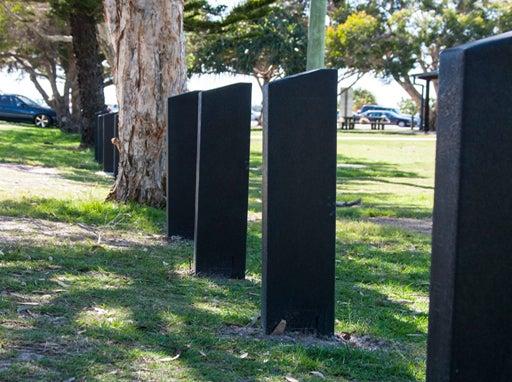
- Bollards are to be used in open spaces at the boundary between parks and parking areas to deter unauthorised vehicle entry.
- Removable bollards located in the middle of pathways should only be used where a risk assessment recommends them.
- Minimise the use of bollards by designing them in-line with existing trees, new planting, landscape boulders and existing garden beds.
- Consider the method of safe operation associated with bollards (i.e. size, weight, material and method of use).
- Hinged gates are preferred over removable bollards for vehicle access, as they provide a superior solution to workplace health and safety issues.
Bollard design

- All bollards are to be designed for their specific purpose, for example:
- turf area – in ground bollard
- concrete area – bolt down type for ease of replacement. Use hinged gate or removable bollard design for vehicle access to suit site requirements.
- maintenance/emergency vehicle access – hinged gates are preferred over removable bollards for vehicle access, as they provide a superior solution to workplace health and safety issues. See LIM Fences and gates for further guidance.
- To restrict vehicle access, bollard centres are to be a maximum of 1.5 m apart.
- Bollards should be consistent in design with other bollards in an area.
- Bollards in the middle of paths should not be used unless a risk assessment indicates that vehicles may enter a park via the pathway.
- Bollards tops and caps are to be designed to shed or repel water.
- Bollard direction markers (with direction arrows or maps) are to be installed as per LIM Signage - Trails markers.
Bollard height
Bollards should be installed at the recommended height listed in the table, in order to:
- provide design consistency
- enable them to be easily replaced (surplus can be kept in stock at Council stores).
See Table 1: Bollard height recommendations.
Table 1: Bollard height recommendations
Bollard | Use |
Standard bollard 900 mm high bollard 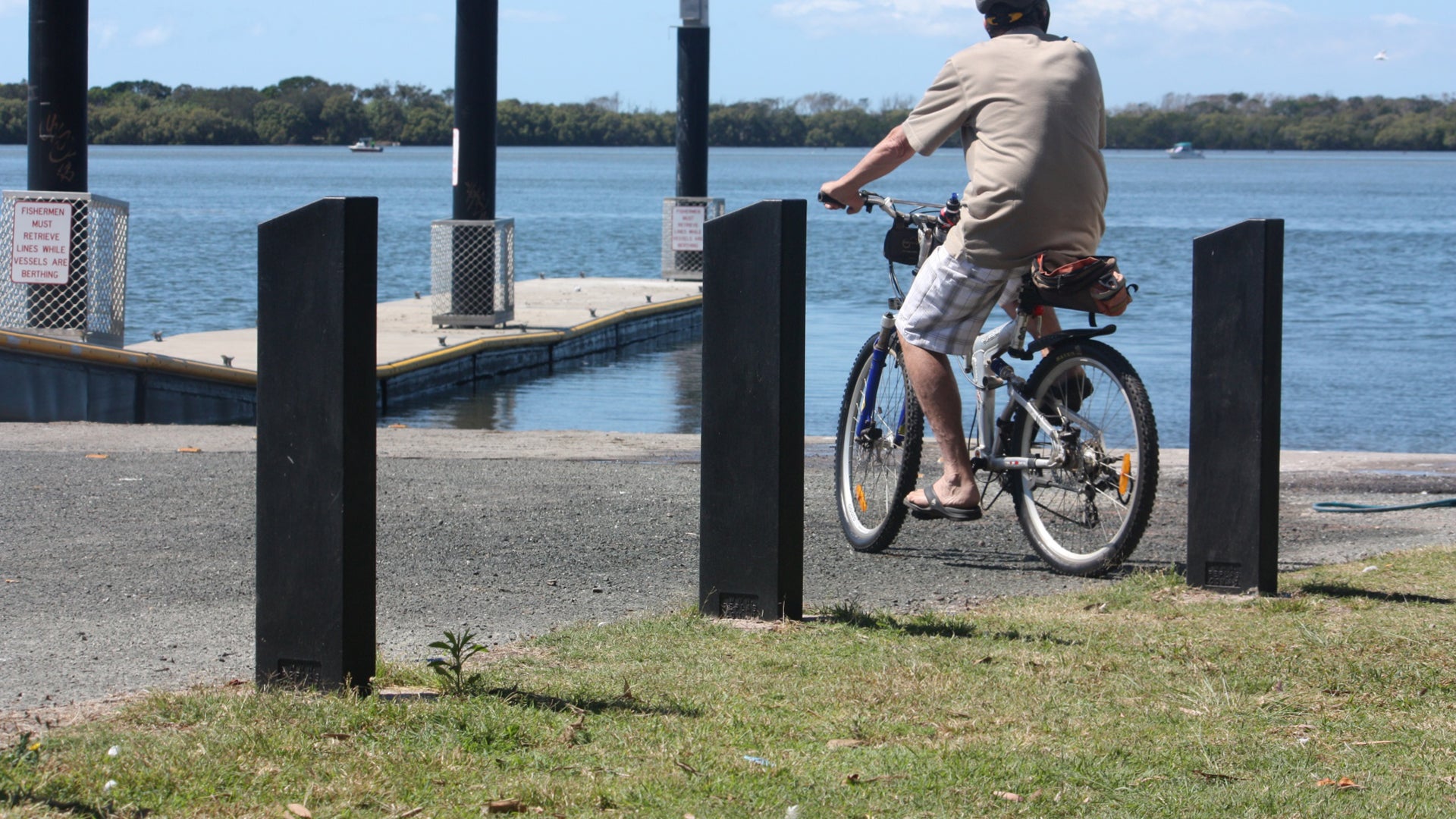 |
|
Central path bollard (not a preferred design solution) 1800 mm high bollard 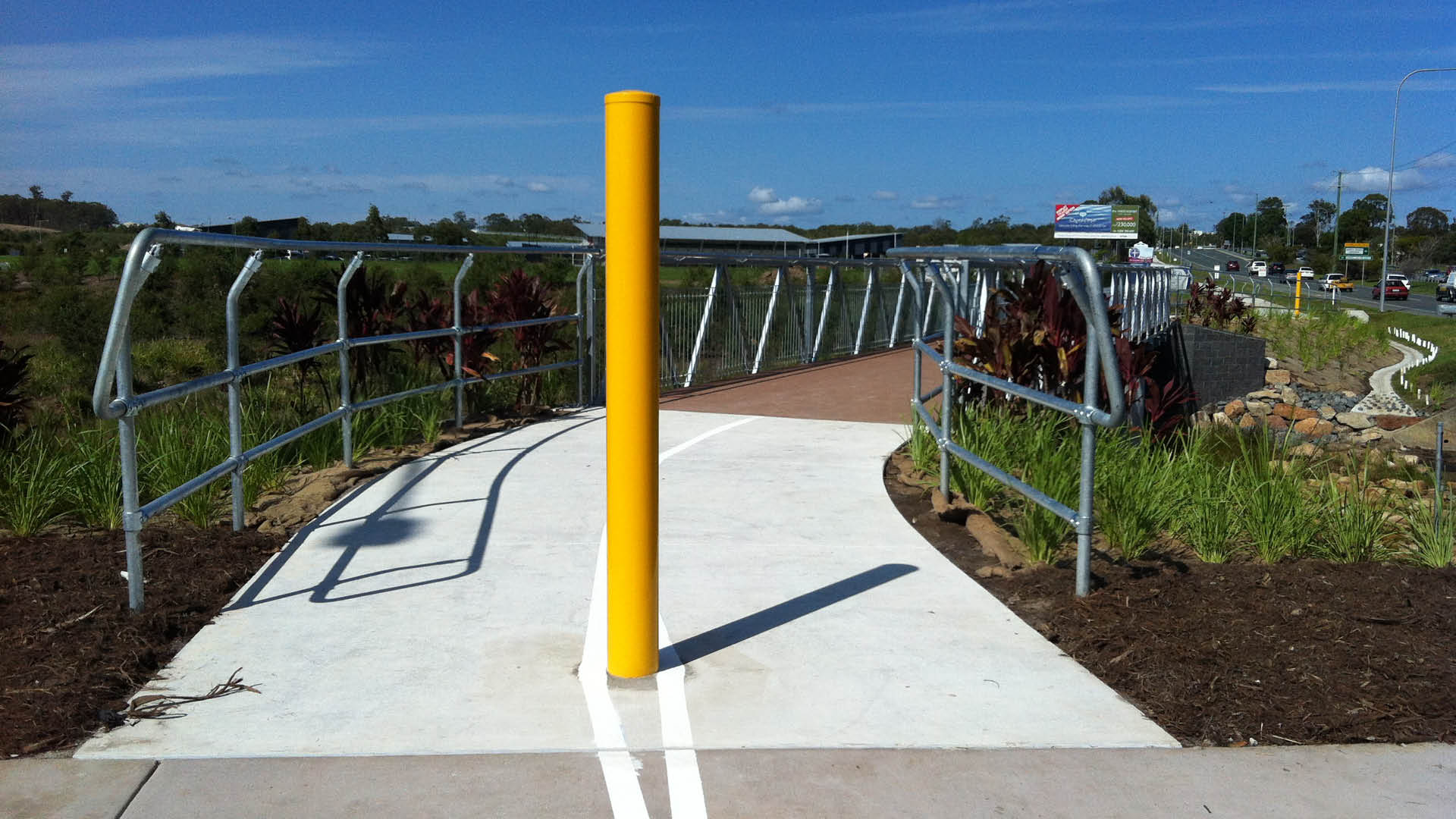 |
|
Note: See Austroads Guide to Road Design Part 6A: Paths for Walking and Cycling. |
Non-standard bollards
Non-standard bollards are NOT accepted, as custom designed bollards can be difficult to maintain and replace.
This component is currently in development