Exercise equipment

Design
Requirements for the design, manufacture and installation of embellishments
Good design
See the following corporate documents to identify relevant project design requirements:
Sunshine Coast Planning Scheme regulates the way land, buildings and structures are used and developed on the Sunshine Coast.

Sunshine Coast Design contains 10 design principles that guide good project planning and design outcomes, that are appropriate for the Sunshine Coast.
The LIM provides further overarching design advice, refer:
- Introduction and Design Principles - e.g. sustainability, CPTED, accessibility
- Preliminaries - environmental management, tree sensitive design and site set up.
Embellishment requirements
- Universal access.
- Comfortable and suitable for the average person.
- See 'Positioning' and 'Equal access' sections for the corresponding LIM category.
- Made from materials that will be durable and can be suitably protected from exterior elements, such as salt spray and UV exposure.
- Robust and sturdy to withstand constant public use and be resistant to vandalism.
- Fixings are to be 316 marine grade stainless steel (unless otherwise stated).
- Tamper proof fixings should be used
- Graffiti protection coatings applied (where applicable)
- Fire retardant (where applicable).
- Warranties should be as listed below.
- Easily repairable or replaceable.
- Sourced locally and use standard fittings.
- Reputable suppliers should be used who keep a supply of stock parts on hand for the life of the product.
- Use sustainable materials, although sustainability needs to be considered over the lifetime of the embellishment.
- Install on paved, concrete or other hard surfaces (where applicable).
- Manufactured to engineering specifications (where applicable).
- See the 'Standards' section for the corresponding LIM category.
Warranty and asset life
Product/embellishment | Warranty (minimum) | Asset life (typical useful life) |
Exercise equipment static/kinetic (static tends to have a longer typical useful life) | 10 years | 15 years 2 |
Edging (concrete) | N/A | 15 years 2 |
Wet pour ethylene propylene diene monomer (EPDM) surfacing | 3 years | 10 years 2 |
Play Matta surfacing (or equivalent) | 6 years | 10 years 2 |
Concrete | N/A | 30 years 2 |
Source 2: Sunshine Coast Council Asset Management Plan 2017/18-2022/23 – Parks and Gardens (figure based on current data, subject to change).
Exercise equipment
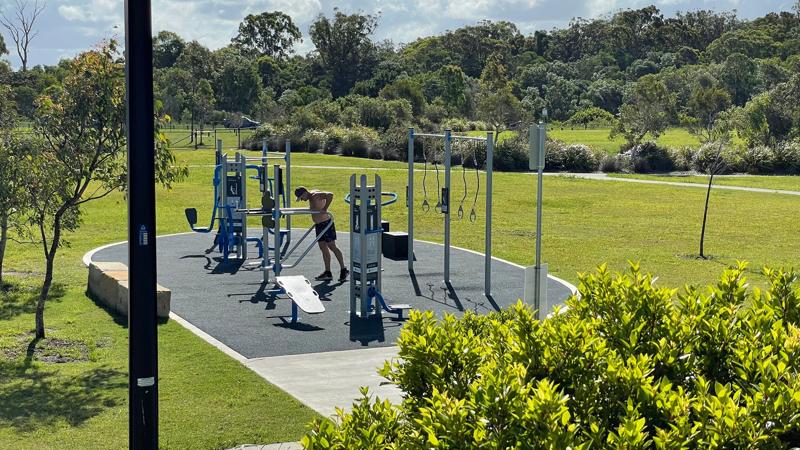
Once the location of the exercise equipment stations has been decided, based on the Environment and Liveability Strategy (ELS) and Recreation Parks Plan (RPP) guidance, consider the appropriate embellishment level to suit the selected site.
Size considerations:
The Recreation Parks Plan (RPP) recommends the number of exercise equipment elements should be consistent with park type, setting and the size of the intended user catchment.
Overarching design considerations:
- All open spaces should include universal access (e.g. provide safe clearances, movement around equipment and access to equipment).
- Equipment layout and footprint must be designed by a professional exercise equipment designer in conjunction with a qualified fitness professional.
- Exercise equipment areas should be designed with a view to reflect:
- the needs of the local community. Community consultation is recommended to engage the user and ensure the best outcome.
- park user numbers.
- Design to minimise risk of injury by installing impact damping ground material (where required).
- Design for provision of shade, either by planting new shade trees at installation, shade sails, or other appropriate structure.
- Select simple, functional and durable elements.
Station design - exercise equipment
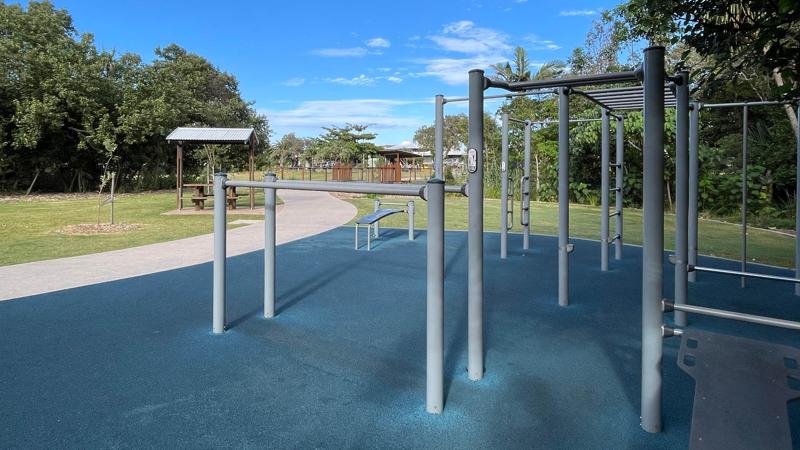
Exercise equipment stations, are to be designed and constructed to comply with AS 16630:2021 Permanently installed outdoor fitness equipment - Safety requirements and test methods.
- The standards are intended for use by designers, manufacturers and installers of exercise equipment, as well as operators of the outdoor exercise equipment
- The objective of the Standard is to minimise the risk of injury to people using equipment, by providing guidelines for:
- siting and developing exercise equipment
- reducing the risk of entrapment
- product information requirements, instructions and operating procedures to support sound design
- selection of appropriate equipment
- minimisation of operational hazards.
- The Standards provide guidance on:
- safety requirements
- test methods/test report
- information for use
- marking
- information to be provided by the manufacturer
- sun and shade protection.
- Station design and layout:
- Create a viable exercise destination by installing clusters of equipment (either a series of smaller stations or one larger station).
- See LIM Exercise equipment - Positioning for recommended station layouts and further guidance.
Design – exercise equipment
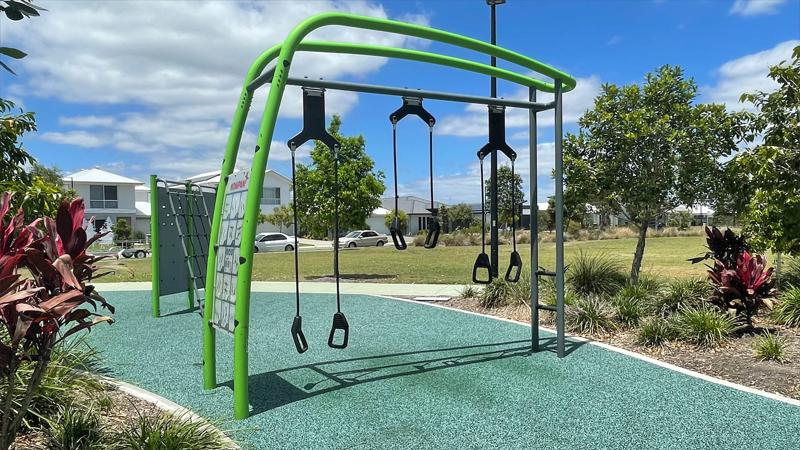
Exercise equipment is to be designed and constructed to comply with AS 16630:2021 Permanently installed outdoor fitness equipment - Safety requirements and test methods.
General requirements
- Exercise equipment over 3.0 m in height, and shade sails require building approval.
- The quality of exercise equipment must be of commercial quality standard.
- Components are to easily repairable and/or replaceable.
- Should provide options for a full body workout, with equipment designed for different ages and abilities. Equipment is for youths and adults, or users having an overall height greater than 1400 mm only:
- include equipment which targets cardiovascular fitness
- include equipment aimed at resistance training for improved strength
- designed to be ergonomically correct.
See Table 1: Exercise equipment body area identification.
- Design equipment for appropriate demographic and consider multi-generational equipment. See LIM Play spaces.
- A combination of both static and kinetic stations. Static pieces are less popular, but are lower maintenance and have a longer life span.
Table 1: Exercise equipment body area identification
Exercise equipment type | Body muscle areas | Abdominal | Arms | Back and chest | Upper, lower, legs and buttocks |
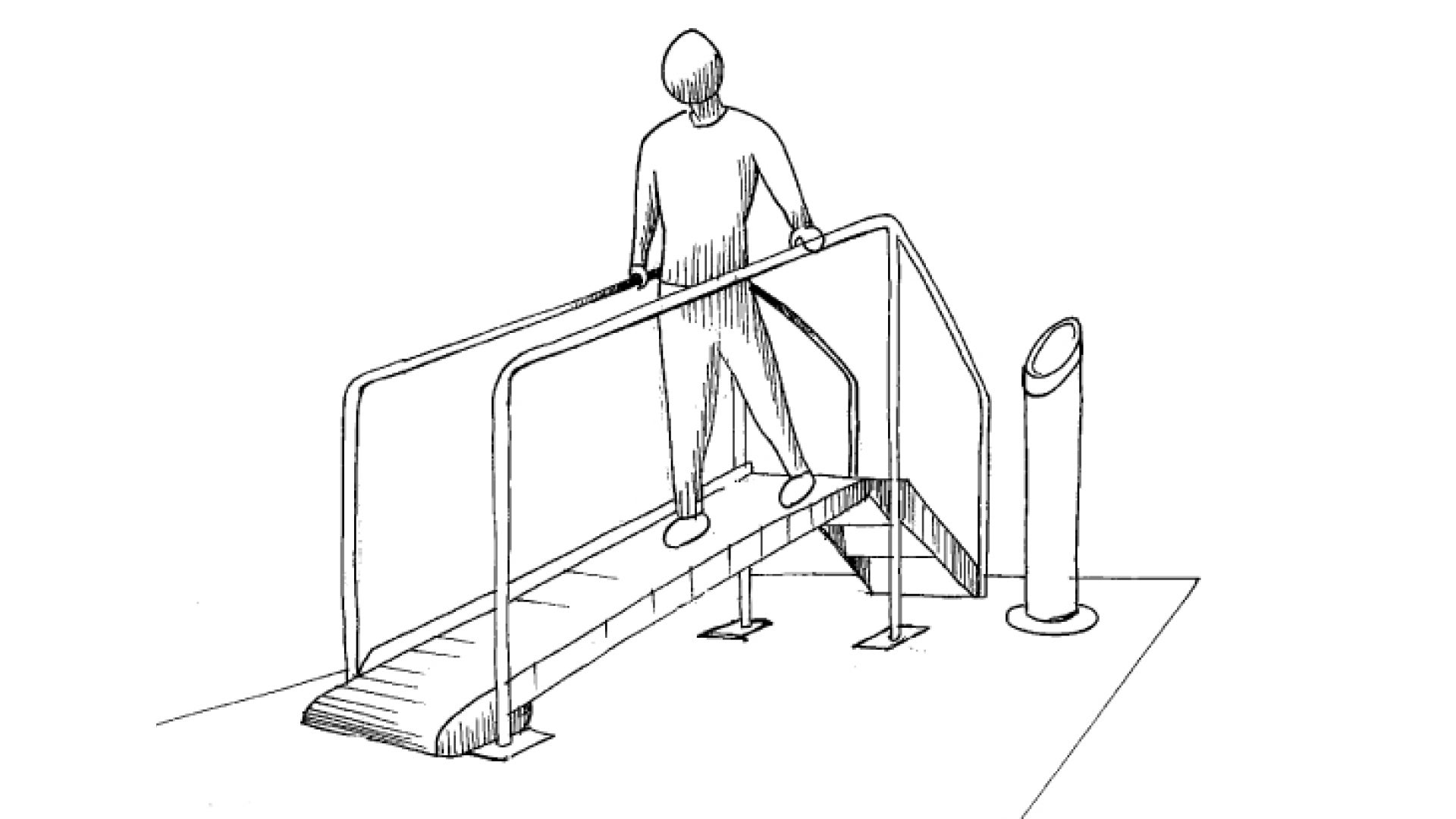 | Core trunk muscles, quadriceps, hamstrings, calves and balance. | Upper, lower, legs and buttocks activated. | |||
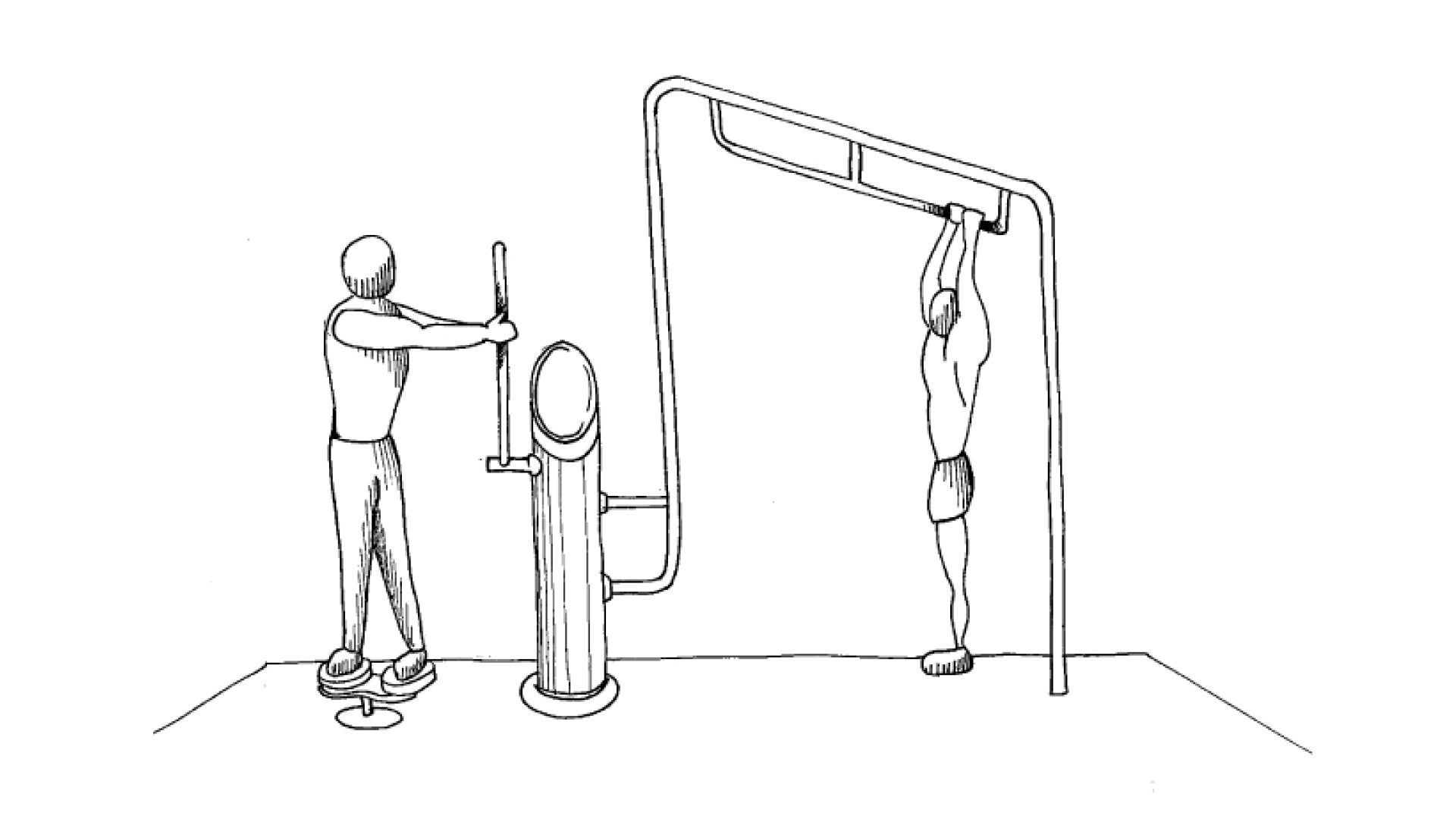 | Shoulders, obliques, gluteus medius, upper back, shoulders and arms. | Arms activated | Back and chest activated. | ||
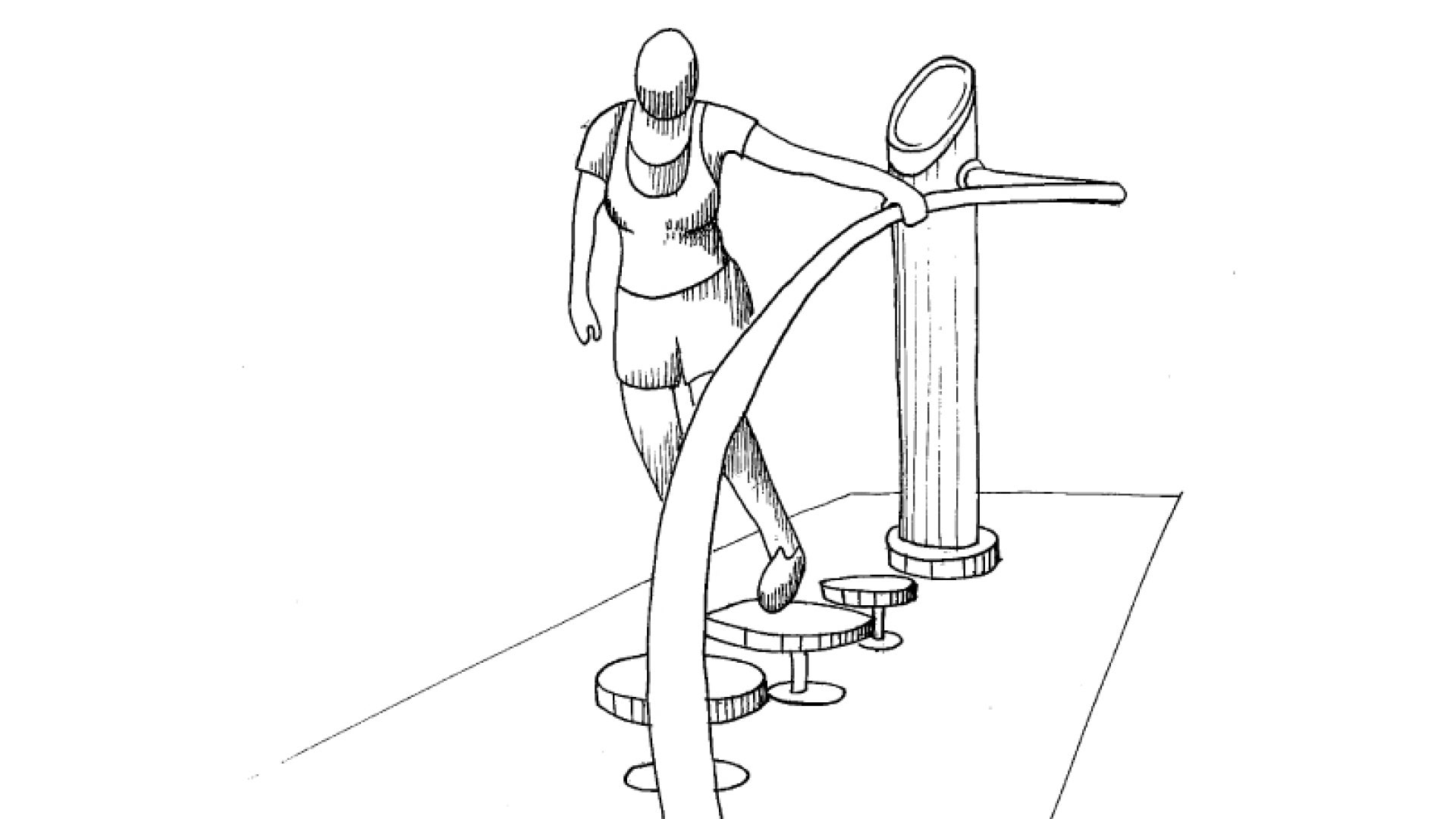 | Quadriceps, hamstrings, calves, tibialis anterior and core trunk muscles. | Upper, lower, legs and buttocks activated. | |||
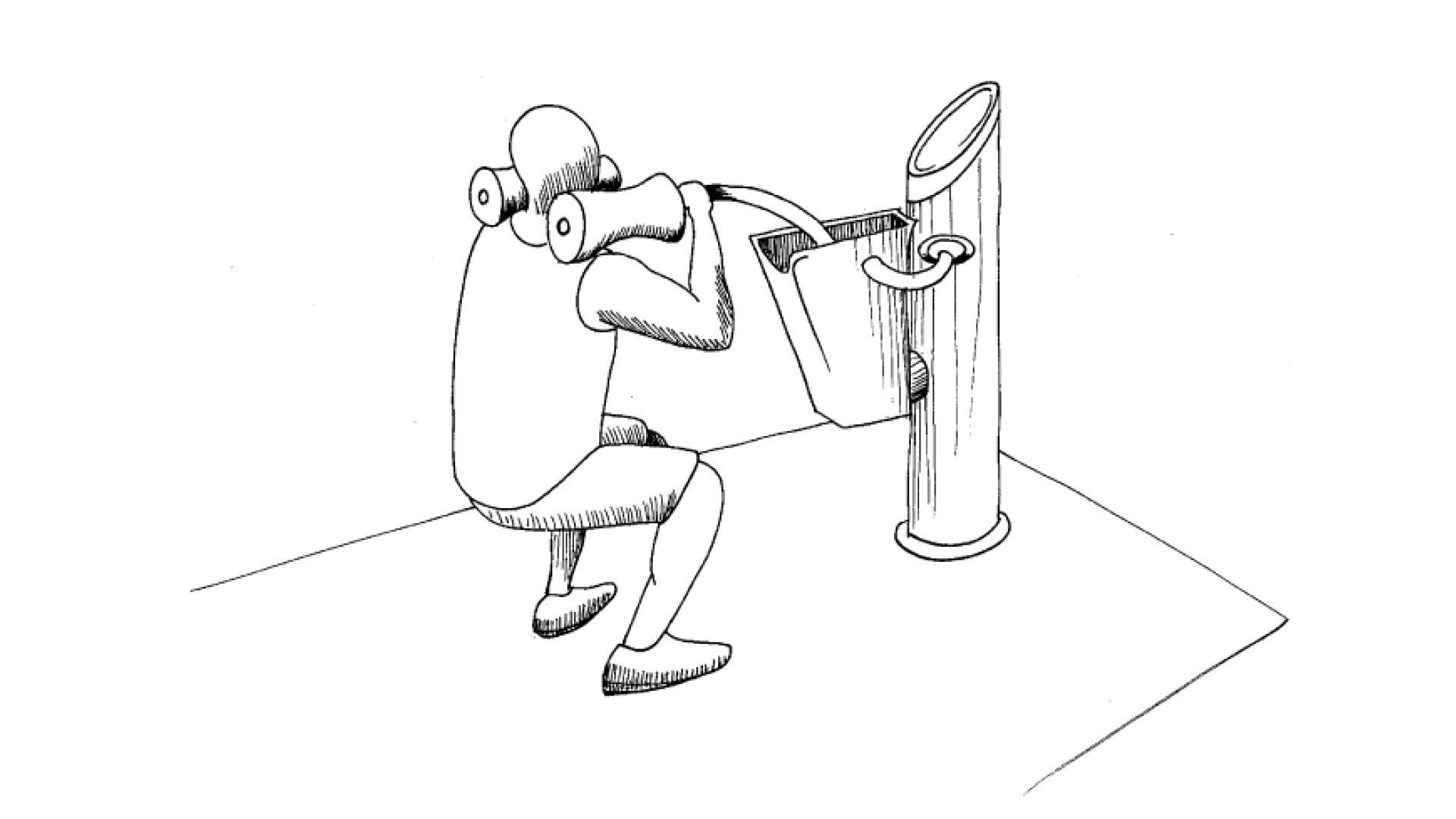 | Quadriceps, hamstrings, gluteus and hip flexors (iliopsoas). | Upper, lower, legs and buttocks activated. | |||
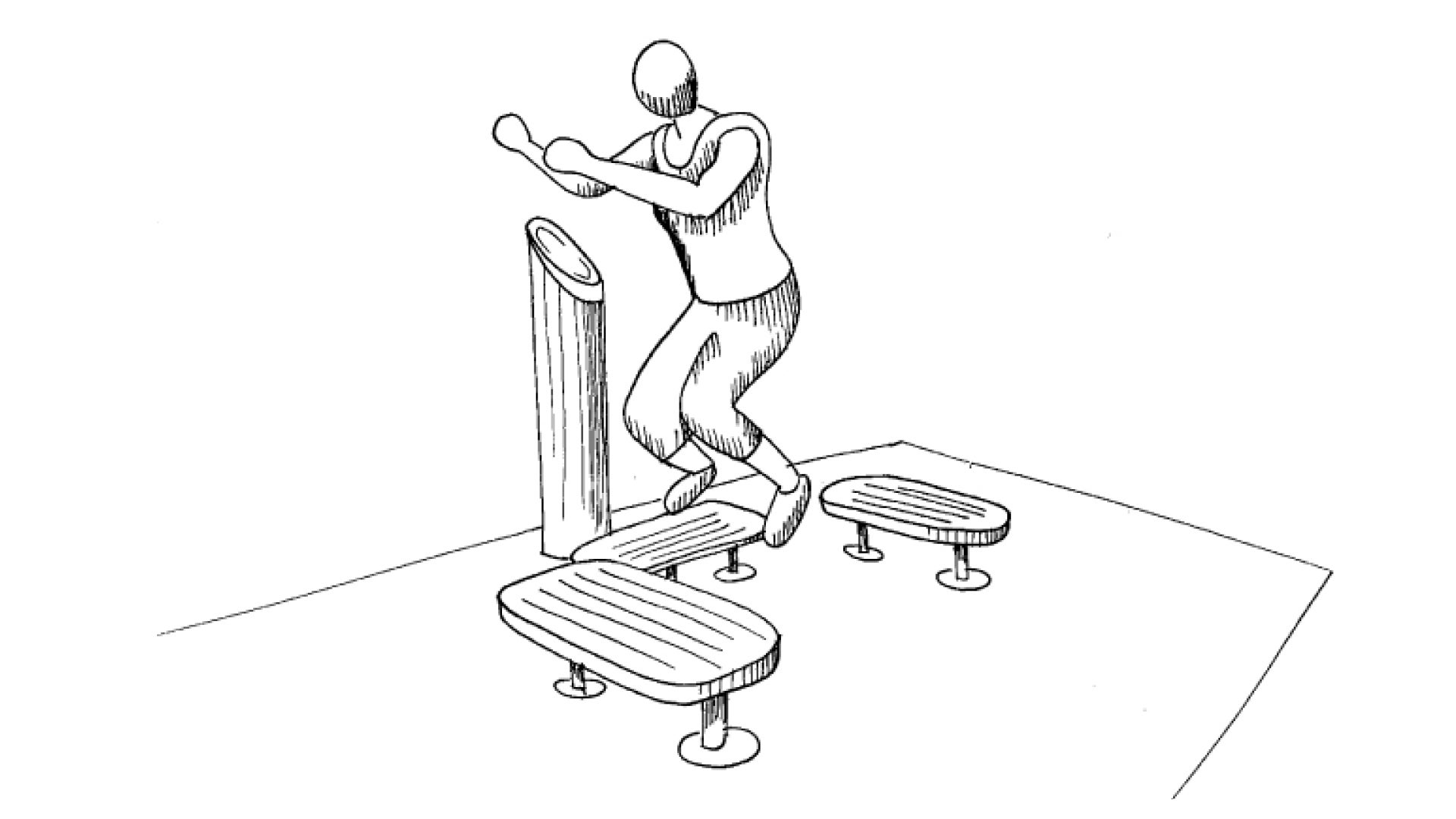 | Quadriceps, hamstrings and gluteus. | Upper, lower, legs and buttocks activated. | |||
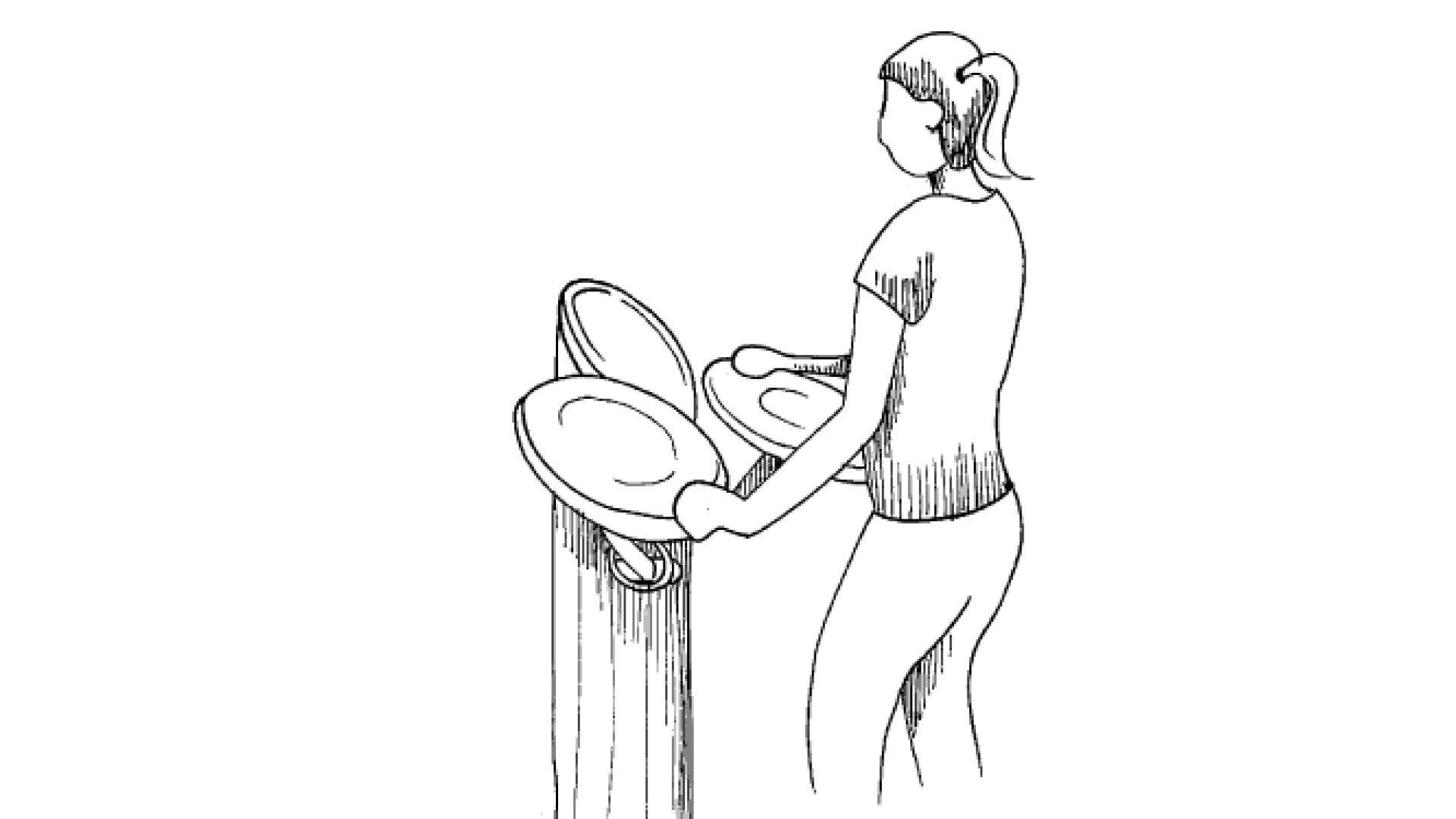 | Deltoid, rotator cuff, trapezius (to a lesser degree), chest and back muscles. | Arms activated | Back and chest activated. | ||
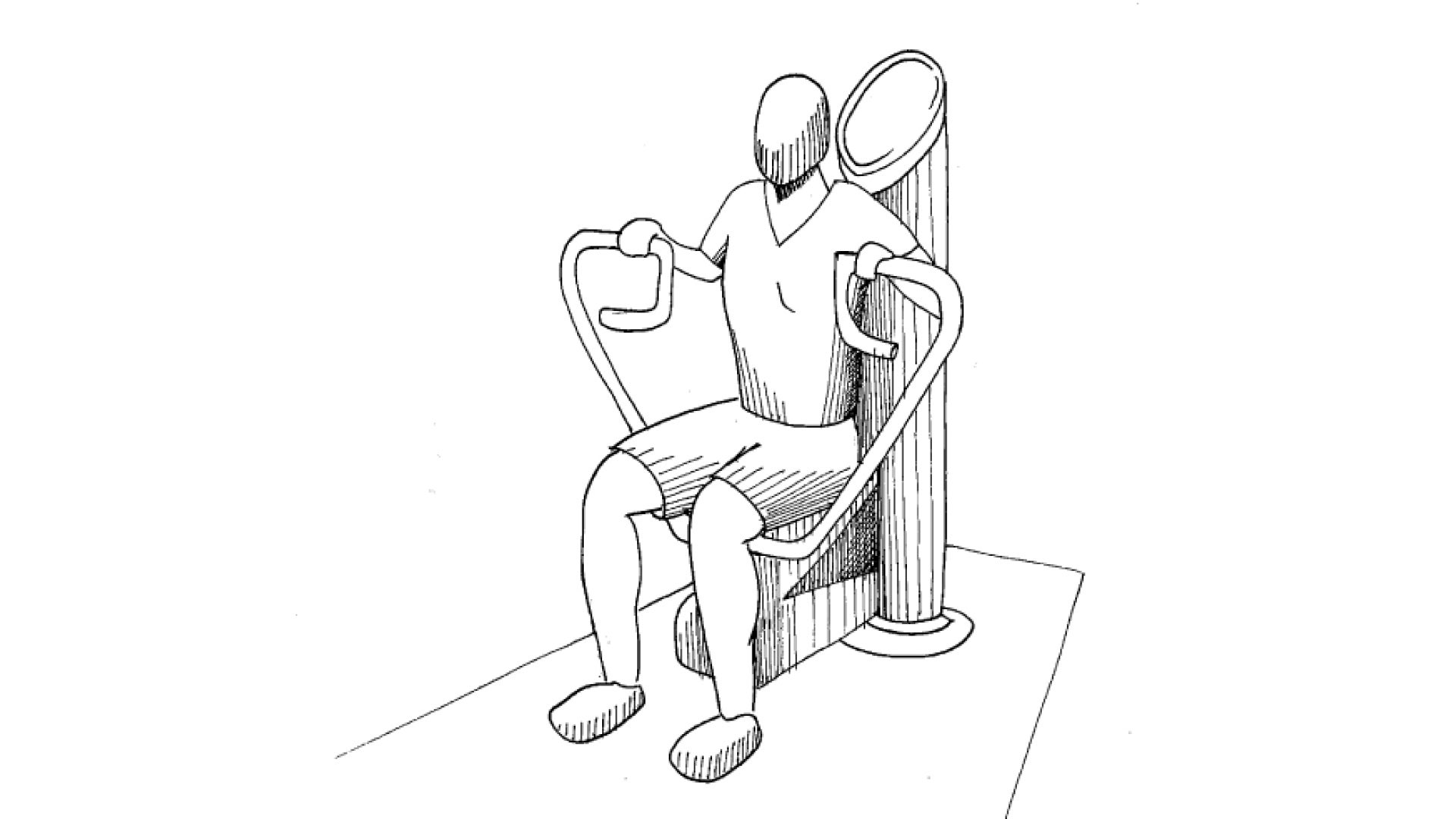 | Pectoralis major, latissimus dorsi, triceps and biceps. | Arms activated | Back and chest activated. | ||
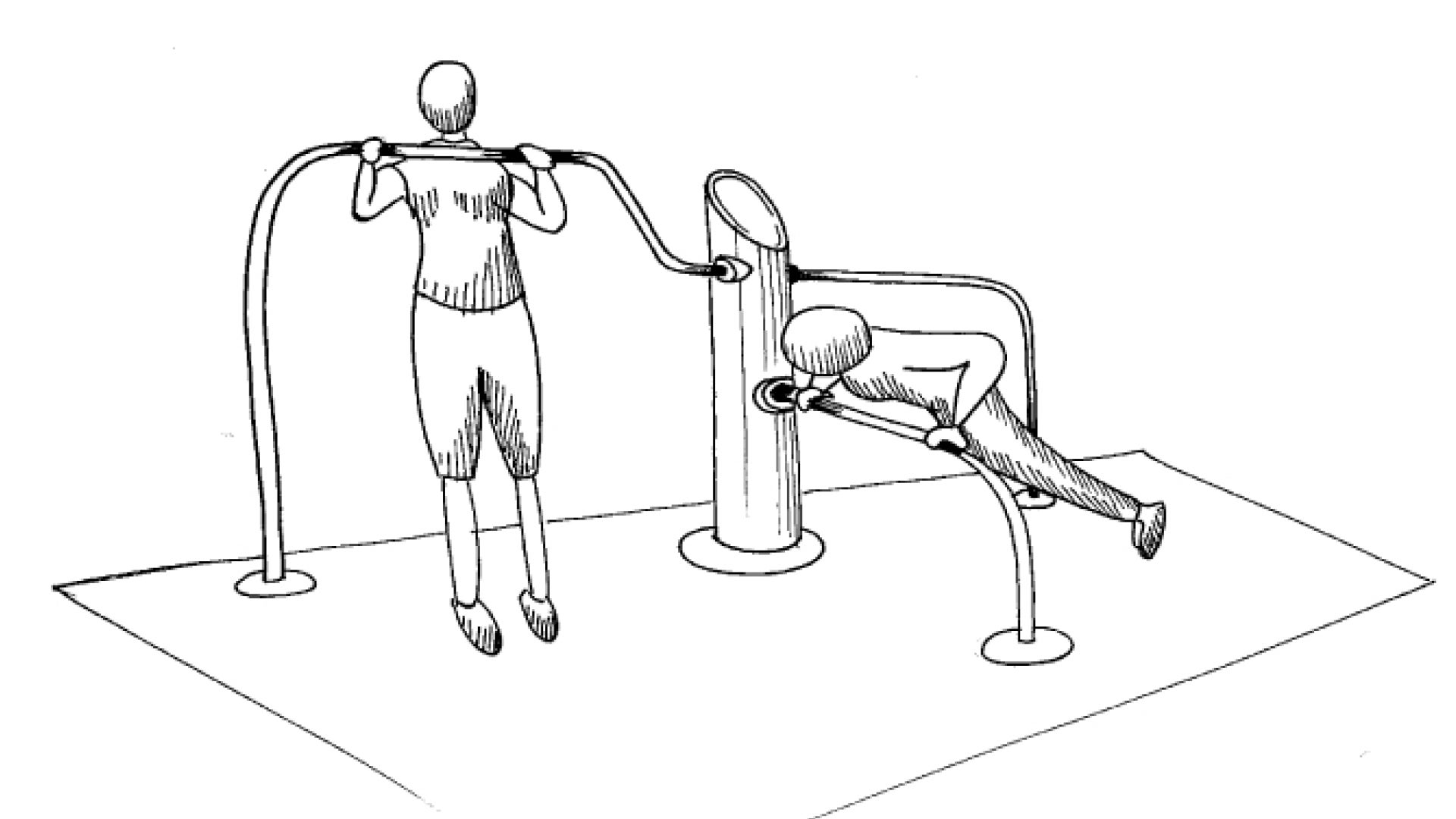 | Row: latissimus dorsi and biceps. Push-ups: pectoralis major and triceps. | Arms activated | Back and chest activated. | ||
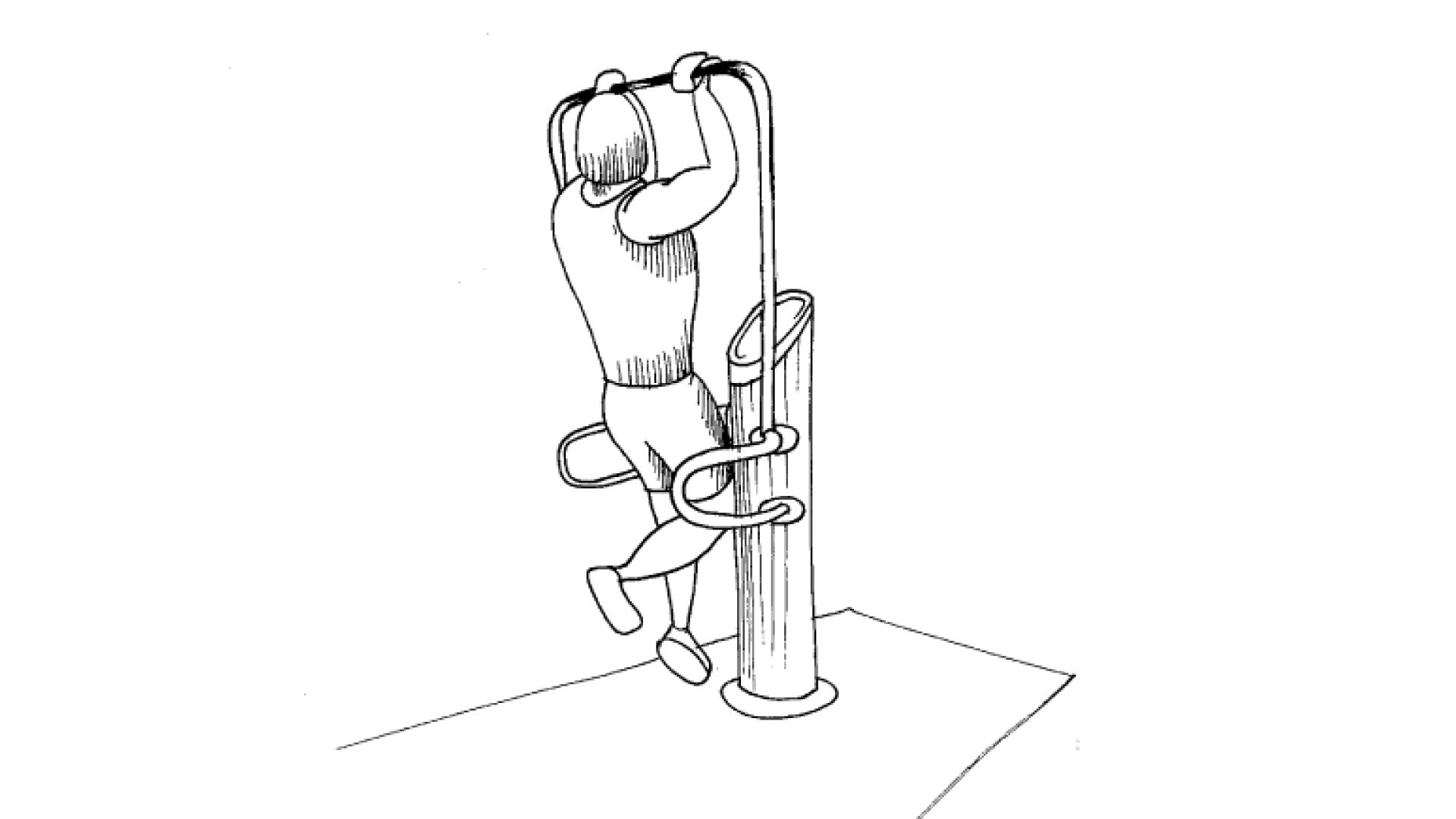 | Pull up: mainly biceps, and to a lesser degree latissimus dorsi. Dip: triceps and to a lesser degree pectoralis. | Arms activated | Back and chest activated. | ||
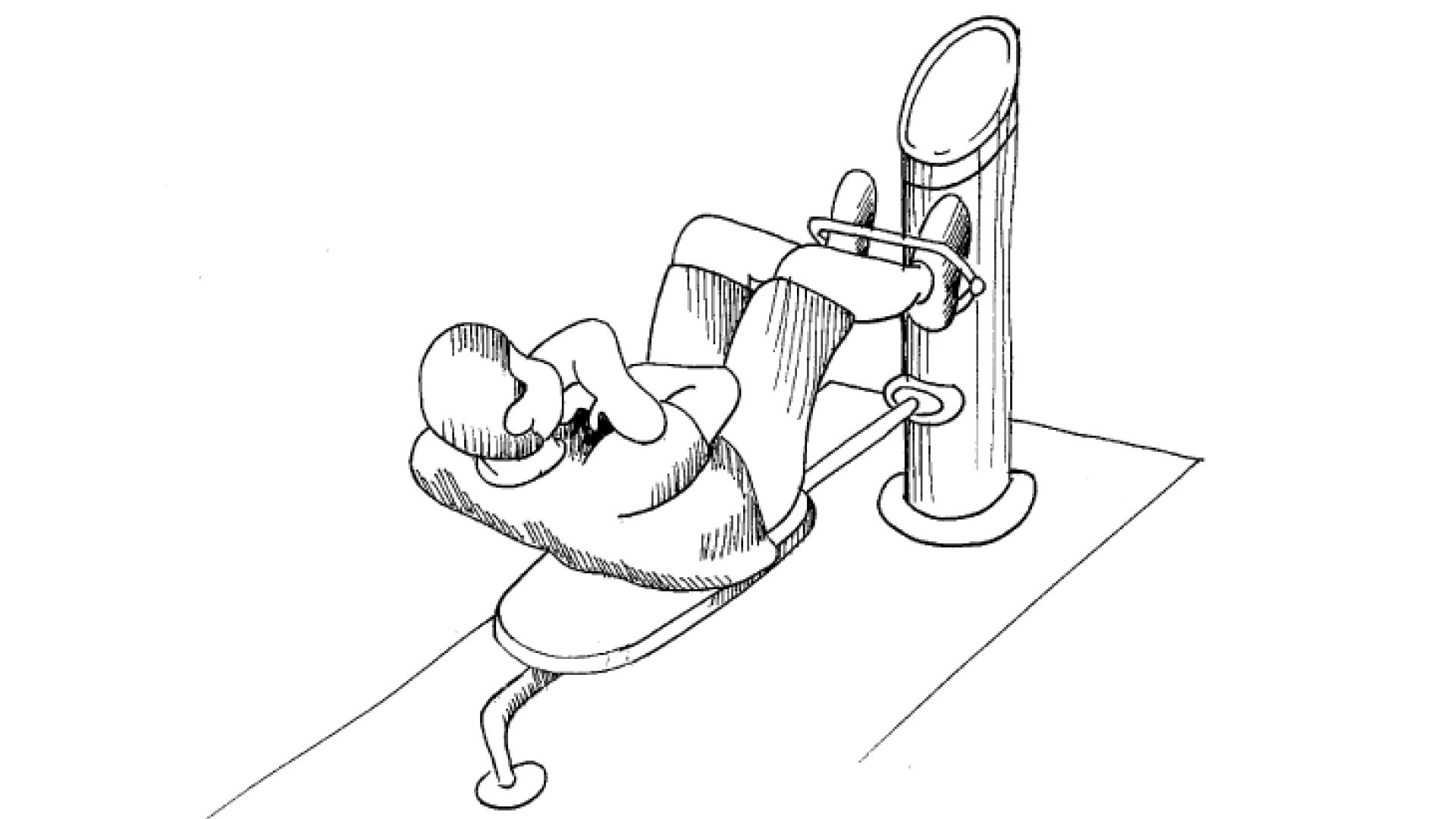 | Upper and lower abdominals. | Abdominal activated |
Materials, fixings and finishes
- All coastal locations (east of the Bruce Highway), must be constructed of coastal hardy materials and fixings such as:
- 316 marine grade stainless steel
- Aluminium
- HDPE/Poly panels
- Timber – appropriate species, mounted on marine grade 316 stainless steel stirrups – with approval from Council (Parks and Gardens).
- It is preferred that timber products are to be treated with alkaline copper quaternary (ACQ), a water based wood preservative. CCA must NOT be used.
- Hinterland areas - materials, finishes and fixings shall be specified as stated above, but 316 stainless steel elements are optional.
- See LIM Introduction and design principles for further guidance regarding coastal/hinterland locations.
- Bolt down exercise equipment is preferred for ease of replacement.
- Flush transition to adjacent levels to minimise trip hazards.
- Concrete edge treatment must be slip resistant.
- Stockpiles of material on site must not be stored on or near exercise equipment to avoid damage to the equipment.
Ground surface material
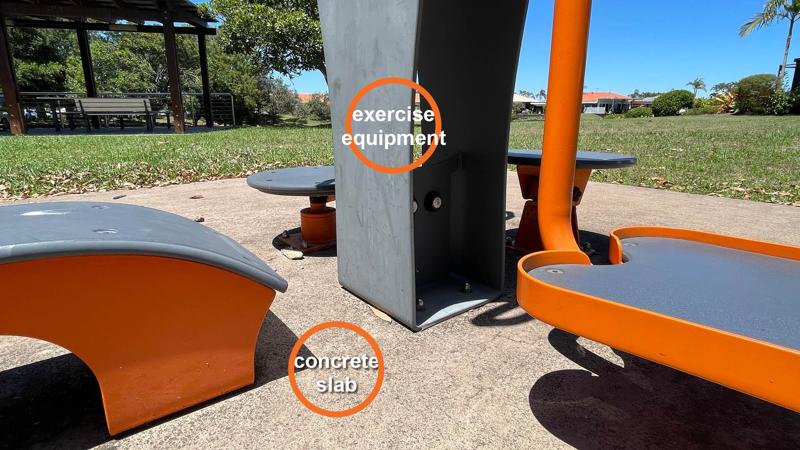
Ground surface material for exercise equipment, is to be designed and constructed to comply with AS 16630:2021 Permanently installed outdoor fitness equipment - Safety requirements and test methods.
General requirements
As per AS 16630:2021 Permanently installed outdoor fitness equipment - safety requirements and test methods:
- the area of movement for exercise equipment with a free height of fall of more than 1.0 m and/or equipment which causes forced movement of the user, shall be equipped with an impact damping ground surface.
- the critical fall height of ground material shall be determined by performance testing in accordance with AS 4422 Playground surfacing (See Appendix ZZ - variations for Australia).
Ground surface material choices
Ground surface material choice and installation methods must consider the following:
- If an impact dampening ground surface is required for compliance, it must meet the impact attenuation requirements of AS 4422.
- Kinetic equipment that has moving parts, particularly those with hydraulic rams must have a ground surfacing material that does NOT impact moving parts. This prevents particles (e.g. sand) entering the mechanism.
- Equipment may require a firm footing positioning for the user.
- Suitability in flood prone areas - choose appropriate site location and select equipment that doesn’t require impact dampening ground surface.
- Must be designed to prevent pooling of water. Runoff must be directed away from equipment, pathways and off safety zone.
- Edge treatment must be slip resistant concrete, finished flush with adjoining surfaces.
See Table 2: Ground surface materials for exercise equipment areas for further guidance on surface choice selection.
Loose-fill surfacing (compliant with AS 4422)
- Must meet the impact attenuation requirements of AS 4422.
- Loose-fill surfacing must NOT be used in certain circumstances (as per those listed previously).
- Must have a minimum depth of 400 mm (or greater where required by free fall heights and attenuation test certificate). Please note sand surfacing may require greater depths as per attenuation test certificate.
- The exercise equipment footprint requires an edging lip to ensure loose fill surfacing does not spill out of the exercise area, however ensure that the main path of travel has a flush join to prevent ‘tramlining’ of prams and wheelchairs, and trip hazards.
- Cross contamination by loose-fill creates an ongoing maintenance issue.
- Takura manufactured wood (or equivalent) is NOT accepted.
- Exercise equipment must NOT have geofabric installed between the ground and safety surfacing.
See LIM Play spaces – technical drawings for further guidance.
Unitary rubber surfacing (compliant with AS 4422)
- Must meet the impact attenuation requirements of AS 4422.
- Must be installed on a concrete base or a cement treated base (CTB) with a concrete mowing edge to the perimeter.
- Use lighter colours or mixed flecked colours, to minimise surface heat and potential extreme localised heat.
- Where full rubber coverage is not suitable, a combination rubber with loose fill surfacing may be utilised where approved. Extend the edges of the unitary (rubber) surface a minimum 100 mm below natural ground level and backfill. Secure as per manufacturers recommendations. See LIM Play spaces - Technical drawings for further guidance.
- Include a flush transition to adjacent levels to minimise trip hazards.
- Ensure mulch from garden beds is contained within the garden to prevent contamination of the exercise equipment surfacing (where garden bed and exercise equipment surfacing are adjacent to each other).
See LIM Exercise equipment – technical drawings for further guidance.
Other ground surface materials
Other ground surface material choices (such as concrete) may be considered in line with Table 3 Ground surface materials for exercise equipment areas, where impact attenuation compliance is NOT required as per AS 16630:2021.
These surface choices may be considered when a firm footing is required by the user, where displacement of loose fill surfacing is likely or when the equipment has moving parts.
Table 2: Ground surface materials for exercise equipment areas for further guidance on surface choice selection
As per AS 16630:2021 Permanently installed outdoor fitness equipment - Safety requirements and test methods:
- the area of movement for exercise equipment with a free height of fall of more than 1.0 m and/or equipment which causes forced movement of the user, shall be equipped with an impact damping ground surface.
- the critical fall height of ground material shall be determined by performance testing in accordance with AS 4422 Playground surfacing (See Appendix ZZ - variations for Australia).
Product | Key considerations | Recommendations |
Concrete |
|
|
Stone (not accepted by Council) |
| DO NOT USE |
Bitumen (not accepted by Council) |
| DO NOT USE |
Top soil (not accepted by Council) |
| DO NOT USE |
Lawn (not accepted by Council) |
| DO NOT USE |
Gravel (not accepted by Council) |
| DO NOT USE |
Rubber (certified AS 4422) |
|
|
Bark (certified AS 4422) |
| May be suitable dependent on site. |
Takura manufactured wood (or equivalent) (not accepted by Council)
(certified to AS 4422) |
| DO NOT USE |
Sand (certified to AS 4422) |
|
|
Exercise equipment edge treatment
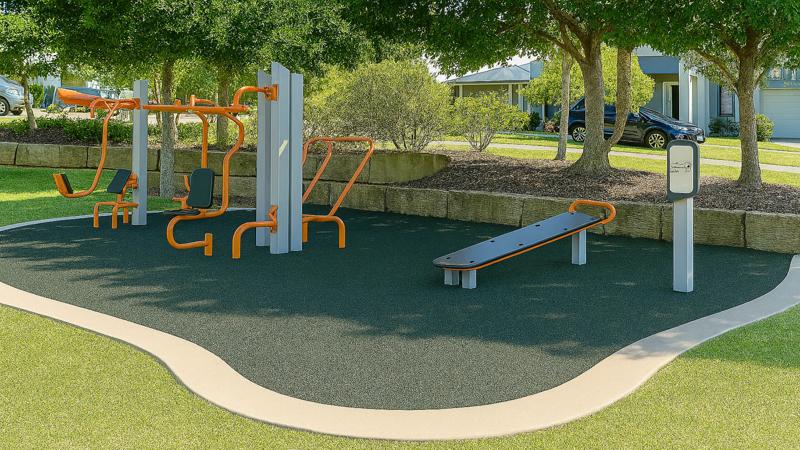
Edge treatments must be concrete.
- Concrete edging must be slip resistant (Council preferred option).
- Slip resistant concrete edging must be used for all rubber surfacing.
- Design must consider impacts of drainage when installing concrete edging.
- The exercise platform is raised to provide adequate drainage. A 2.5 m wide turf batter to edging, with a preferred slope 1:6 (maximum 1:4). Ensure connecting pathways are accessible.
- A slip resistant concrete edging must be used for all unitary rubber/loose fill surfacing materials, finished flush with adjoining surfaces.
See LIM Exercise equipment – technical drawings.
Concrete edge treatment (preferred)
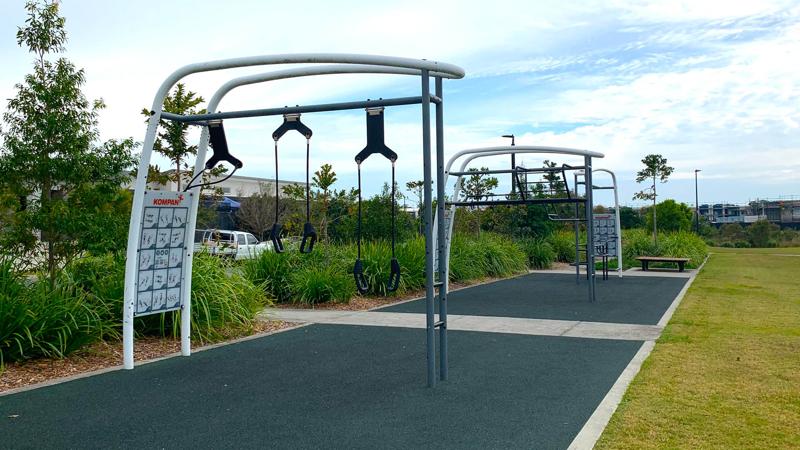
Surfacing with a concrete edge under an exercise equipment area is preferred for the following reasons:
- Easy to maintain due to the defined and durable boundary.
- Grass and other soft landscaping elements will be less likely to encroach onto the surfacing, reducing functionality and appearance.
- A permanent visual distinction is provided between surfaces to improve wayfinding/surface recognition for all users.
- Increased lifespan of the surface.
- Reduced maintenance effort and cost compared to installations without a concrete edge.
No concrete edge treatment (not preferred)
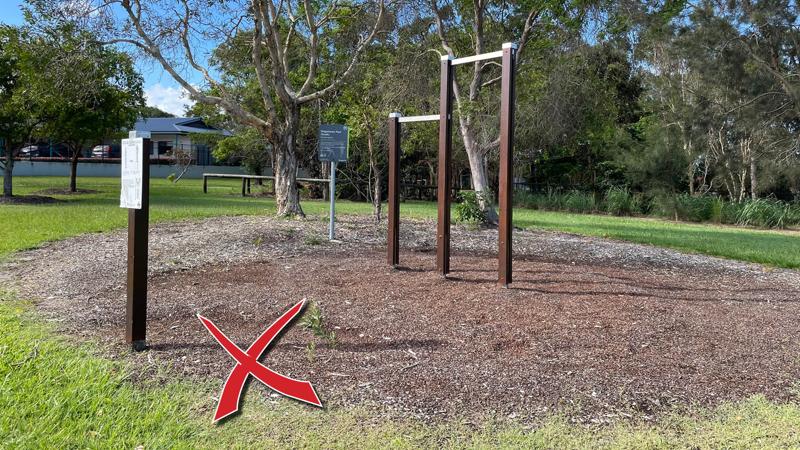
An exercise equipment area with no defined edge is NOT preferred for the following reasons:
- Difficult to maintain due to the absence of a defined and durable boundary.
- Grass and other soft landscaping elements can encroach onto the surfacing, reducing functionality and appearance.
- Encroaching vegetation can create uneven edges, increasing the risk of trip hazards.
- Loss of a clear edge can compromise visual distinction between surfaces, reducing usability for all users.
- Greater likelihood of surface degradation over time due to lack of containment.
- Increased maintenance effort and cost compared to installations with a concrete edge.
Ancillary embellishments
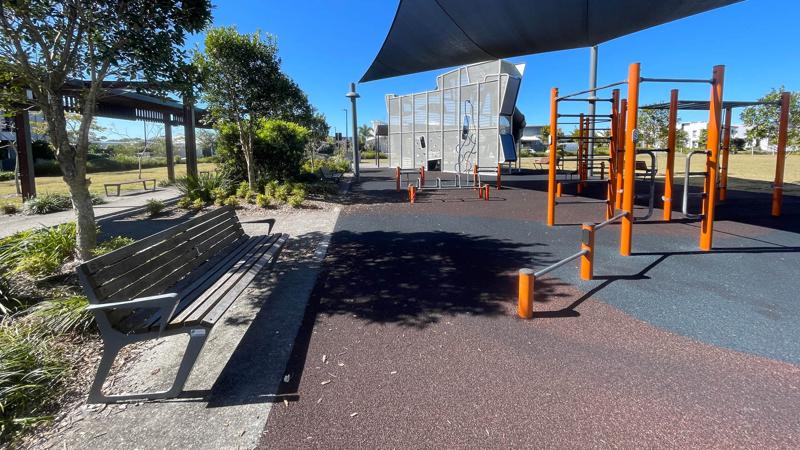
Utilise the ELS and RPP guidance, to determine what ancillary facilities should be provided with exercise equipment.
Seats
- Provide shaded seating areas for respite.
See LIM Seats for further guidance.
Drinking fountains
- A drinking fountain is preferred, near exercise equipment stations or strategically placed along the exercise circuit.
See LIM Drinking fountains for further guidance.
Shade (natural/artificial)
General
- See AS 16630:2021 Appendix ZZ for Australian conditions, shade and sun protection.
- Provision should be made in each exercise area for areas of sun protection and shade.
- Care should be taken to site equipment so that it is correctly positioned with respect to sun exposure. Uncovered platforms and some under-surfacing materials can become uncomfortably hot if exposed to too much direct sunlight.
- Provide site specific shade modelling (shade diagram). Refer LIM Shade sails for shade requirements.
- Shade sails may be required over larger exercise hubs.
Shade sails
This category should be read in conjunction with LIM Shade sails for specifications and clearance heights.
Landscape Planting
Shade trees
- Plant shade trees at the time of exercise equipment installation, particularly in local parks. Minimum planting offset 1.2 m from edge of a path.
- Install shade trees to the north and west to protect the equipment at the hottest part of the day.
- Use existing trees for shade where the design can be sensitive to tree root requirements, under guidance of a qualified arborist. It is preferable to plant trees at the time of exercise equipment installation.
- Ensure tree roots do not compromise the surfacing or create trip hazards. For guidance on tree roots and specific treatments contact qualified arborist.
See the following for further guidance
- Preliminaries - LIM Tree sensitive design (existing and new trees).
- See LIM Planting (landscape).
Planting
- Avoid plants with leaves with cutting edges, sharp thorns, spikes, poisonous parts. Avoid species notorious for limb dropping.
- Avoid fruit bearing plants that may attract significant levels of birds and bats as this can become a maintenance issue.
- Choose plants that will provide clear sight-lines (CPTED guidelines).
See LIM Planting (landscape) for further guidance.
Site drainage
Exercise equipment areas must have adequate sub-surface and surface drainage to avoid nuisance water pooling.
- Sub-surface drainage plans must be provided.
- A brass ‘D’ marker must be fitted to both sides of the play space edging to indicate the position of sub-surface drainage pipes.
- Drainage must be discharged outside of the exercise equipment footprint.
- Drainage material must not contaminate surfacing (safety softfall).
- Geofabric must NOT be installed between the ground and surfacing. This method is causing safety and maintenance issues, particularly when geofabric is not installed correctly and starts lifting (creating a trip hazard).
- Surface runoff must be directed away from equipment and pathways.
- Drainage grates are to comply with AS 1428.1 Design for Access and Mobility (Set). Sub-surface drainage is to be installed and connected as per Council plumbing advice.
See LIM Landscape drainage for further guidance.
Pathways
Pathways must provide a continuous accessible path of travel (CAPT) to exercise equipment, as defined in AS 1428 Design for Access and Mobility. This enables access for all users.
- Consider that a 1.8 m wide pathway is required for two wheelchairs to pass each other.
- Accessible ground material selection can be used to integrate exercise items within the exercise area footprint.
See LIM Paths, trails and tracks for further guidance.
Internal paths
- provide internal circuit to each exercise station.
- provide internal path connections to other sporting facilities.
Connection paths
- provide a connection path from the car park to the exercise equipment.
- consider connecting park pathways to existing pedestrian and cycle networks.
- consider connecting park pathways to shopping and public transport hubs.
Signage
This section should be read in conjunction with LIM Signage suite - for a complete suite of suitable signage, from the carpark to activity area.
Activity entry sign - Park
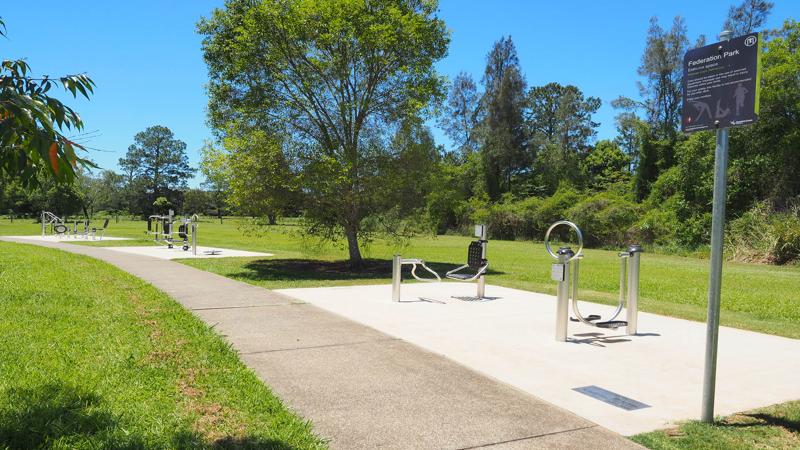
- An activity entry sign must be installed for compliance. It can be positioned at the entrance, start or most appropriate visible location, of an exercise node. Ensure that sign posts do not create collision points when using equipment.
- AS 16630:2021 outlines the minimum information that shall be provided at exercise equipment facilities.
User signs (manufacturer)
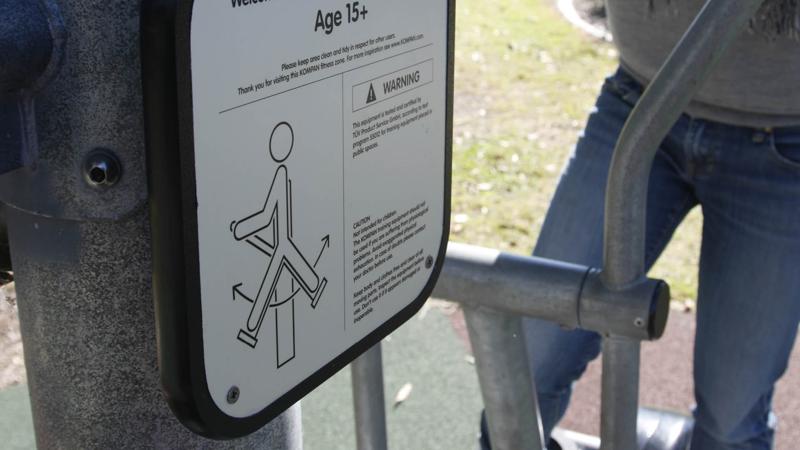
- User information signs must be provided by the exercise equipment manufacturer.
- AS 16630:2021 states that a user information sign shall be provided on, or adjacent to, each piece of exercise equipment, in a durable and easily conspicuous form:
- exercise instructions with the corresponding pictograms
- main functions of the equipment
- safety information, if necessary
- highest permissible user weight, if necessary.
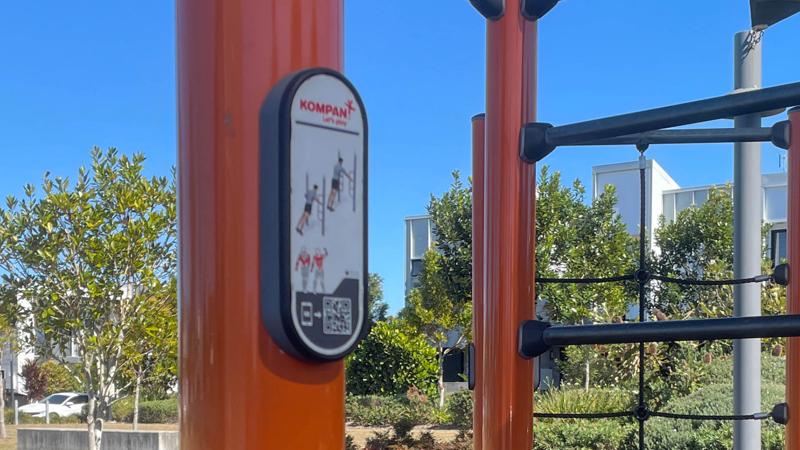
- Other items that may require consideration on the sign, include:
- Council prefer clear instructions for use, including instructions for equipment adjustments.
- diagrams representing proper use and target muscle groups.
- identification of any use restrictions such as age or ability.
- information to encourage warm up and warm down.
- install signage at a highly visible position which can be seen while using the equipment (preferably on the equipment, rather than in an adjoining garden bed).
- Other items that may require consideration on the sign, include:
- Council prefer clear instructions for use, including instructions for equipment adjustments.
- diagrams representing proper use and target muscle groups.
- identification of any use restrictions such as age or ability.
- information to encourage warm up and warm down.
- install signage at a highly visible position which can be seen while using the equipment (preferably on the equipment, rather than in an adjoining garden bed).
Marking (manufacturer)
Marking will be provided by the exercise equipment manufacturer.
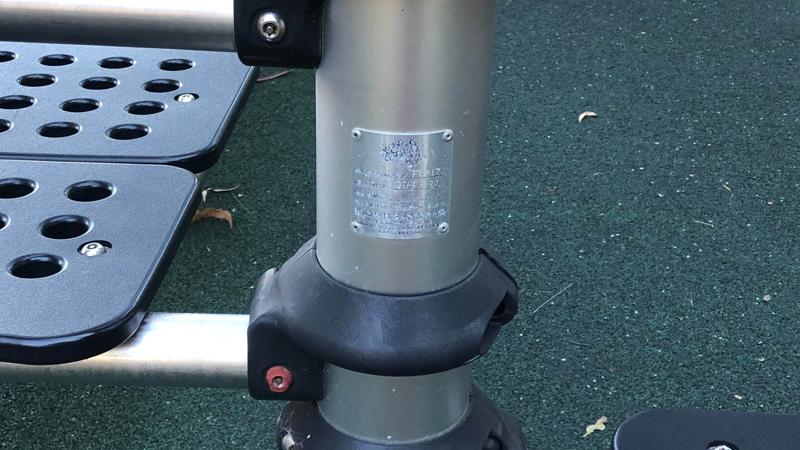
Manufacturer compliance plate
- AS 16630:2021 states that the equipment is to be marked clearly and durably with at least the following information visibly positioned:
- name and address of manufacturer
- equipment marking and year of manufacture
- number and date of standard.
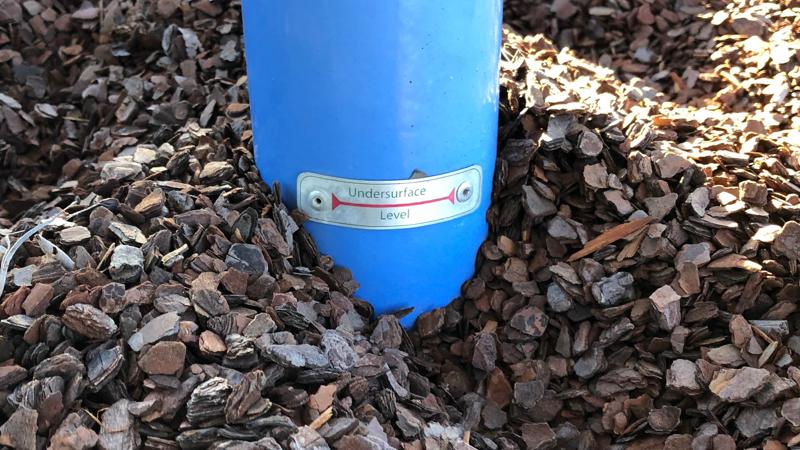
Basic level mark
- Where loose fill material is used, exercise equipment shall be marked clearly and durably with the basic level mark.
This component is currently in development