Suite of signs

Activity entry signs
Activity entry signs are an internal entry sign located at an entry point to a activity within a public open space. The sign is intended to minimise risk, inform and enhance visitor experience. The content combines naming, specific safety and regulatory information pertaining to the activity undertaken in the immediate vicinity.
Download the full LIM Signage suite Catalogue.
Technical drawings and artwork templates
Embellishment | Technical dwg/artwork template | Supplier |
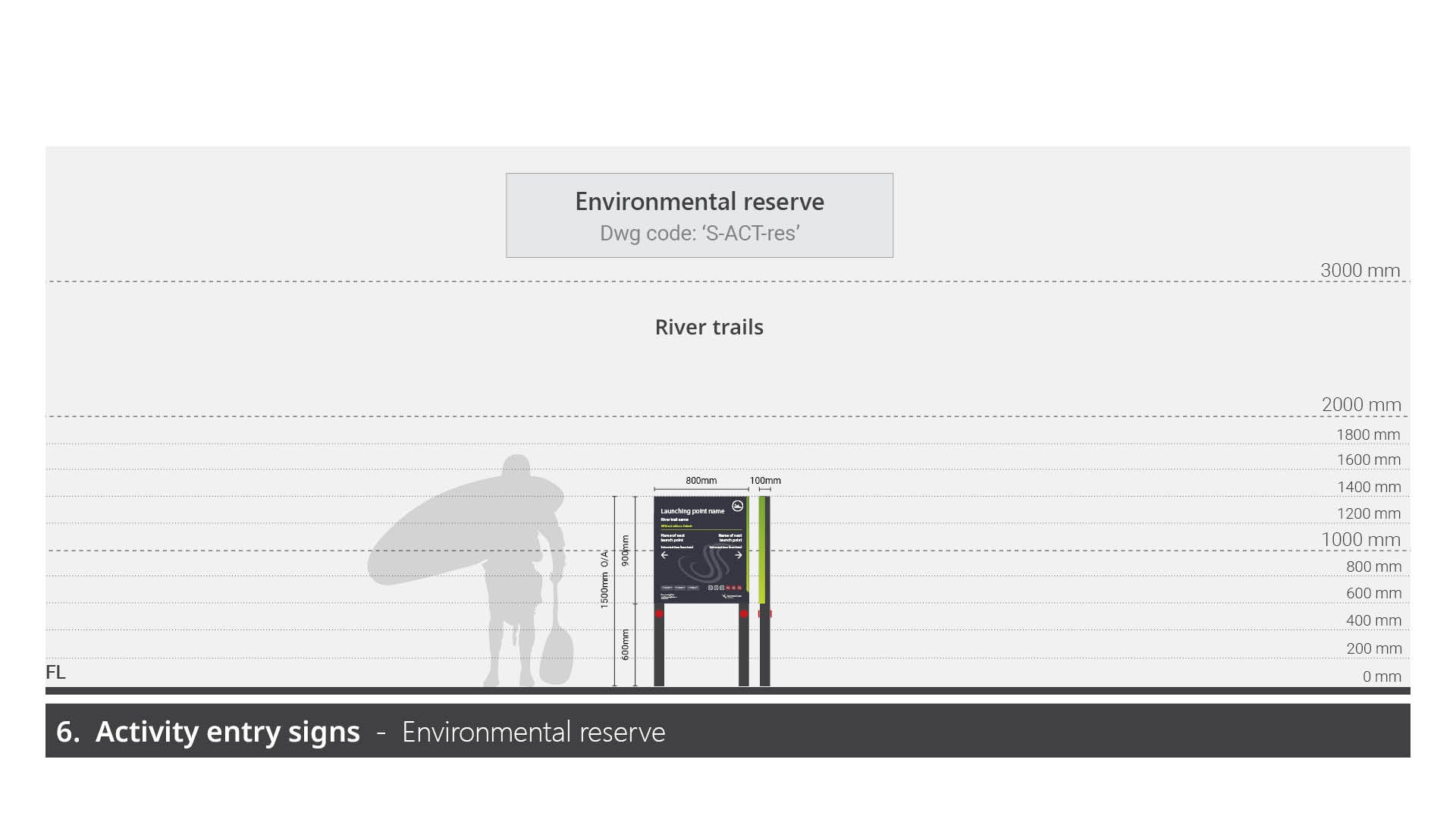
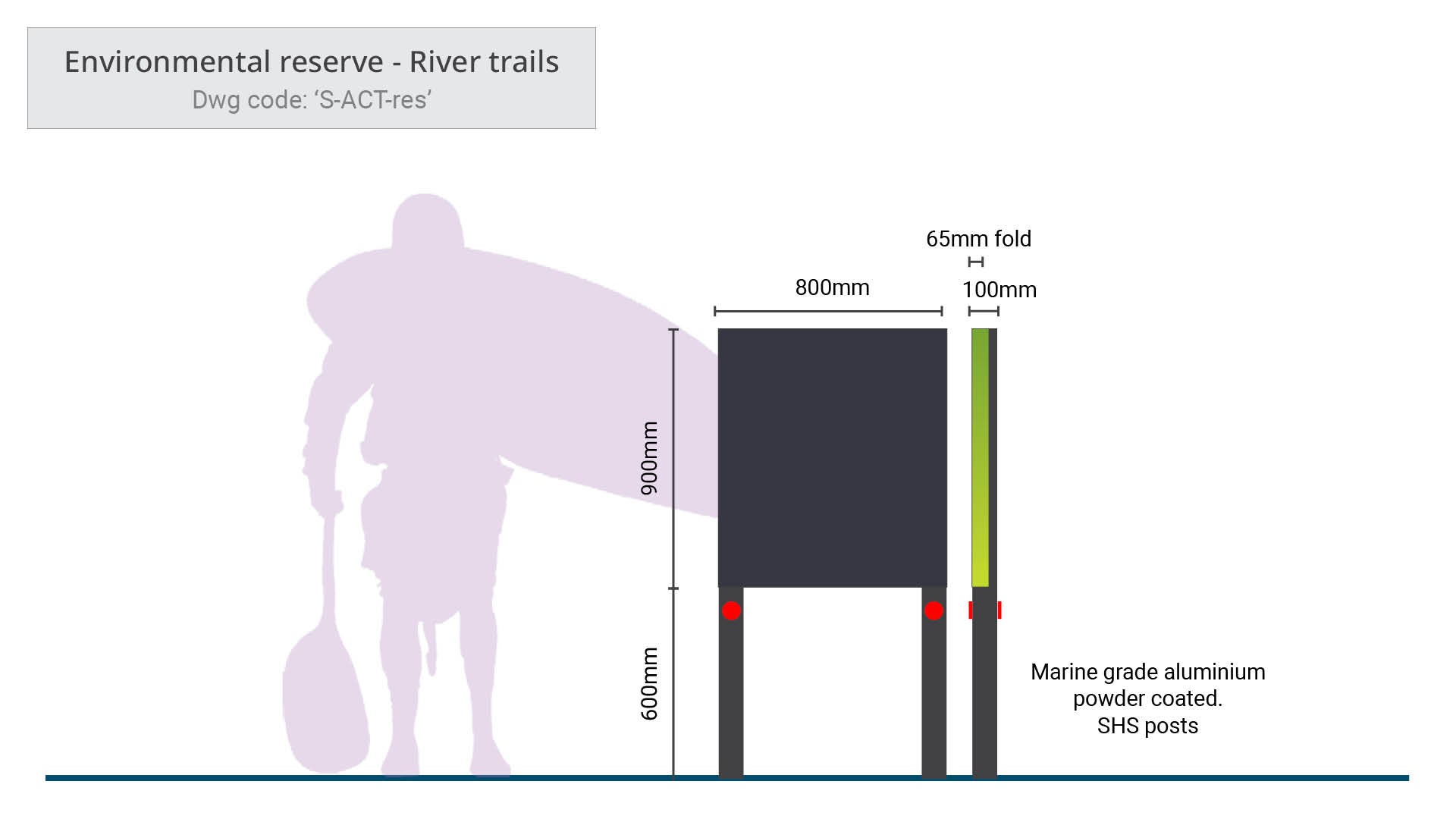 | Activity entry - Environmental reserve
| No supplier specified |
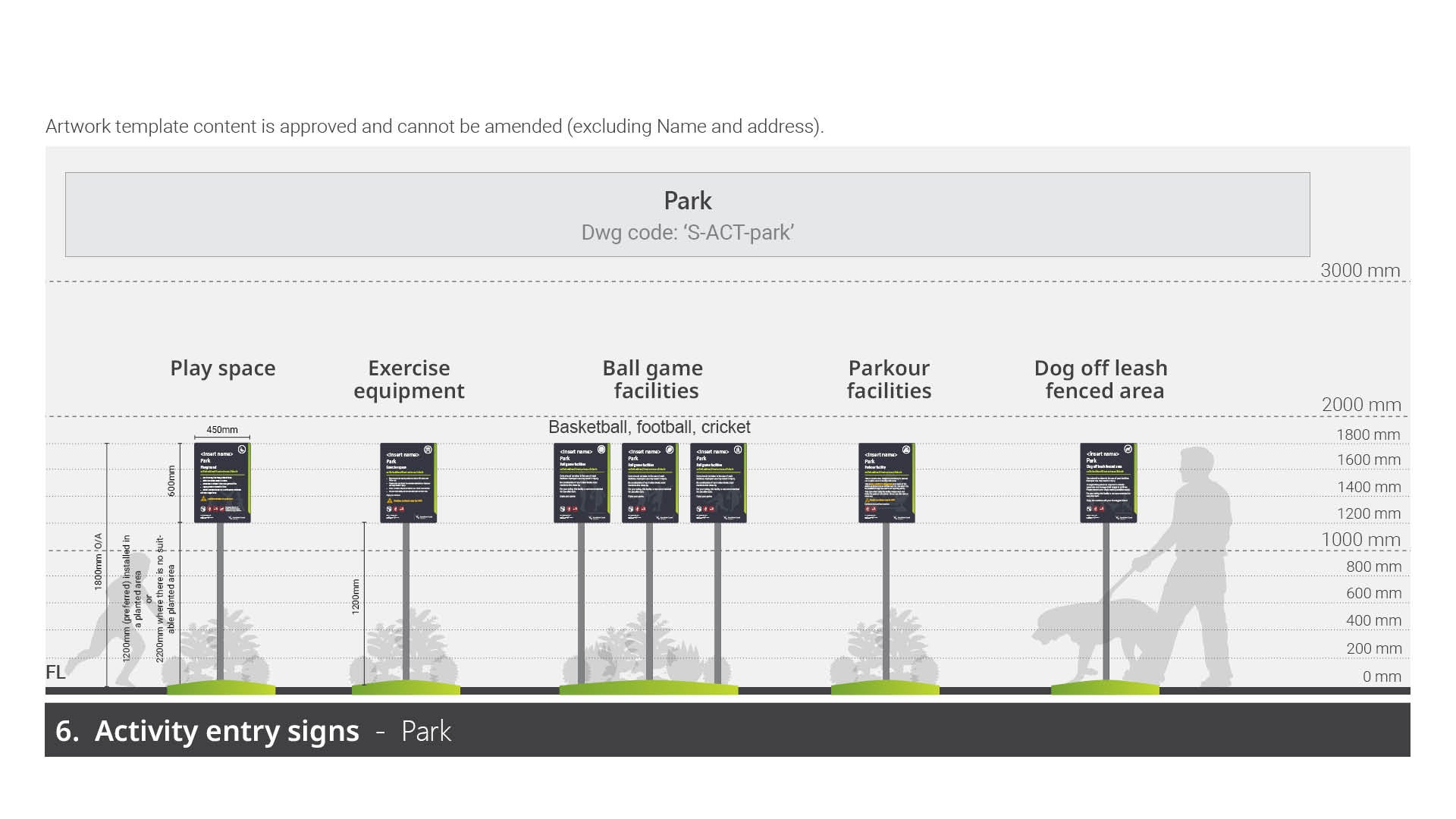
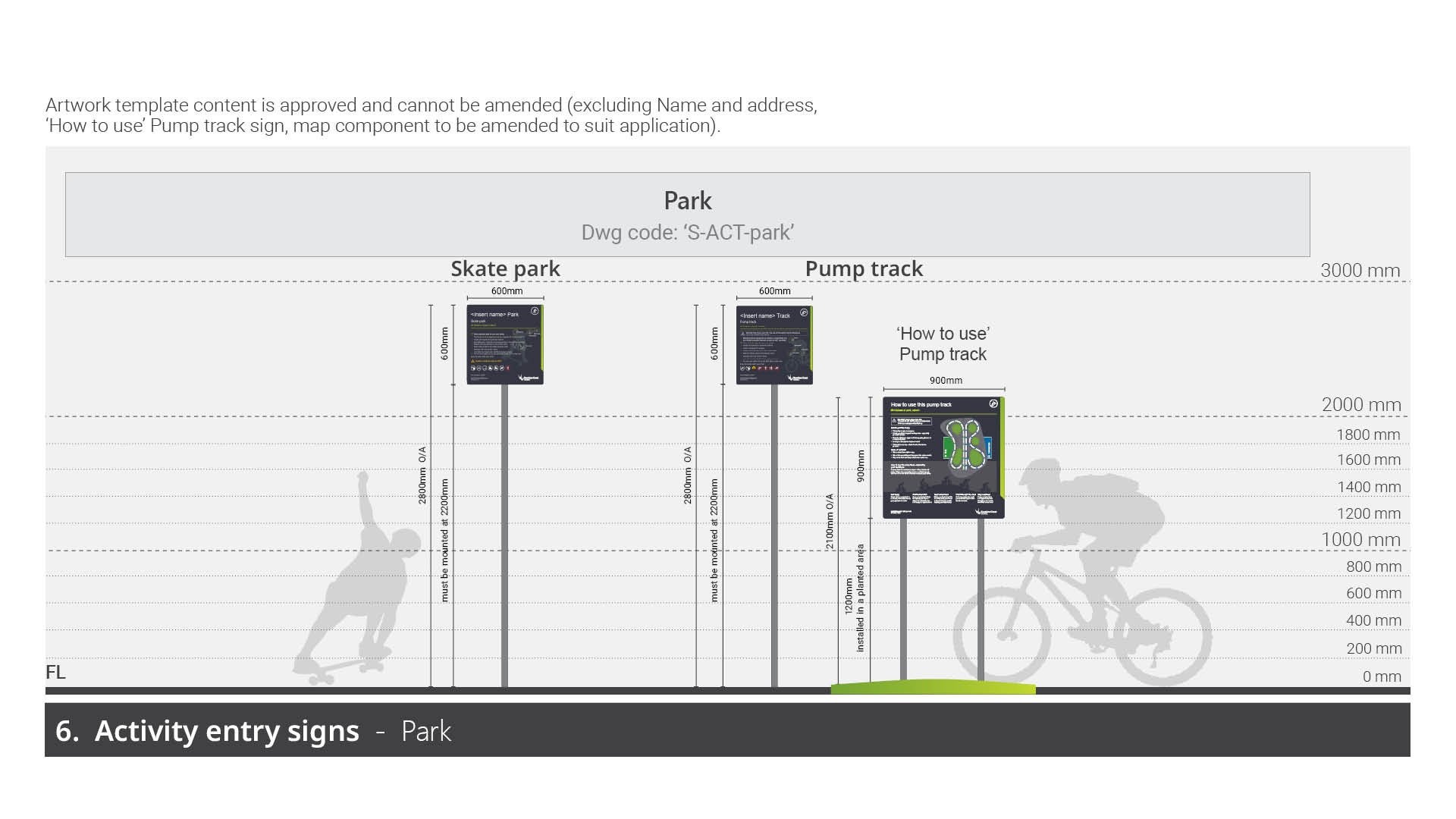
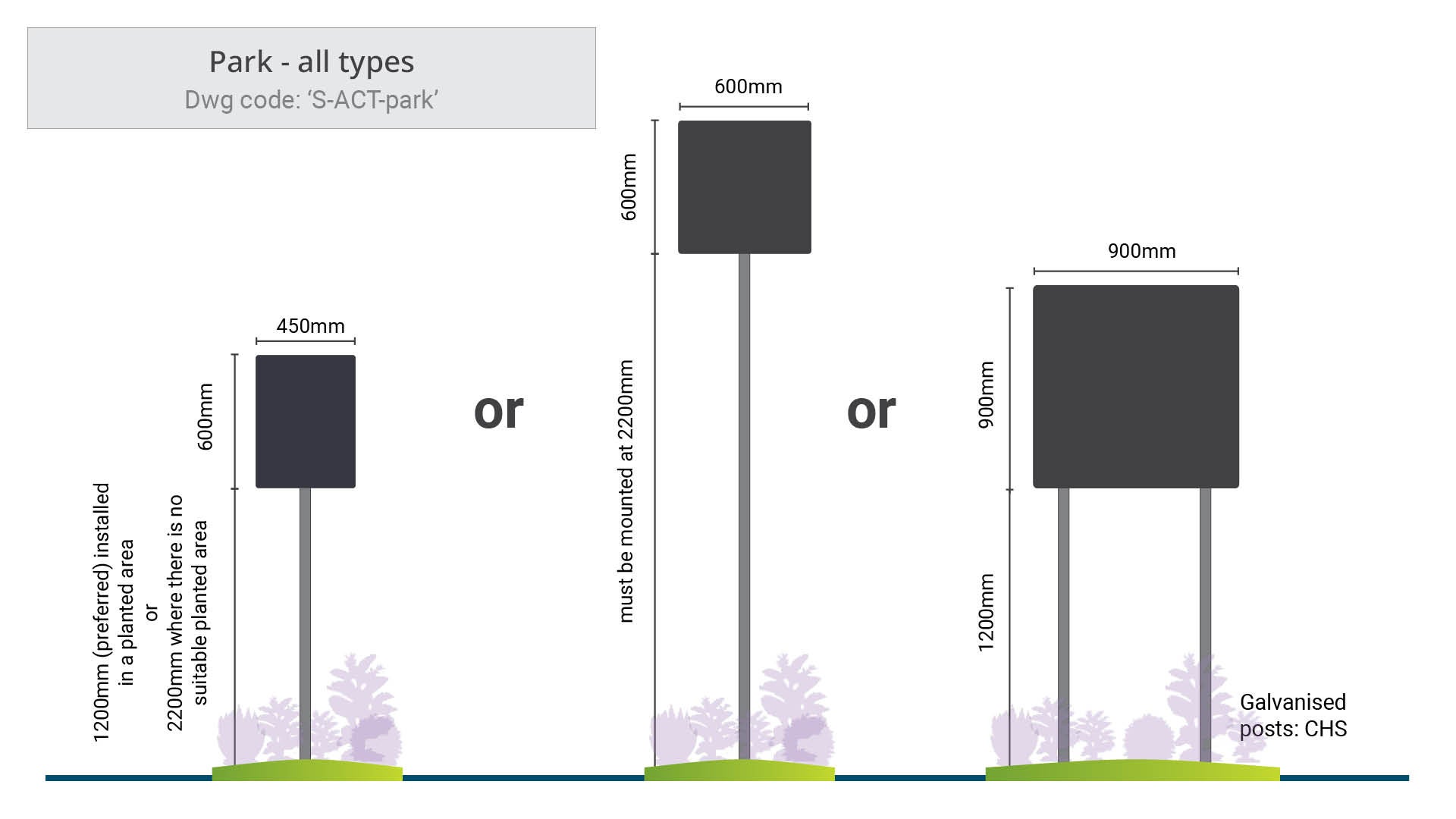 | Activity entry - Park
| No supplier specified |
Purpose
The objective of an Activity entry sign is to provide an 'entry' to individual facilities within an open space. It provides specific information for the correct use and safety regulations for the specific activity type.
The signs should be erected at all entrances to such activity spaces, such as, playgrounds/play spaces, exercise equipment nodes, skate parks, ball game facilities, dog off leash areas and canoe/kayak trails.
There are two types of Activity signs:
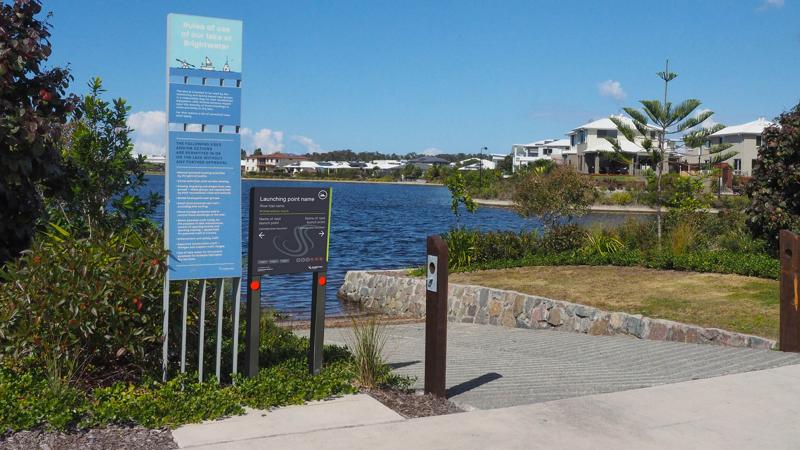
Activity entry sign - Environmental reserve. This short message sign is intended to minimise risk, inform and enhance visitor experience.
This type is to be installed in locations at a determined entry/s point for specialised use in Environmental reserves. Such places may be an entry to a trail network for specific activities. These activities are most commonly aimed at:
- Canoe/kayak users
- Bush walkers (where relevant).
These signs are typically located at the beginning of a trail (within a larger trail network) and along a circuit or activity trail.
- The most common placement is at the entrance to an access point, such as a jetty or pontoon.
- The sign should be able to be viewed by the canoe/kayak user/s from the water and land users (such as bush walkers) from land.
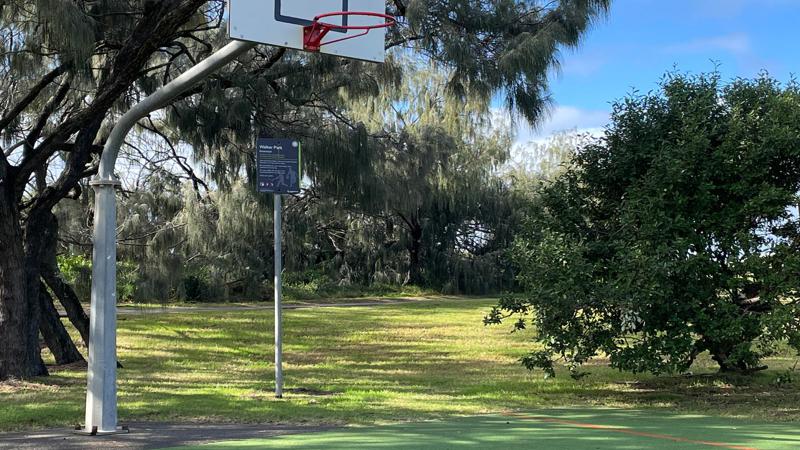
Activity entry sign - Park. This short message sign is intended to minimise risk, inform and enhance visitor experience.
This type is to be installed in only park locations at a determined entry point for specialised use facilities within a park, such as playgrounds/play spaces, exercise equipment nodes, ball game facilities, dog off leash parks and skate parks. This sign type may also be referred to as Park user sign.
The sign does not negate the requirement for an activity area to comply with Australia Standards. It is to be used in conjunction with an activity area that is deemed safe. The short message sign is intended to minimise risk, inform and enhance visitor experience.
The signs are aimed at such users as:
- Adults or carers that provide supervision.
- Anyone who may want to access the facility.
A Park activity user sign must be installed for compliance with the applicable standards for the following sign types:
- play space
- exercise equipment
- ball game facilities
- parkour facilities
- dog off leash fenced area
- skate park
- pump track
- pump track - How to use.
All other park activity areas (such as, ball games, dog off leash fenced area, pump track and mountain bike), must have park activity user signage installed for safety and emergency services wayfinding.
Planning
General
The following should be considered prior to the installation of activity signs:
- Confirm the number of entry points which provide access to individual activity area/s.
- Establish the appropriate location to capture the majority of facility users.
- Plan to incorporate Crime Prevention Through Environmental Design Guidelines (CPTED) such as ‘retain sight lines’ at the design stage of a sign project, to avoid ongoing maintenance costs for lift pruning of trees and vegetation or costly re-design to enhance public safety.
Environmental reserve
The following should be considered prior to installing an Activity entry sign - Environmental reserve, for river trails:
- Determine locations along a river trail which require this sign to aid navigation.
- Determine the number of signs required.
- The sign for river trails must be a double sided sign. The sign is able to be viewed from both the land and from the water.
Park
The following should be considered prior to installing an Activity entry sign - Park:
- Determine if there is a continuous accessible path of travel to a destination to identify if a Wayfinding marker is also warranted to direct people with low vision and people who are blind. If a marker is required install an Wayfinding equal access marker.
- Identify an appropriately located garden bed in which to install the sign, this is preferred rather than installing on a slab.
- Where there is no existing garden, install a planted garden bed to accommodate a sign, preferably at the entrance to the facility.
Design
Legal, standards and guidelines, requirements
Sign construction
- Technical drawings (DWGs) - for typical construction details for each sign type. See Technical drawings and artwork templates table (above - top of page).
- Artwork templates and samples - for approved graphic design templates and samples for alternative options (where applicable) for each sign type. See Technical drawings and artwork templates table (above - top of page).
See LIM Signage – Overarching guidelines – for Standards such as, designing for access and inclusion, traffic and road standards (where applicable).
Content and corporate branding
- Sunshine Coast Council corporate branding logo must be displayed on all signs as per Artwork templates.
- All colours must be selected from the Council corporate colour palette or otherwise approved for specific purpose. e.g. some colours, such as red, yellow and black, (not part of the corporate palette) may be used for regulatory purposes.
See LIM Signage – Graphic design guidelines – for essential guidance on components that make up signs. e.g. colour application, pictogram integration, text sizing and spacing, map implementation etc.
Other
- All signs must be used sparingly throughout any site and permissions must be granted prior to installation. Overuse will result in a cluttered environment and a negative visual impact.
- Environmental reserve - River trail sign: Reflectors must be positioned on each post (both sides) to alert users.
Refer the following for further guidance:
- AS 4685.0:2017 – Playground equipment and surfacing.
- AS 16630:2021 – Permanently installed outdoor fitness equipment - Safety requirements and test methods.
- AS EN 14974:2021 – Skateparks - Safety requirements and test methods.
Note: Where applicable, this section should be read in conjunction with:
- LIM Play spaces - signage
- LIM Exercise equipment - signage
- LIM Skate parks - signage
- LIM Sports and games - signage
- LIM Dog exercise areas (DEAs) - signage.
Content general
- All sign artwork is to be professionally designed (by a qualified graphic designer or equivalent) as vector files.
- The content of these signs has been approved by Council and must not be changed. The ONLY acceptable content that requires template changes, prior to installation is: naming, street address and any other additional information required for that specific site (e.g. distances between access points for river trail signs). Each template clearly indicates components that can be amended to suit the application.
- The name of the site and street address must accurately researched and approved by council asset custodian prior to print.
- The name of the site and street address must be clearly displayed at the top of each sign. This information could be vital in emergencies.
- Site name and spelling must be checked against Council records to ensure accuracy.
- All regulatory pictograms must be approved by Council (Community Response) prior to printing.
- Positive pictograms are preferred, to encourage the user to accept the message.
- Council approved regulatory pictograms (part of the 'locked template').
- Positive signage is encouraged. Regulatory pictograms must only be used where there may be a reoccurring problem/s.
- Corporate branding banner
- Council logo plate
- Emergency contact information.
- Items not regulated by Council should not be included. Campaign content should not be included as they are subject to change.
Specific use content
Environmental reserve
The approved and graphically designed Activity entry sign templates for River trails must include the following:
- Launching point name
- River trail name
- Street address (nearest access point, if the park has multiple entry points)
- Body content text
- Distance between access points
- Name of next launching point, with directional arrows.
- Estimated time (hour/minute).
- Activity pictograms are to be located to the far top right of the reserve name, for quick identification of the reserve facilities (part of the 'locked template').
- Supporting sponsor logos (only applicable for River trail signs).
Park
The approved and graphically designed Activity entry sign templates include the following:
Park - Play space
- Incorporates approved material as specified within the applicable Australian Standards.
- Information regarding the supervision of users, warning information about possible hot surfaces and proper use.
- Includes approved regulatory pictograms.
- There are two alternative text options (these are enforceable by council and fines apply):
- Fenced playground – Dogs prohibited (penalties apply). Assistance dogs welcome.
- Unfenced playground – No dogs within 5.0 m of playground facility (penalties apply). Assistance dogs welcome.
Park - Exercise equipment
- Information about proper use and conduct.
- Incorporates approved material as specified within the applicable Australian Standards.
- Also includes approved regulatory pictograms.
Park - Ball game facilities
- Information about proper use and conduct.
- Also includes approved regulatory pictograms.
Park - Parkour facilities
- Information about proper use and conduct.
- Incorporates approved material as specified within the applicable Australian Standards.
- Also includes approved regulatory pictograms.
Park - Dog off leash parks
- Information about the supervision of animals and proper use.
- Also includes approved regulatory pictograms.
Park - Skate parks
- Include information about safety equipment and proper use.
- Information on containing noise levels and proper use. Incorporates approved material as specified within the applicable Australian Standards.
- Also includes approved regulatory pictograms.
Park - Pump track
- Activity entry sign
- Information about proper use and conduct.
- Incorporates approved material as specified within the applicable Australian Standards.
- Also includes approved regulatory pictograms.
- How to use sign
- Information about what to know before you ride, code of conduct and how to us the pump track.
- It also shows a plan of the pump track showing the direction of use.
Positioning
General
- When considering potential sign locations, avoid positions where the sign may interrupt or block a prominent view. Signs should be secondary to a natural view. However, safety is paramount.
- Position signs in a planted area where possible, for ease of maintenance mowing, and to potential for avoid pedestrian collision.
- To ensure a sign panel will not be obscured in future, consider mature size of surrounding vegetation.
- To protect trees from potential damage, all signs should be installed outside of their canopy areas (drip lines). Where this is not possible, the Project Arborist should be contacted to provide advice. See LIM Site set up (including Tree protection) for further guidance.
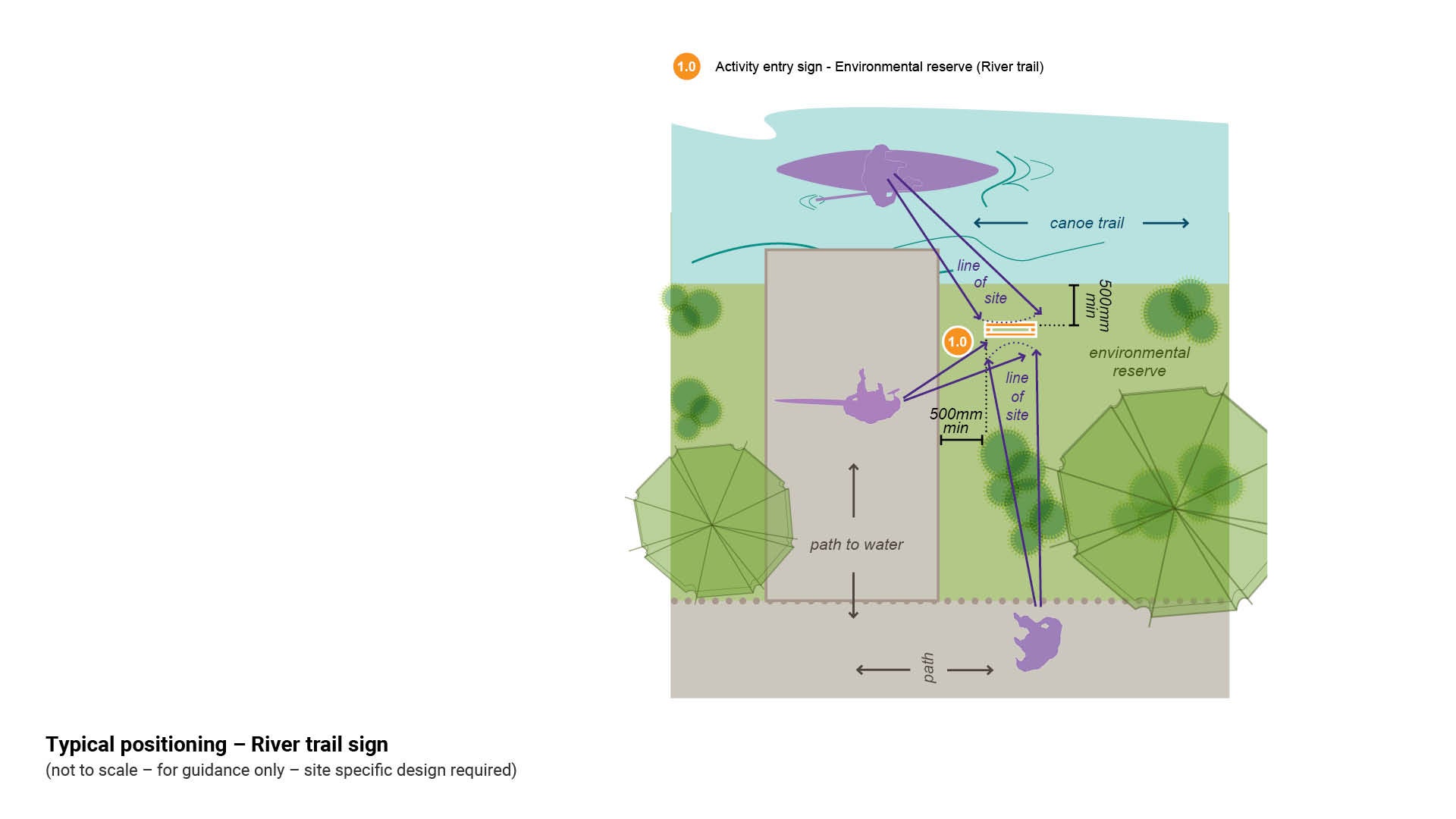
- Where there is an existing or new pathway, all signs must meet Austroads minimum 500 mm safety offset from any path edge, to avoid collision with the sign while using the pathway.
- Position signs a minimum of 200 mm in from any slab or compacted surface edge for mowing offsets (where applicable) and visual appearance.
Environmental reserve - River trails
- The sign must be double sided to be viewed from the water as well as from the land.
- Maintain clear view lines from the river trail to the sign as well as the land trail network.
- Plant low vegetation to maintain site lines from pathways.
- River trail signs are designed as short message signs that can be viewed from a distance as well as from a short viewing distance.
See Figure 15: Typical positioning – River trail sign.
Figure 15: Typical positioning – River trail sign
Park - general
- These signs have two mounting options:
- 1.2 m above finished ground level (preferred). The sign must be located in a planted area so sign does not create a surface for collision. Positioning in a planted area also reduces on-going maintenance.
- 2.2 m above finished ground level (MUTCD). Only mounted at this height where there is no planted area near by, to locate the sign, or the site is known to be a high vandal area, such as Skate park sign.
- All signs must be installed outside the safety footprint of the activity area, so as not impede the safe use of any equipment.
- Where a sign is installed beside a new pathway, a luminance contrast treatment is recommended to form the sign slab and must extend the full width of the path of travel. This treatment enables people with low vision and people who are blind to identify a sign or facility adjoining a pathway.
Park - Play space
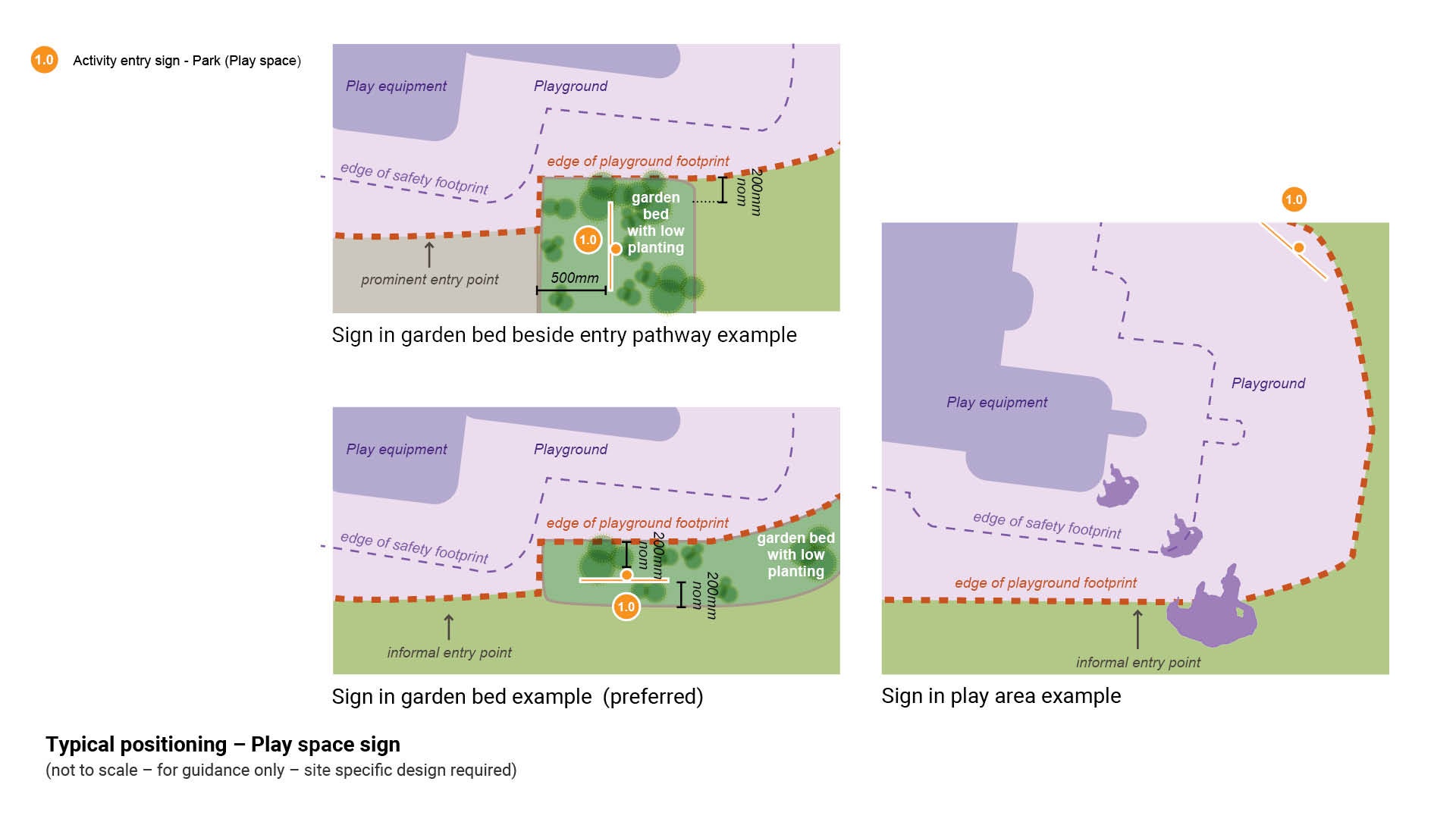
- Activity entry signs for playgrounds/play spaces should be positioned in a garden bed beside the pathway, as close to the entrance (preferred). Or alternatively, positioned at the most used entry point of the facility as possible.
- Where there are multiple entry points, ensure the sign can be viewed by as many park users as possible.
- All signs must be outside the safety zone of play equipment and avoid locating signs within a free run or large open area.
See Figure 16: Typical positioning – Play space sign.
Figure 16: Typical positioning – Play space sign
Park - Exercise equipment
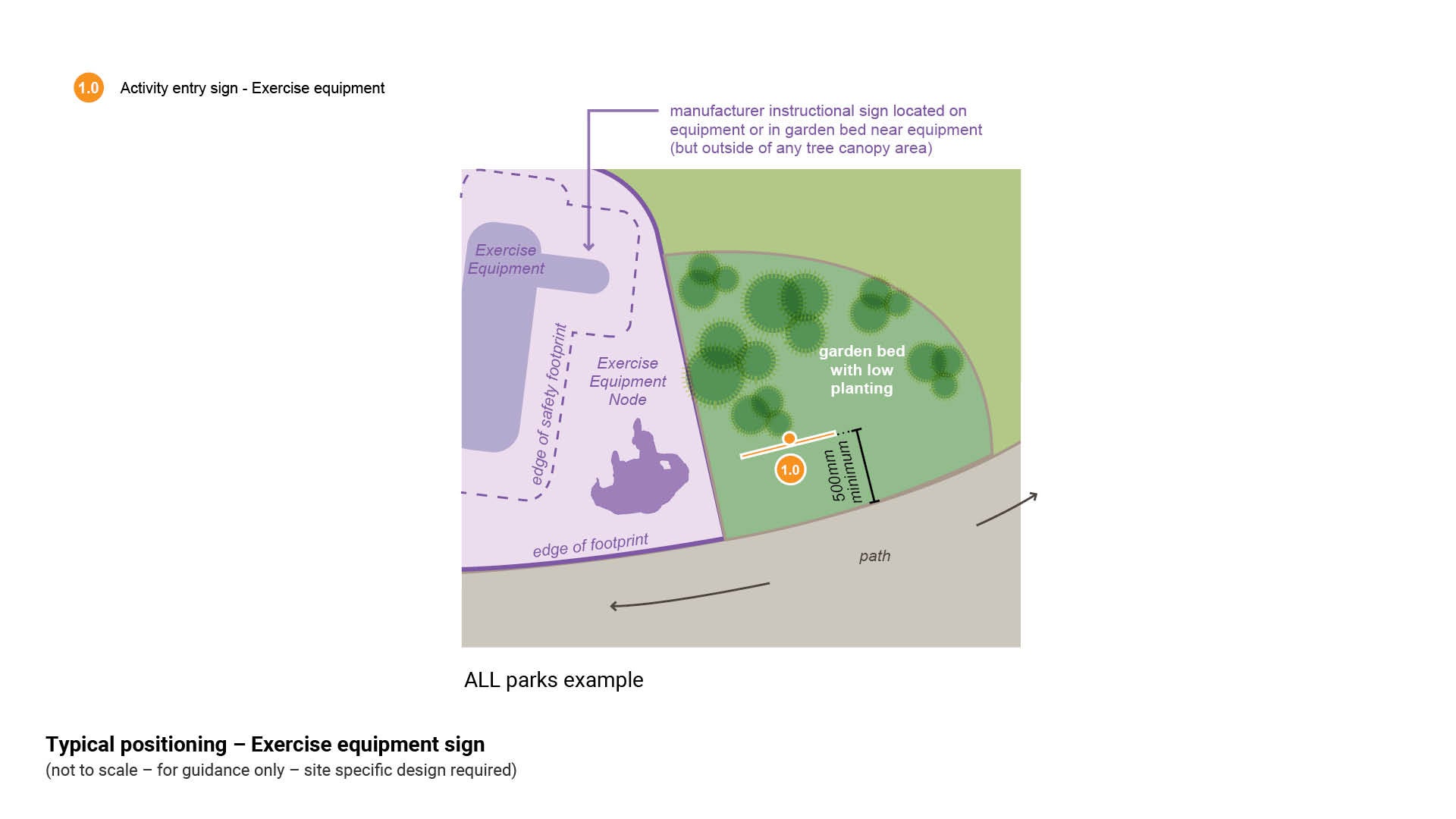
- This sign must be installed outside the safety zone (minimum), however positioned outside the exercise node footprint is preferred, to maintain a safe exercise area.
See Figure 17: Typical positioning – Exercise equipment sign.
Figure 17: Typical positioning – Exercise equipment sign
Park - Ball game, parkour and skate park
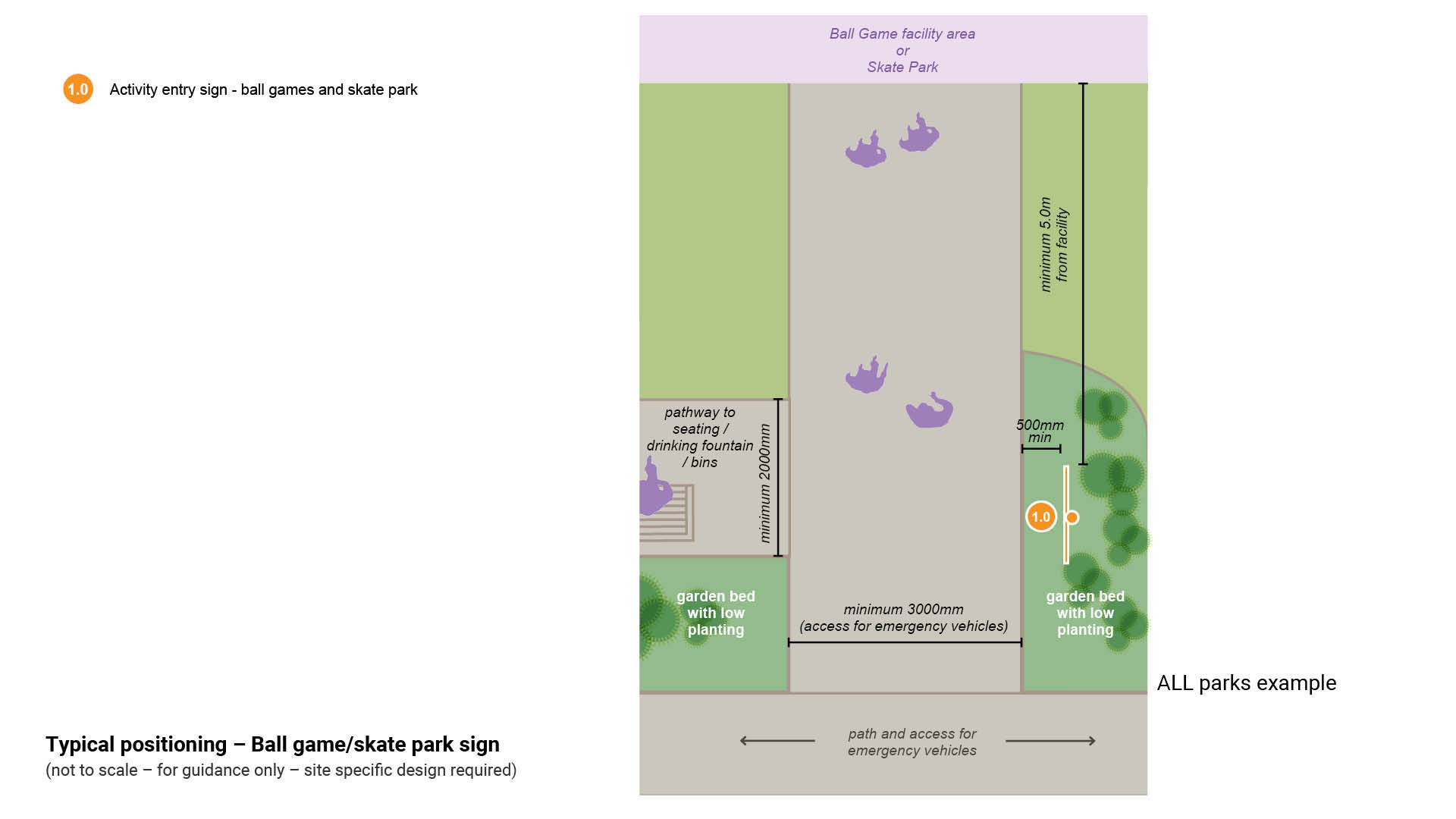
- All signs must be a minimum 5.0 m from an activity facility, such as basketball court or skate park.
See Figure 18: Typical positioning – Ball games/Skate park sign.
Figure 18: Typical positioning – Ball games/Skate park sign
Park - Dog off leash area
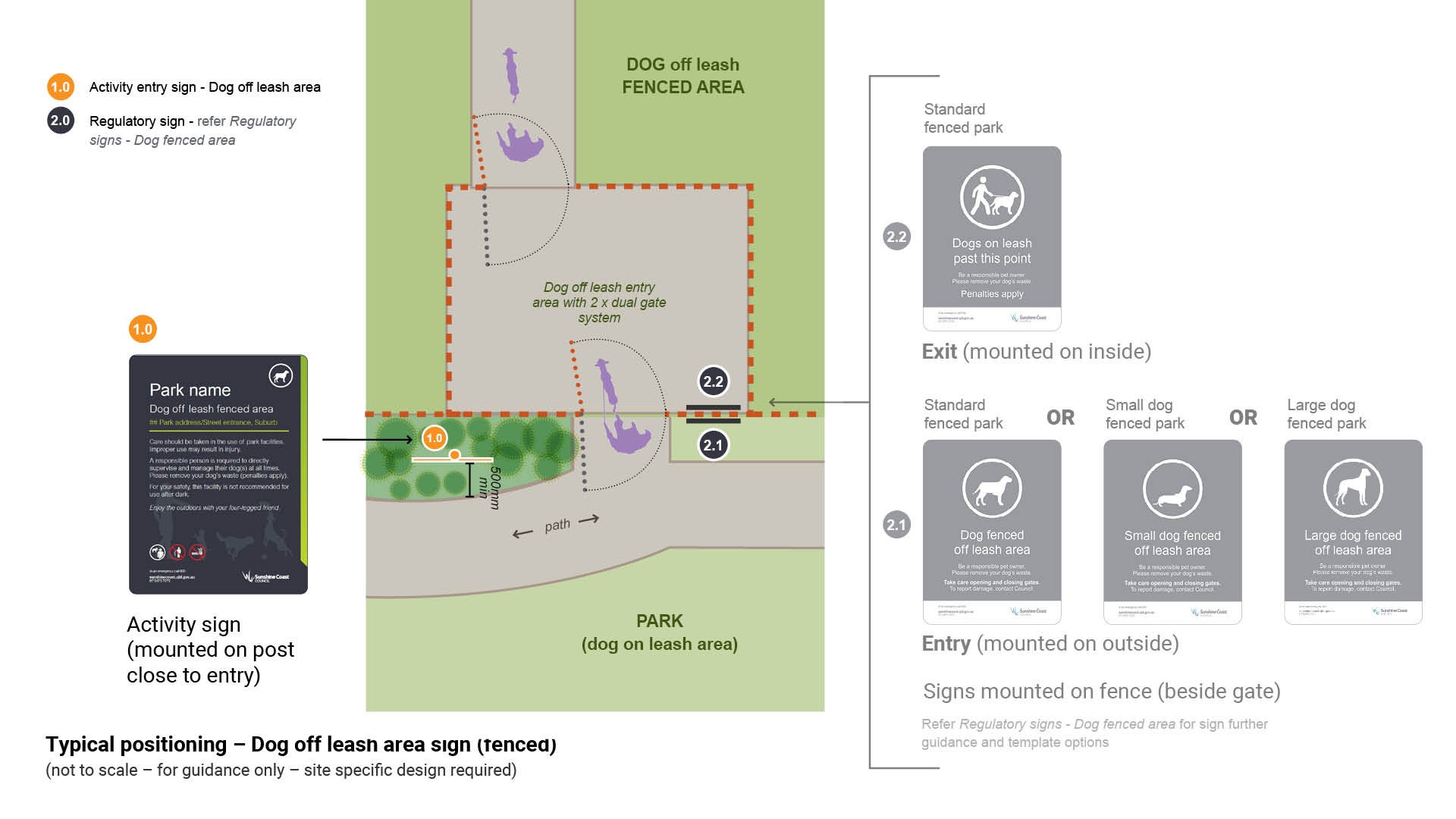
- Position the sign at the entry to a fenced dog off leash area, beside the entrance gate.
- Regulatory signs must be installed outside and inside the gate.
- It is preferred a regulatory sign is fixed on a dual gate area fence to avoid obstructing the entry area.
- Where the dog off leash area is unfenced, position the sign at primary entry points (preferred in a garden bed), a minimum 500 mm Austroads safety offset from any path of travel.
See the following for further guidance:
- Figure 19: Typical positioning – Dog off leash area sign (fenced)
- LIM Signage - Regulatory signs - Dog fenced area for supporting signage required at all dog off leash fenced parks.
Figure 19: Typical positioning – Dog off leash area sign (fenced)
Park - Pump track
There are two signs that should be installed at pump track facilities:
- Activity entry sign (primary entry sign)
- How to use sign (secondary sign with additional information).
Activity entry sign
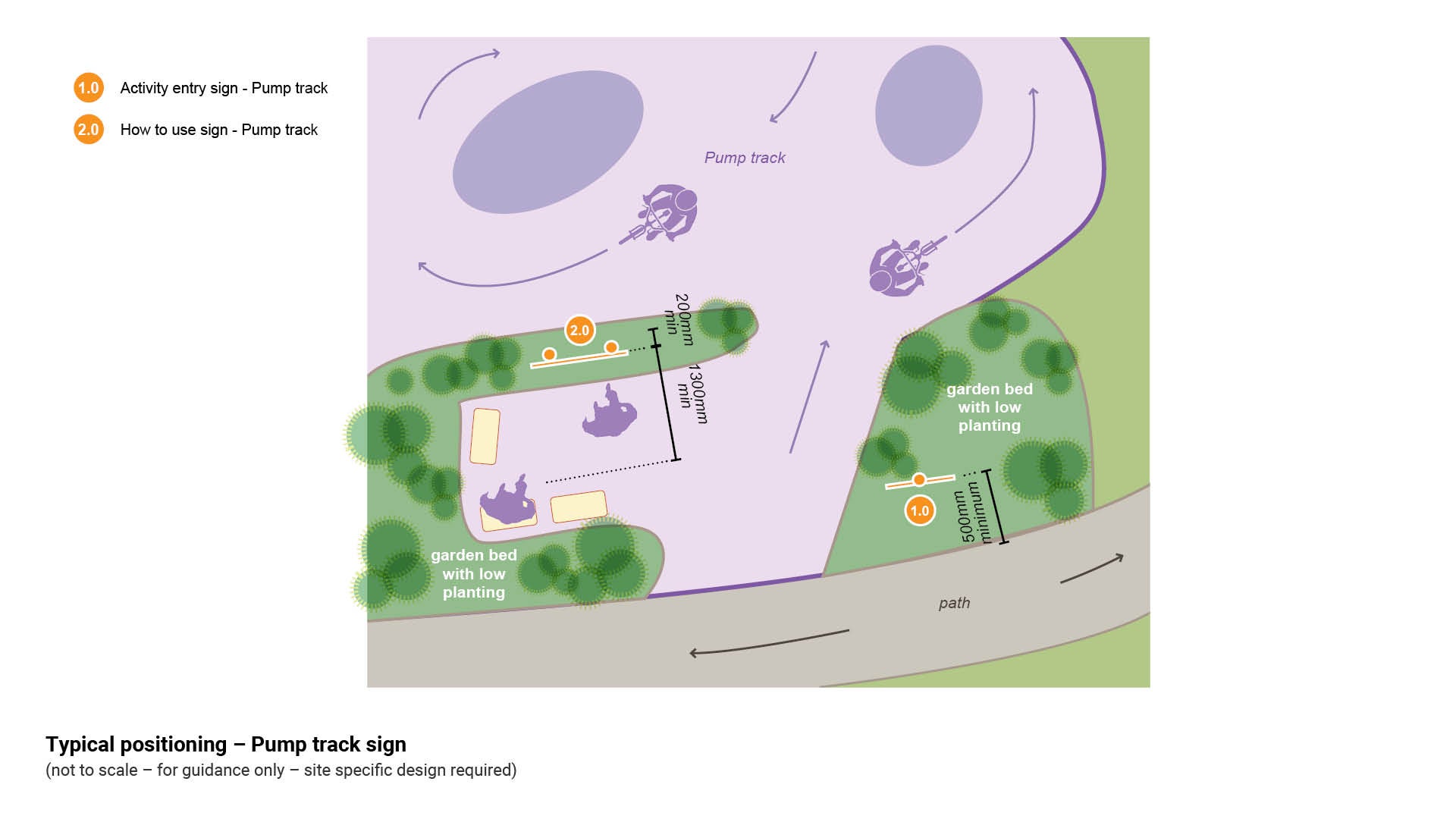
- Activity entry signs for a pump track facility should be positioned in a garden bed beside the connection pathway, as close to the entrance (preferred). Or alternatively, positioned at the most used entry point of the facility as possible.
See Figure 20: Typical positioning – pump track.
How to use sign
- How to use sign for a pump track facility should be positioned in a garden bed at the start of the track and close to the entrance (preferred). This is a long message sign, so ensure the sign is located where there is sufficient space for users to assemble with their bikes and view the information safely and comfortably.
See Figure 20: Typical positioning – pump track.
Figure 20: Typical positioning – pump track
Delivery
For all developer delivered assets, contact Council (Development Services) – this includes all works associated with any development application.
For all council delivered assets, the following process should be used:
Site investigations
- Confirm council land tenure and approval process.
- Identify sign location.
- Identify physical/technical constraints.
- Obtain arborist advice (where required).
Community engagement/stakeholders
- Where applicable.
Corporate liaison and approvals
See the Technical drawings and artwork templates table in each sign type page for guidance - How to place an artwork order (internal use only) and Artwork design instructions (internal use only).
- Council (Parks and Gardens) and or Council (Environmental Operations).
- initial approval for use/application of sign.
- approval and guidance of artwork content.
- approval to manufacture signs.
- approval of location of signs.
- Council (Community Response)
- approval of any regulatory signage/componentry.
- Council (Communication)
- editing of templates
- supply of proofs for approval
- approval of corporate branding.
Deliverables
- Site plan – for sign installation.
- Technical drawings (DWGs) – sign construction details.
- Schedule of signs.
Manufacture
See the Technical drawings and artwork templates table in each sign type page for guidance - How to place an artwork order (internal use only) and Artwork design instructions (internal use only).
- In-house manufacture – Council (Transport Network Operations) - Civil Operations (Signs Technical Officer).
OR
- External manufacture – select a suitable sign fabricator.
Installation
- All relevant key stakeholders are to be notified (including contractors), and where required, attend a pre-start meeting.
- Sign location as per approved site plan.
- Installation as per technical drawings and schedule.
Finalisation
- Assets captured.
- As designed as constructed drawings (ADAC) supplied.
- Hand over to asset custodian.
Manufacturer instruction signs
Purpose
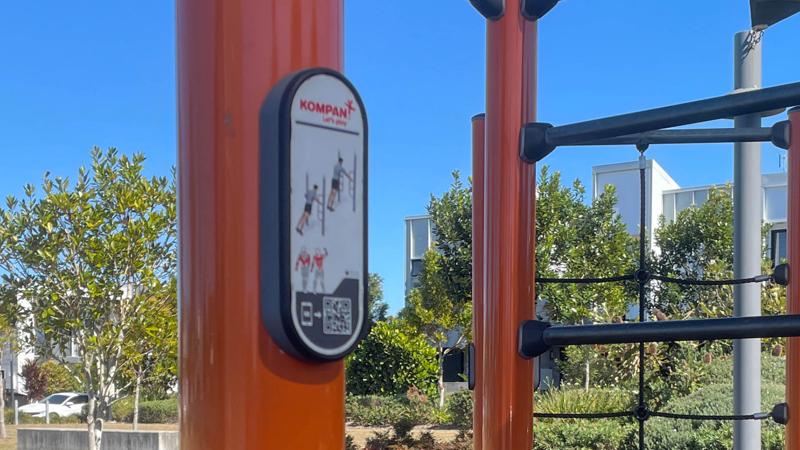
Signs supplied by the product manufacturer, are intended to provide effective instruction for safe and correct use of individual pieces of equipment. The signs are used for exercise and playground equipment, for the safe use of equipment. (AS 16630:2021 Permanently installed outdoor fitness equipment - safety requirements and test methods).
The sign minimises risk and enhances visitor user experience.
Design
Legal, standards and guidelines
Sign construction and content
- Council require exercise equipment to be installed with instructional signs supplied by the manufacturer.
- Manufacturer supplied signs must meet Australian Standards.
Requirements
Content
- All sign artwork is to be professionally designed (by a person qualified in graphic designer or equivalent) as vector files.
- Sign content must use a positive tone. This will influence users to embrace the message.
Detailed design
Specific content
- Manufacturer instruction sign must provide clear instruction to encourage safe and effective equipment use as per Australian Standards.
- A manufacturer instruction sign for exercise/playground equipment may provide the following:
- Recommended target audience (age group)
- Safe use of the equipment.
Positioning
General
- Position the sign to be viewed while equipment is in use or alternately, locate the sign to enable instructions to be read before use.
- Position signs to prevent trip hazards.
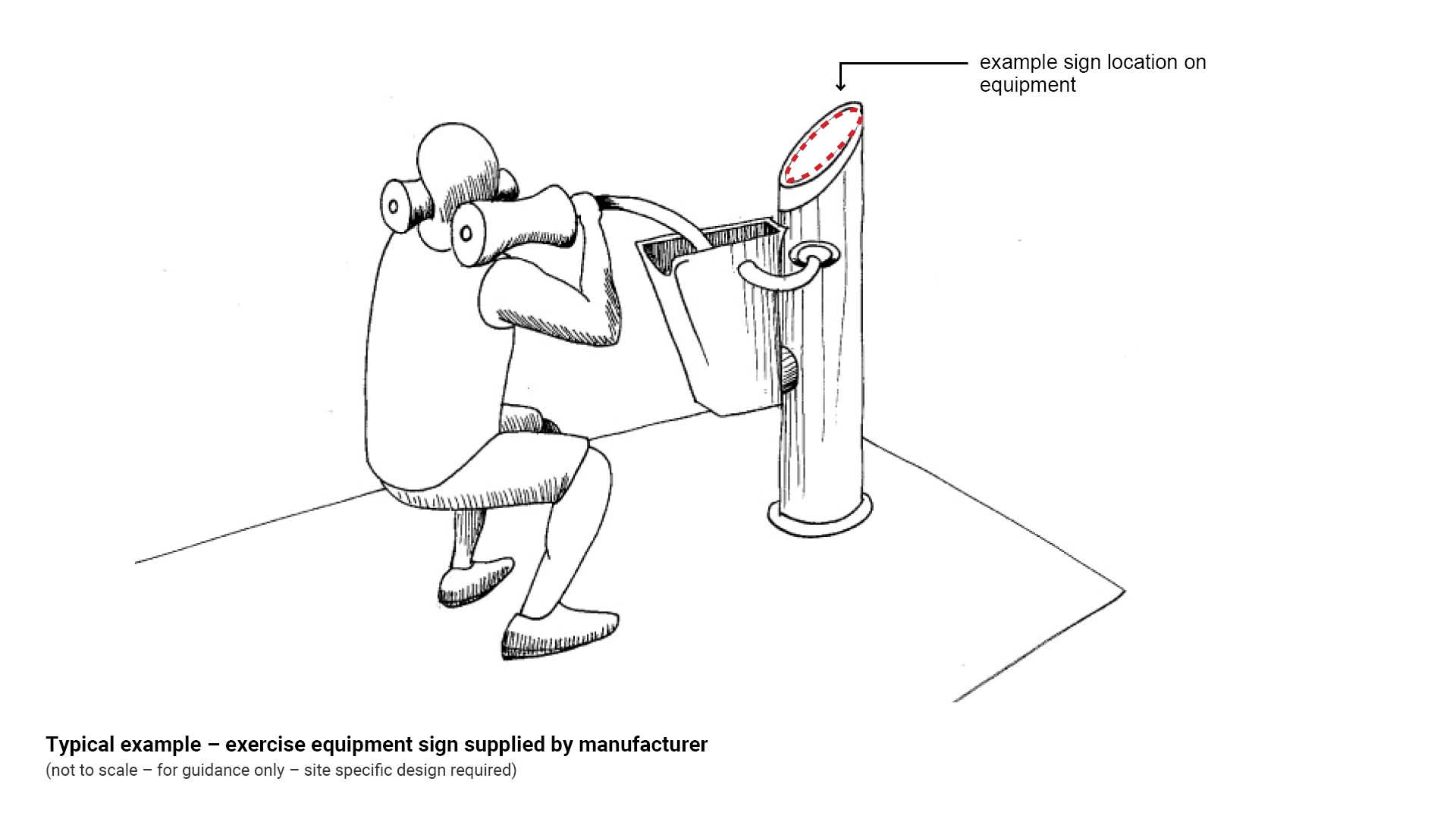
- Mount signs on equipment where possible or integrate into equipment design.
See the following figure and LIM category for further guidance:
- Figure 21: Typical example – exercise equipment sign supplied by manufacturer
- LIM Exercise equipment - Design - Signage
- LIM Play spaces - Design - Signage.
Figure 21: Typical example – exercise equipment sign supplied by manufacturer
Delivery
The supply and install of instructional signs is the responsibility of the exercise equipment or playground equipment manufacturer/certified installed. All signs must be fixed/installed at the time of installation.
This component is currently in development