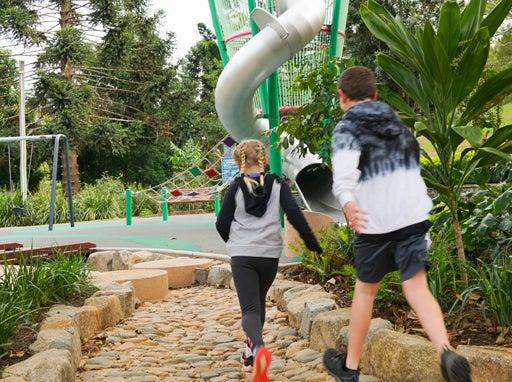
Play spaces

Accessible and inclusive play

Requirements and considerations for accessible and inclusive play spaces

All abilities play space (AAPS) - fully fenced specialist facility
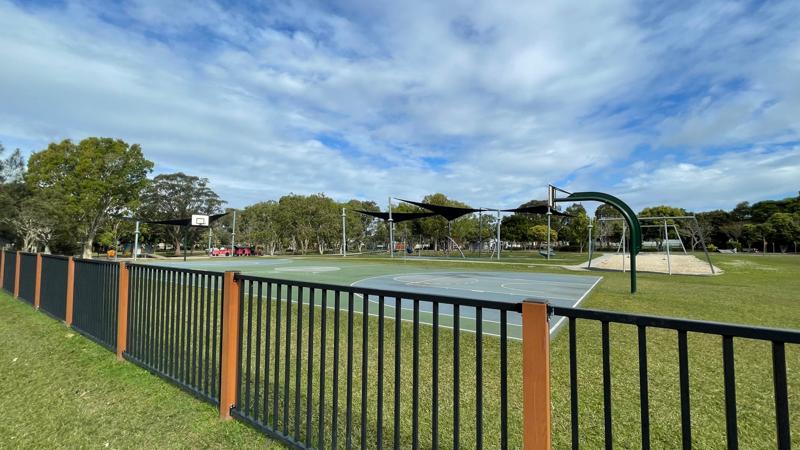
LIM_play_pic_fencing.jpg

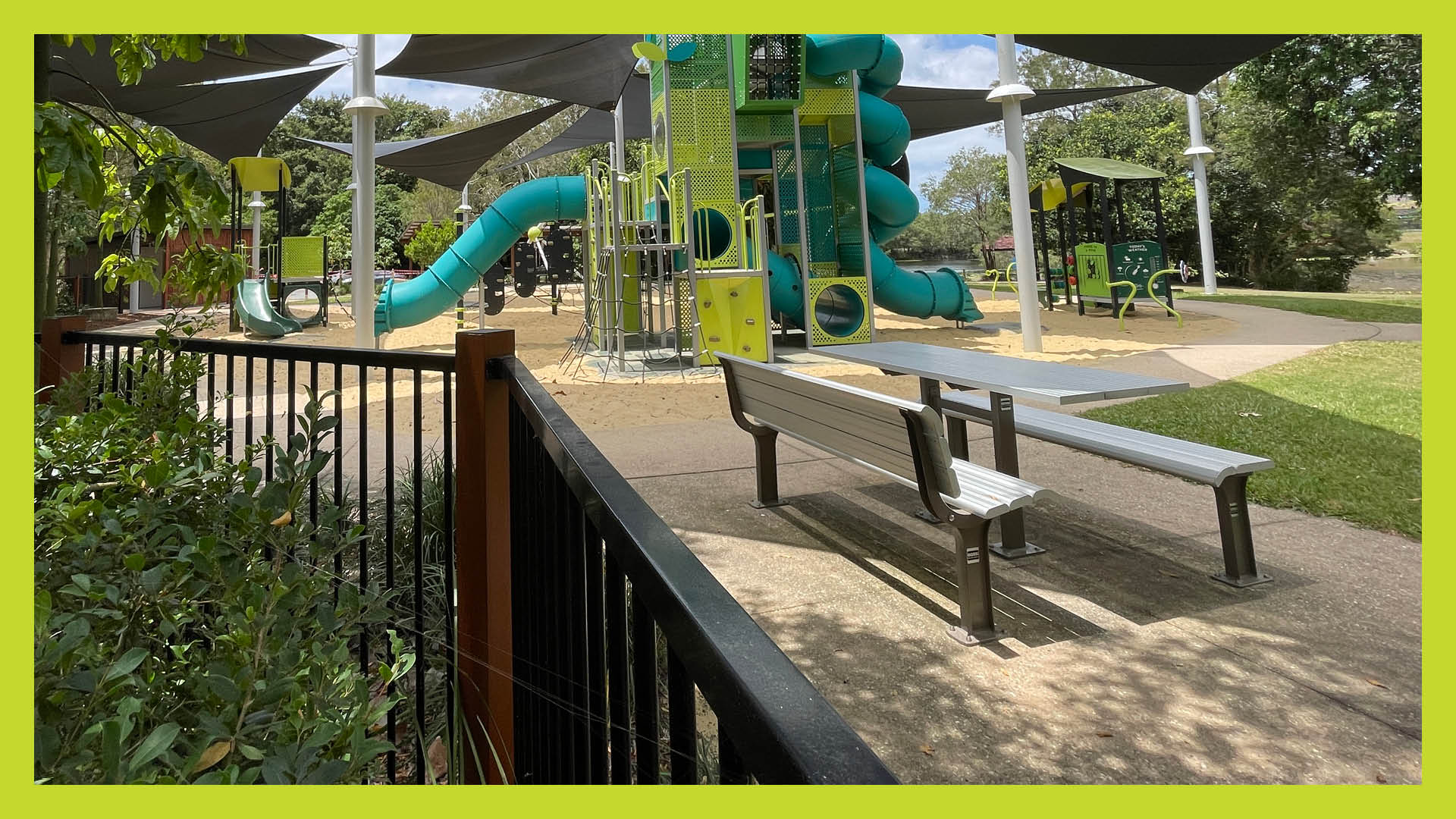
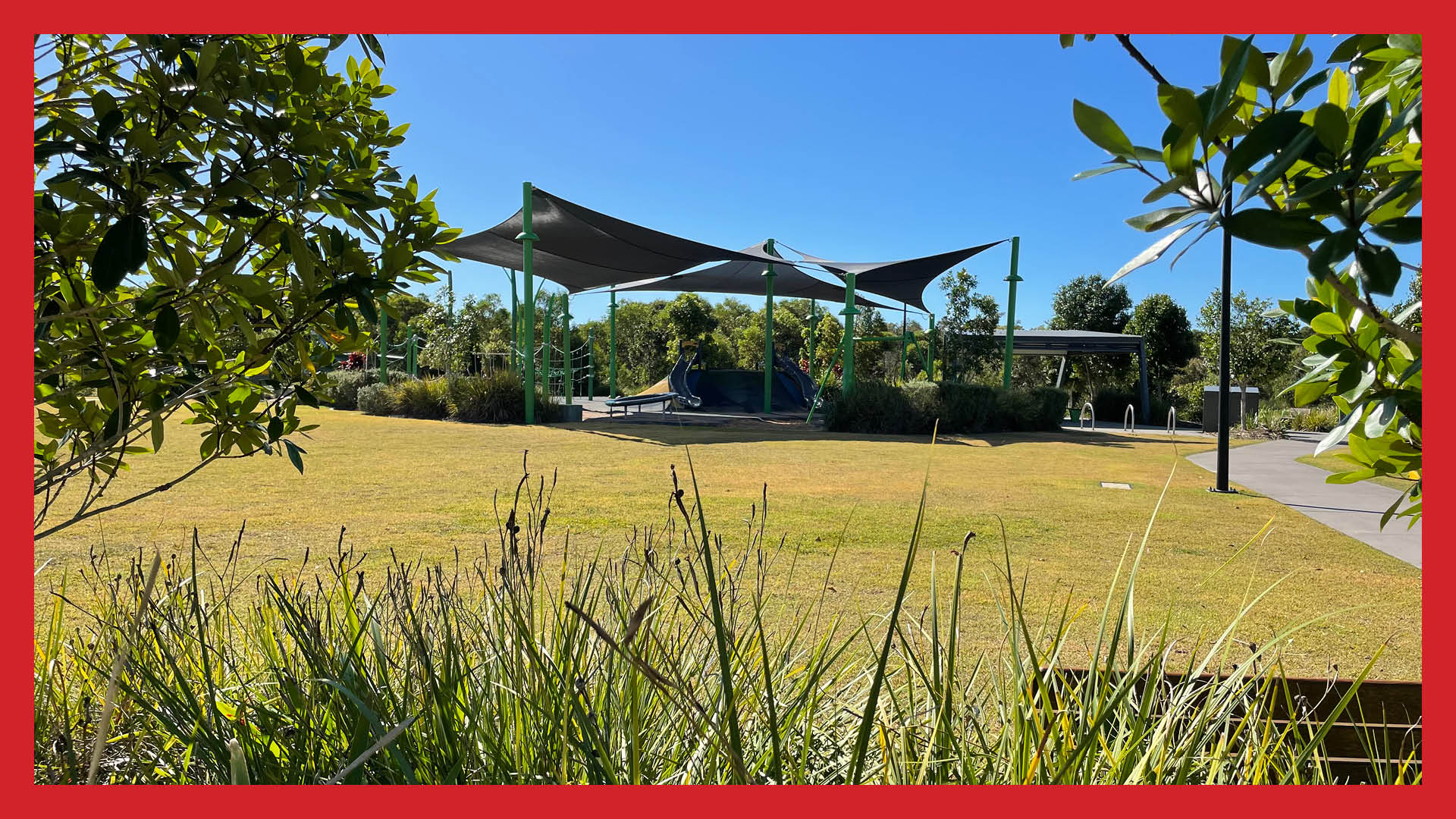
A successful all abilities play space will look and feel like any playground to the untrained eye. There are however many features that have been well designed or modified to meet the needs of as many users as possible.

All ability play space design is about creating a space that is inviting and easy to access, encouraging children, parents and carers to interact and most importantly providing equal access, inclusive infrastructure and play elements. This is a place where parents and carers can visit for respite, in a safe and comfortable outdoor environment.

  • Successful all abilities play space design breaks down the barriers that families currently face in accessing existing local play space facilities and play elements.
  • Rather than isolating and designing for specific disabilities, the idea is to focus on removing ‘barriers’ and meeting the ‘needs’ of families who access play spaces. It is for this reason that extensive user participation workshops and engagement of community, schools, stakeholders and professionals is particularly important in designing all abilities play spaces.
  • Accessible and inclusive play considers a diverse range of children’s needs, not just physical access.  

The key requirements when choosing a site are:

  • A risk assessment must be conducted to minimise potential risks e.g. busy roads, water bodies, etc.  Water bodies are not preferred near AAPS.
  • Suitable site for facilities (e.g. land suitability, availability and topography, utilities, carparking, fully fenced play space including kick and throw, public amenities within the play space, external network connections, etc.).

The key infrastructure items are:

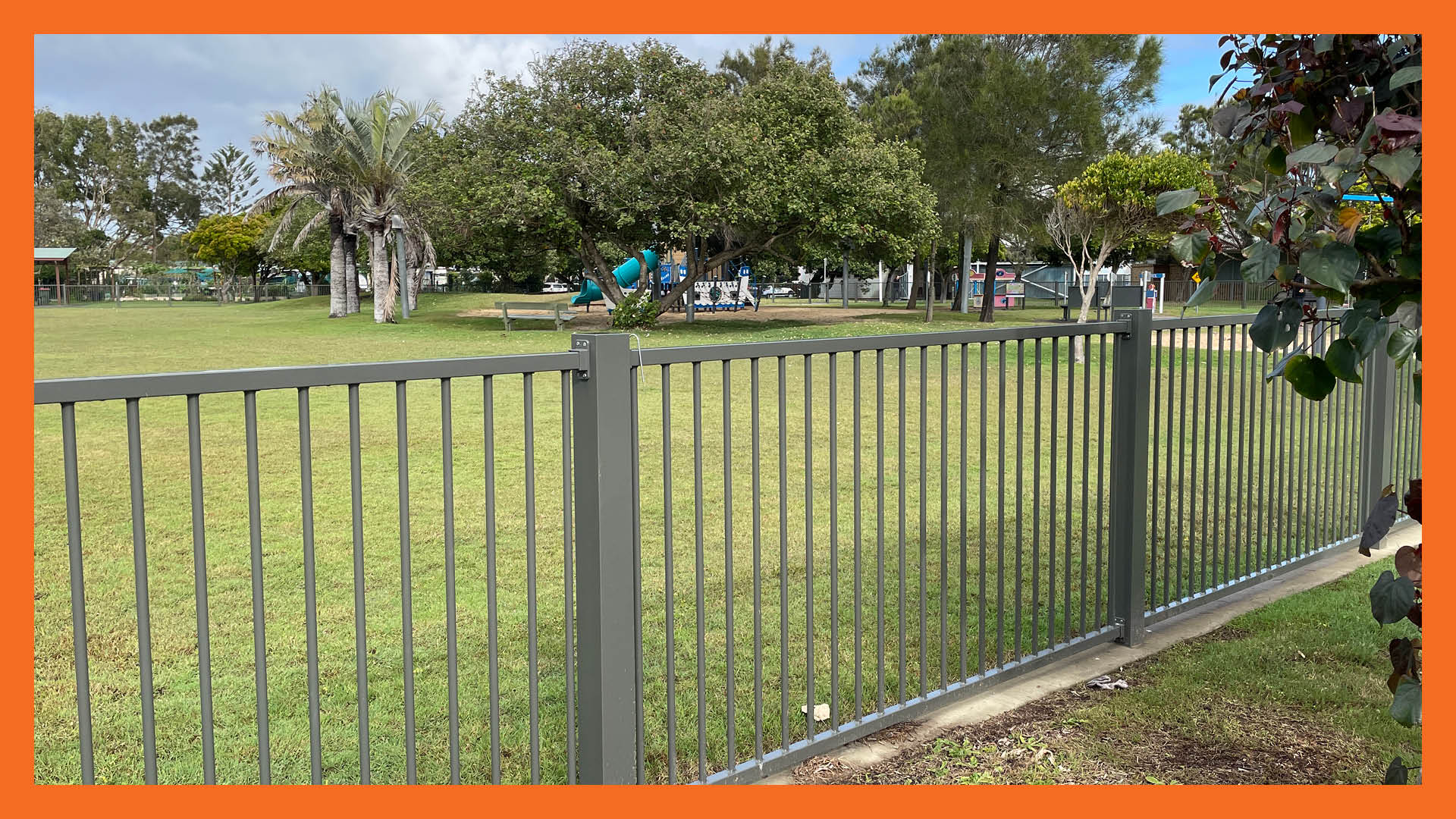
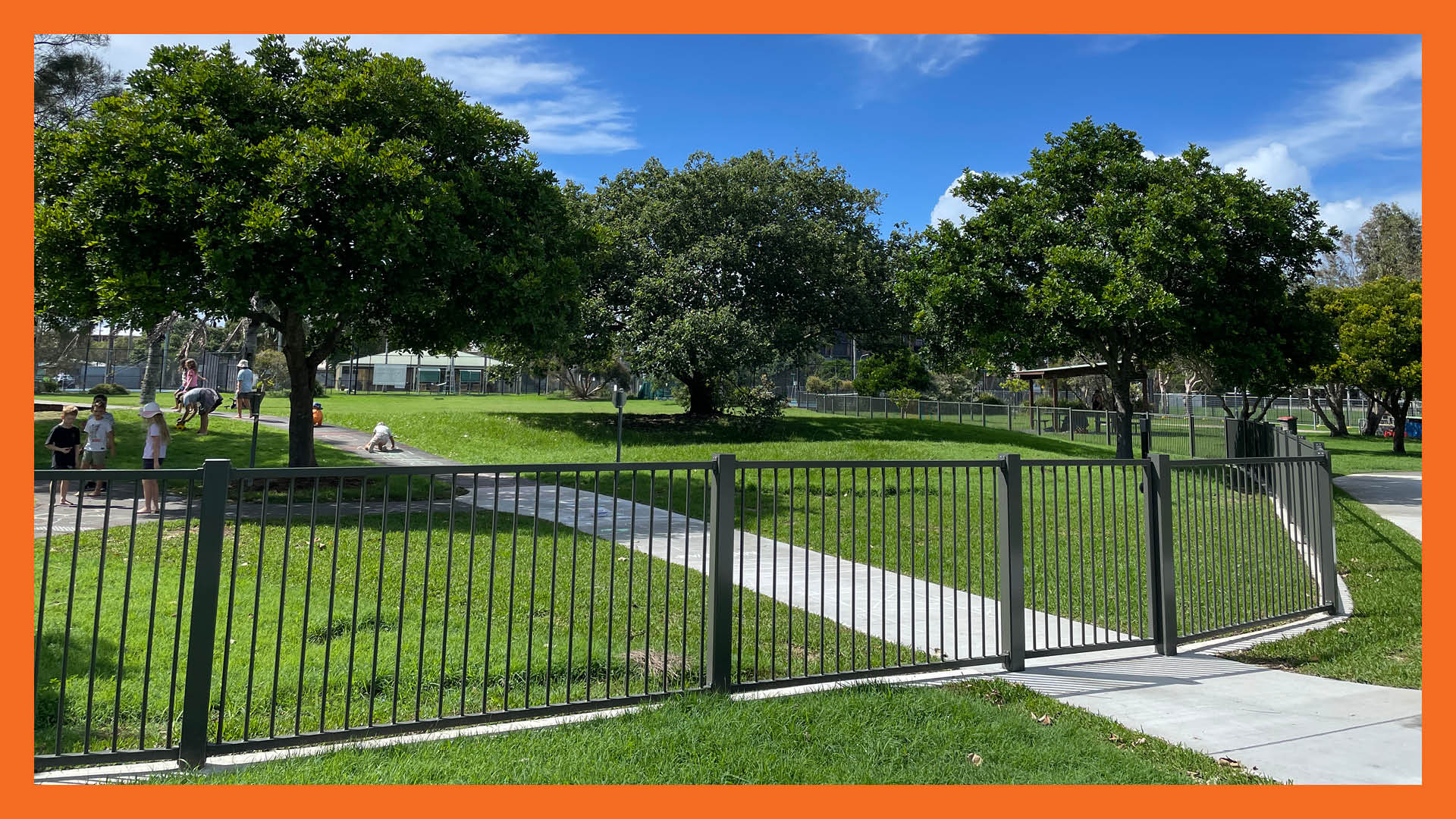
  • Full safety fencing (around play space, kick and throw and public amenities). Gate to use magnalatch (or equivalent) latch system
    • Consider a dual latch system. A pool fence latch to the top of the gate and an (MLAK) key release to allow entrance by adults unable to use this latch system. See LIM Fences and gates for further guidance
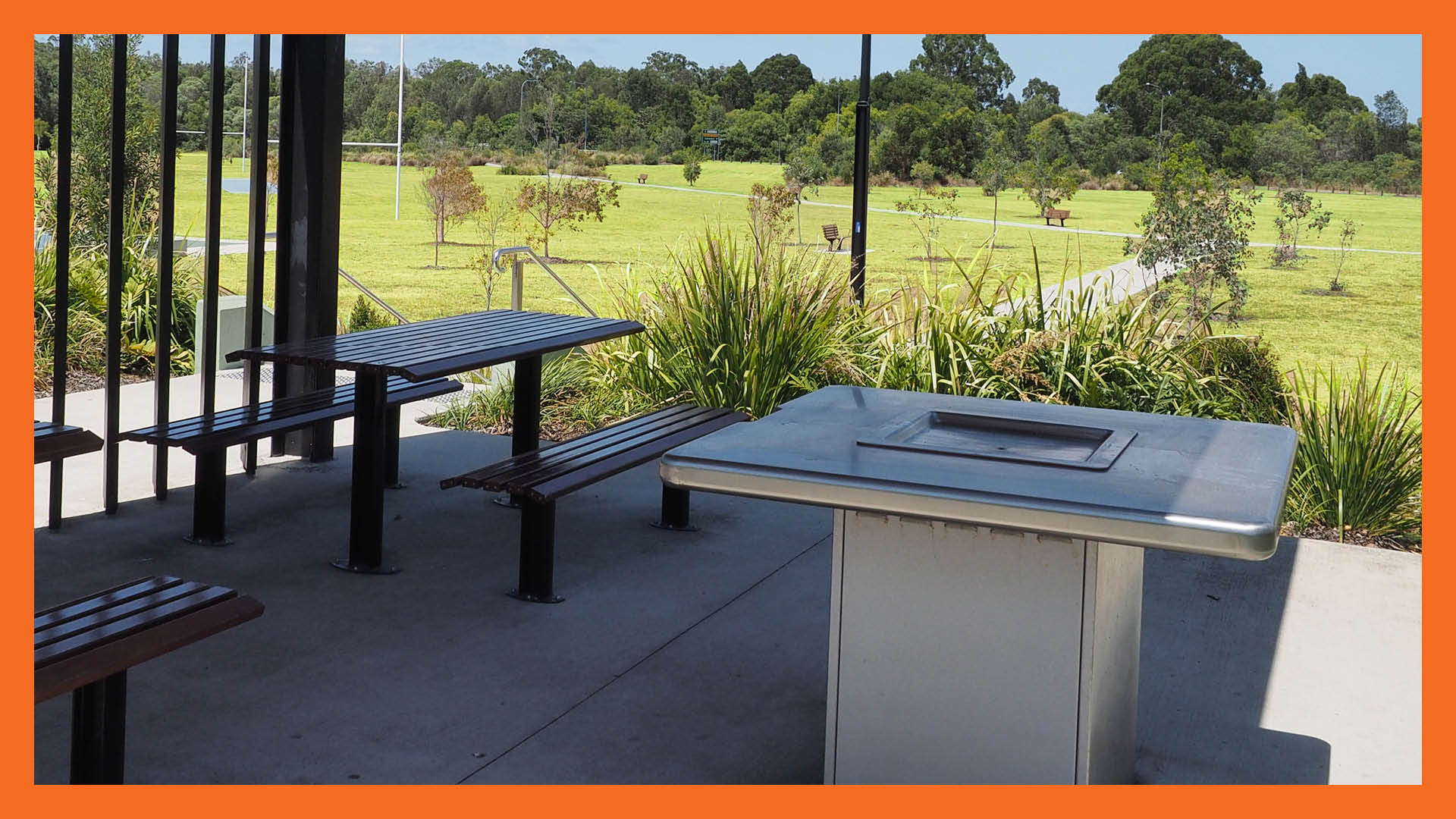
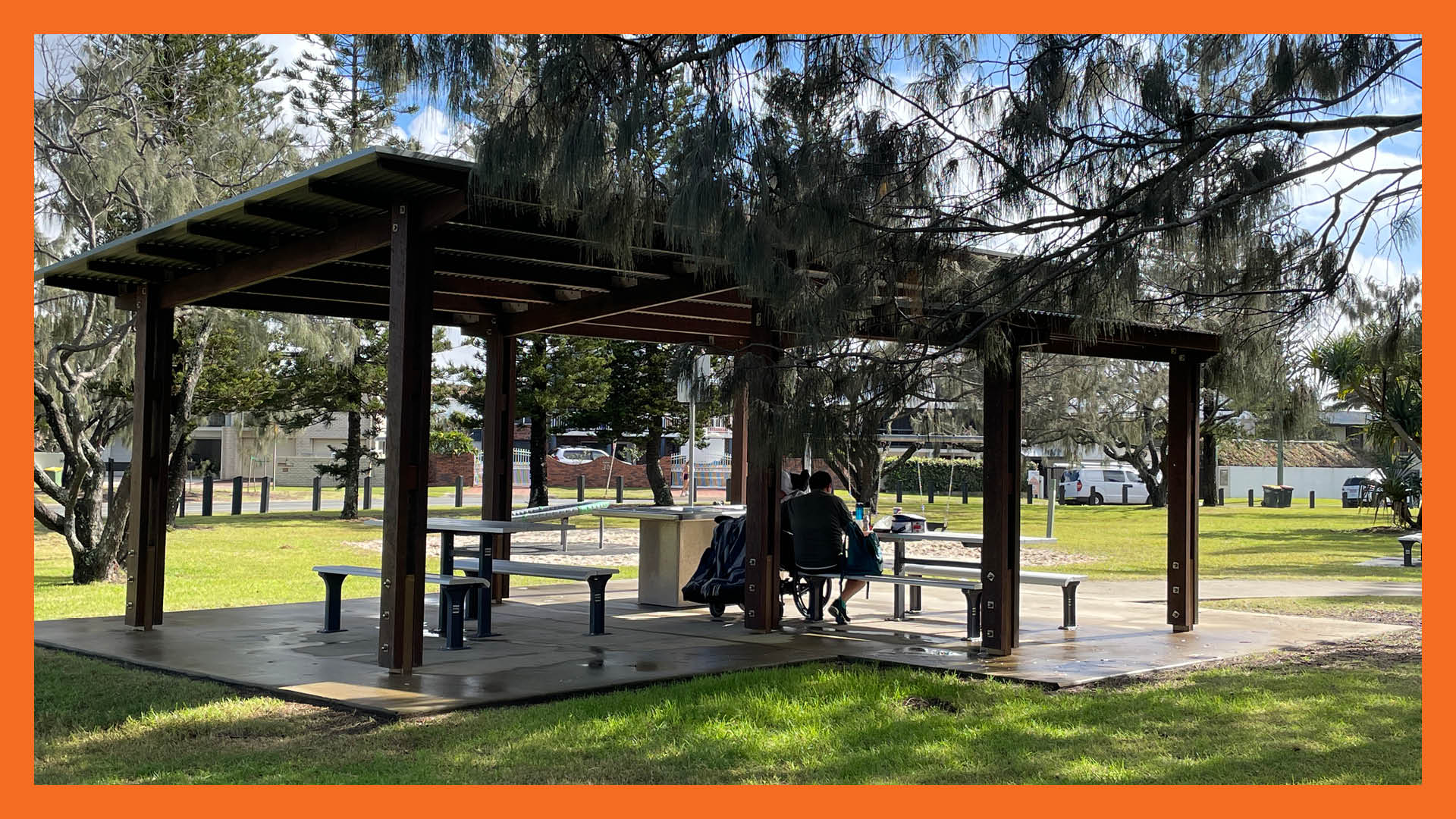
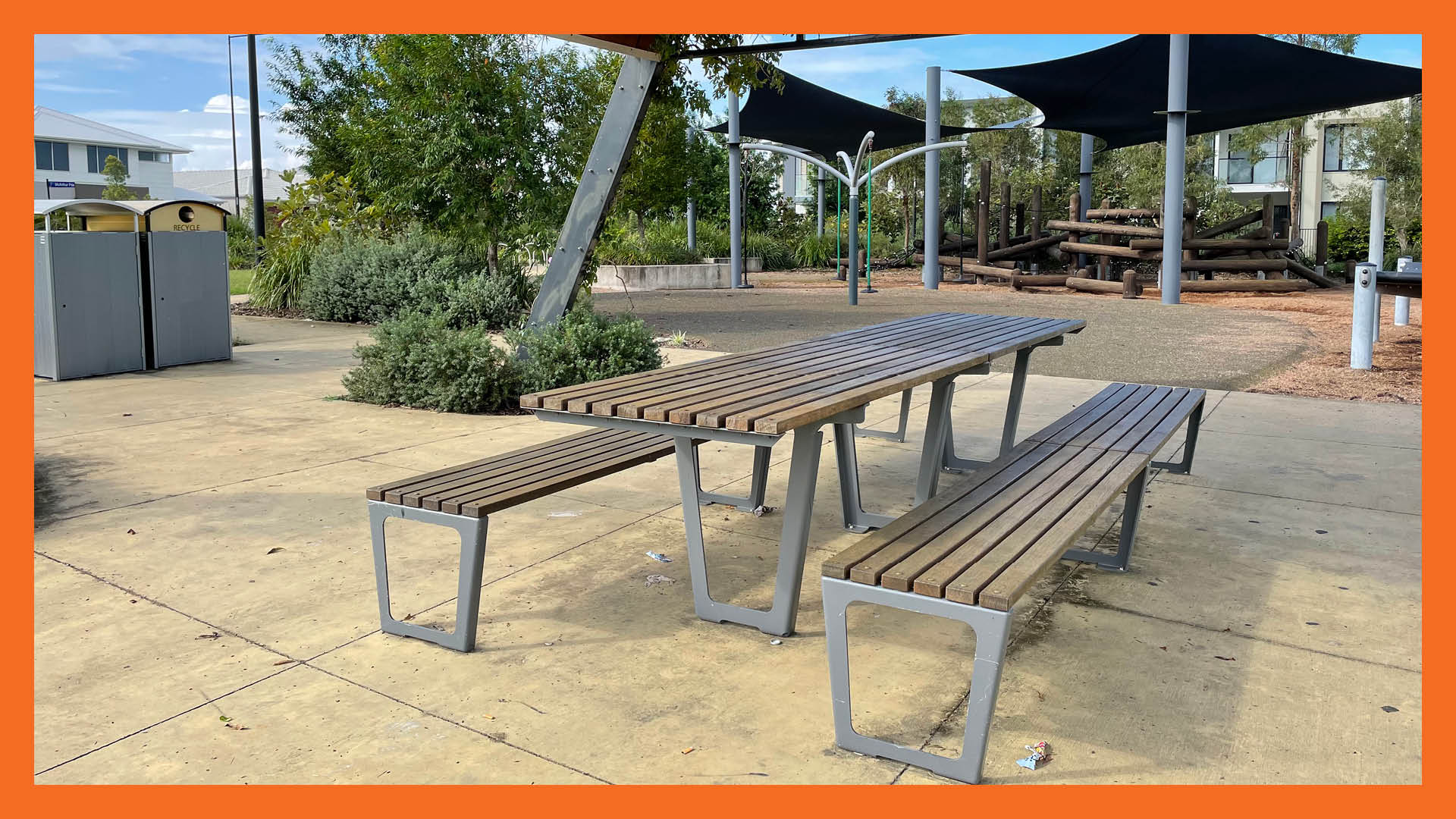
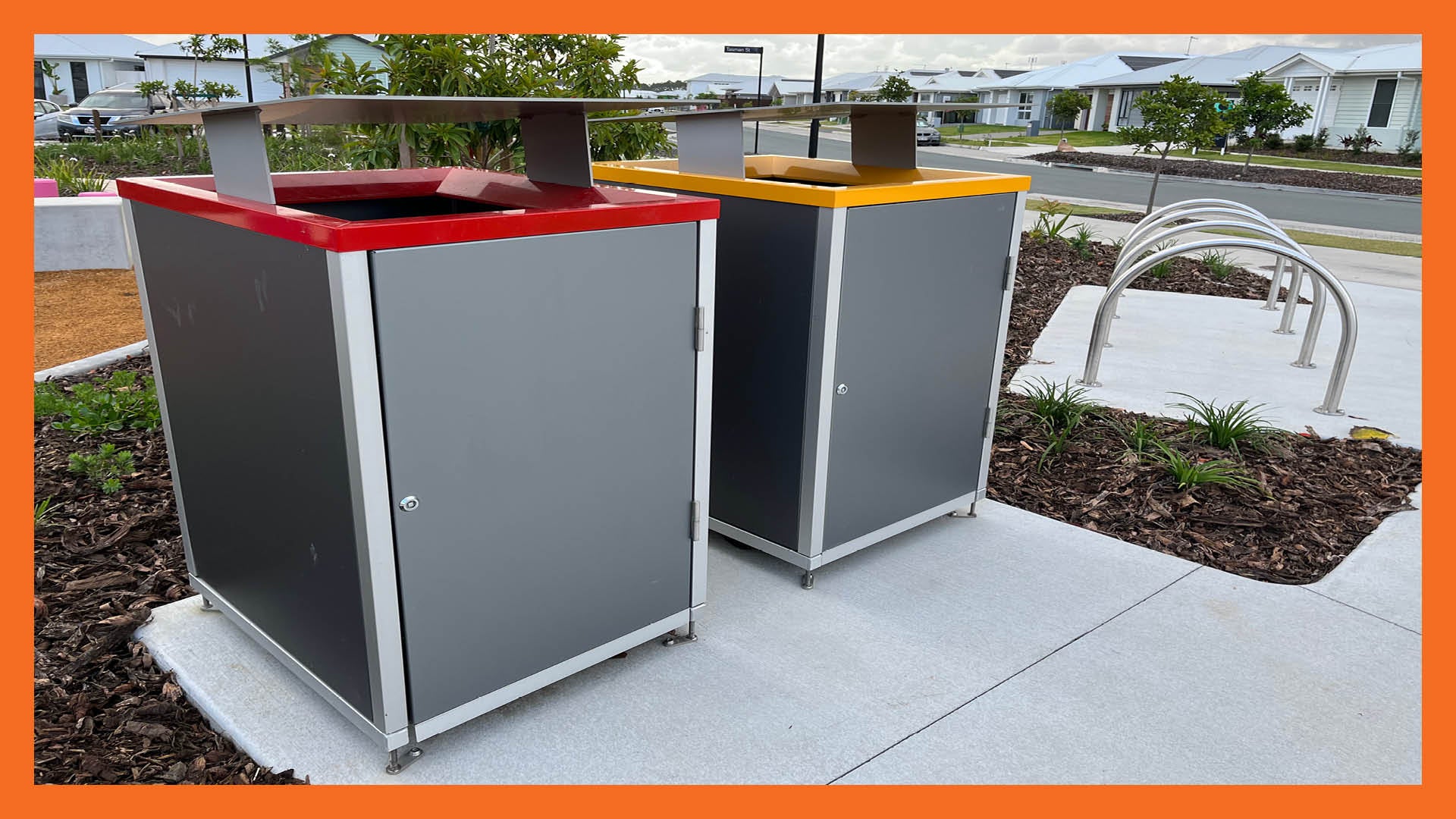
  • Equal access picnic facilities - shelters, barbecue, tap, tables and benches, bins (in lockable enclosures), drinking fountain, etc. 
  • Equal access seats - throughout the play space
  • Bicycle rails
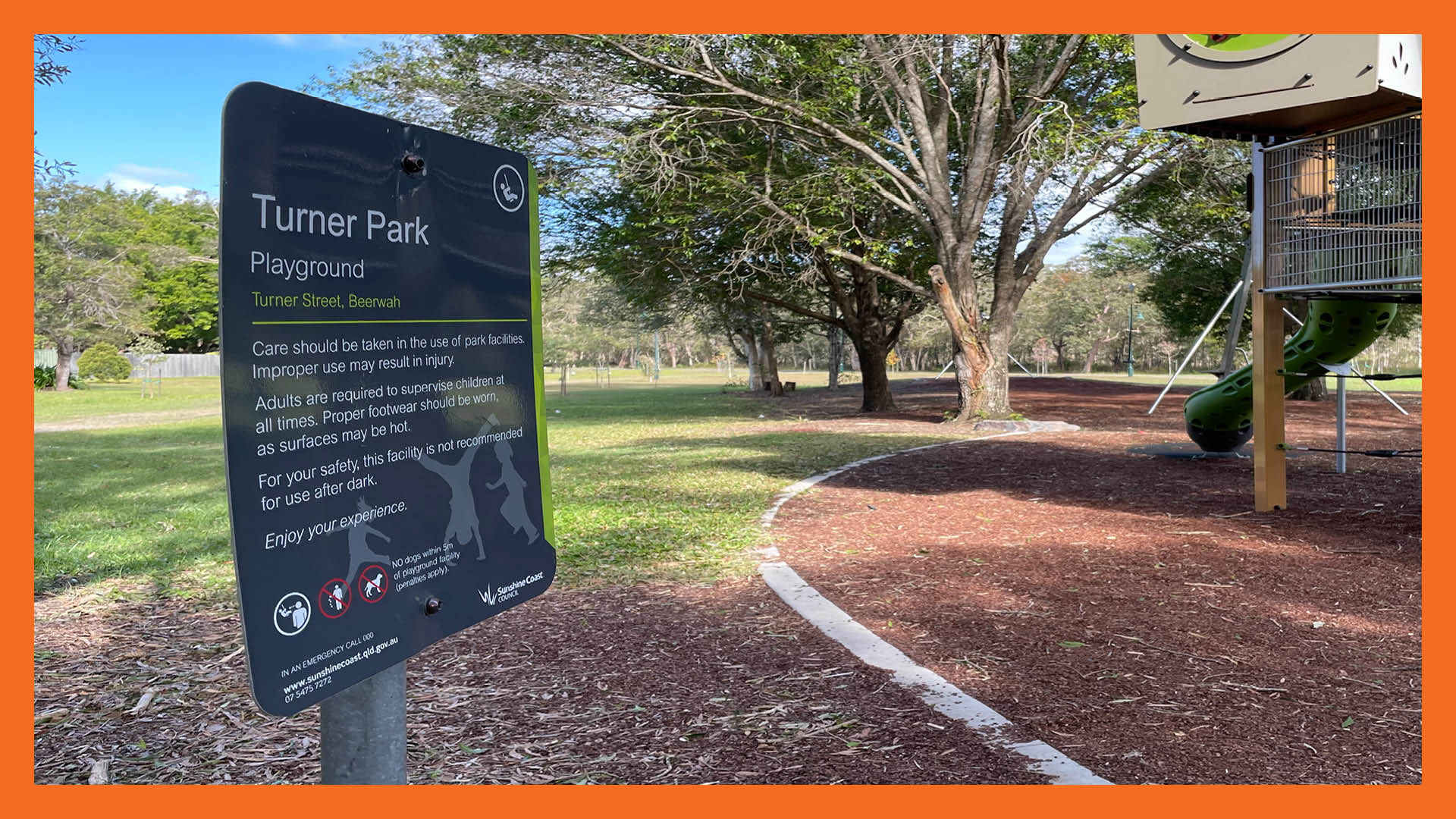
  • Signage - regulatory, wayfinding, etc. 
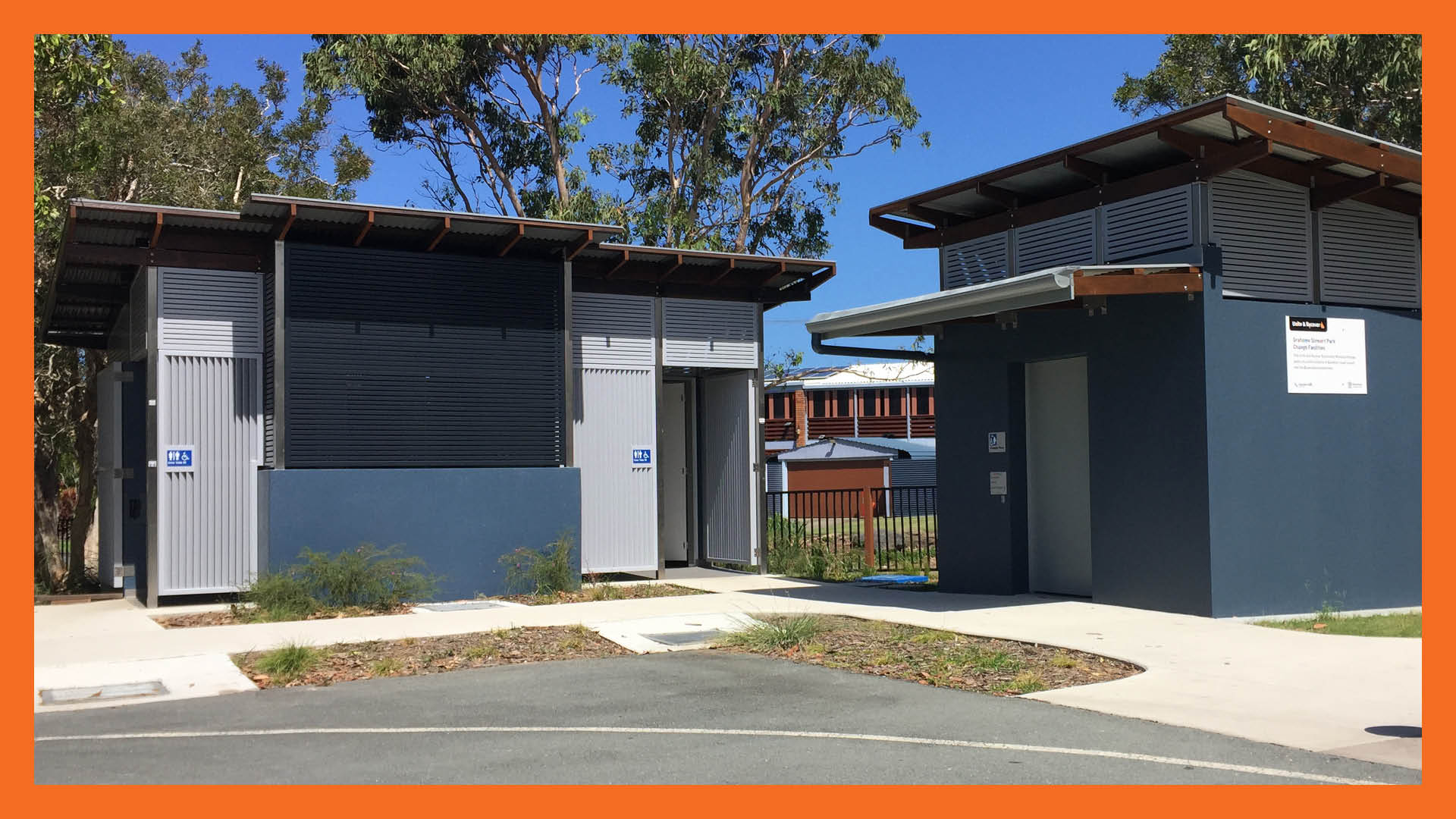
  • Equal access public amenities (toilet).  An additional ‘changing places’ toilet facility should be considered.  Both facilities should be installed within the fenced play space
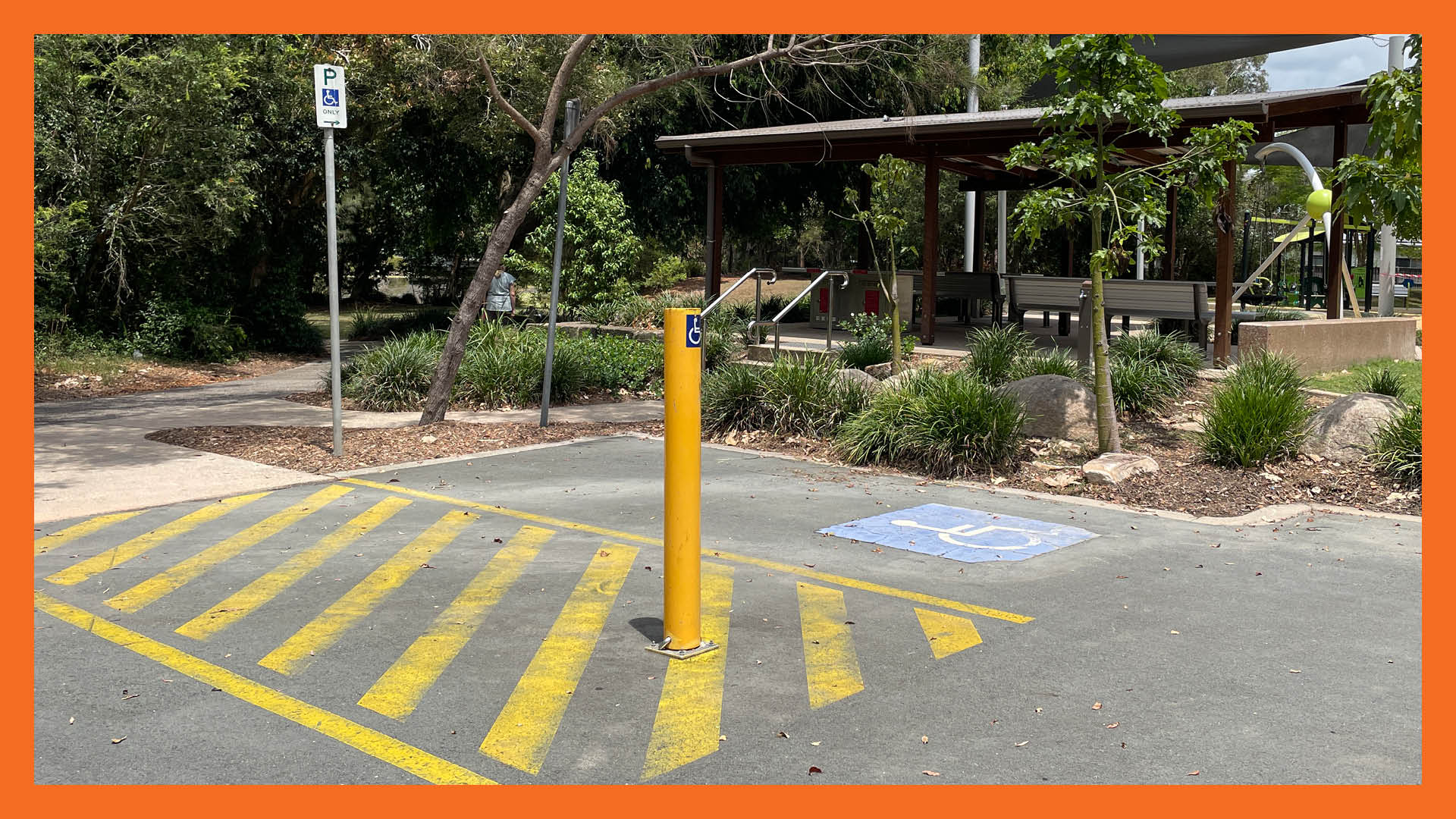
  • Equal access car parking - adequate and safe location of parking and set-down areas, for cars, minibuses, etc.
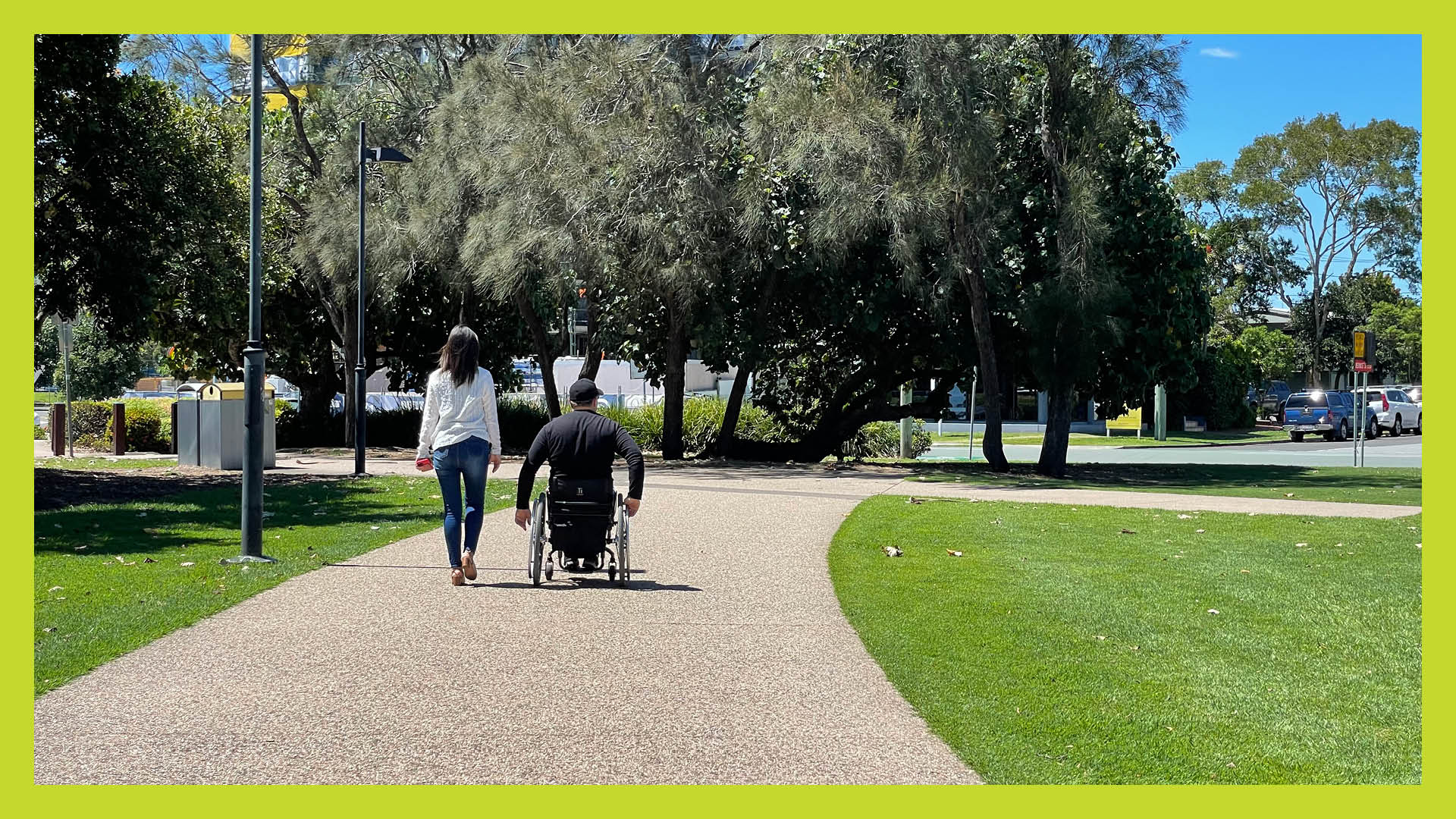
  • Equal access pathways from the carpark to the play elements
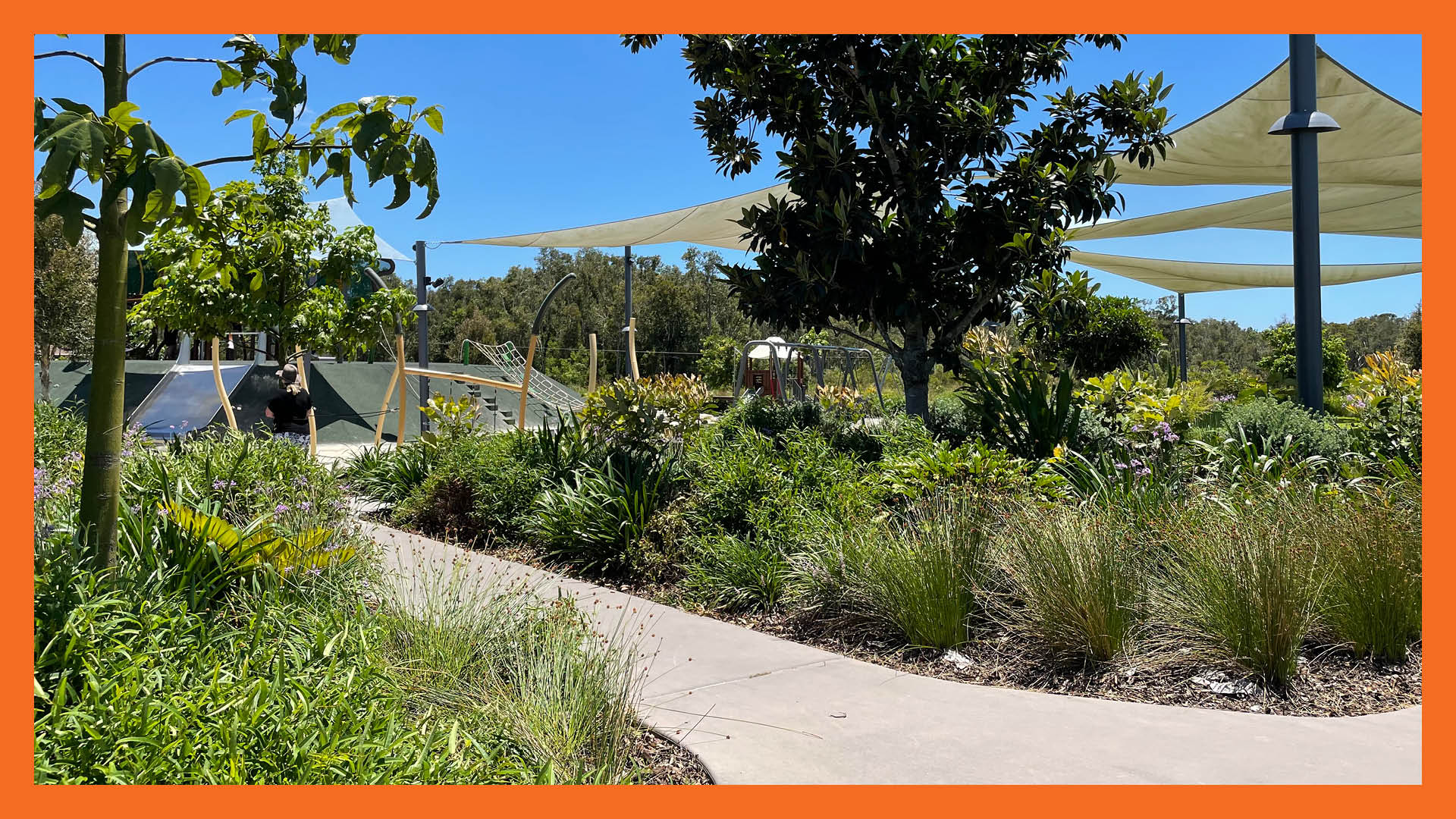
  • Shade trees and landscaping 
  • Kick and throw area 
  • Inclusive play space elements
  • Shade sails
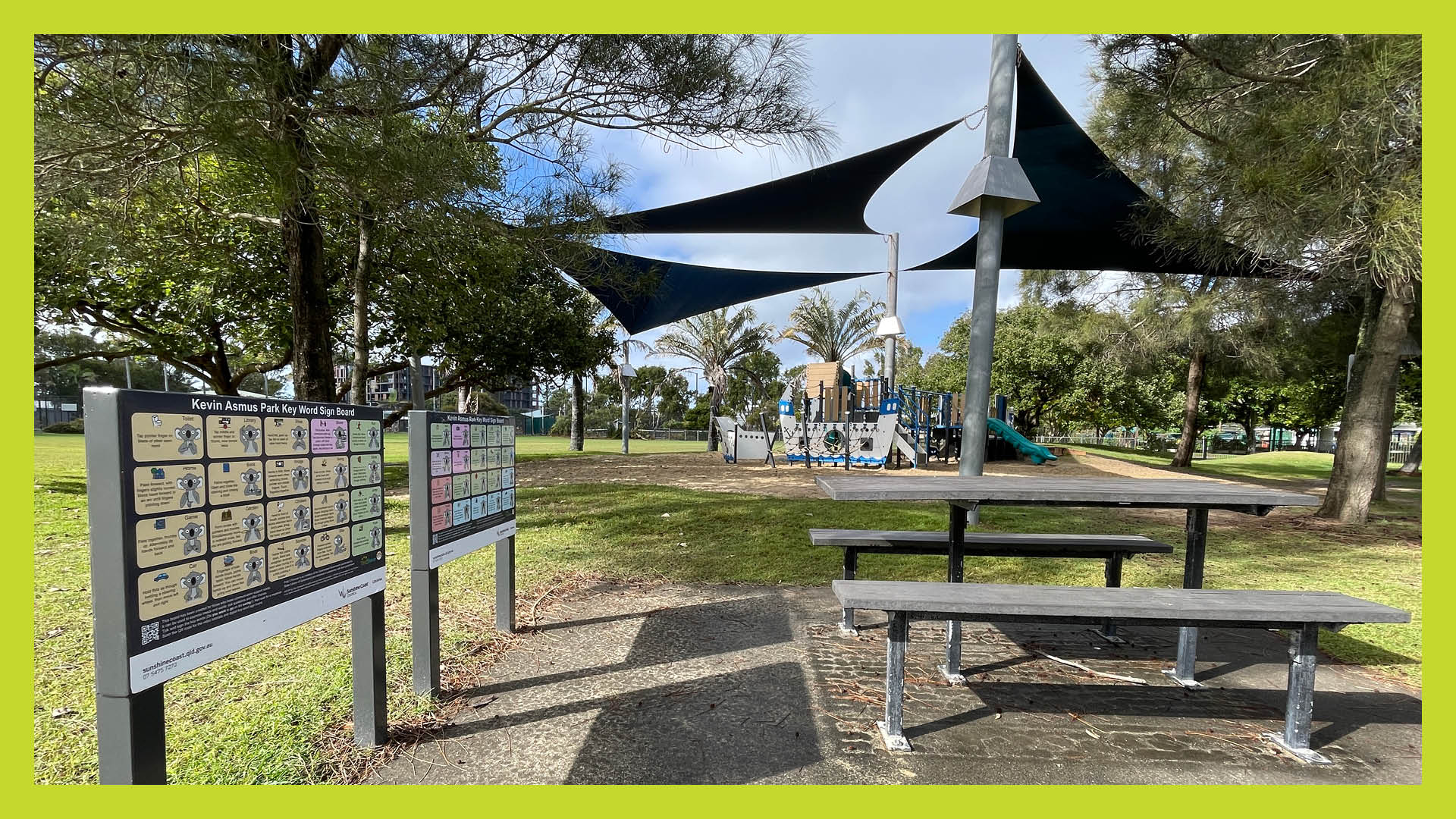
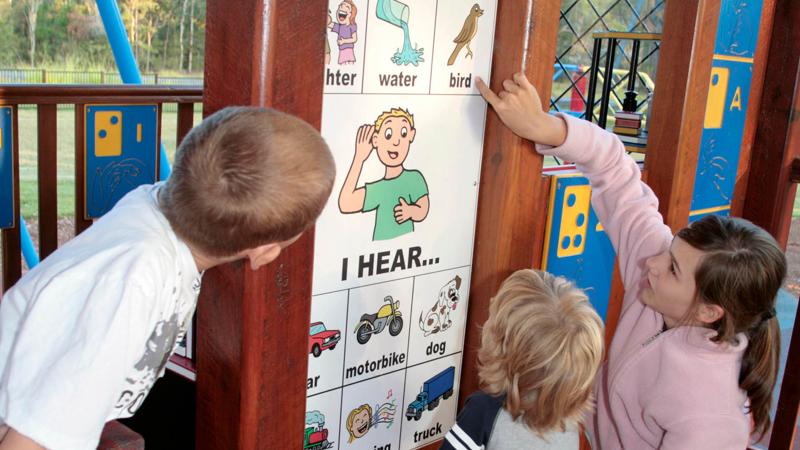
  • Communication boards - for language development and peer interaction.

The following tables (9.1.1 to 9.1.3) present and show examples for All abilities play space (AAPS) requirements in further detail.  These items could also be applied to any play space, not just AAPS. 

Key (for the following tables)
Summary/definition/explanation

All‑abilities play space – Overall site provision requirements 

This includes considerations such as:

  • Parent/carer supervision
  • User safety
  • Inclusiveness, inviting spaces and respite
  • Connections.


All‑abilities play space – Site facility requirements 

This includes considerations such as:

  • Parking
  • Fencing
  • Barbecues
  • Seating and picnic tables and chairs
  • Bins
  • Public amenities (toilets)
  • Signage
  • Landscaping
  • Paths.

All‑abilities play space – Play requirements 

This includes considerations such as:

  • Play elements
  • Open space areas
  • Circulation, safety and assistance
  • Surfacing
  • Shade.

Overall site provision requirements

Table 3: All Abilities Play Space – Overall site provision requirements
Item
Key considerations

Parent/carer supervision

  • The layout/design to allow parents/carers to constantly supervise their children, particularly from seating/picnic areas  
  • Space beside seating for a wheelchair or pram
  • Clear line of sight to safety gates
  • CPTED principles applied.

User safety

  • Full safety fencing - it is preferred that picnic facilities, kick-about area and public amenities, are all to be located within the fenced play space area 
  • Emergency/maintenance access
  • Safe entry/exit gate locations
  • Locate play spaces away from potential hazards i.e., water bodies, busy roads, etc (risk assessment needed).  Water bodies near AAPS are NOT preferred. 

Inclusiveness, inviting space, respite
  • Children, parents, carers should ‘feel’ a sense of inclusiveness
  • Ability for family members, peers, to play together or side by side
  • play equipment e.g. basket swings, game panels, talk tubes, etc
  • communication boards
  • quiet areas with seating options e.g. hammock, circle of seating, dome 
  • Same entry for everyone, with welcoming signage
  • Comfortable amenities
  • Shade and shelter from the elements
  • Consider respite opportunities for parents/carers, for example:
    • provide all the facilities within the safety fencing
    • provide adequate shaded seating opportunities nearby play equipment to aid in supervision, whilst still promoting independent play
    • provide opportunities to connect with other families
    • provide quiet areas.

Connections

  • Connection to external networks i.e public transport, food and drink outlets, walking trails
  • Accessible connection to all activity areas and facilities within the AAPS
  • Convenient carparking, disability carpark bays and mini-bus drop-off zones, all with easy connections to the play space.


Site facility requirements

Table 4: All abilities play space – Site facility requirements
Item
Key considerations

Parking

  • Designated disability parking bays
  • Adequate carparking
  • Mini-bus parking/drop off zone
  • Bicycle rails.

Fencing

  • Full perimeter safety fencing around play space (including picnic facilities, kick-about area and public amenities) - to offer respite for parents/carers
  • The fenced play space must be kept to a manageable size, to enable the supervision of children by parents/carers  
  • At least 2 entrances, all entrances must be in full view for supervision
  • Safety latch at the entrance gates (e.g. Magnalatch or equivalent), consider additional means of access (e.g. MLAK key).

Barbecues

  • Equal access barbecue with shelter over.

Shelters

  • Shelters over picnic facilities - consider social interaction opportunities 
  • Shelter posts must be able to be manoeuvred around by a pram or wheelchair.

Seating and picnic tables and chairs

  • Equal access picnic tables and benches
  • Table combination and layout to cater for small groups and larger gatherings, etc 
  • Provide opportunities for social interaction between families
  • Table and seating to provide gaps to enable wheelchair users or prams to sit alongside others
  • Seating to be comfortable, and provide backrests and armrests to assist users (do not use armrests in picnic settings)
  • Use a variety of seat heights (within the standards) to provide for different users.  Seating should also be considered at children’s heights Alternative seating options such as platform seats, walls and blocks can also be considered, particularly around play areas to provide respite/supervision.

Bins

  • Provide equal access waste and recycle bins (in lockable enclosure) where appropriate, particularly near picnic facilities and entrances.

Drinking fountain and bottle filling station
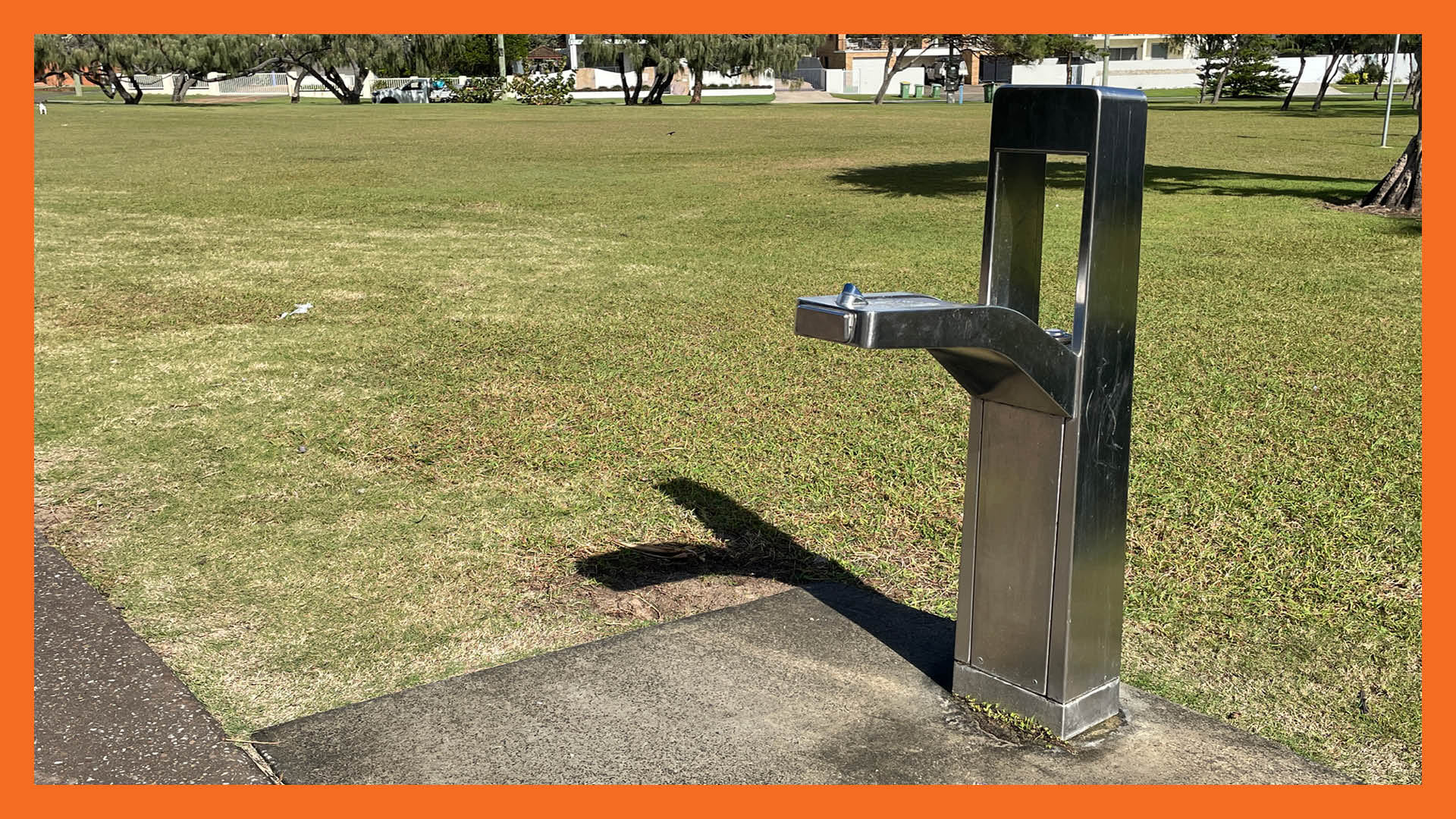
  • Provide equal access drinking fountains/bottle filling stations where appropriate.

Public amenities (toilets)

  • Public amenities should be located within the fenced play space area 
  • Provide compliant public amenities as per Australian Standards and Building Codes
  • AAPS should provide a changing places public amenities facility which includes:
    • a multi-directional ceiling tracking unit
    • a height adjustable adult-sized changing bench
    • a tracking hoist system
    • a shower
    • enough space and a safe, clean environment.

See Changing Places Transforming Lives website for technical specifications and resources.

Signage

  • Provide signage for vehicle and pedestrian wayfinding  
  • Provide regulatory signage
  • Provide interpretive/educational signage (where required)  
  • Signage should be installed as per the corporate templates, including compliant font heights, installation viewing heights, etc.

Landscaping

  • Ensure there is plenty of shade around the play space, particularly at seating areas
  • Position the kick and throw area inside the safety fence, ensure there is flow from the play space to grassed area 
  • Incorporate natural landscape elements into the playspace e.g. rolling mounds, garden beds, boulders
  • Consider sensory planting/textures, etc.

Pathways

  • Provide equal access paths (ensuring 2 wheelchairs can pass one-another, pram use, etc) 
  • Pathway construction to consider minimal gradient / crossfall, kerb ramps, luminance contrast, etc
  • Manoeuvring areas provided, particularly around play elements, amenities and picnic facilities
  • Pathway connection from carpark to play space, consider external path (and road crossing) connections. 


Play requirements

Table 5: All abilities play space – PLAY requirements
Item
Key considerations

Play elements

  • Provide choice - provide a variety of play elements, that can provide a range of challenges, at different difficulty levels
  • Provide elements that promote independent play
  • Provide opportunities for active, passive and social play - that meet children’s developmental needs.  Examples include:
    • Ensure there are areas for quiet reflection, exploration and chillout areas
    • Ensure there are areas for active play, running around, climbing, balancing, jumping and spinning 
    • Play activity panels, sand tables, etc - must be installed at child friendly and accessible heights. A variety of heights should be considered
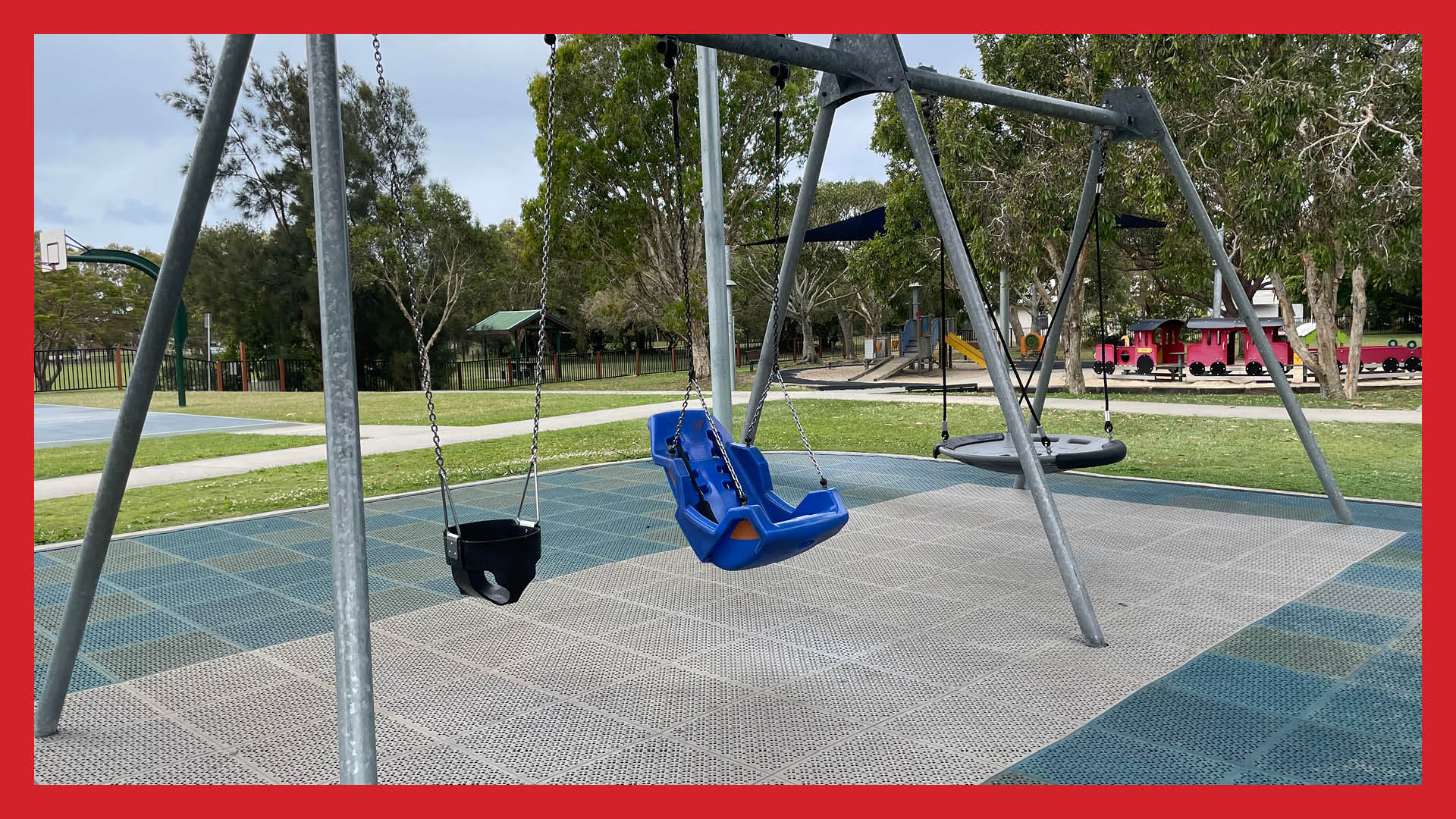
    • Consider the variety of equipment available e.g. swings - can be arm-powered, have backrest and harness, or be a basket swing, 5 way swing, or hammock swing 
    • Ensure there are opportunities for social interaction e.g. game panels, cause and effect games, music, pulley systems
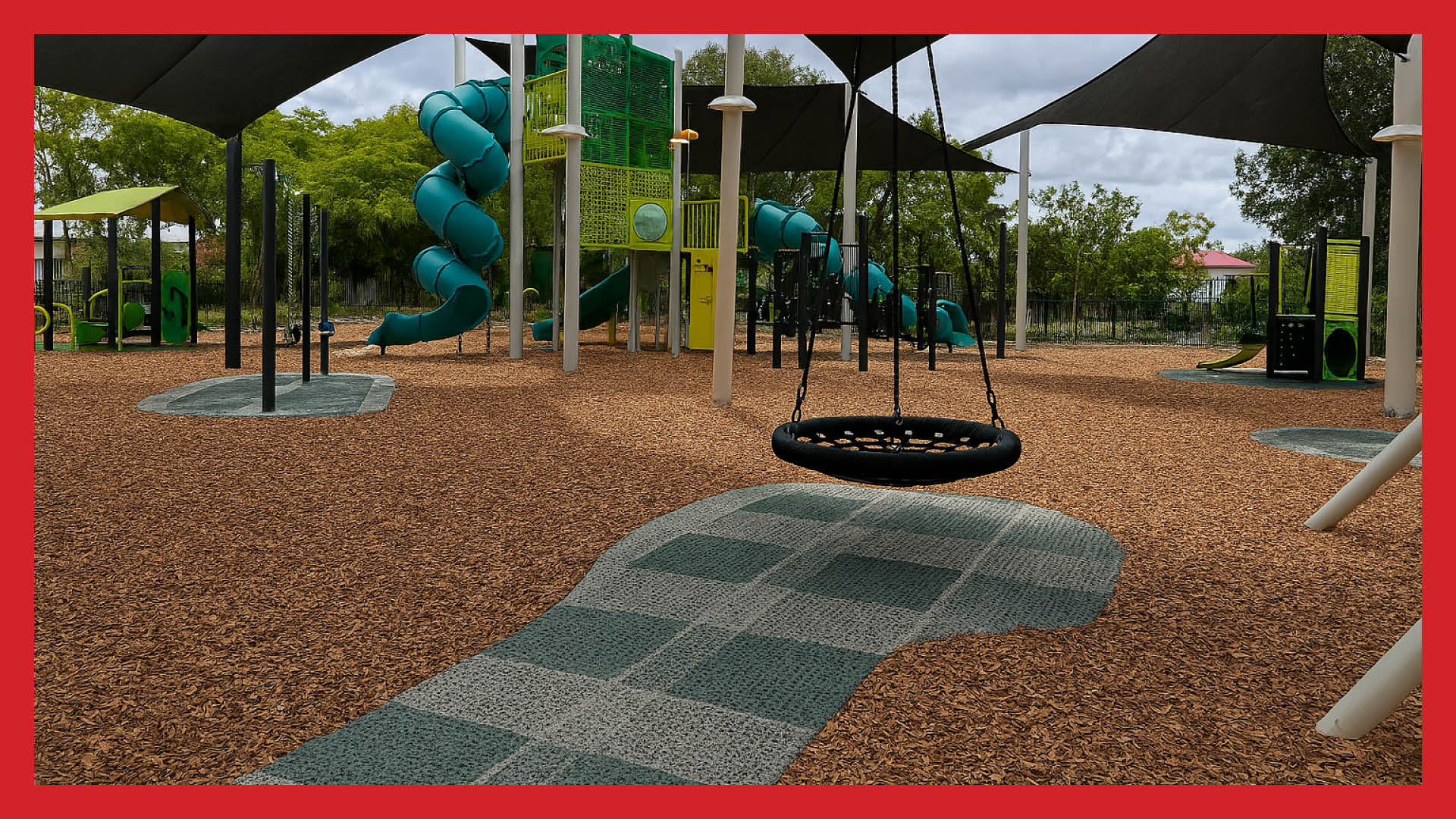
    • Provide equipment that can be used by multiple people, and different ages and abilities e.g. basket swing
    • Language and communication boards - should be installed to encourage language skill development and interaction between peers
    • Provide various sensory opportunities e.g. sand play, music play, living sensory garden, different textures
    • Provide play opportunities at ground level, with musical chimes, sensory textures, pavement games, etc.

Open space areas 

  • Encourage play in the surrounding natural environment, incorporate site features as part of the play/discovery elements
  • Provide a kick and throw area directly adjoining the playspace (the kick and throw area should be inside the overall fenced play space) 
  • Incorporate other complementary park activities such as basketball/netball, educational bike tracks, table tennis, pavement games, etc.

Circulation, safety and assistance

  • When designing the play space consider: 
    • room to manoeuvre and play together 
    • access to play elements
    • access for a parent/carer to assist
    • room to safely transfer a child onto play equipment and safe activity transfer areas
    • supportive seats i.e with back rest, hand grips, harness systems
    • safety near moving equipment or on elevated platforms.

Surfacing

  • Surfacing should be provided to all elements of the play space
  • Instead of providing the entire area with rubber under-surfacing, consider a combination of various safety surfacing materials ie sand/rubber  
  • Rubber surfacing can not only provide transitions to play elements, but can also assist with providing social interaction amongst peers  
  • Ensure manoeuvring areas and transfer areas are provided    
  • Ensure transition areas and level changes are safe.

Shade

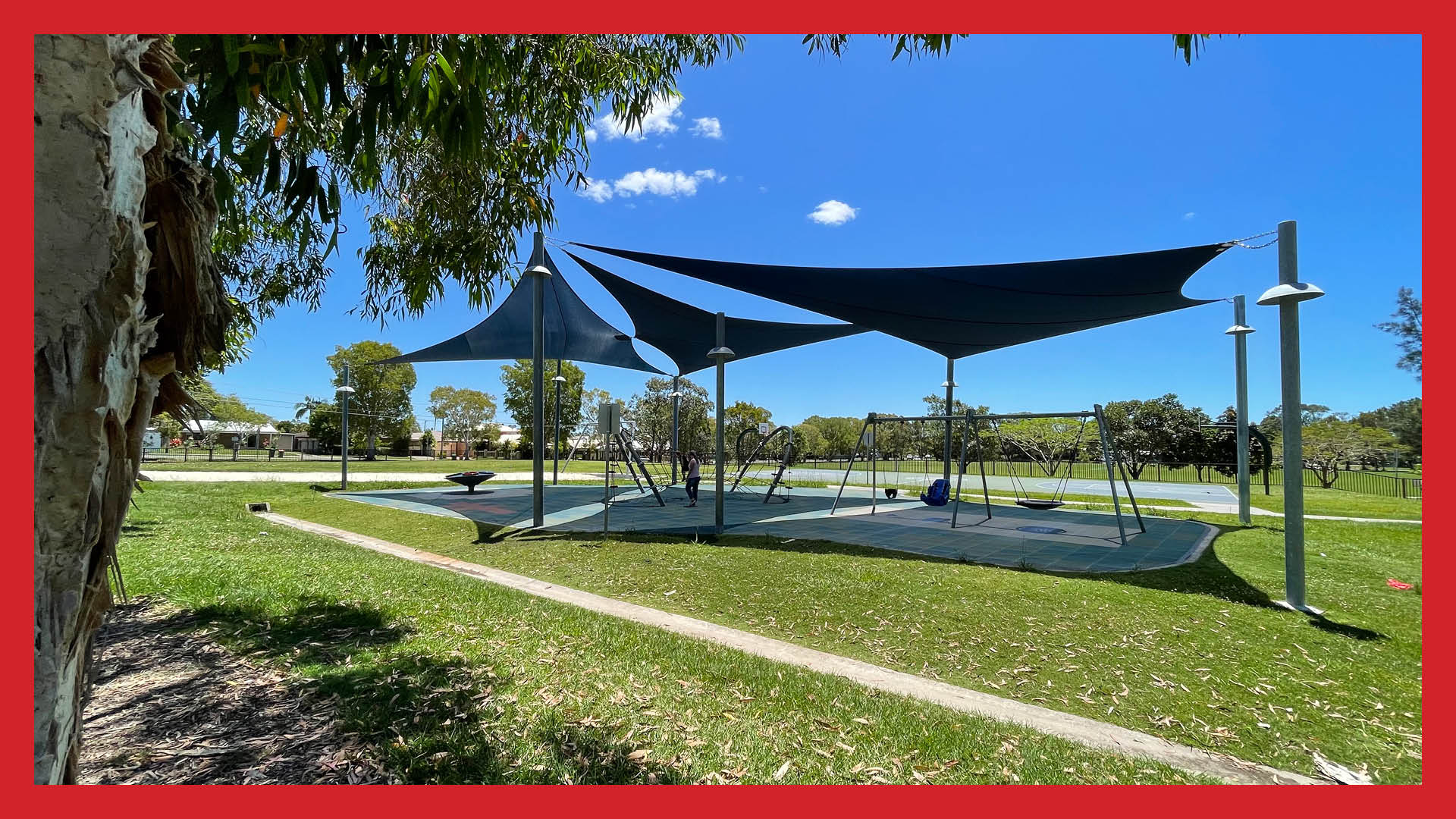
  • Shade must be provided as part of the play space, particularly over passive play areas (e.g. sand pits)
  • Shade sails should be used in combination with natural shade trees.


Other all abilities play opportunities
LIM_play_pic_communication boards_2.jpg

Where a fully AAPS specialist facility isn’t appropriate for the site, many accessible and inclusive play opportunities can still be integrated into play spaces.

Fully fenced play spaces for respite

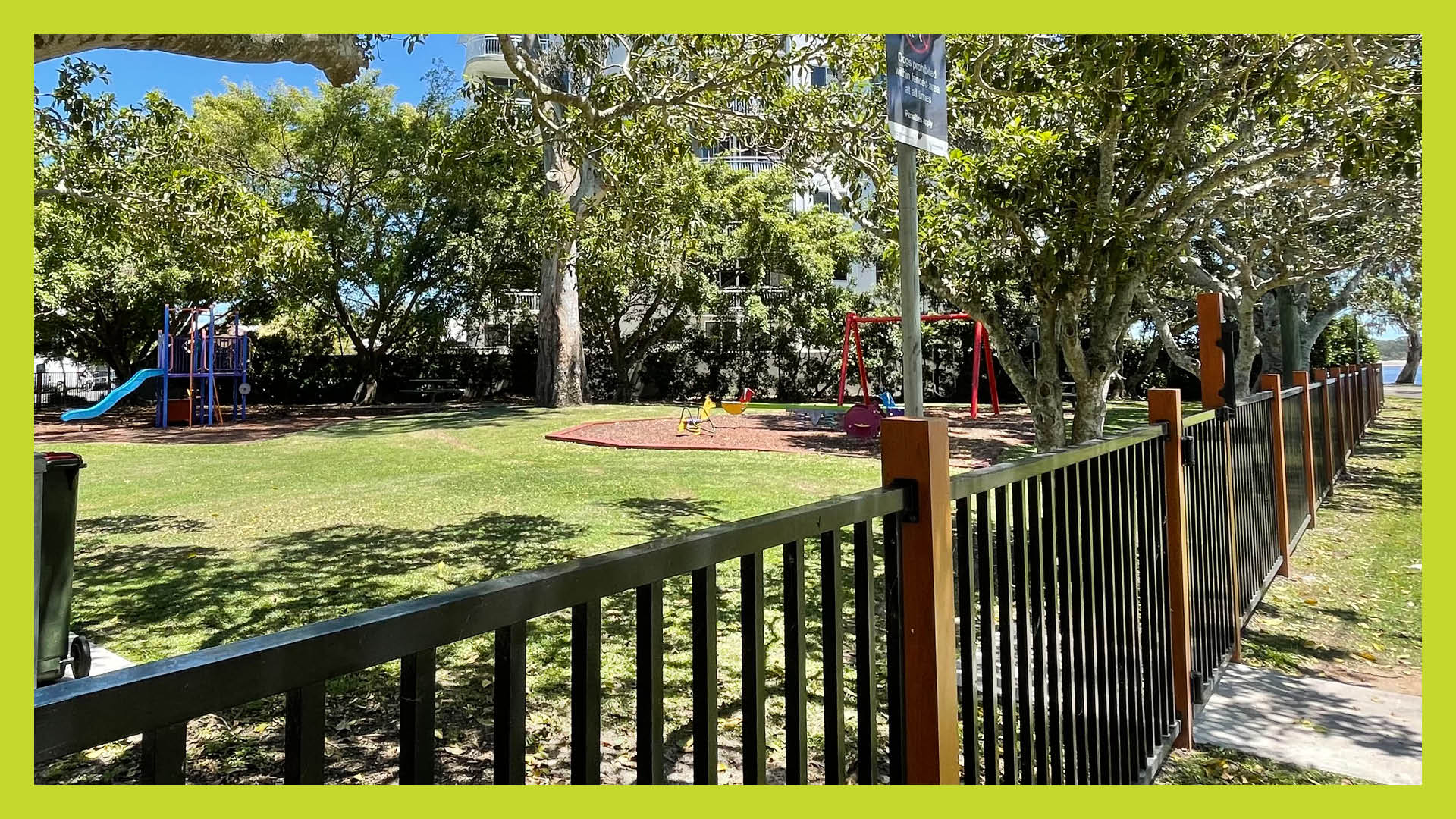
Safety fencing is one of the key requirements for parents and carers for respite: 

LIM_play_pic_fencing.jpg
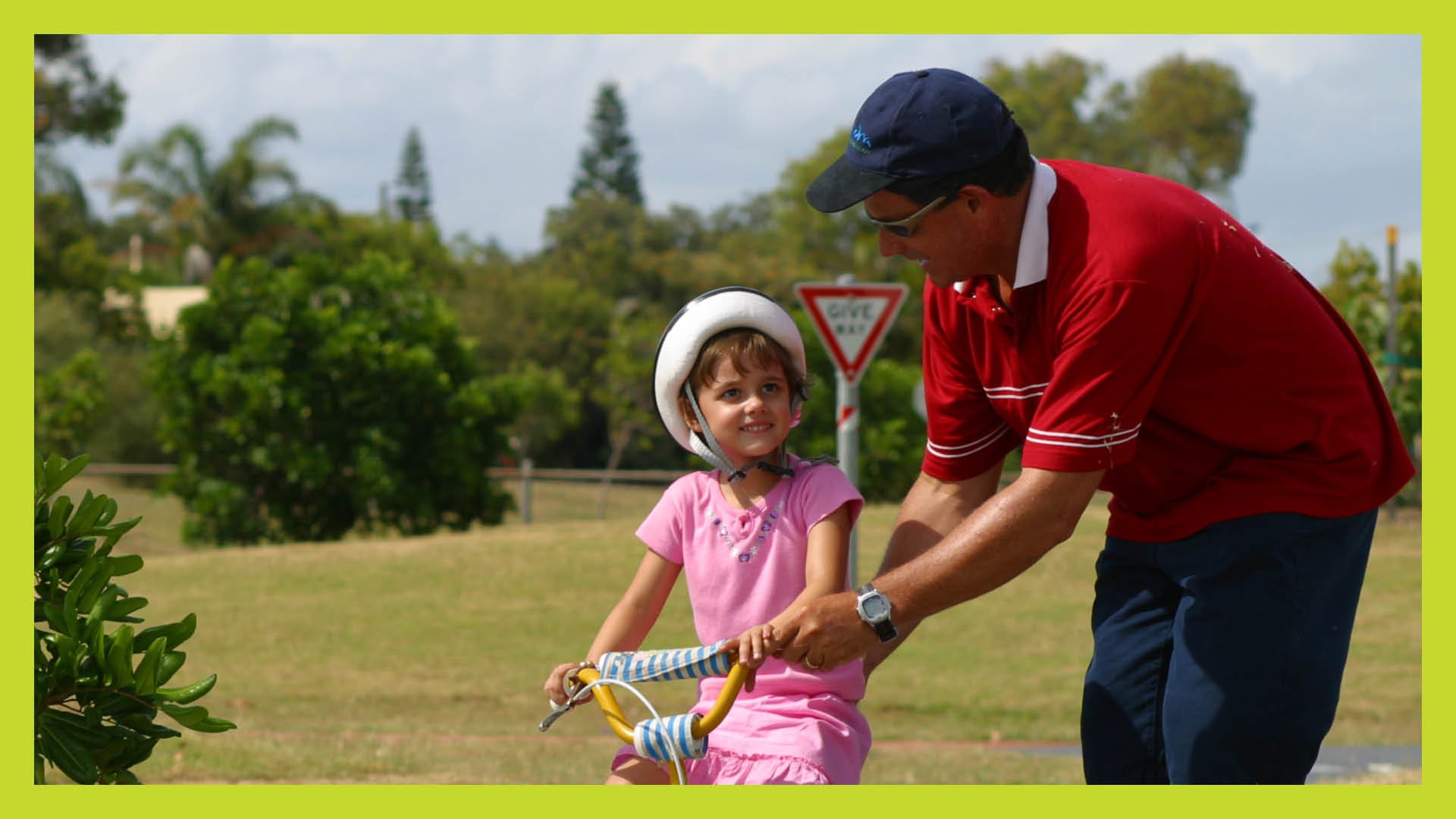
  • Providing a safe playspace with picnic facilities and open space within the fenced area, provides more opportunities for ‘independent play’ for children, as well as respite opportunities and social connection for parents/carers. 
  • Providing toilets within the fenced play space allows parents/carers to easily access them, therefore are considered desirable. 

Inclusive play opportunities

LIM_play_pic_inclusive play_.jpg
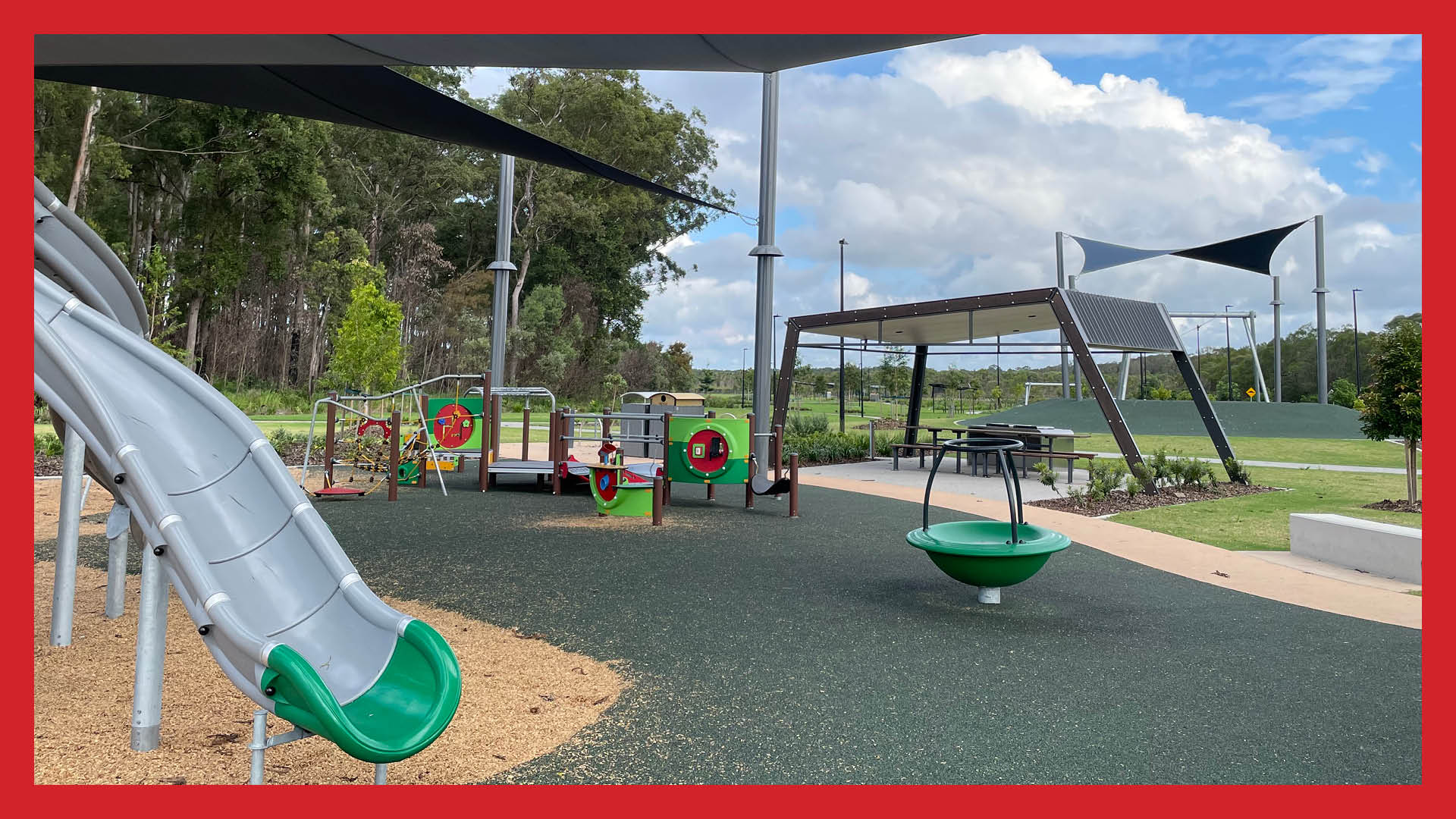
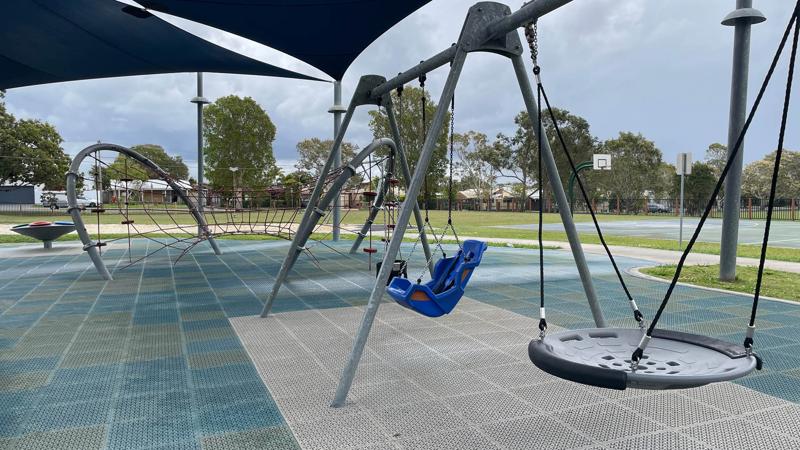
  • Equal access - play spaces should have equal access throughout the play space and to each play element.  This not only allows users access to the equipment, but it also offers them opportunities for social interaction.  
LIM_play_pic_inclusive play_3.jpg
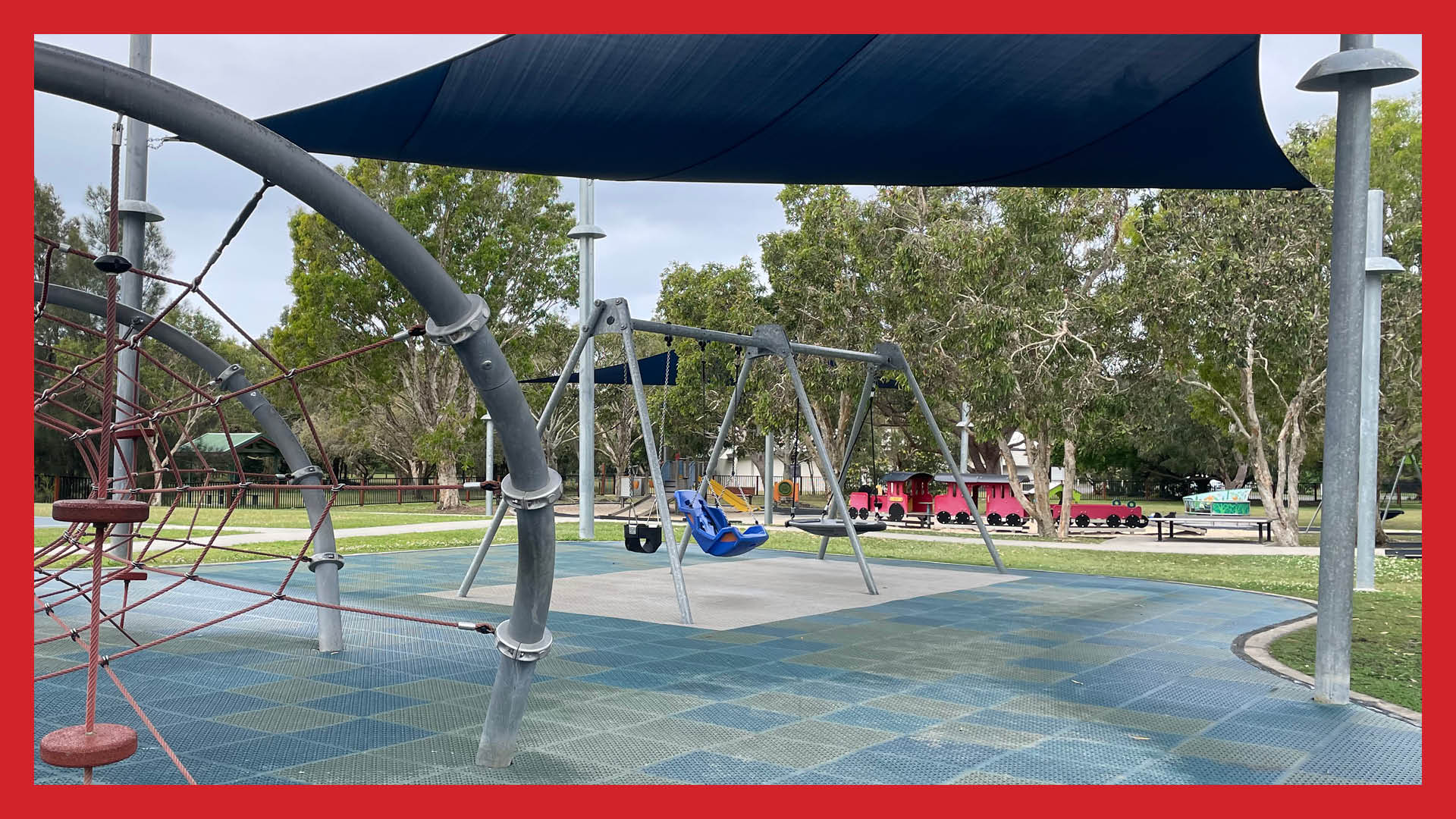
  • Play elements - many elements promote inclusive play opportunities. Basket swings, communication boards, games and harnessed swings, are all examples of equipment that can be used to provide inclusive play and social interaction amongst peers.
LIM_play_pic_inclusive play_2.jpg
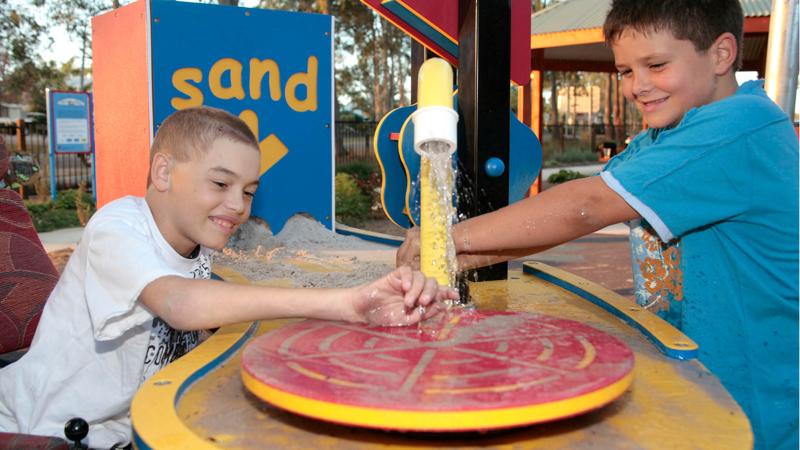
  • Providing ‘choice’ within a play space is important - consider providing a variety of play elements, that can provide a range of challenges, at different difficulty levels.  
LIM_play_pic_inclusive play_5.jpg
  • Provide elements that enable ‘independent play’ - these are elements that do not require assistance from parents and carers.

Language and communication boards

Consider the following:
LIM_play_pic_communication boards_3.jpg
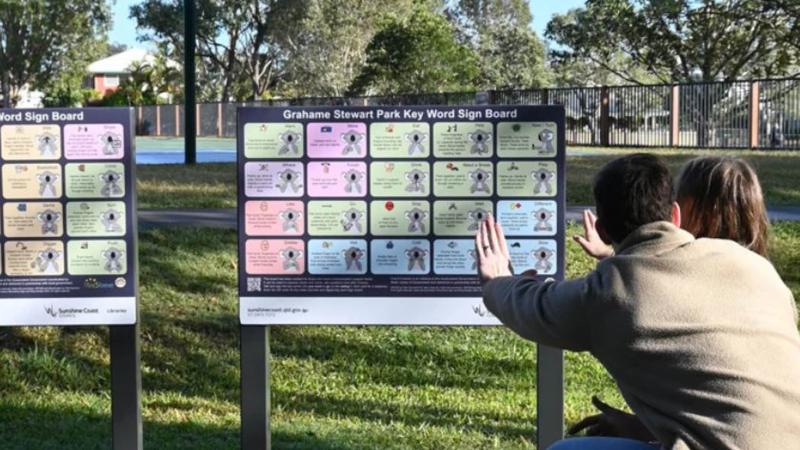
  • Communication boards - with keyword sign xxxxxx
LIM_play_pic_communication boards_2.jpg
  • Language signage (pictorial cues, sign language)
  • Communication signs (chat boards, activity choice panels)
LIM_play_pic_communication boards_.jpg
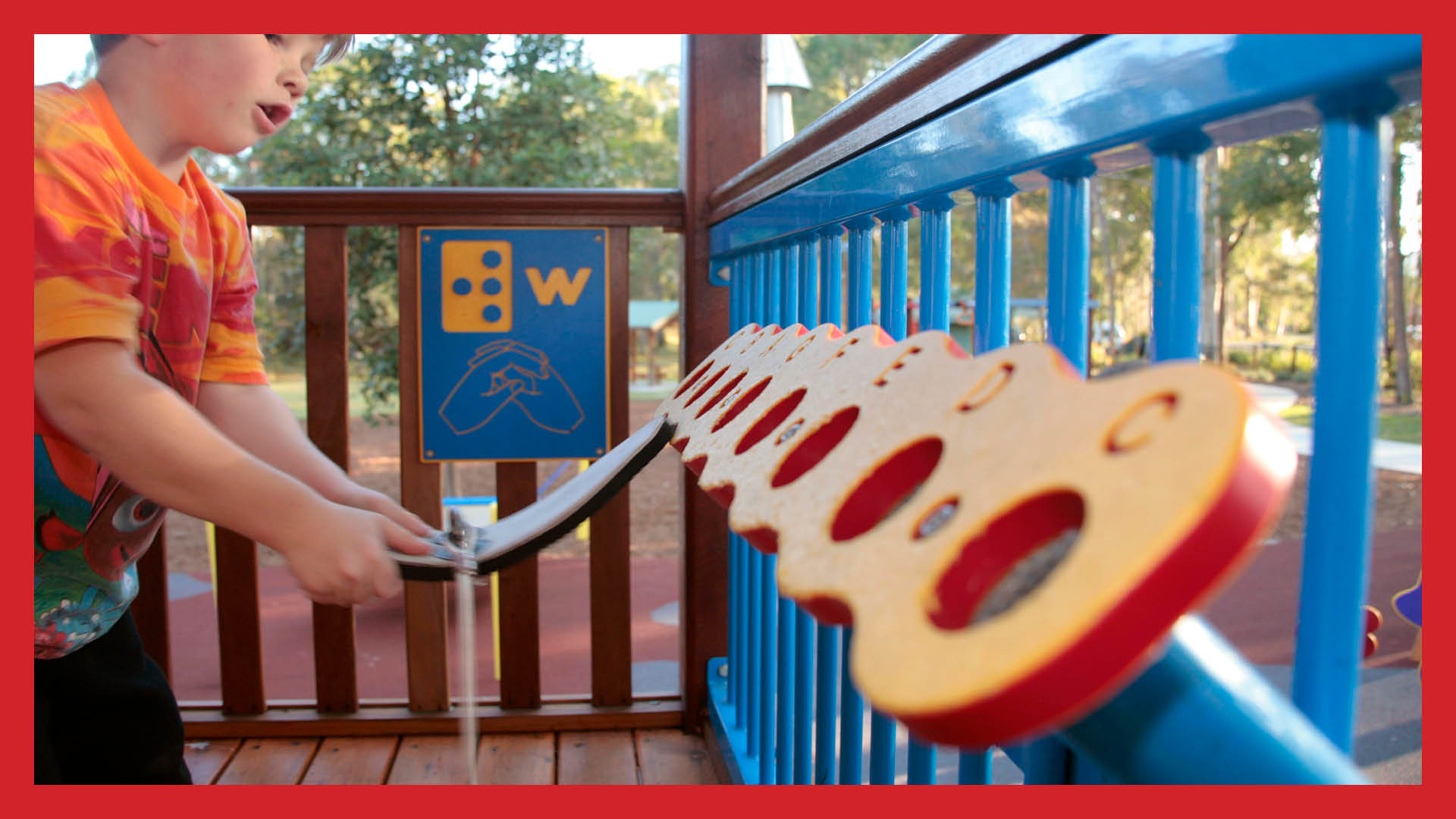
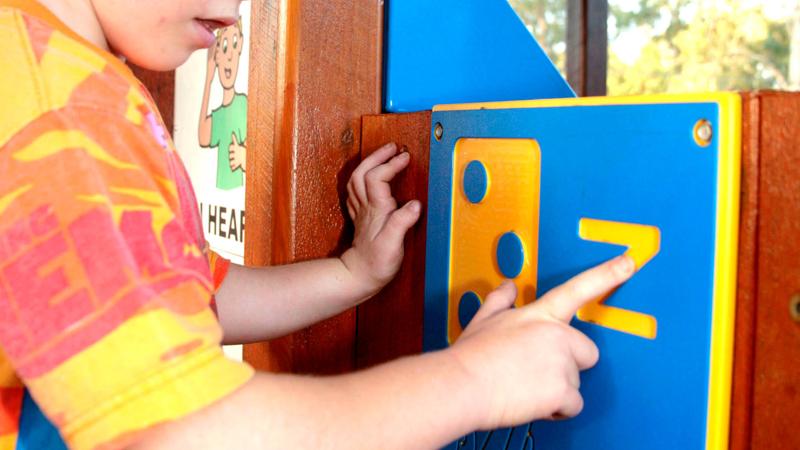
  • Signage should be in an accessible format, that may include raised tactile and Braille
  • QR barcode readers - are used by play equipment manufacturers to enable users to access additional digital content (such as fairy-tales that relate to the specific play piece). The QR barcode is printed on signage or equipment, and by scanning the QR code with their mobile device, users are directed to the relevant website. 

Modifying traditional equipment

Traditional play elements may easily be re-designed to enable a wider range of users. Some examples of this are as follows:

LIM_play_pic_sensory garden.jpg
  • Sensory gardens should be raised beds where possible to increase access. Consider using fragrant ground cover underfoot so that as children run over the plants they release an aromatic smell. Ensure signage is in place to encourage smell and touch and to discourage eating the plants.
LIM_play_pic_inclusive play_2.jpg
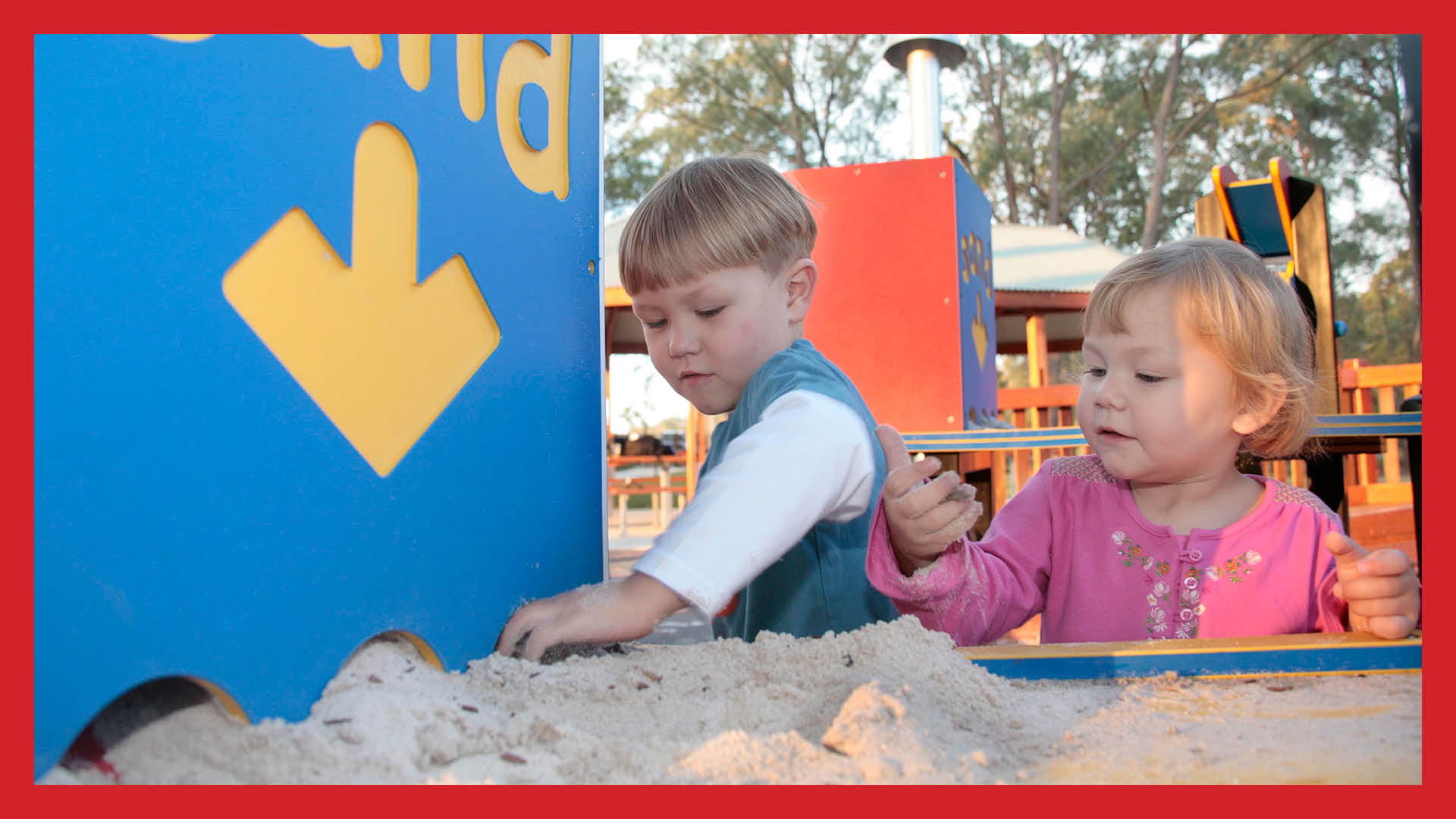
  • Sand and water tables can be added to the traditional sandpit; they should be placed at different heights to encourage equal access by a wide range of users. Ensure controls operable by one hand require force to be no more than 19.5 N.
LIM_play_pic_inclusive play_4.jpg


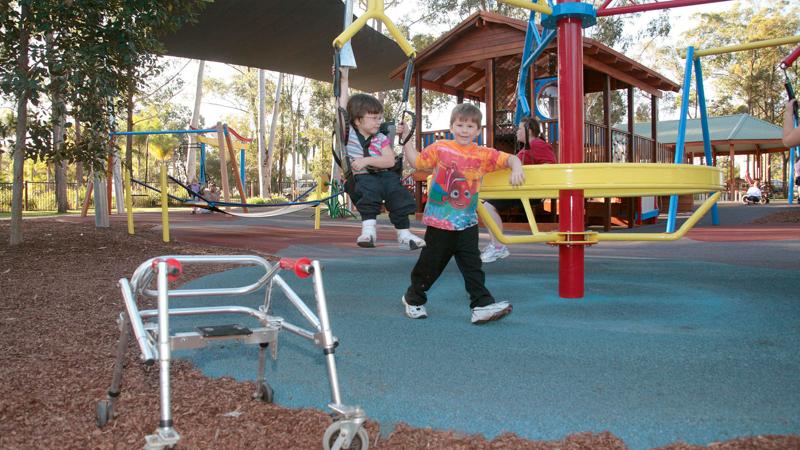
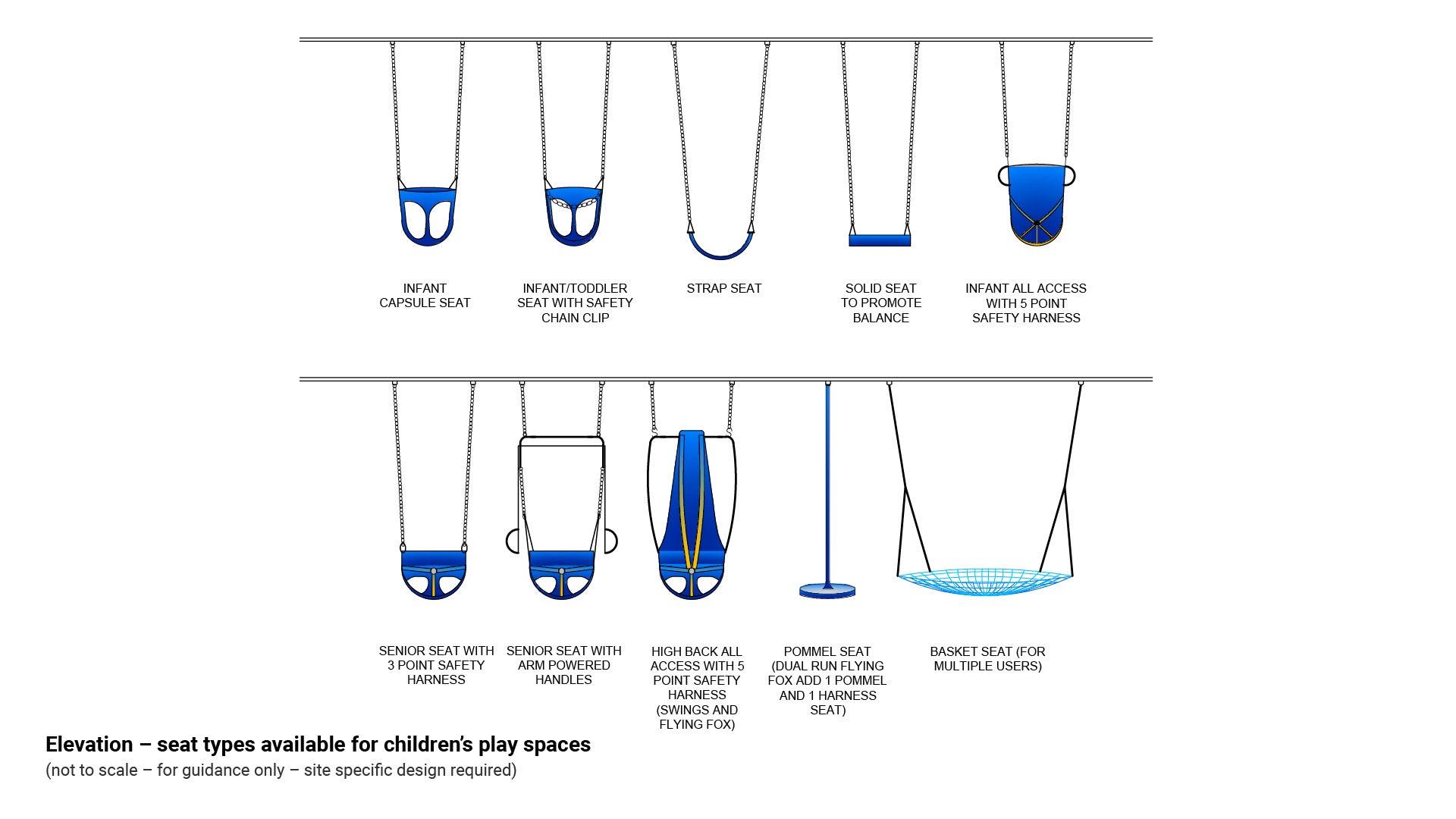
  • There are a variety of play equipment seat types available. Consider providing a range of seat types specific to the park, for equal access and community needs, such as; swings, flying fox, sling carousel with back support and safety harness seat systems.
  • Music tables and other similar elements should be designed at an age appropriate height, with equal access leg room under to enable a wide range of users.
  • All forms of signage should be considered. Welcoming entry signage, facility signage (i.e. toilet), Braille, tactile, child language signage (pictorial cues, sign language) and other communication forms (chat boards, activity choice panels, etc.).
  • Install various table heights for a variety of different users.
  • Install handrails at various heights for a variety of different users.
  • When designing equipment consider the reach dimensions for different users and manoeuvring areas around equipment.
  • Ensure safety and operational information is displayed in accessible formats e.g. raised tactile and Braille.
  • Ensure play equipment such as, swings, sensory puzzles, auditory play pieces, or at least one piece of each type of equipment is designed for independent use by people with disabilities.

Following are some of the many examples of how traditional play equipment has been modified to create easily accessible elements.  

See the following for further guidance: 

  • Figure 10: Reference guide for children’s wheelchairs in relation to age
  • Figure 11: Elevation – all abilities play space
  • Figure 12: Elevation – sensory herb garden
  • Figure 13: Elevation – multi-generational exercise station.
  • Figure 14: Elevation – language signage and communication
  • Figure 15: Elevation – seat types available for children’s play spaces.


Figure 10: Reference guide for children’s wheelchairs in relation to age
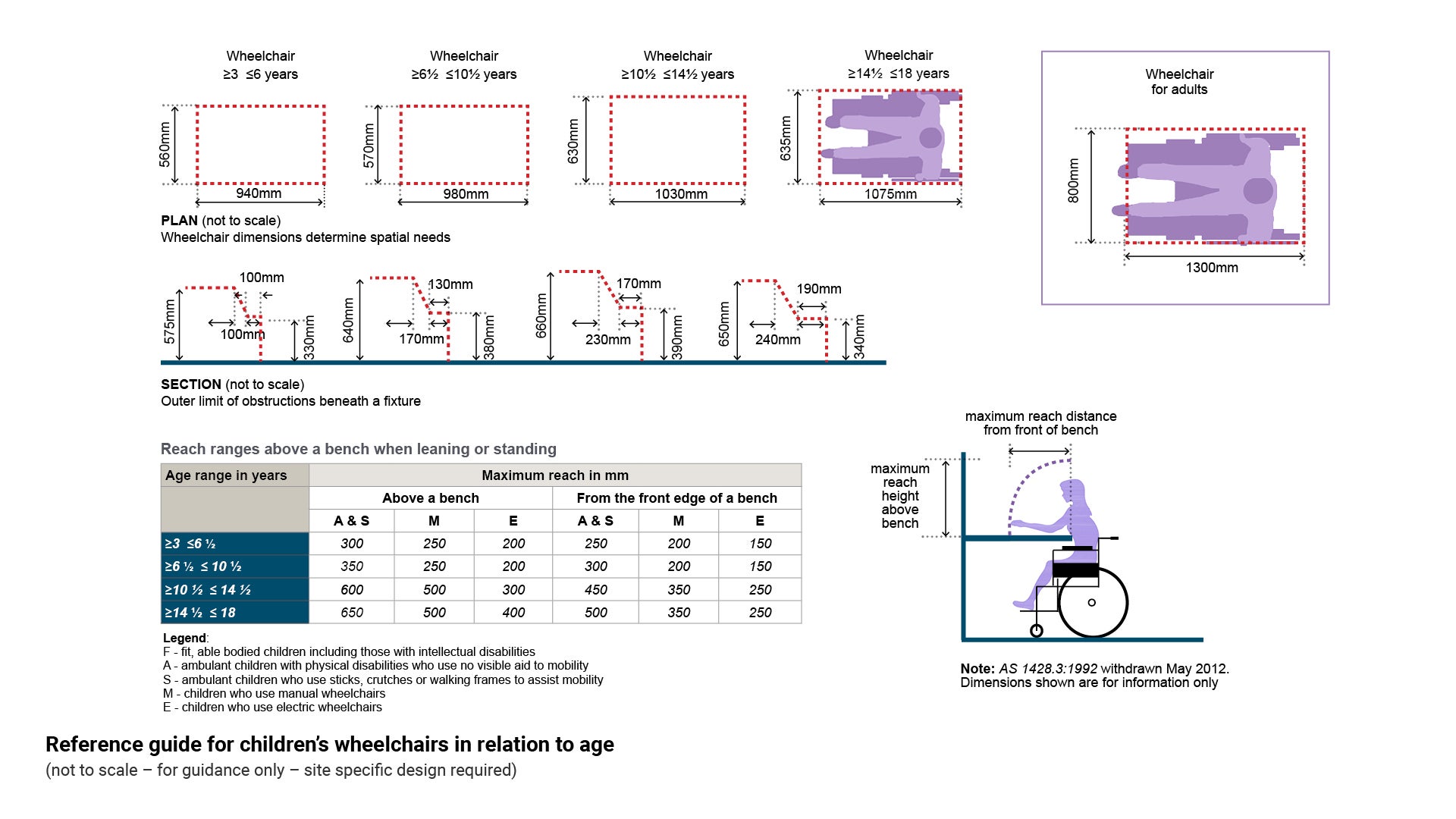

Figure 11: Elevation – all abilities play space
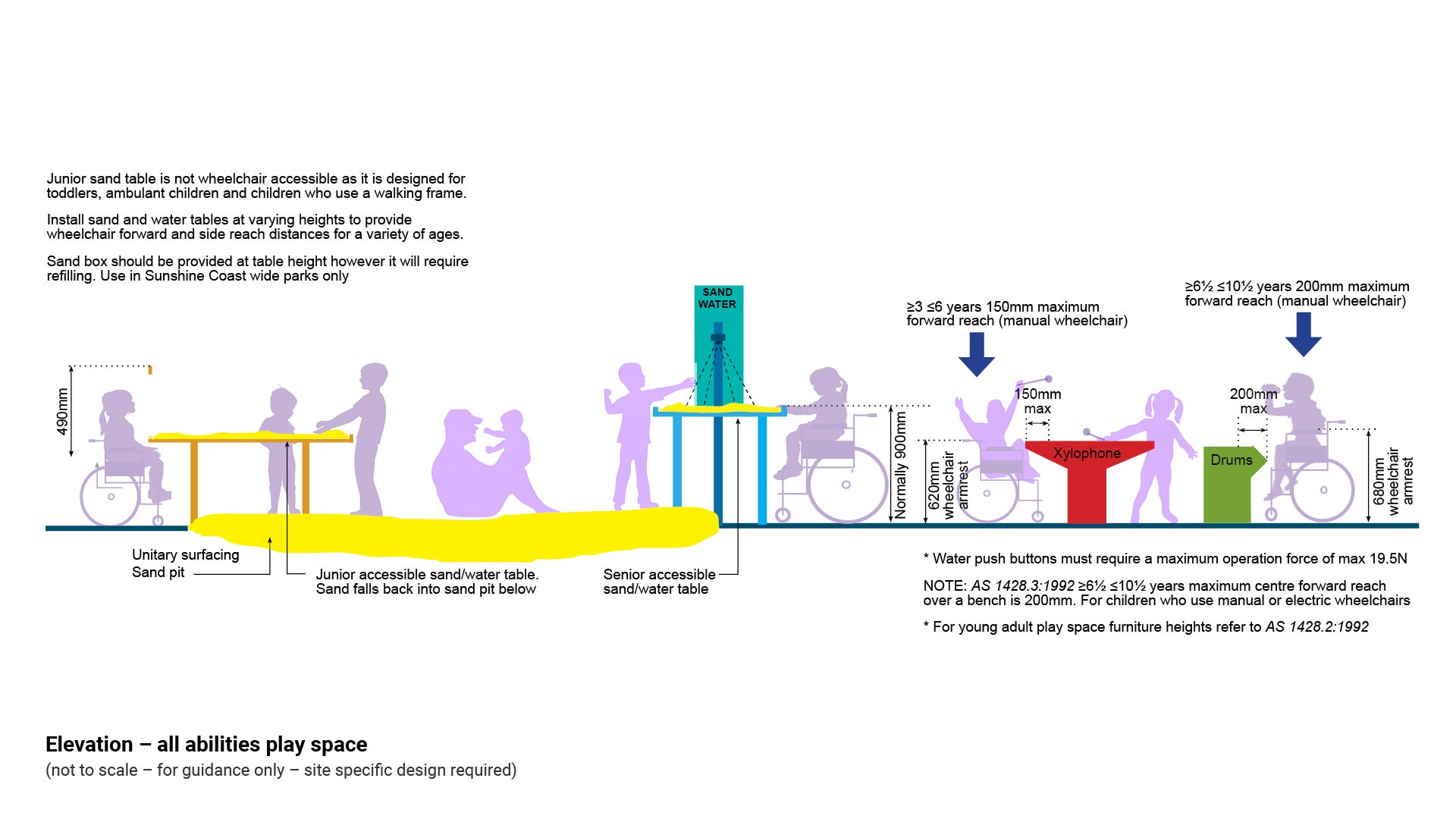

Figure 12: Elevation – sensory herb garden
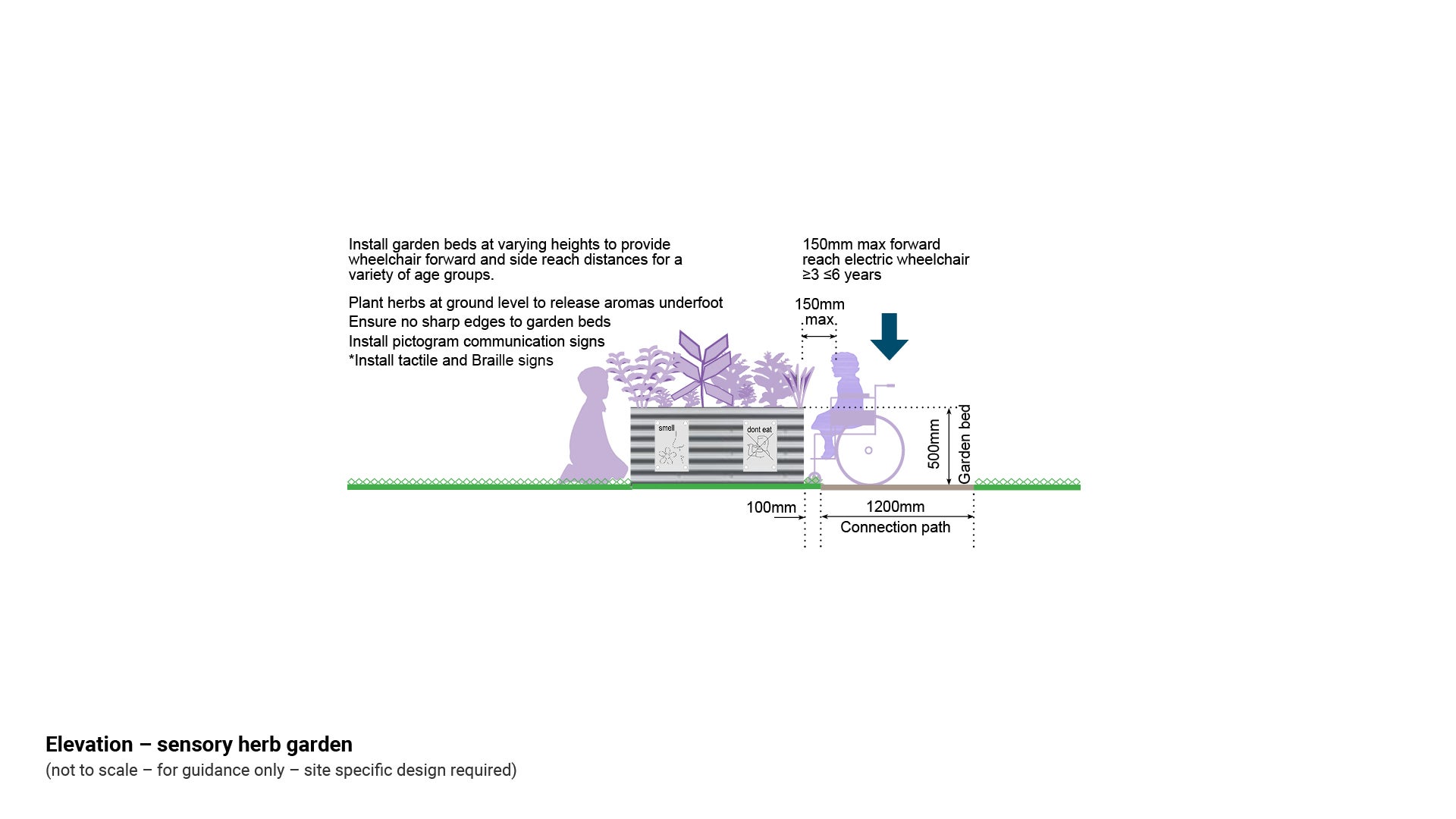

Figure 13: Elevation – multi-generational exercise station.
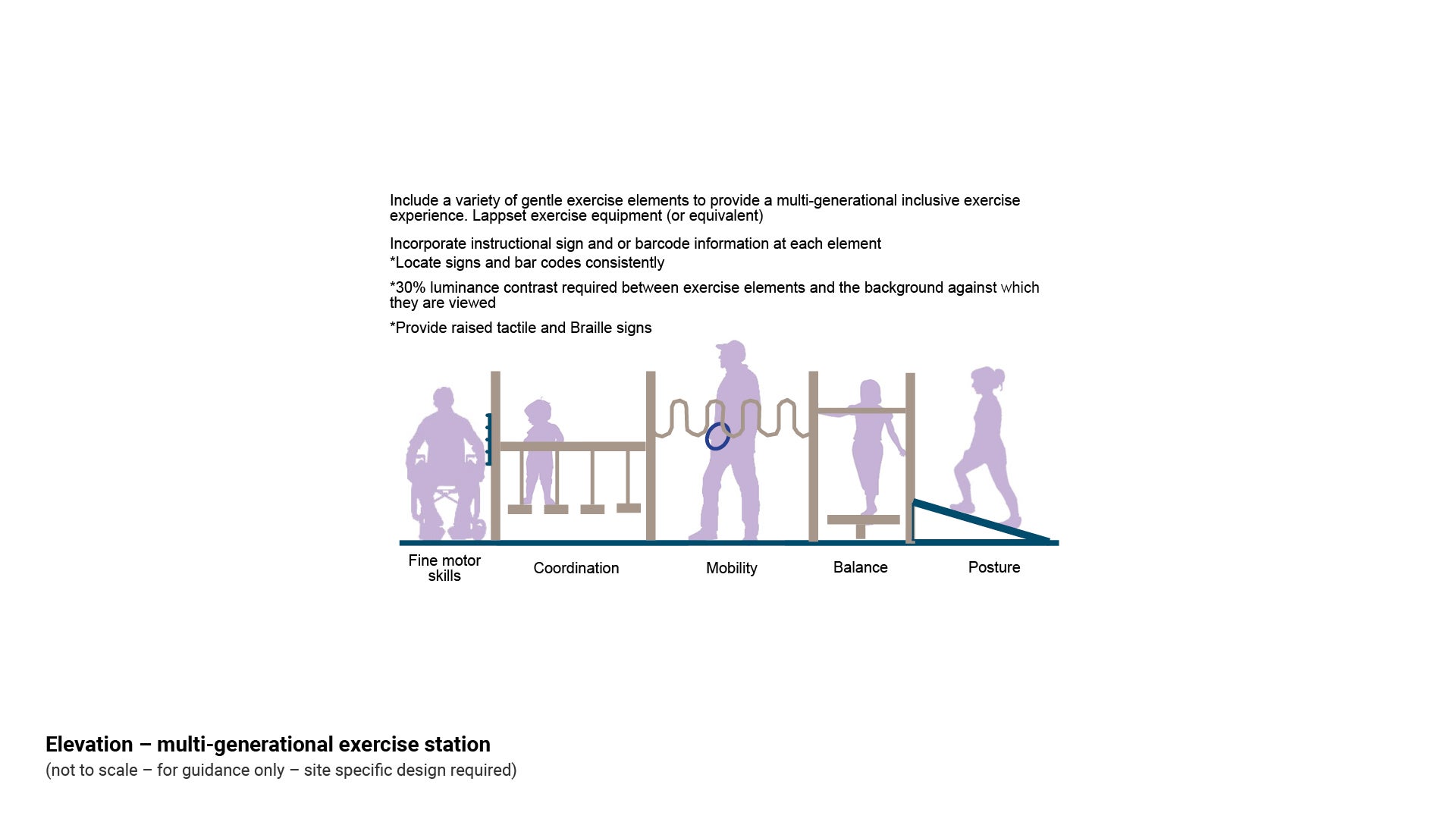

Figure 14: Elevation – language signage and communication
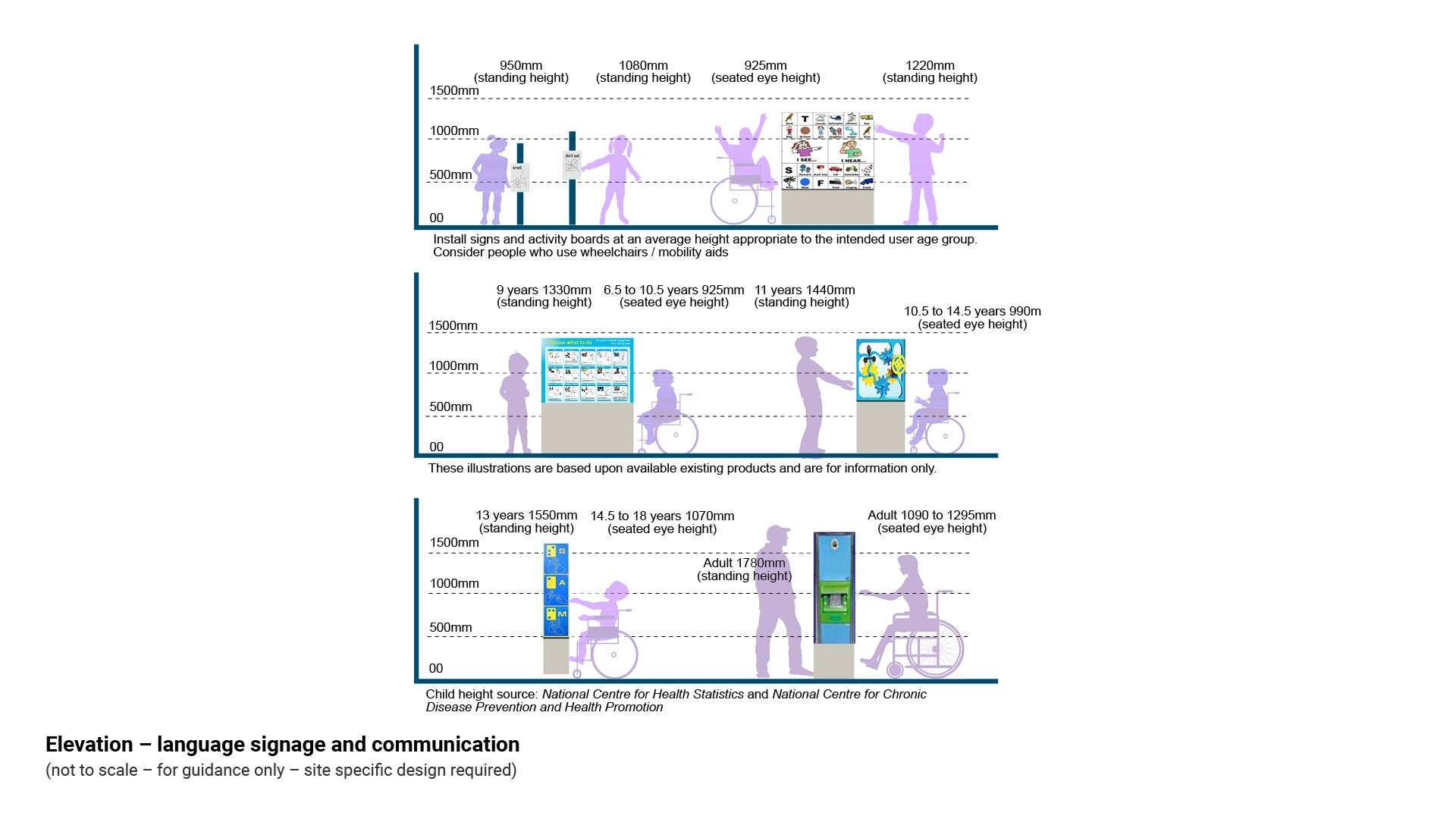

Figure 15: Elevation – seat types available for children’s play spaces.
Page payload data

This component is currently in development


Sunshine Coast Open Space Landscape Infrastructure Manual (LIM) DISCLAIMER

Disclaimer

Information contained in this document may change without notice and you should use the current material available from Council’s website and not rely on material previously printed or stored by you.

All figures and diagrams are intended to be used as an aid to design and include Council’s preferred elements but they are not intended to be prescriptive and may need to be varied as dictated by site specific factors. While Council has exercised reasonable care in preparing this document, it does not warrant or represent that it is accurate or complete. The Council will not accept responsibility for any loss, damage, cost or expense that you may incur as a result of the use of or reliance upon any material contained in this document.

This document is produced to convey general information and is not intended to constitute advice whether professional or legal. Any reference to legislation in this document is not an interpretation of the law. It is to be used as a guide only. Consult relevant authority websites for current documents, revisions and amendments.

Where a particular product or supplier is profiled in this document, Council is NOT nominating this product or supplier as the selected choice. Product/supplier information has been provided to allow users to source products which contain the correct elements required for Council embellishments. Each product profiled states ‘or equivalent’ which means that different products may be supplied provided they satisfy the identified performance criteria, recommended standards, equal access guidance and product specifications.

Product design, manufacture and installation requires appropriately qualified people to provide site specific solutions to ensure the embellishment is appropriately adapted to local conditions and data.

This document does not override requirements stipulated in a development approval. Project specific variations may be appropriate as a result of site, environmental or other constraints. Any variations to these standards must be approved in writing by council prior to commencement of variation works. Components of this document may be used within a contract document but users should undertake their own investigations to confirm the information is suitable for this purpose.

Drawings contained in this document are NOT FOR CONSTRUCTION.

Details in this document are deemed to be the minimum standard and the user may wish to apply a higher standard subject to approval by council.

Acknowledgements

Council wishes to thank all contributors and stakeholders involved in the development of this document.

Copyright

Sunshine Coast Regional Council (Council) supports and encourages the distribution of its material however, copyright protects this document. Council has no objection to this material being reproduced but only if council is recognised as the owner of the copyright and this material remains unaltered.

https://www.sunshinecoast.qld.gov.au[email protected]07 5475 7272

Sunshine Coast Open Space Landscape Infrastructure Manual (LIM)

 | 

© LIM 2024 – 2026

 | 

Version 0.0.38.beta

 | 

Last Updated: 01/04/2026 12:27 AM

Preview