Play spaces
Design - play spaces
Requirements for the design, manufacture and installation of embellishments
Playground equipment – design
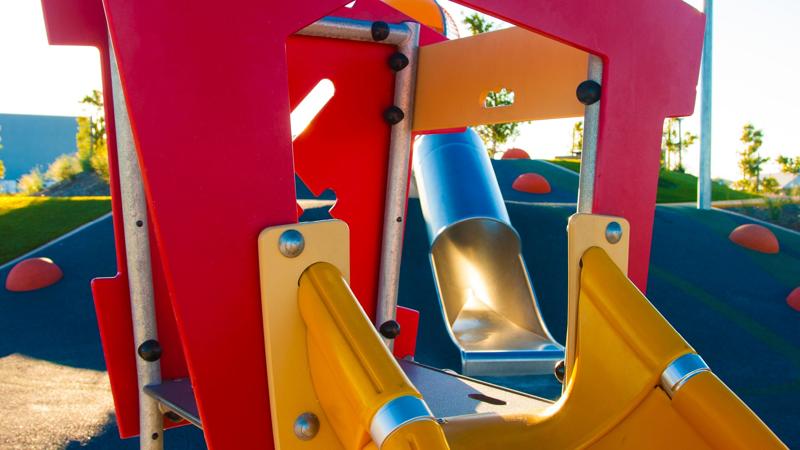
Playground equipment must comply with AS 4685 – Playground equipment and surfacing SERIES.
Playground equipment in AS 4685.1:2021 is defined as:
‘Equipment and structure, including components and constructional elements with, or on which, children can play outdoors, either individually or in groups, according to their own rules or own reasons for playing which can change at any time’.
Colour, material types and equipment choices
Equipment colours should be determined on a site specific basis. Generally playground element colours are bright to indicate that the area is for play. It distinguishes the play space from the surrounding background.
However, the choice of bright colours must be thought through carefully with relation to the site. Subtle colour schemes may need to be considered for parks in natural activity play areas, character areas, quiet areas/sensory play spaces and in direct residential viewlines.
Consider the following:
- For children between 2 and 6 years old, colour is more important than shape and size for understanding physical objects.
- Red, yellow and orange are seen first by the eye. They offer children an opportunity to better understand how to comprehend depths, spaces and distances.
- Children eight and older are able to comprehend with greater subtlety, so a different variety of colours can be used.
- Dark colours retain heat and lighter coloured surfaces stay cooler. Site specific colour selection is required.
General requirements
- Playground equipment over 3.0 m in height and all shade sails require building approval.
- The quality of playground equipment must be of commercial quality standard.
- The active and passive areas of a playground should be appropriately designed to avoid any potential conflicts.
- Playground equipment such as swings, spinning items and flying foxes, should be located away from the main paths of travel. This will ensure they don’t pose a potential hazard, particularly for young users.
- Flying fox (cableway):
- ‘Flying foxes’ require a copy of the cable certificate and must have a non-twist, stress reinforced cable.
- Where an elevated grade is required for a flying fox starting point, install a platform. Rubber mounds are not preferred.
- As per AS 4685.1:2021, playground equipment is to be designed to ensure that adults are able to gain access to assist children within the equipment.
Materials for fixings and finishes
- All coastal locations (east of the Bruce Highway), must be constructed of coastal hardy materials and fixings such as:
- 316 marine grade stainless steel.
- In certain locations (where approved by Council (Parks and Gardens)), C5 hot dip galvanised steel may be considered for use.
- Aluminium
- HDPE/Poly panels
- Timber (appropriate species, mounted on marine grade 316 stainless steel stirrups – with approval from Council (Parks and Gardens).
- It is preferred that timber products are to be treated with alkaline copper quaternary (ACQ), a water based wood preservative. CCA is not to be used.
- 316 marine grade stainless steel.
- Hinterland areas - materials, finishes and fixings shall be specified as stated above, however:
- 316 marine grade stainless steel elements are optional.
- C4 hot dip galvanised steel may be used.
See LIM Introduction to the LIM for further guidance regarding coastal/hinterland locations.
Netting mesh
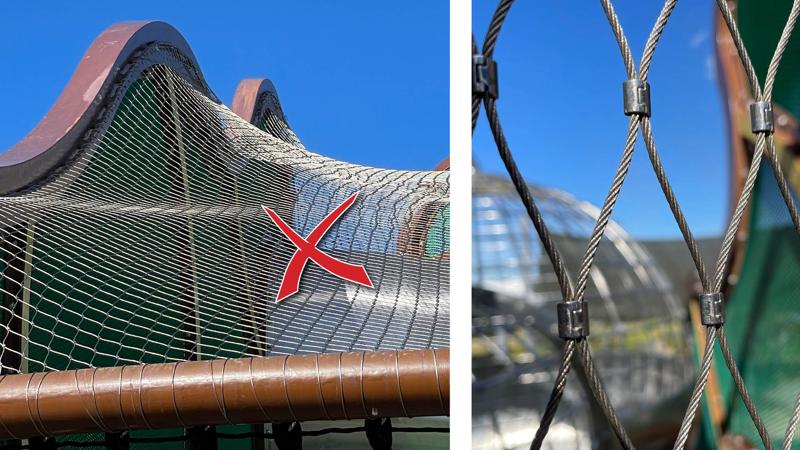
- Stainless steel netting mesh (e.g. crimped wire with trace/tie wire) must NOT be used.
- If crimped, the entire run is damaged and requires replacement.
- The use of permanent elements or robust maintainable components should be utilised.
Water play
Plumbing and underground services should include the following features:
- Waste water must not be discharged into civil stormwater connections.
- Plumbing work must conform to the Plumbing Code of Australia (PCA) which forms volume 3 of the National Construction Code.
- A gate valve must be installed within 3.0 m of the water play, but not within the play space footprint. Gate valve to be on a separate water supply from other units (such as toilet, drinking fountain). This enables the water play to be turned off during the colder months.
- Water play must be designed to look good and be used for other play when water is turned off.
- Water play mechanisms:
- any push buttons must be fitted on a timer
- any push buttons must be operated at maximum 19.5 N.
- any lever operations must be robust enough to withstand prolonged use and vandalism.
- must be suitable for the coastal environment.
- must have adequate drainage.
- must not use recycled water.
Audio equipment
Audio elements shall be limited to a maximum level of noise as per Environmental Protection (Noise) Policy 2008 Schedule 1 – Acoustic quality objectives, and be located in a part of a play space that is open to the public for use other than sport or organised entertainment.
Natural activity areas
- As per AS 4685.0:2017 – Playground Equipment and Surfacing – Development, installation, inspection, maintenance and operation, nature play elements consist of:
- ‘natural, non-manufactured items that are incorporated into the playground, including items such as logs, boulders, plant materials, paths and surfaces, changes of level and other landscape elements’.
- Natural play elements must be designed, manufactured and installed by an approved play space company. They must meet all Australian play space standards and be independently certified by a qualified professional.
- Natural play elements incorporated into a play space are subject to the requirements of AS 4685 (set). Where the requirements of this Standard cannot be applied to natural elements incorporated into a playground, a ‘risk benefit assessment’ is to be undertaken to determine the suitability of such elements. This report must be approved by Council (Parks and Gardens).
- Develop strategies to manage activities which include playing with branches, pebbles, and any other loose elements.
Natural activity area elements
- Natural activity areas may include elements that:
- incorporate natural play equipment such as timber logs into a play space, either in a natural state or embellished with artistic carving/designs/unique works of art.
- encourage understanding of the tactile nature of natural bush elements, as a play/learning experience.
- foster an appreciation of and connectivity with the natural beauty of the Australian bush.
- may incorporate built structures using natural materials.
- incorporate recycled, local natural elements such as locally sourced timber.
- encourage exploration and develop imagination
- challenge fitness.
- foster the positive impact of the beauty of nature.
- encourage the benefits associated with imaginative natural play.
- may incorporate non-natural play equipment to provide a holistic play experience.
- Items such as logs, must be secured to prevent rolling, have rounded edges, no splits, be certified stress graded and have a compliance certificate by an independent play space compliance engineer.
- A qualified arborist should be consulted to determine the appropriate timber species to be used for logs and the like, in order to prevent rot and de-lamination. A ‘non-toxic’ termite deterrent must be used.
- Any natural play that uses rocks and sticks is to be designed to prevent rocks contaminating grass areas. Rocks in grass require removal by hand to prevent mowers turning them into projectiles.
- Any loose dry creek bed rocks within 50 m of equipment or safety surfacing, must have the rocks secured into concrete, as loose rocks:
- can be used as projectiles
- contaminate safety surfacing
- can be used to damage equipment
- have to be hand removed from turfed areas as they become a projectile when mowed.
Natural bushland areas adjoining formal play
- Remnant or natural bushland areas that adjoin formal play spaces and may be accessed by children, must include a sign ‘natural hazards may exist in this area’.
- These adjoining bushland areas must not include any formal play equipment.
- As per AS 4685.0: 2017 – Playground equipment and surfacing – Development, installation, inspection, maintenance and operation, a ‘risk benefit assessment’ must be undertaken and a report approved by Council (Parks and Gardens). The report is to identify any unacceptable risks in adjoining bushland.
Surfacing design
(also known as softfall or safety under-surfacing)

Surfacing must comply with AS 4422:2016 – Playground surfacing, specifications, requirements and test method.
Surfacing choices
Surfacing (as per AS4422:2016) is defined as: ‘the surface of a play space from which the use of the equipment commences’.
- Unitary surfacing is defined as: impact-attenuating surface consisting of one or more material components (such as shredded rubber bound together with urethane) formed into a sheet, tile or other continuous surface where the underlying protective properties of the impact surfacing changes little with consecutive and/or repeated use.
- Loose-fill surfacing is defined as: consistent of unbound, granular, chipped or fibrous elements such as sand, wood-fibre, bark mulch, wood chips or other materials. These may be organic or inorganic.
Play spaces are required to be surfaced in compliance with AS 4422:2016 - Playground surfacing - Specifications, requirements and test method.
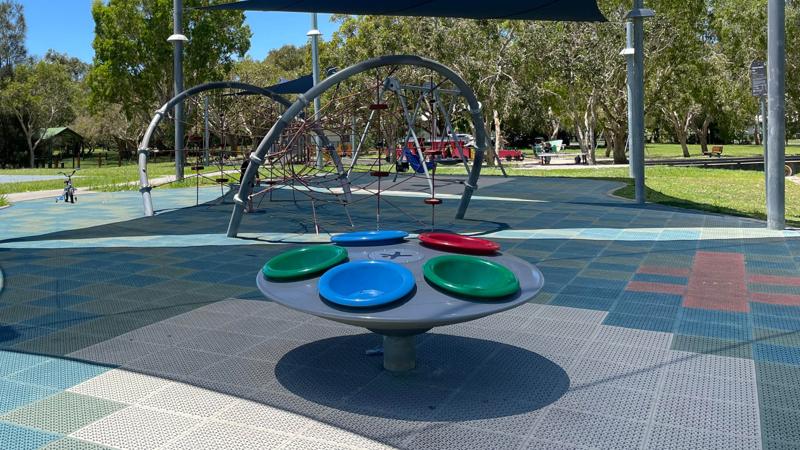
Surfacing for play spaces must respond to the context of the site. When designing the play space for accessibility, consider unitary surfacing to integrate and connect activity areas and play items within the playground footprint. This is particularly important for all-abilities play spaces as loose fill surfacing does not allow for equal access. Further, site specific environmental factors like existing shade, vegetation, topography and flood and overland flow characteristics must be considered in surfacing selection to ensure the long-term viability of the embellishment from both a maintenance and user perspective.
See Table 1: Surfacing choices.
Unitary surfacing
- Must meet the impact attenuation requirements of AS 4422.
- Must be installed on a concrete base or a cement treated base (CTB)
- CTB is a mixture of aggregates or granules with measured amounts of cement and water that forms a durable base.
- Must be fully shaded.
- Must use lighter colours or mixed flecked colours, to minimise surface heat and potential extreme localised heat. Dark colours absorb heat.
- Must have edges that extend a minimum 100 mm below natural ground level when directly adjoining loose-fill surfacing. All surfacing materials must be finished flush with each other when settled.
- See LIM Play space – Technical drawings for further guidance - secure as per manufacturers recommendations.
- Must include a flush transition to adjacent levels to minimise trip hazards.
- Must be installed with concrete edging.
The following unitary surfacing types should be considered:
- Modular rubber sheets/tiles (play matta or equivalent)
- Rubber wet pour (EPDM/CSBR)
Unitary surfacing - wear pads
- Must meet the impact attenuation requirements of AS 4422.
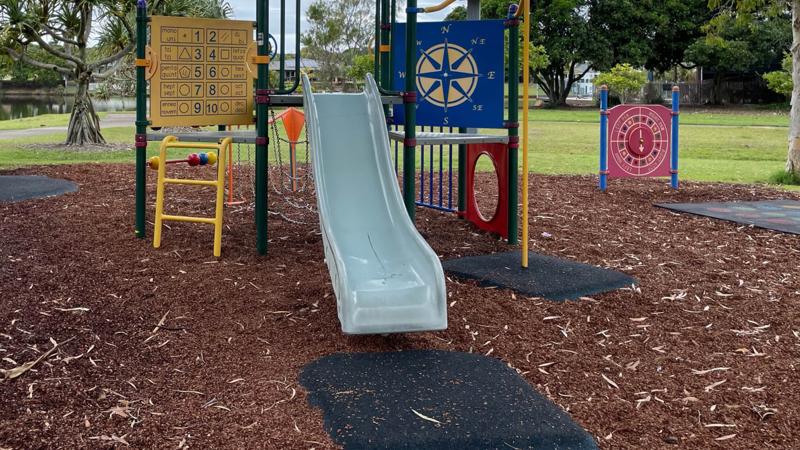
- Play equipment must have unitary surfacing directly under equipment where displacement of surfacing is likely to occur (forced movement), with the exception of swings.
- Fire poles, exit run-out for slides, rotating elements and carousels or spinning discs must have wear pads.
- Playmatta (or equivalent) wear pads are preferred due to ease of maintenance. Note: unitary surfacing products that allow for sand ingress (e.g. Playmatta) cannot be installed directly adjoining sand.
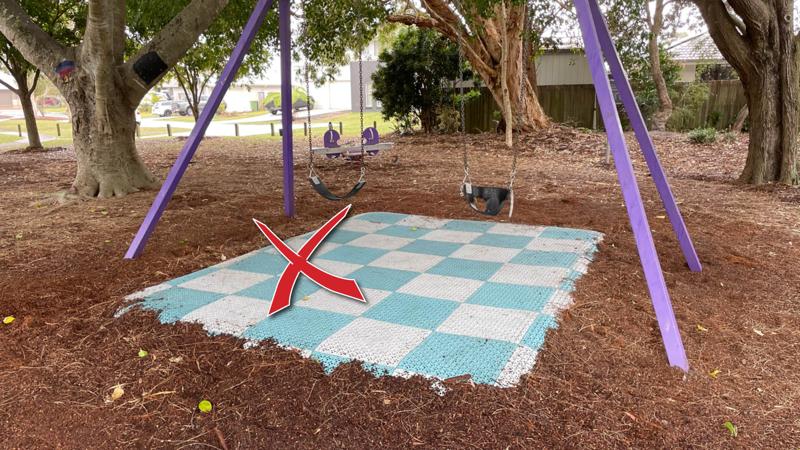
- Swings – wear pads are NOT preferred under swings, with loose-fill surfacing being the only accepted option. Where equal access is required unitary surfacing can be installed from pathway to the play equipment and installed to cover entire safety zone. Wear pads are NOT preferred under swings for the following reasons:
- Creation of trip hazards when the surrounding surfacing reduces in level.
- Prone to damage.
- Require continual maintenance and drop testing.
Loose-fill surfacing
- Must meet the impact attenuation requirements of AS 4422.
- Surfacing depth:
- Must have a minimum depth of 400 mm (or greater where required by free fall heights and attenuation test certificate) to allow for compaction and depletion.
- Loose-fill products (particularly bark) will 'settle' after installation. This must be accounted for during installation to ensure that the final settled level of the surface is a minimum of 400 mm in depth and flush with all adjoining surfacing.
- Sand surfacing may require greater depths as per attenuation test certificate.
- Must be installed with a lip around the playground footprint to ensure loose fill surfacing does not spill out of the playground.
- However, designers must ensure that the main path of travel has a flush join to prevent ‘tramlining’ of prams and wheelchairs, and creating trip hazards.
- If loose fill materials are to share a playground footprint they must be installed with adequate separation (either via distance or physical barriers) between differing loose fill materials to prevent cross contamination.
- Must NOT have geofabric installed between the natural ground and safety surfacing.
- Must be installed with concrete edging around playground footprint except in situations where tree root disturbance is to be avoided, in which spade-cut edging may be required (as specified by a Council Arborist).
The following loose-fill surfacing types should be considered:
- Sand
- Must NOT be installed directly adjoining Playmatta tiles or any unitary surfacing products that allow for sand ingress. This is due to sand compaction within the surfacing creating non-compliant impact attenuation issues.
- If sand and unitary surfacing products that allow sand ingress are to be used in the same play space, the two surfaces must be separated by distance or a physical barrier.
- Must NOT be installed around the base of spinning play elements with bearings (carousel, spinning cup, etc.), unless they have preventative measures to stop sand build up underneath the equipment. Sand build up can cause significant maintenance issues within spinning parts and bearings.
- If spinning play elements are installed in sand the wear pad (made of wet-pour unitary surfacing) must extend a minimum of one metre past the outer edge of the equipment.
- Note: the use of sand provides for additional sensory play developmental opportunities.
- Must NOT be installed directly adjoining Playmatta tiles or any unitary surfacing products that allow for sand ingress. This is due to sand compaction within the surfacing creating non-compliant impact attenuation issues.
- Bark
- Takura manufactured wood (or equivalent) is NOT accepted.
- When designing a play space, consider containment of loose-fill surfacing. This may be achieved by:
- ensuring level grades
- installing raised edging/seating
- installing sand play tables away from picnic areas and major thoroughfares
- considering flooding and overland flow conditions of the site.
Table 1: Surfacing choices
Products | Key considerations | Recommendation |
Unitary surfacing RUBBER (certified to AS 4422) 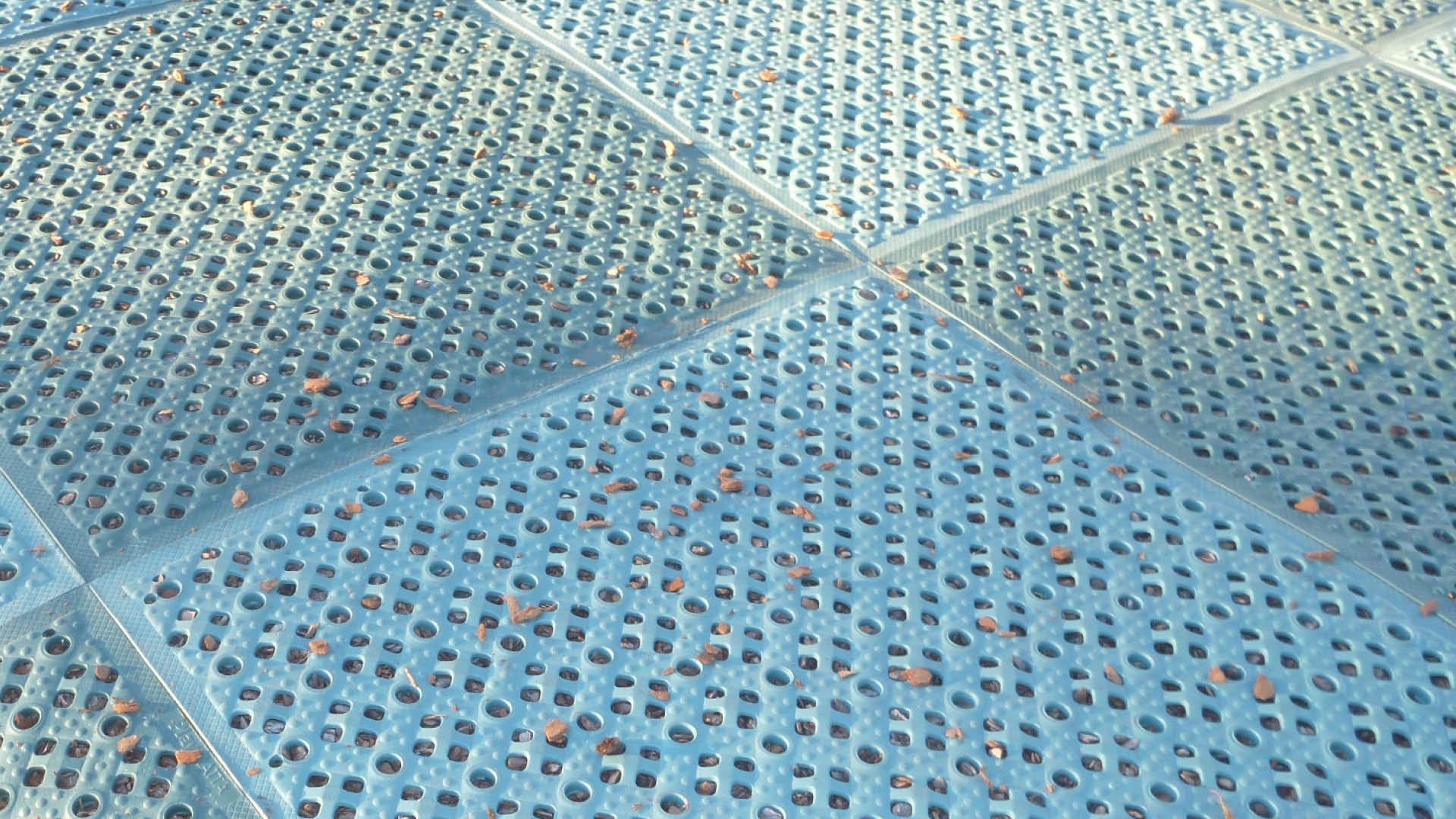 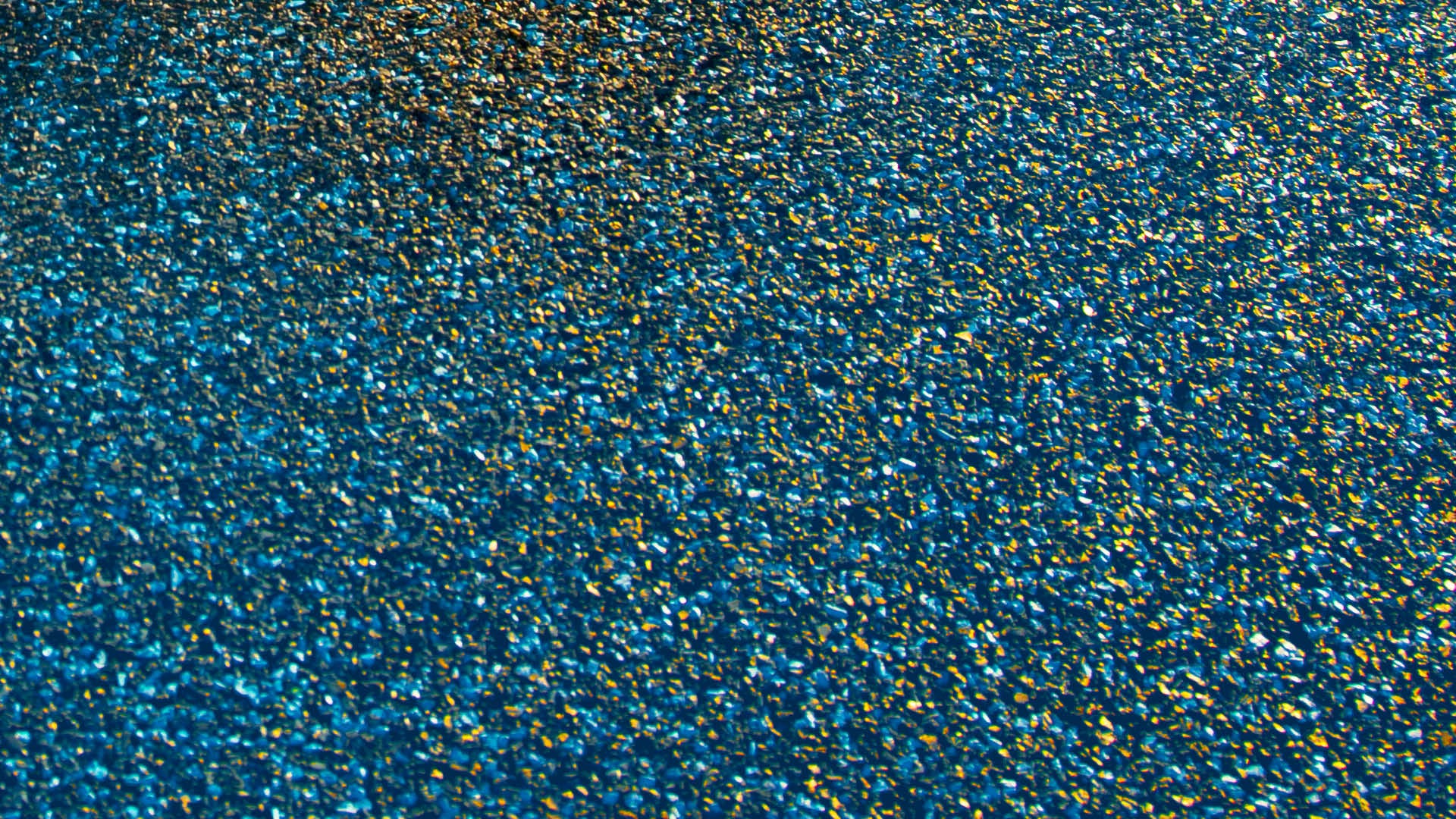 |
|
|
Loose-fill surfacing SAND (certified to AS 4422) 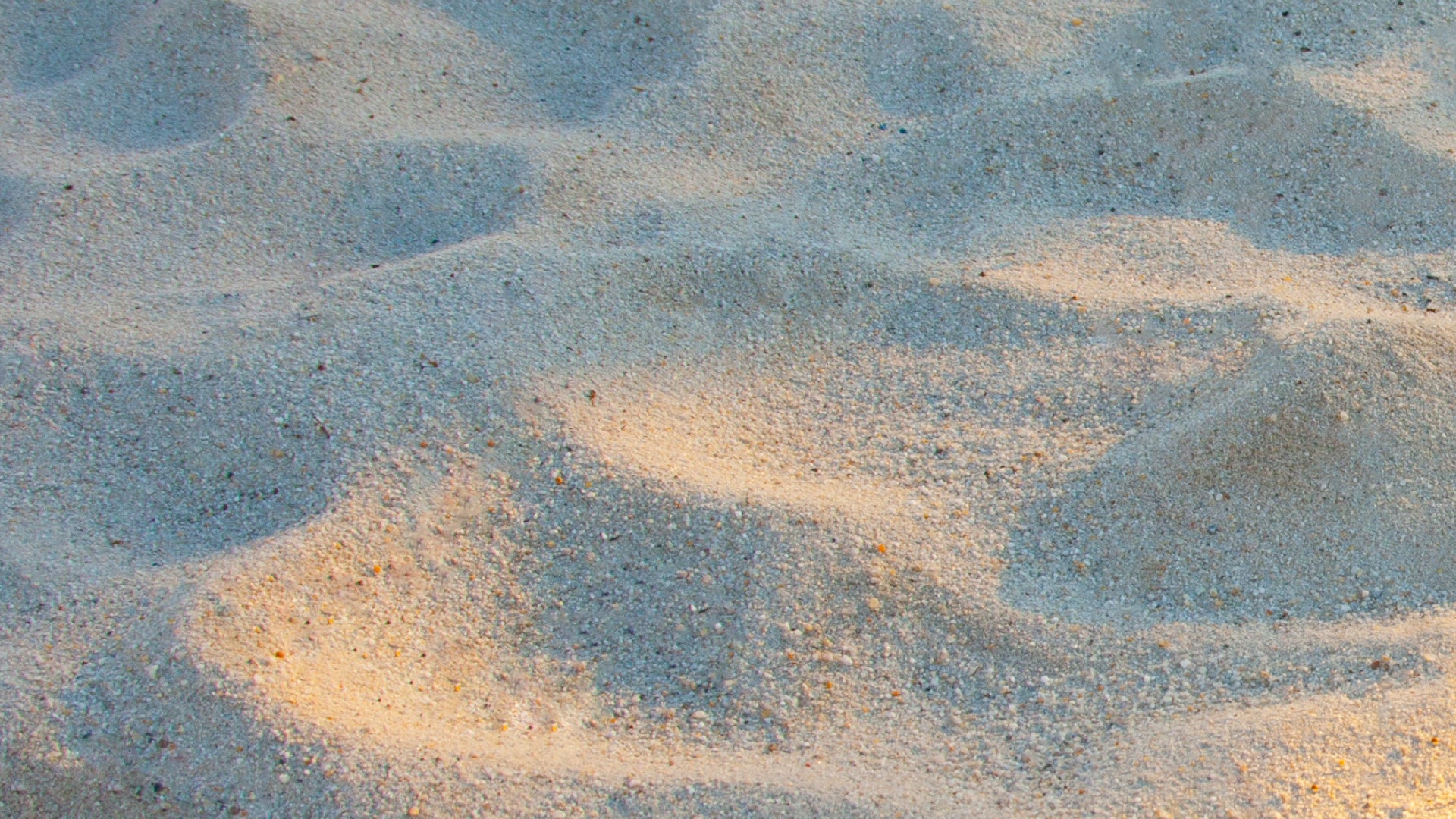 |
|
|
Loose-fill surfacing BARK (certified to AS 4422) 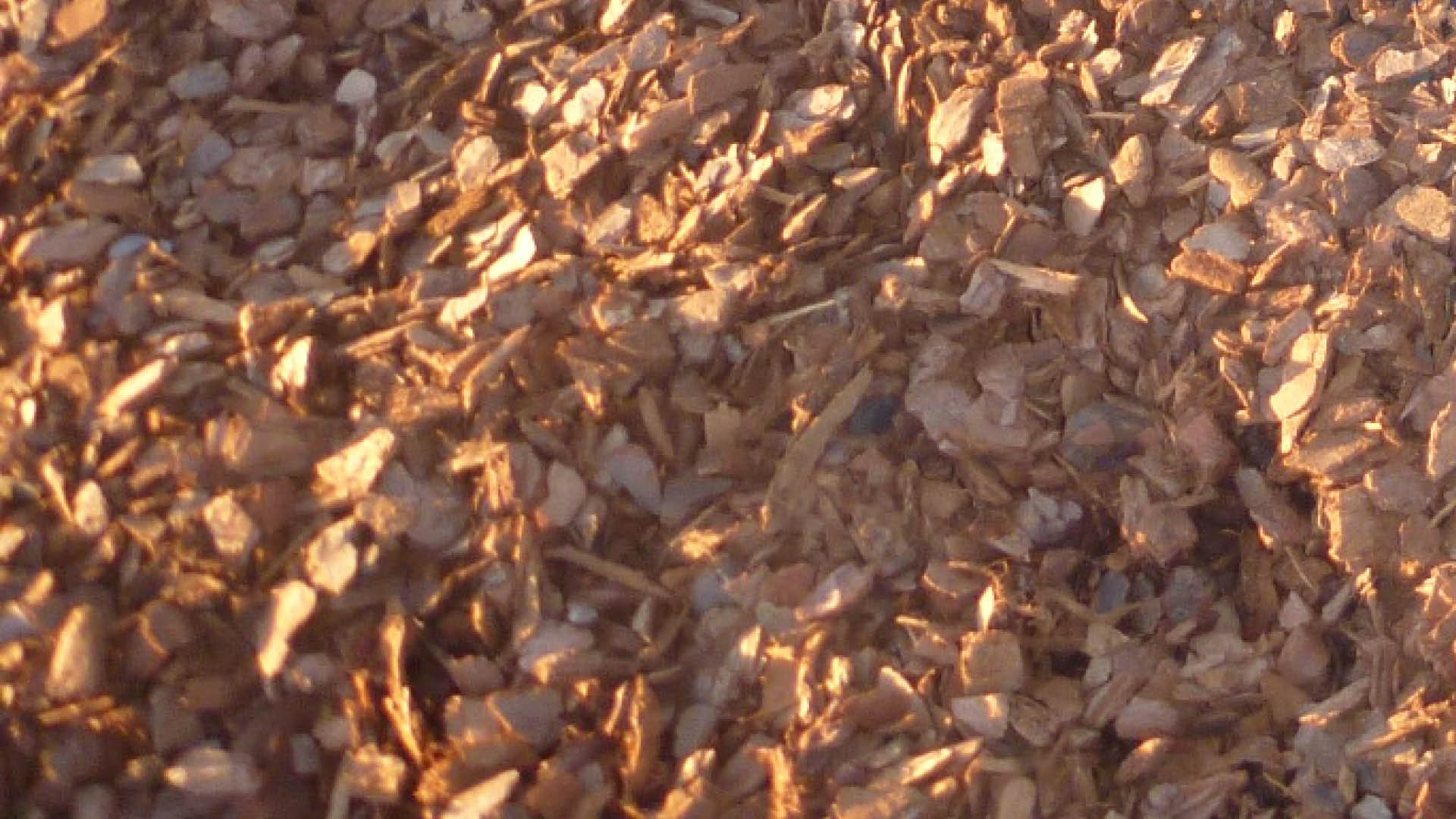 |
|
|
Loose-fill surfacing Do NOT use. TAKURA MANUFACTURED WOOD (or equivalent) (certified to AS 4422) 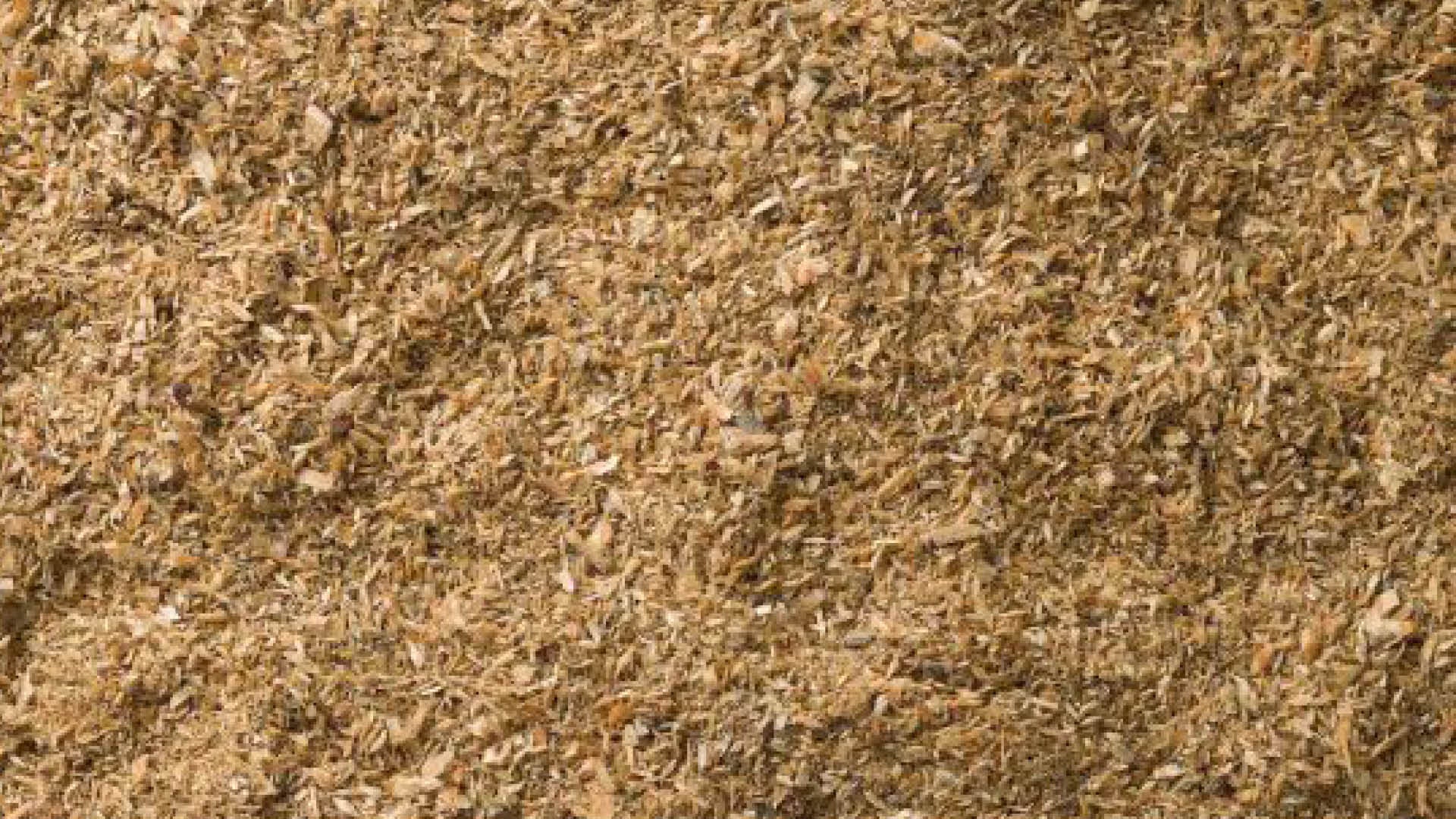 |
|
|
Playground footprint edge treatment design

Playground footprint edge treatment must comply with AS 4685 – Playground equipment and surfacing (set) and AS 4422:2016 – Playground surfacing – Specifications, requirements and test method.
Edging is defined as ‘the component which defines the play footprint and maintains the integrity of the chosen surfacing’.
All edge treatments for play space must be constructed of slip-resistant concrete:
- Timber edges are NOT preferred, due to the increased maintenance requirements. Any timber edging requires asset custodian approval.
- If timber edging is to be used it must be treated with alkaline copper quaternary (ACQ), a water based wood preservative (CCA is not to be used). A treatment of acrylic topcoat non-slip/splinter containment paint should also be applied to manufacturers instructions, with a minimum 2 coats.
- Space cut edges are NOT preferred due to increased maintenance requirements, except in situations where tree root disturbance must be minimised as specified by a Council arborist.
Edging design must also consider:
- Adequate drainage is provided considering the flooding and overland flow context of the site (e.g. through raising the playground platform).
- A 2.5m wide turf batter is provided with a preferred slope of 1:6 (maximum 1:4) to allow for deck mower access around the playground footprint.
- Connecting pathways provide equal access.
See LIM Play space – Technical drawings for further guidance.
Kick and throw areas design
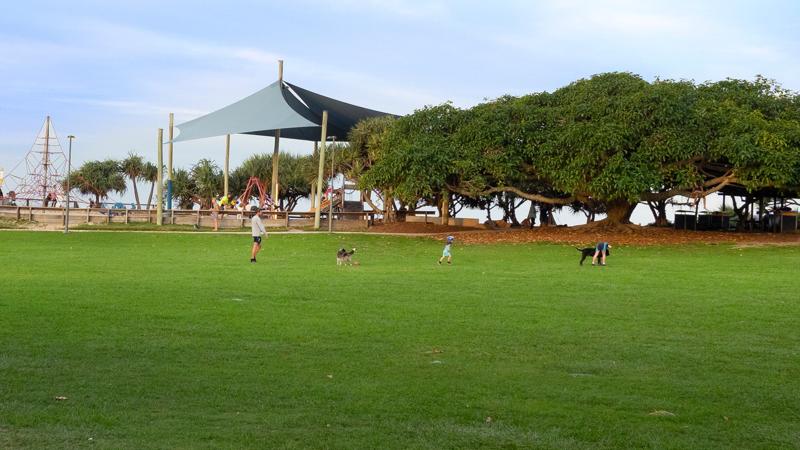
Kick and throw spaces are grassed areas in a park, clear of embellishments to allow activities such as frisbee throwing, ball throwing, kite flying and general relaxation, including temporary gatherings.
Embellishments can be provided at the perimeter eg. shaded seating, drinking fountains. Kick and throw areas also preserve green spaces, provide scenic amenity and their openness allows visitors to appreciate the landscape, away from the built environment.
Families
Kick and throw areas should be provided adjacent to play spaces to provide the opportunity for families to move from one space to another for different types of experiences. The combination of play spaces, kick and throw spaces and picnic nodes, as well as public amenities, provides the opportunity for choice and to extend the stay in the park for recreational enjoyment.
Skills development
Throwing and catching skills are an important component of many games and activities played by children to prepare them for the games and sports they may play in the future. Netball, softball, football, basketball and cricket are some of the games that require good skills in throwing and catching. The advantage of the kick and throw area is that families need minimal equipment to develop ball skills. They also provide sufficient space which may not be available at home, as house blocks and gardens reduce in size and urban development becomes more built up.
Exercise
As well as skills development, the opportunity to run, chase, catch and jump in an open, green, grassed space provides the opportunity for families to exercise in the fresh air. Opportunities for running with a kite or leaping to catch a frisbee provide exercise opportunities for all age groups. Park activities for children can include hide and seek, tug of war, scavenger hunt, Simon says, follow the leader. These provide opportunities for fun exercise.
Social gatherings
Kick and throw spaces can be used for informal gatherings to celebrate anniversaries and other events. The area is not designed as a function space with fixed embellishments e.g. stage, amphitheatre, but allows people to gather in an informal setting. These are temporary events, with people providing their own portable equipment e.g. balls, seating etc. to be removed at the end of the gathering.
Ancillary embellishments
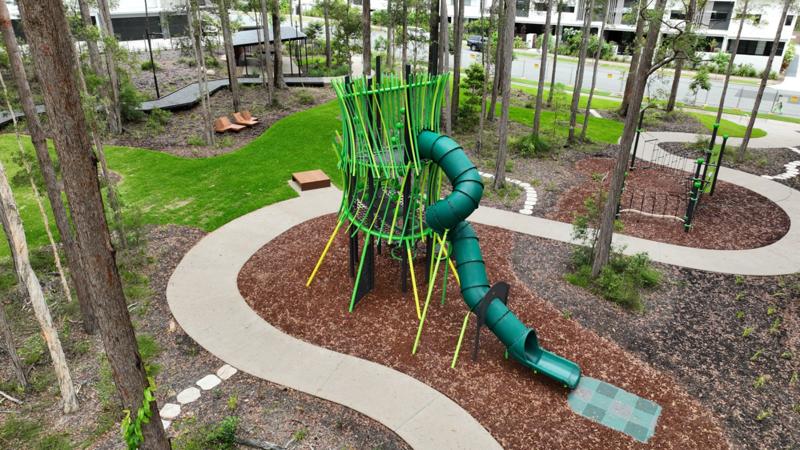
Utilise the ELS and RPP guidance to determine what ancillary facilities should be provided with a play space and kick and throw area.
Typical embellishments in parks
Level of park | Embellishment provision |
Play space within a LOCAL PARK should provide: |
|
Play space within a DISTRICT PARK should provide: |
|
Play space within a COUNCIL WIDE PARK should provide: |
|
See LIM Play space - Accessible and inclusive play for all abilities play space (AAPS) provision.
Bins
- Wheelie bins must be installed within a wheelie bin enclosure at playgrounds, as bins can be removed and used to gain access to high areas such as climbing onto shade sails.
See LIM Bins for further guidance.
Drinking fountain
- A drinking fountain is preferred, near play spaces.
- Consider different fountain height models.
See LIM Drinking fountains for further guidance.
Seats
- Provide shaded seating areas for respite, for parents and carers.
- Provide a range of seating options e.g. platforms seats, children’s height seats.
See LIM Seats for further guidance.
Shade (natural/artificial)
Playgrounds must be designed with areas of effective shade from either trees or built elements or both (as per RPP requirements).
General
Shade is the best way to provide maximum protection against UV radiation.
- Refer AS 4685.0 2017 – Appendix A, for comprehensive shade and sun protection information.
- For example, as per AS 4685.0:2017, App A: “large flat or inclined surfaces, especially metal ones, likely to contacted by the user (e.g. on a slide) may heat up and cause serious burns. Protect impact -attenuating surface and the slide from direct sunlight by the use of trees or shade cloth are examples of ways in which this hazard may be reduced”.
- Provision should be made in each playground for areas of sun protection and shade, both for the children using the playground as well as for any caregivers present.
- Care should be taken to site equipment so that it is correctly positioned with respect to sun exposure. Uncovered platforms and some under-surfacing materials can become uncomfortably hot if exposed to too much direct sunlight.
- Provide site specific shade modelling (shade diagram) for shade sails and shelters. Refer LIM Shade Sails for shade modelling requirements.
Shade sails
- LIM Play spaces category should be read in conjunction with LIM Shade sails for shade modelling requirements, specifications and clearances.
Shelters
- LIM Play spaces category should be read in conjunction with LIM Shelters.
Landscape planting
Shade trees
As a general rule, trees with a canopy that is dense and closer to the ground provide the best protection from direct UV radiation.
- Plant shade trees at the time of play space installation, particularly in local parks. Minimum planting offset 1.2 m from edge of a path.
- Install shade trees to the north and west to protect play equipment at the hottest part of the day.
- Use existing trees for shade where the design can be sensitive to tree root requirements, under guidance of a qualified arborist. It is preferable to plant trees at the time of play space installation.
- Ensure tree roots do not compromise the surfacing or create trip hazards. For guidance on tree roots and specific treatments contact a qualified arborist.
See the following for further guidance
Plants
As per AS 4685.0:2017 Playground equipment and surfacing – Development, installation, inspection, maintenance and operation:
- 'Plants are valuable design elements in playgrounds and should be selected for their potential to provide for play, as well as for their:
- visual amenity
- sensory properties
- potential for shade
- potential to withstand compaction, extremes of climate and the impact of users.'
- Avoid plants with leaves with cutting edges, sharp thorns, spikes, poisonous parts, fragile tree limbs or prone to limb drop.
- Avoid foliage, flowers or seeds that could cause choking hazards.
- Avoid fruit bearing plants that may attract significant levels of birds and bats as this can become a maintenance issue.
- Choose plants that will provide clear sight-lines for parent and carer supervision (CPTED guidelines).
See LIM Planting (landscape) for further guidance.
Drainage
- Play spaces must have adequate sub-surface and surface drainage to avoid nuisance water pooling.
- Kick and throw areas should be grassed and well drained to prevent water build up and slip hazards.
- A drainage plan must be provided.
- Markers should be fitted to each side of the edging to indicate the position of all underground services. For example, a brass ‘D’ marker must be fitted to both sides of the play space edging to indicate the position of sub-surface drainage pipes.
- Drainage must be discharged outside of the playground footprint.
- Drainage material must not contaminate surfacing.
- Geofabric must not be installed between the ground and surfacing. This installation method causes safety and maintenance issues, particularly when geofabric is not installed correctly and starts lifting (creating a trip hazard).
- Surface runoff must be directed away from equipment and pathways.
- Drainage grates are to comply with AS 1428.1 Design for Access and Mobility (Set). Sub-surface drainage is to be installed and connected as per Council plumbing advice.
See LIM Landscape drainage for further guidance.
Pathways
- Pathways must provide a continuous accessible path of travel (CAPT) to a play space (where possible), as defined in AS 1428 Design for Access and Mobility. This enables access for all users.
- Consider that a 1.8 m wide pathway is required for two wheelchairs to pass each other. This consideration is particularly important for an all abilities play space.
See LIM Paths, trails and tracks for further guidance.
Internal paths
- A path should not bisect a playground as children will be constantly running across the path of cyclists and pedestrians.
- A secondary pathway comprising materials such as unitary surfacing may be used to integrate and connect activity areas and play items within the playground footprint.
Connection paths
- Provide a connection path from the car park to the play space and kick and throw area.
- Consider connecting park pathways to existing pedestrian and cycle networks.
- Consider connecting park pathways to shopping and public transport hubs.
Fencing (including pedestrian and vehicle gates)
Play space fencing should be considered where a playground:
- is near a hazard
- requires a separation of use from other park users
- is part of an all abilities play space.
Fencing is also highly sought after for parent/carer respite, and to provide a safer environment.
Where fencing is being considered, it is best practice to fence around the entire play space including kick and throw, picnic facilities, public amenities.
This provides the opportunity for social interaction amongst families and promotes independent play in children.
See the following for further guidance:
- LIM Play spaces - Accessible and inclusive play
- LIM Fences and gates (play space fencing section) which outlines relevant hazard criteria, planning, application and detailed design.
Public amenities
- All Abilities Play Spaces (AAPS) would benefit from the inclusion of an equal access public amenities and ‘Changing Places change room’, located within the play space.
See the following for further guidance:
- LIM Play spaces - equal access
- LIM Play spaces - Accessible and inclusive play
- LIM Public amenities.
Other
Artificial turf
- Artificial turf is generally not supported (asset custodian approval required), due to cleaning issues, potential trip hazards, irregular surface wear and environmental impacts.
Signage
Note: This section should be read in conjunction with LIM Signage suite - for a complete suite of suitable signage, from the carpark to activity area.
Activity entry sign - Park
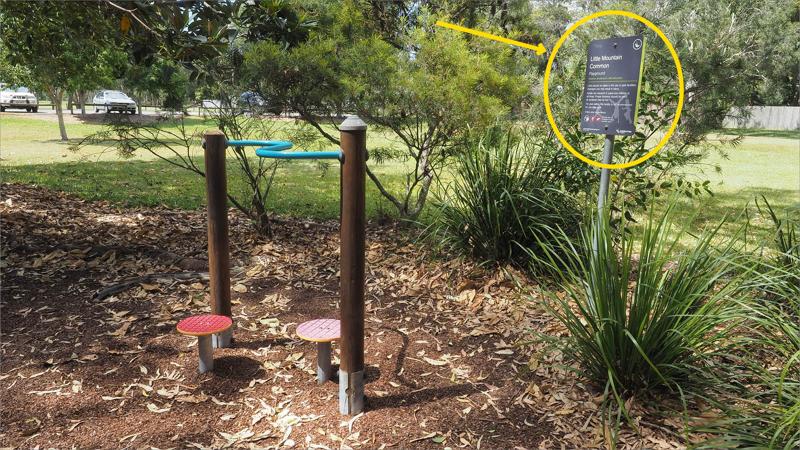
- An activity entry sign must be installed for compliance. It can be positioned at the entrance, start or most appropriate visible location, of a play space. Ensure the sign posts do not create collision points when using equipment.
- AS 4685.0:2017 outlines the minimum information that shall be provided on the sign, at play space facilities.
Play equipment user sign (manufacturer)
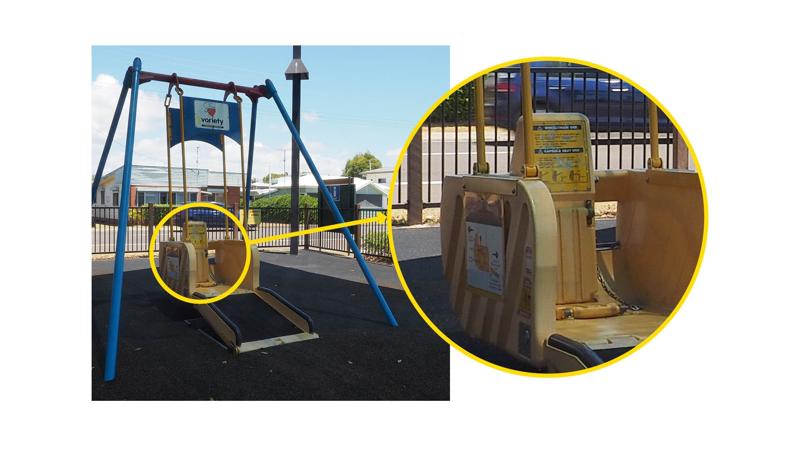
- Where required, user information signs must be provided by the space equipment manufacturer.
- As per AS 4685.0:2017, the playground manufacturer may be required to install user signage for specific equipment. This may include any information needed to guide carers regarding the use of the equipment (safety and operational information). This should be attached to the equipment. The use of pictograms is preferable so the message is understandable to all users.
Marking (manufacturer)
Marking will be provided by the play equipment manufacturer.
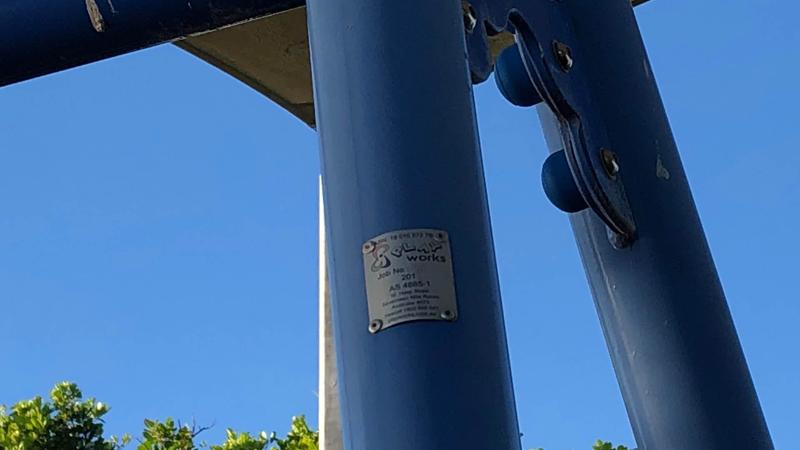
Manufacturer compliance plate
- AS 4685.1:2021 states that the equipment is to be marked legibly, permanently and in a position visible from ground level with at least the following:
- name and address of manufacturer or authorised representative
- equipment reference and year of manufacture
- number and date of standard.

Basic level mark
- AS 4685.1:2021 states that the equipment is to be marked legibly, permanently and in a position visible from ground level with at least the following:
- playground equipment shall be marked legibly and permanently with the basic level mark.
Regulatory signs
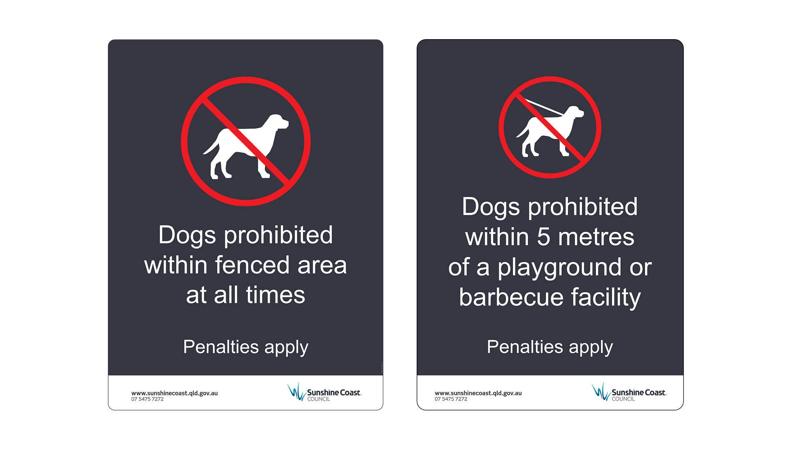
Additional dog prohibited signage is available for use, particularly for fenced play spaces (‘no dogs’ sign positioned on gate). For positioning guidance, see LIM Signage suite - Regulatory signs.
This component is currently in development