Dog exercise areas (DEAs)

Design
Requirements for the design, manufacture and installation of embellishments
Good design
See the following corporate documents to identify relevant project design requirements:
Sunshine Coast Planning Scheme regulates the way land, buildings and structures are used and developed on the Sunshine Coast.

Sunshine Coast Design contains 10 design principles that guide good project planning and design outcomes, that are appropriate for the Sunshine Coast.
The LIM provides further overarching design advice, refer:
- Introduction and Design Principles - e.g. sustainability, CPTED, accessibility
- Preliminaries - environmental management, tree sensitive design and site set up.
Embellishment requirements
- Universal access.
- Comfortable and suitable for the average person.
- See 'Positioning' and 'Equal access' sections for the corresponding LIM category.
- Made from materials that will be durable and can be suitably protected from exterior elements, such as salt spray and UV exposure.
- Robust and sturdy to withstand constant public use and be resistant to vandalism.
- Fixings are to be 316 marine grade stainless steel (unless otherwise stated).
- Tamper proof fixings should be used
- Graffiti protection coatings applied (where applicable)
- Fire retardant (where applicable).
- Warranties should be as listed below.
- Easily repairable or replaceable.
- Sourced locally and use standard fittings.
- Reputable suppliers should be used who keep a supply of stock parts on hand for the life of the product.
- Use sustainable materials, although sustainability needs to be considered over the lifetime of the embellishment.
- Install on paved, concrete or other hard surfaces (where applicable).
- Manufactured to engineering specifications (where applicable).
- See the 'Standards' section for the corresponding LIM category.
Warranty and asset life
Product/embellishment | Warranty (minimum) | Asset life (typical useful life) |
Dog drinking bowl | 1 year | 15 years 2 |
Dog agility equipment - manufactured | 10 years | Not available |
Dog agility equipment - natural (sandstone/rock) | N/A | 50 years 2 |
Source 2: Sunshine Coast Council Asset Management Plan 2017/18-2022/23 – Parks and Gardens (figure based on current data, subject to change).
Dog off leash areas (DOLAs)
Once the location of the DOLA has been decided based on the Environment and Liveability Strategy (ELS), the Recreation Parks Plan (RPP) and the Dog Exercise Area Regional Plan and Network Blueprint guidance, consider the appropriate embellishment level to suit the selected site.
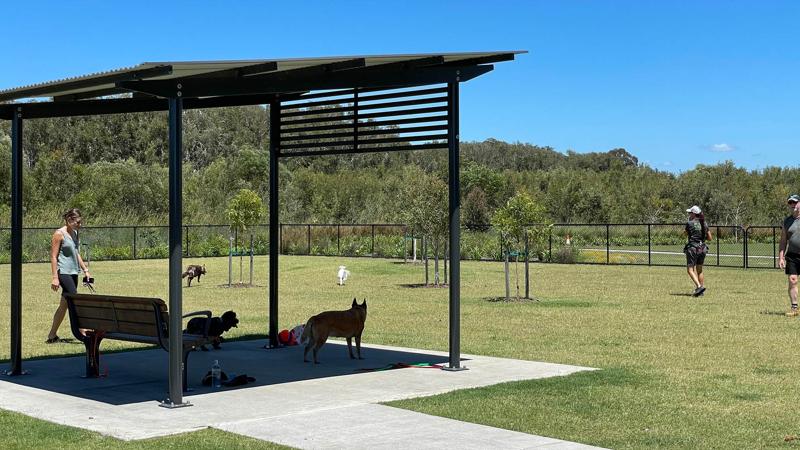
Overarching design considerations:
- If the site specific Multi Criteria Risk Assessment (MCRA) and Pairwise assessment is supportive, then the design development can proceed.
- The Dog Exercise Area Regional Plan and Network Blueprint outlines the desired standard of service for council-wide, district and local DOLA hierarchies. The plan outlines preferences for size, shape, free running space, activity areas and separated enclosures.
- There are two types of fenced DOLAs. One with a large legible space with clearly delineated, multiple activity areas, including smaller spaces for small dogs. Another with separated fenced areas, one for large dogs and one for smaller dogs.
- Each design should cater to attract the widest possible usage. Ensure the expected numbers of people who will participate in the activities can be accommodated.
Design of fences and gates
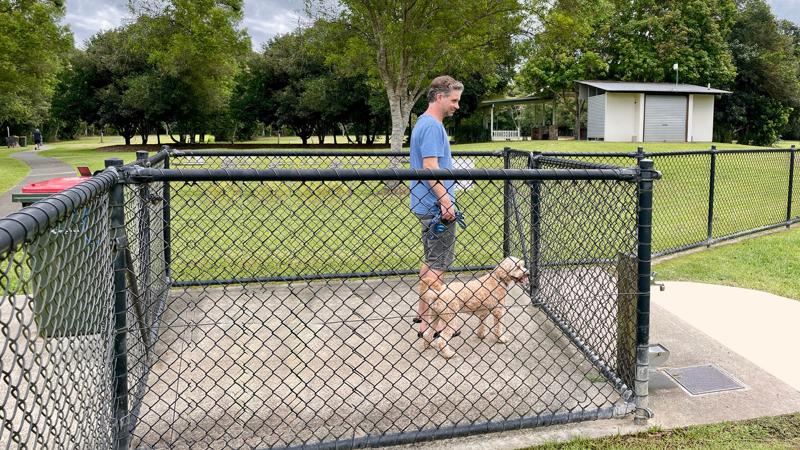
Fenced DOLA
The Dog Exercise Area Regional Plan and Network Blueprint provides further guidance on the configuration of fenced DOLAs according to their hierarchy. Further information can also be found in the LIM Dog exercise area - Site planning and LIM Dog exercise area - Positioning.
Design
This section should be read in conjunction with:
- LIM Fences and gates (dog off leash fencing section) which outlines relevant planning, application and detailed design.
- Consider creating a fenced area that does not include 90 degree angle corners, this decreases the opportunity for a dog to dig holes. Chamfered edges in fencing are to be large enough to avoid tight corners.
- Align fences away from trees to avoid root damage and the need for tree pruning.
- A site specific risk assessment should be conducted on the height of the fence to ensure it prevents dogs escaping. Options include a cranked fence or increasing the fence height.
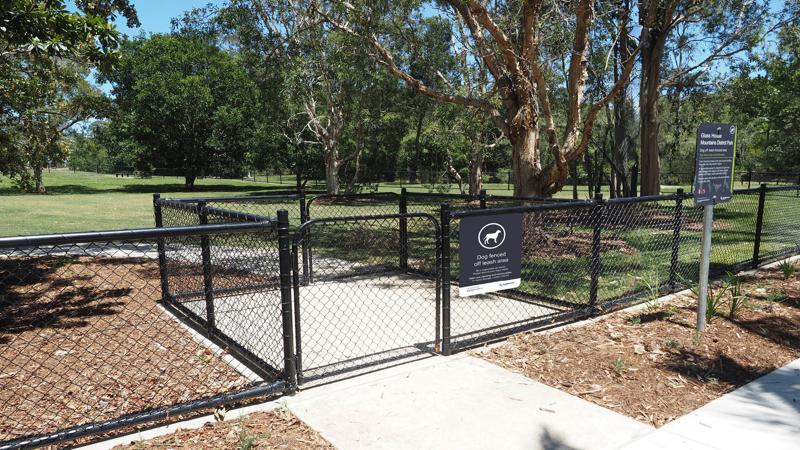
- Pedestrian access gates:
- Dual pedestrian access gate system, with connecting pedestrian pathway.
- Minimum two entrances for the smaller enclosures, larger enclosures will have additional entrances.
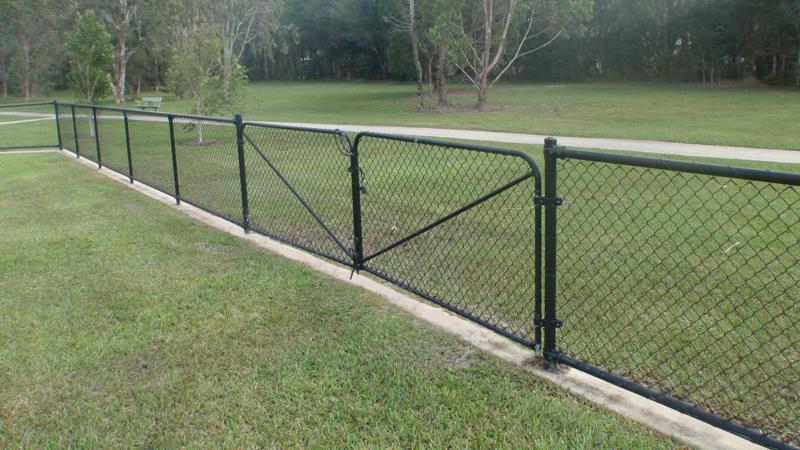
- Vehicle access gate:
- One vehicle access gate per enclosure is required for maintenance access.
- Concrete mowing strip/anti-digging strip must be reinforced to allow vehicle crossover.
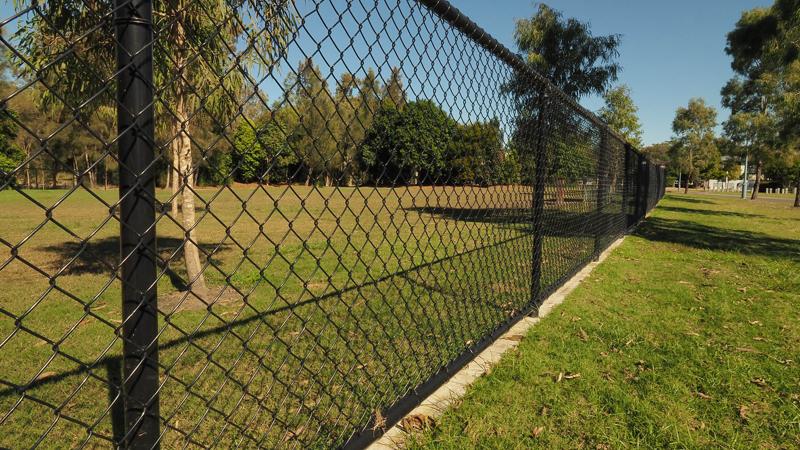
- Fence with concrete mowing/anti-digging strip:
- Fencing should be a minimum of 1.2 m high and have a maximum of 50 mm gap between bottom rail and concrete mowing/anti-digging strip.
- Concrete mowing/anti-digging strip should be used only when adjacent to risk areas including roads, highly trafficable areas or environmentally sensitive areas.
- If the concrete mowing/anti-digging strip is installed, it MUST be installed directly under fenceline to prevent dogs escaping.
Dog activity areas design
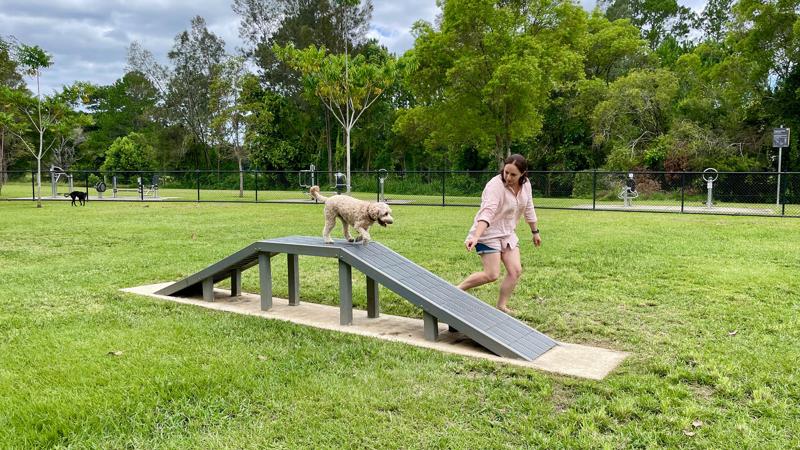
The Sunshine Coast Council Dog Exercise Area Regional Plan and Network Blueprint 2025-45 outlines the following dog activity areas within DOLAs:
- Dog run areas - large, turfed areas free of obstacles that maximise straight distances for dogs to run.
- Agility/training zones - areas with dedicated dog agility and training equipment.
- Rummaging zones - planted/landscaped areas for dogs to sniff and explore.
- Socialisation zones - embellished areas for dogs and owners to congregate for socialising.
- Chillout/quiet dog zones - secluded areas for dogs and owners to rest and relax.
- Digging pits - areas containing sand (or other suitable alternative) designated for dogs to dig.
- Water play areas - natural or constructed water bodies for dogs to swim and play.
- Dog sports zones - areas for kennel clubs/agility clubs to utilise for events.
Dog run
The main purpose of a dog off leash area (DOLA) is to provide a dog off-leash run/ball throw area, free from obstacles.
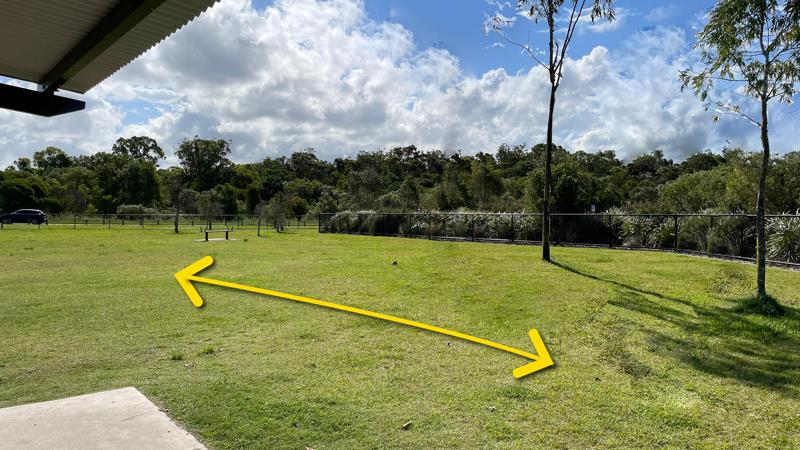
- For the safety of dogs, areas should be long linear grassed areas, free of obstacles (e.g. trees, dog agility equipment, taps) to prevent accidents.
- Trees, gardens and paths may be positioned to create segregation between areas, to distinguish zones for dog owners.
Table xx: Dog run lengths
Hierarchy | Dog run length (minimum) |
Council-wide DOLA | Dog free-running areas within large open spaces that maximise lengths of running areas |
District DOLA | Dog free-running area – maximise length (straight line)
|
Local DOLA (with separated small dog area) | Dog free-running area – maximise length (straight line)
|
Local DOLA (combined) | Dog free-running area – maximise length (straight line)
|
Agility/training zone
Agility/training zones provide owners with a separate facility to practice dog agility skills and obedience. They are intended to improve a dog's fitness, coordination, confidence, and obedience while strengthening the bond between a dog and its owner.
Agility equipment MUST be located away from other zones, particularly free running areas to prevent accidents.
- Agility equipment should provide a range of obstacle types such as tunnels, runs, balancing, weave poles, steps and jumps.
- Suppliers can advise on layout of the equipment suitable for training for competitions.
- Ensure that the equipment is safe for its intended use, whilst providing materials that requires minimal maintenance, is suitable for corrosive environments (coastal areas) and has low vandalism qualities.
- Ensure equipment does not have any entrapments issues i.e. no equipment with gaps, tyres, long tunnels or moving pieces.
- Ensure equipment is made from suitable materials and is well designed, i.e. equipment doesn’t hold water and materials provide grip.
- Equipment should be fixed in place/bolt down.
- Provide equipment at different heights suitable for small, medium and large size dogs. To avoid injury, equipment must NOT have any sharp edges or protrusions and must NOT be adjustable.
- Sandstone blocks - can be positioned to encourage multi-purpose activities e.g. tunnel, platform, steps, etc. They are also long lasting, require little maintenance and provide luminance contrast with turfed areas.
- Timber products are NOT acceptable due to on-going maintenance.
- Choose colours that suit the character of the area, either fun/vibrant or natural. Colours will also be dictated by the material choice. Consider that dogs see colours but they are neither as rich nor as many as seen by humans, and they cannot distinguish red from blue. Consider luminance contrast requirements when selecting colour.
Dog agility equipment is typically made from natural or manufactured materials.
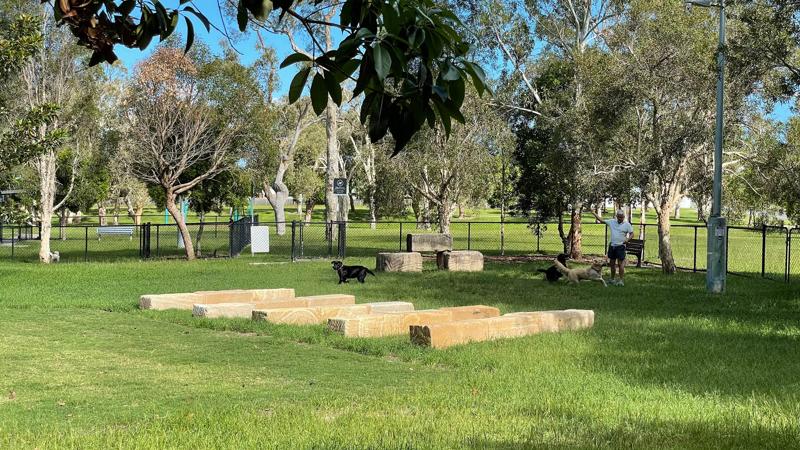
Natural elements such as sandstone blocks

Manufactured elements such as recycled plastic dog exercise equipment.
Rummaging zone
Dog rummaging areas may use low level mounds and planting features to create smaller spaces for dogs (particularly small dogs) to feel more secure. It also provides a separate area away from the run area, with less opportunity for dogs to collide.

- Dog rummaging areas may include natural features to provide dogs with a rummage area to explore. They can included natural items/materials such as mounds, trees, low planting and boulders may be considered.
- Ensure plants are carefully selected for suitability and to withstand heavy use.
- Low planting must not be toxic for dogs.
Socialisation zone
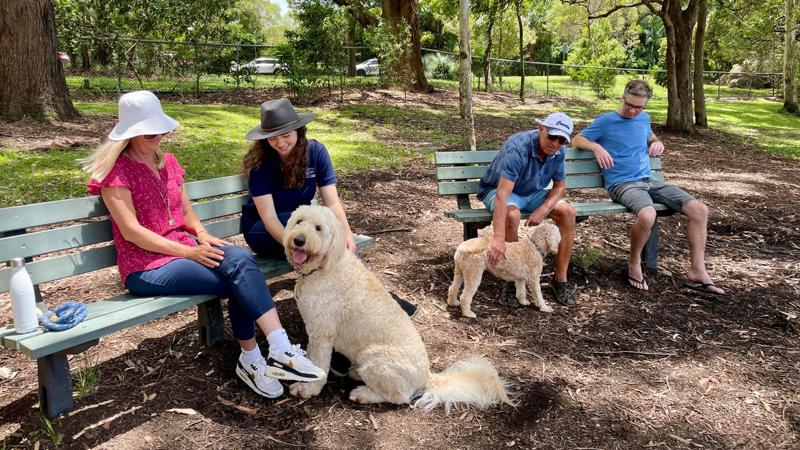
Dog socialisation areas are designated spaces designed to facilitate safe interaction and play between dogs. They also provide a gathering space for owners.
These areas should incorporate natural shade, shelters, or a combination of both. It is important they provide accessible seating options and connection pathways to all entrances.
Chill-out/quiet dog zone
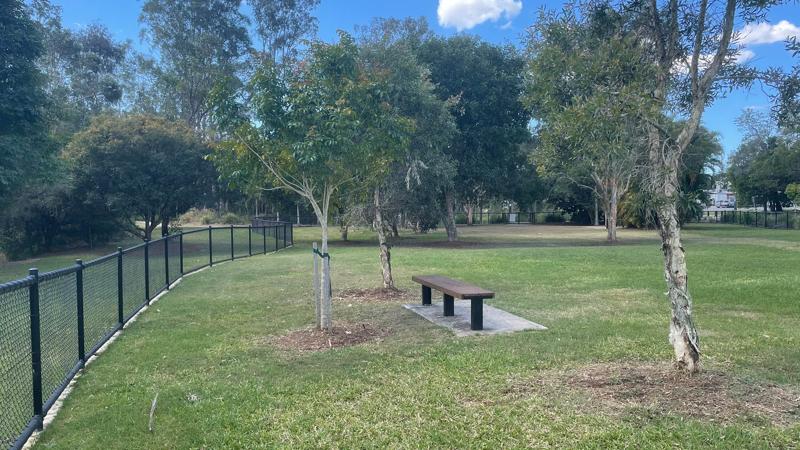
A chill-out/quiet dog zone is an area that is designated for dogs and owners to find a quieter area, should the dog run and socialisation areas be overcrowded.
This area should provide minimal embellishments but may include individual seating and landscaping.
Digging pit
Digging pits are an optional item for Council wide and District DOLAs. They can contain sand (or a suitable alternative) and must include concrete edging to maintain containment of materials. Drainage must be considered as part of the design. Custodian approval is required for the detailed design and installation of this facility.
Dog water play area
A dog water play area should be considered for a Council wide DOLAs. It is an optional item for District level DOLAs if the space is available.
Should a dog water play area be installed, there should also be a dog shower/washdown facility.
Custodian approval is required for the detailed design and installation of this facility.
Dog sports zone
Dog sports zones are a consideration in District and Council wide DOLAs where an area is provided for kennel clubs/agility clubs to utilise it for events. These areas require no additional embellishment, as the clubs provide their own equipment. Custodian approval is required.
Ancillary embellishments
Dog bag dispensers and waste bins
Dogs are prohibited within 5.0 m of a playground or barbecue facility. Do not install embellishments such as dog bag dispenser and dog drinking bowls within this exclusion zone.
Install dog bag dispensers on waste bins, with consideration of the following:
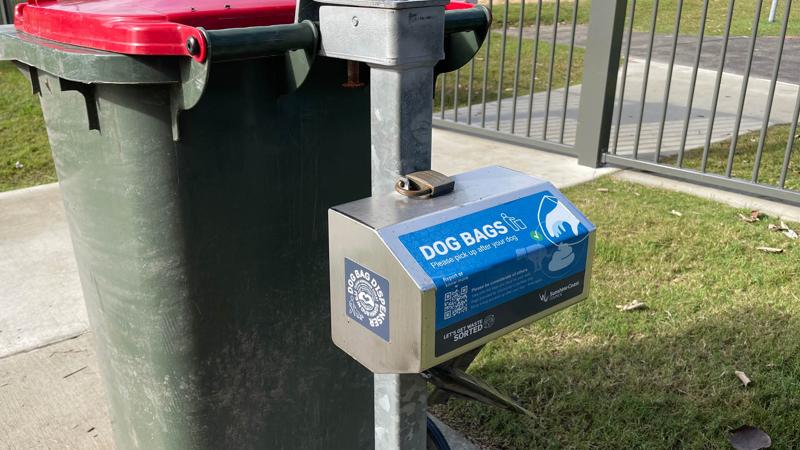
- The waste truck collection point must be no more than 80 m away from the bin and dog bag dispenser.
- For fenced DOLAs, place waste bins and dog bag dispensers outside the primary entry gate to enable contractors to empty them without entering the area. Additional dog bag dispensers should be located at each of the other entrances.
- For unfenced DOLAs, locate dog bag dispensers at entry points.
- All dog bag dispensers are required to have a QR code to direct owners to dog off leash areas (DOLAs) - supplied by Council Customer Response.
See the LIM Bins for further guidance.
Dog bowl and tap
Dogs are prohibited within 5.0 m of a playground or barbecue facility. Do not install embellishments such as dog bag dispenser and dog drinking bowls within this exclusion zone.
Hinged dog drinking bowls are to be attached to a public access tap (push button), with consideration of the following:
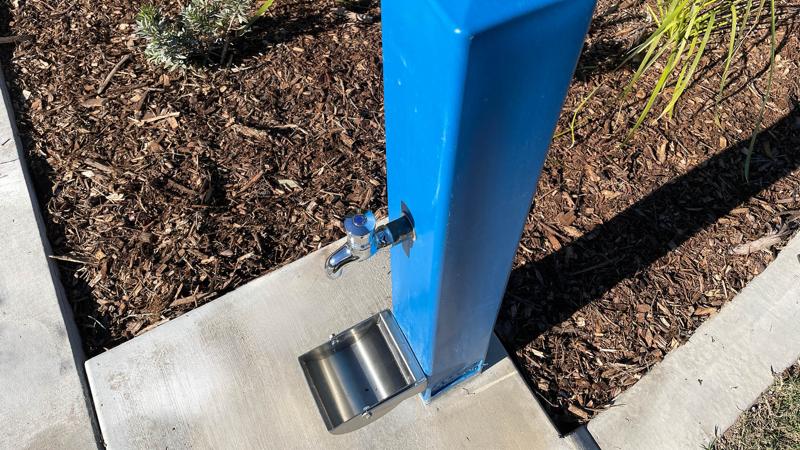
- Drainage MUST be provided (splash pad preferred).
- Dog bowls should not be installed on drinking fountains (install on tap instead). Dog bowl with swivel to empty, to prevent dirty water build up and allow dog owners to fill with fresh water.
- Drinking fountains must NOT be installed inside a fenced DOLA for hygiene reasons.
See the following for further guidance:
- LIM Dog exercise areas (DEAs) – Technical drawings
- LIM Taps for tap design and drainage.
Seats
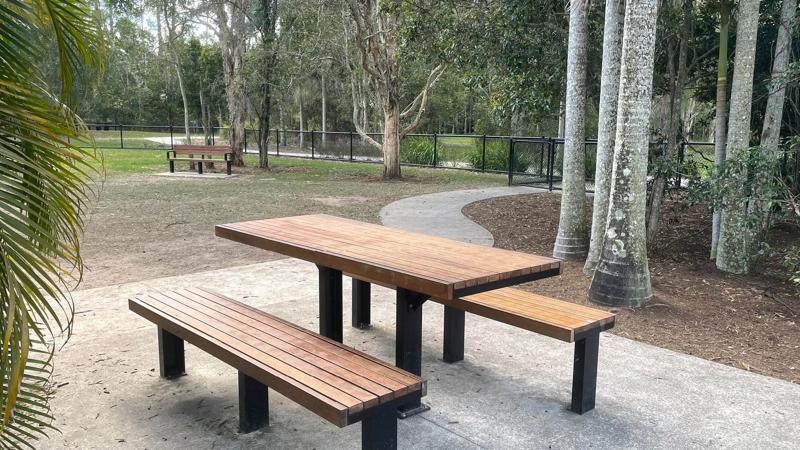
Provide individual seats as well as seating nodes, for dog handler social interaction.
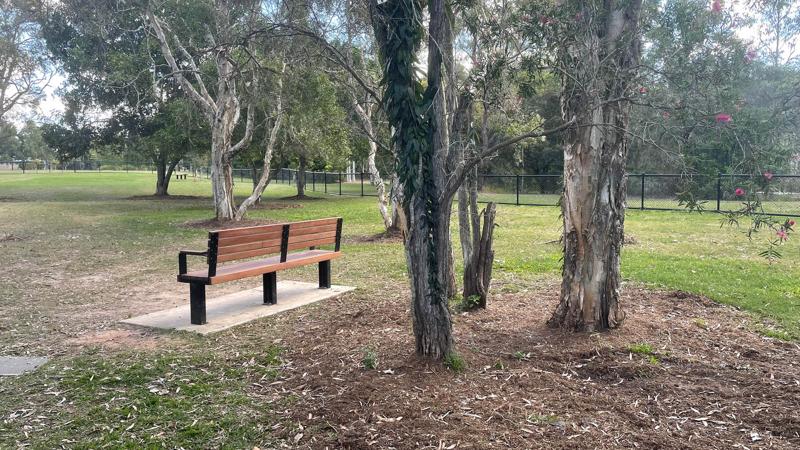
- Locate in shaded areas, at strategic points to allow owners to keep sight of their dogs. Picnic tables and chairs are NOT preferred in fenced DOLAs (due to hygiene and supervision requirements).
- In fenced DOLAs, locate seating and other embellishments a minimum of 2.0 m away from fences to avoid dogs using them to escape the off leash fenced park.
See LIM Seats for further guidance.
Landscape planting
- Provide good sight lines (using CPTED principles) to allow dog owners to assess whether the park is crowded and they need to reschedule, or if they are in the park, to see whether there is trouble and they need to exit. Provide clear sight lines between entry and exits.
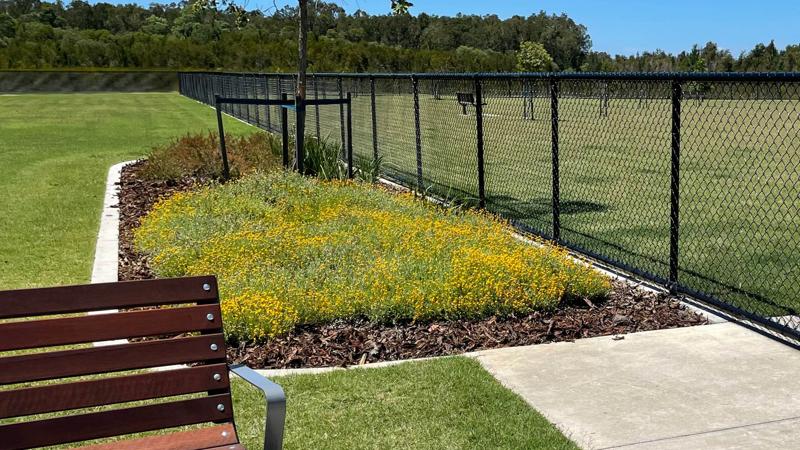
- Buffer planting (low level planting and trees)
- Should be installed along the fenceline between small/large dog areas - to prevent dogs running along the fenceline.
- Should be installed at potential conflict areas, such as carpark/DOLA entrances.
- Can be used to delineate different areas/uses.
- Ensure buffer planting meets CPTED guidelines and doesn't allow dogs to jump over the fence.
- Natural shade is preferred. Seek to retain existing vegetation where possible.
- Provide shade over seating and throughout the area, although the run area needs sunlight to reduce bare earth patches and be clear of obstacles.
- Avoid plants with sharp cutting edges, thorns and spikes, or plants that may be poisonous for dogs. This also includes exterior buffer planting.
- Plant species selected will need to be robust to withstand trampling and dog waste.
- Align fences away from trees to avoid root damage and the need for tree pruning.
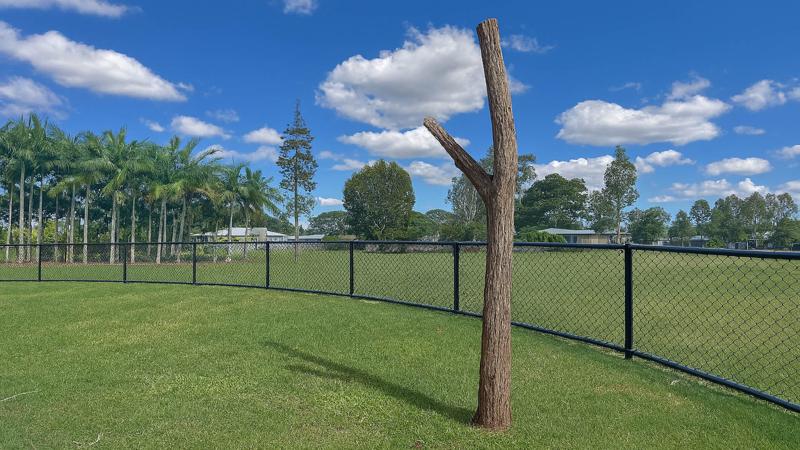
- DOLAs located within or near koala habitat areas are to include koala poles, particularly along fence lines for accessibility.
- Planted vegetation (locations and species choices) should ensure vegetation does not allow wildlife entry into the DOLA.
See LIM Planting (landscape) for further guidance.
Shelters
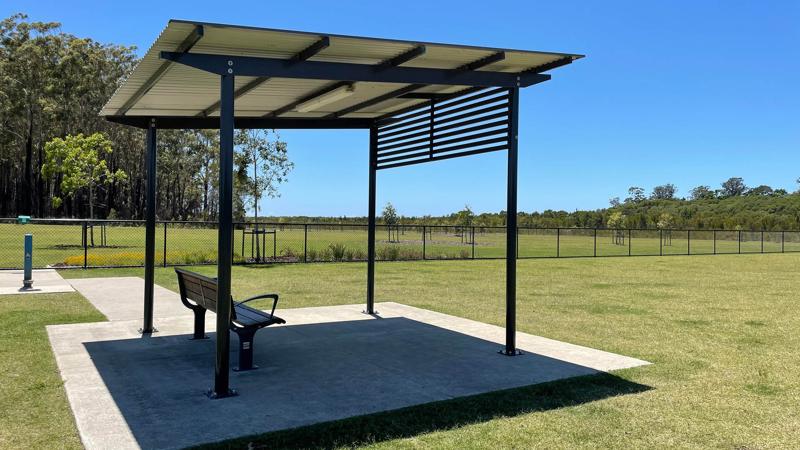
- Natural shade is preferred
- Shelters installed in dog exercise areas must use 316 or 304 marine grade stainless steel post anchors. Galvanised steel is not the preferred material for anchors at the base of post legs, as dog urine has been found to corrode the galvanised steel.
See LIM Shelters for further guidance.
Pathways
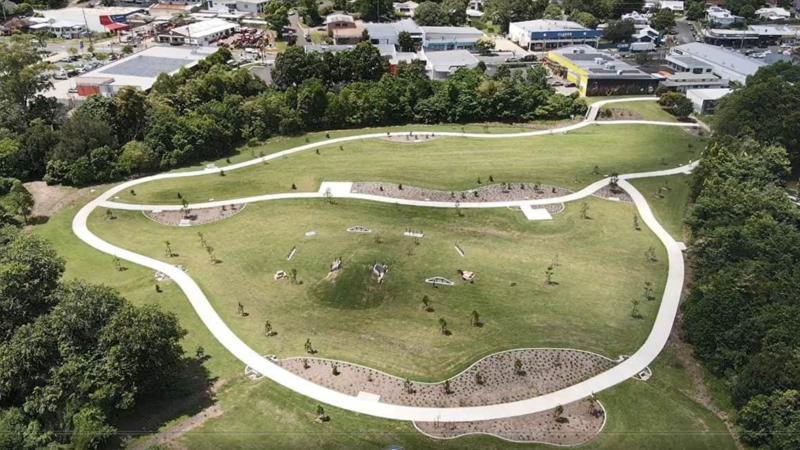
Pathways must provide a continuous accessible path of travel (CAPT) to a DOLA, as defined in AS 1428 Design for access and mobility. This enables equal access for all users.
- Consider that a 1.8 m wide pathway is required for two wheelchairs to pass each other.
See LIM Paths, trails and tracks for further guidance.
Internal paths
In fenced and unfenced DOLAs, provide entry/exit paths with clear lines of sight to allow users to identify exit paths in case of conflict.
- In unfenced dog off leash areas DOLAs consider:
- separating areas by use of pathways, with low level planting, to reduce conflict with other uses in the park.
- use of a large circuit path for on leash exercise.
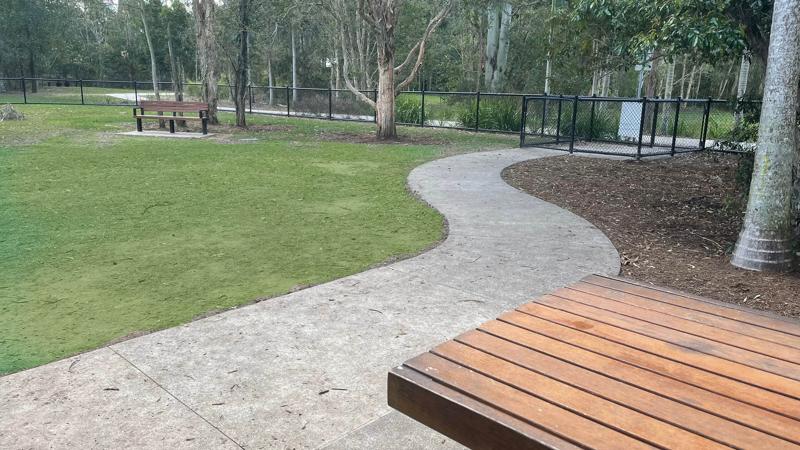
- In fenced DOLAs consider:
- avoid locating footpaths along fencelines
- providing a continuous accessible path of travel (CAPT) from the car park all the way through to the DOLA fenced facility, connecting primary and secondary entry/exit gate systems and beyond to external path networks.
Connection paths
Provide connection paths from both the primary and secondary entry/exit to provide equal access to external networks.
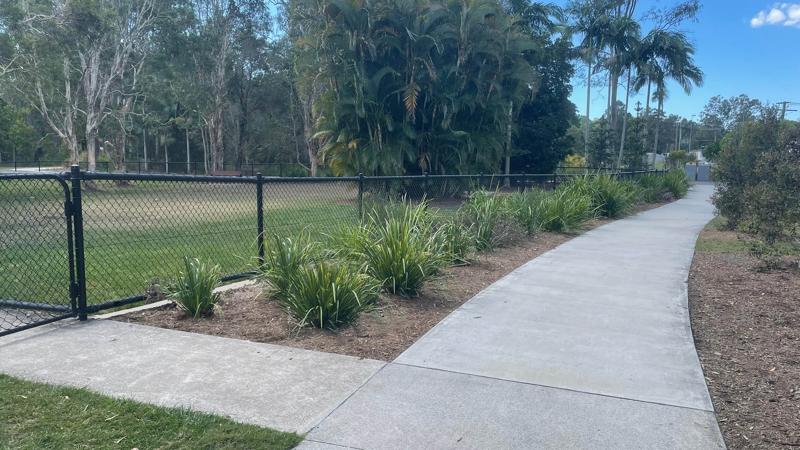
- provide a connection path from the car park to the DOLA facility.
- consider connecting park pathways to existing pedestrian and cycle networks.
- consider connecting park pathways to shopping and public transport hubs.
Parking
- Locate on-site parking (where required) as close as possible to the DOLA park entrance (away from cul de sacs, local streets and adjacent residents).
- Carpark and pathway networks must consider user conflicts. Dogs are prohibited within 5.0 m of play equipment and barbecue facilities (e.g. ensure connecting pathway avoids passing through these areas).
Site drainage
- Site to be well drained and take account of natural drainage lines and overland flows to prevent ponding.
- Positioning of fences and mowing strips/anti-digging strips must take into account natural drainage lines and overland flows to prevent trapping of water and ponding.
- Include requirement for subsurface drainage.
See LIM Landscape drainage for further guidance.
Lighting (optional)
Typically lighting is not provided in DOLAs. However is some cases there may be a need to extend the use of the park in the evenings in winter. To be considered on a site by site basis.
Where lighting is installed, ensure the following:
- must use a timer to ensure light turns off at allocated times
- must be mounted onto a pole
- consider using solar to power light.
- consider location of pole to ensure it does not interfere with park activities or create an obstacle.
See LIM Electrical for further guidance.
Signage and wayfinding
Note: This section should be read in conjunction with LIM Signage – for a complete suite of suitable signage, from the car park to activity area.
Approvals: Must liaise with Council (Customer Response), Council (Parks and Gardens)/Council (Environmental Operations), to ensure correct choice of sign template, content and placement location.
See LIM Signage suite.
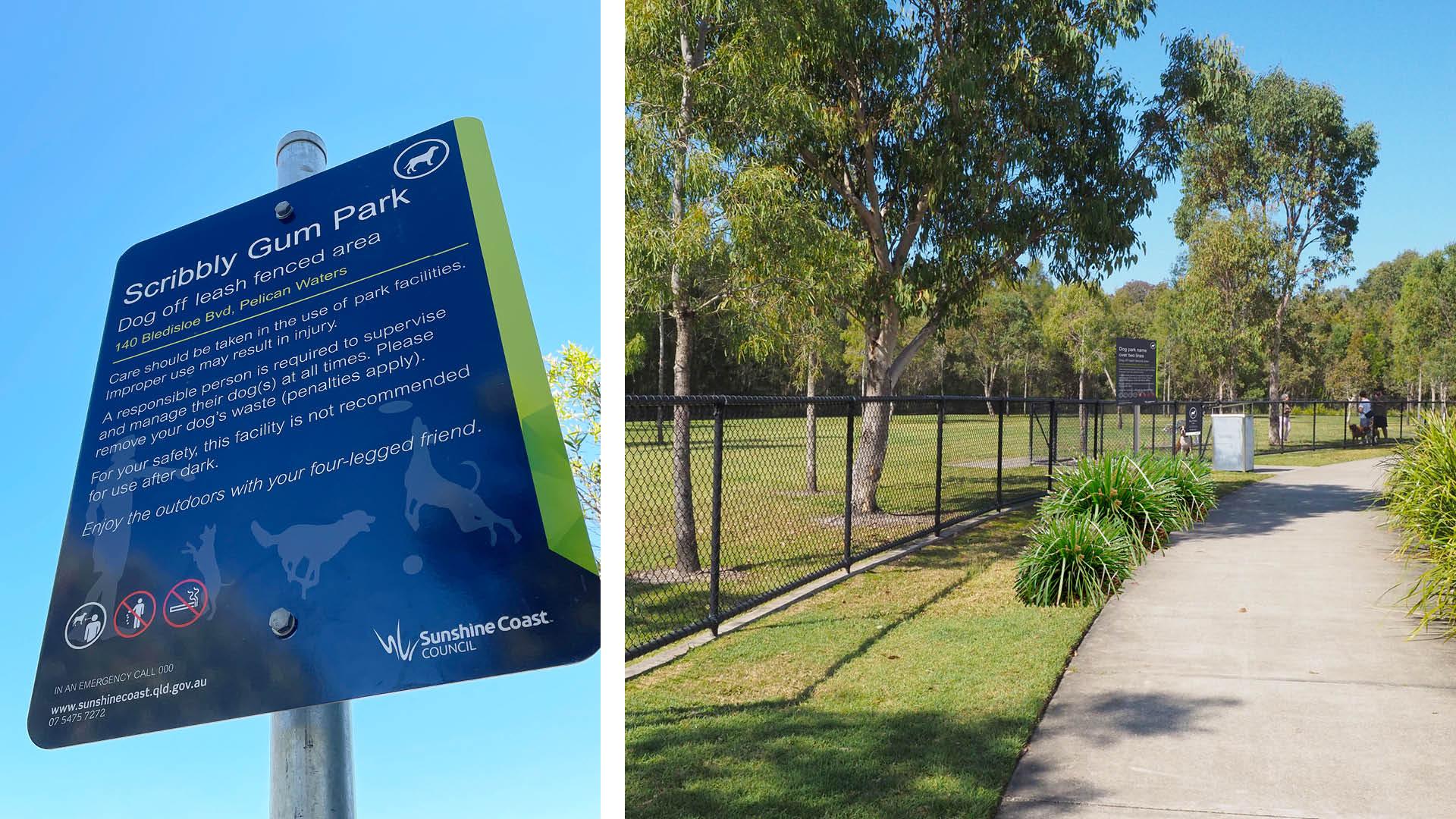
Park activity entry sign
- A park activity entry sign is mandatory.
- Install at the entrance, displaying the name and address of the park, regulatory guidance and basic code of conduct (etiquette) expected when using the facility.
- The sign must be installed on a post in a garden bed and close to the entrance of the facility.
See LIM Signage - Activity entry signs - Park - Dog off leash fenced area for further guidance.
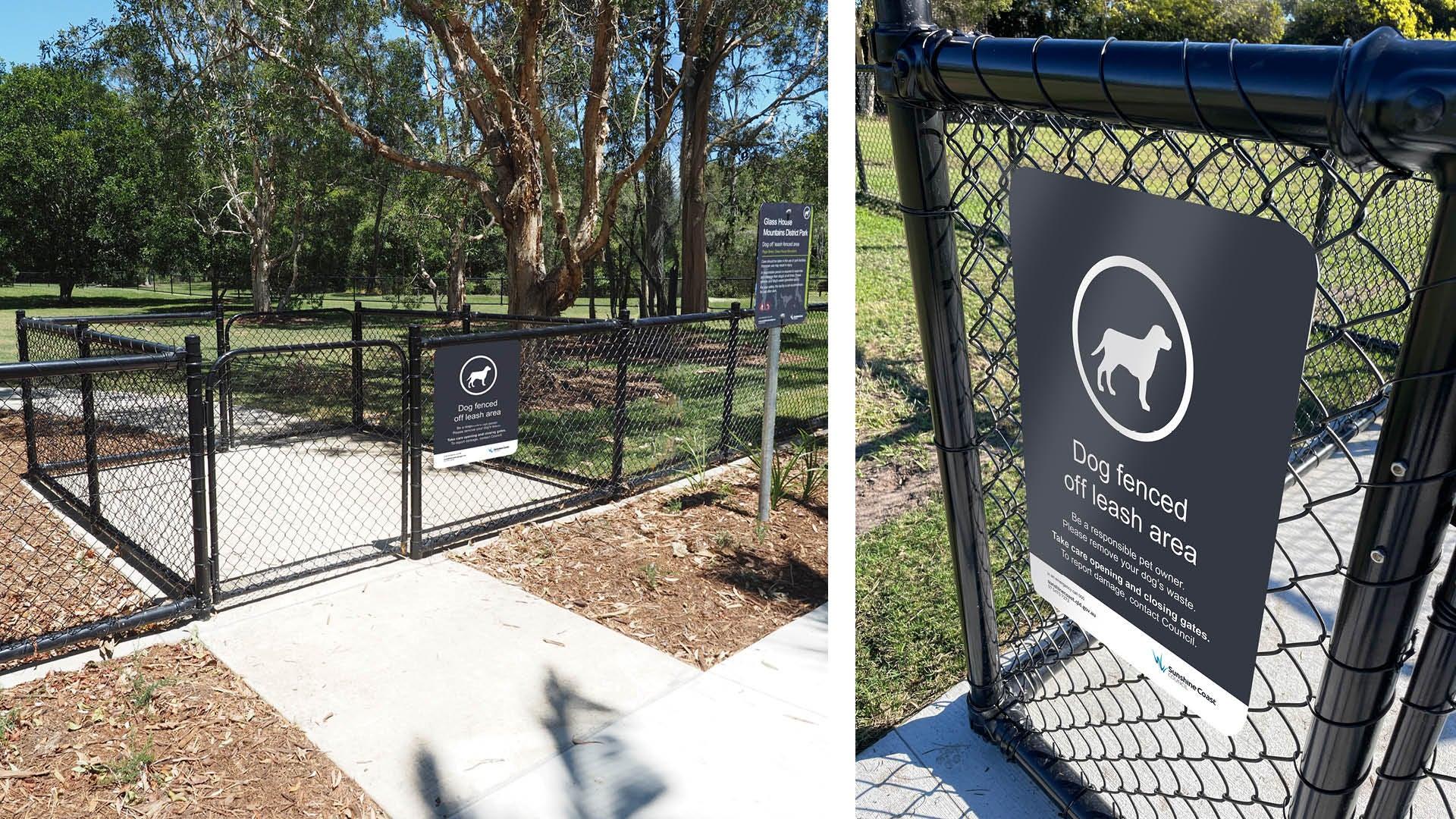
Regulatory signage - Fenced off leash areas
Mandatory requirement at all entrance and exit gates of designated fenced off leash area indicating the use of the facility, such as Large dog off leash area. The sign must be displayed on the fence and located to provide no foot holds. Sign must be installed on the fence beside the pedestrian gate.
See LIM Signage - Regulatory signs - Dog use - Fenced dog off leash area for further guidance.
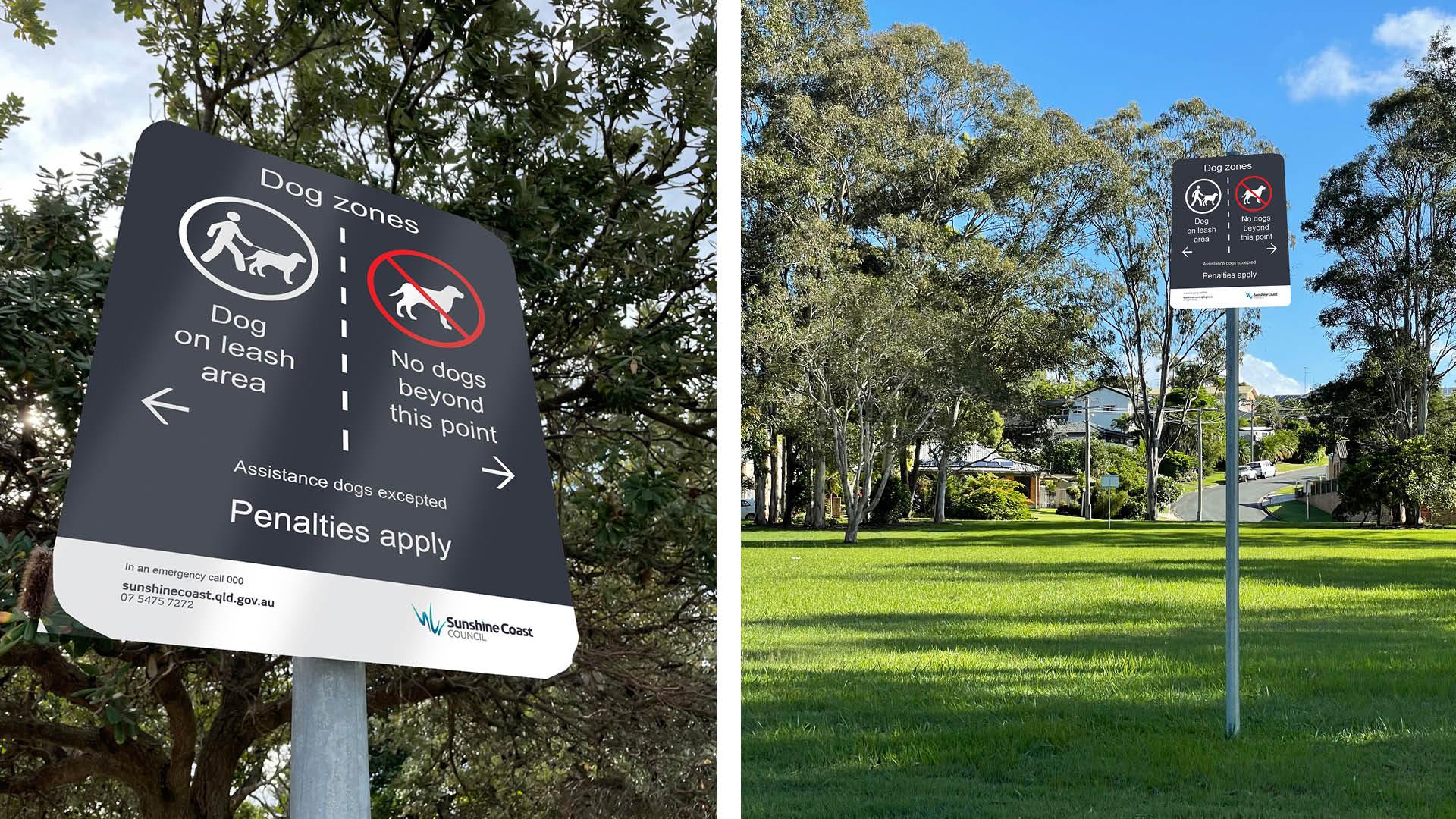
Regulatory signage - Dog open spaces
- Mandatory requirement at all major entrance and exit points. Paths can be used to clarify entry and exit points.
- Sign displays the fact that is an off-leash area and any time restrictions where applicable.
- Unfenced DOLA signage is to be located at the point where an unfenced park becomes “off leash” to indicate its extent.
- Signs should be installed on a post in a garden bed (preferred) or in an open space clear of obstacles.
See LIM Signage - Regulatory signs - Dog use - Dog open space for further guidance.
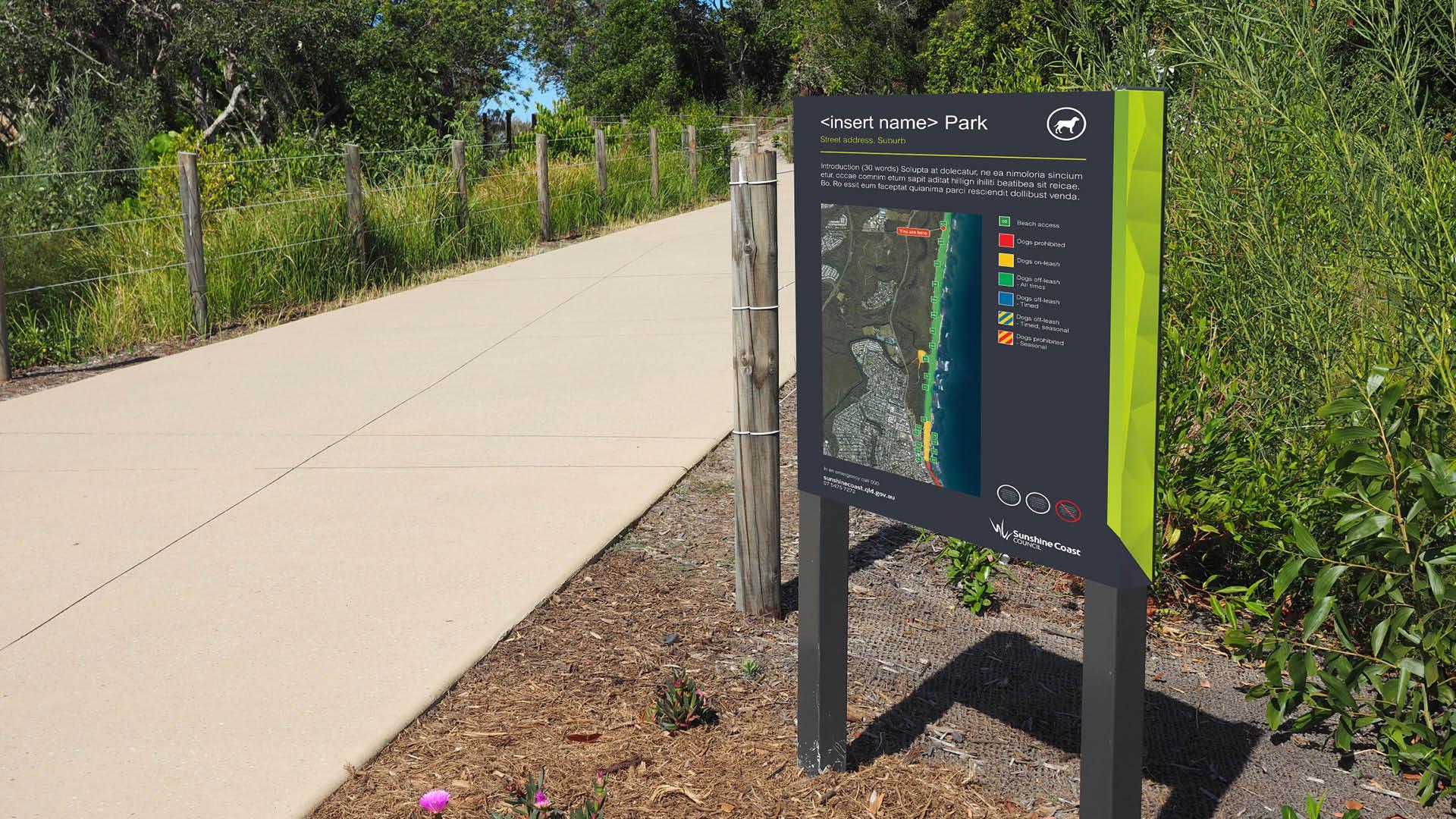
Map/information sign (Small) – dog zone map
Optional requirement at entry points or where there are changes in zoning or at locations where there may be multiple zones. The sign should be installed in a garden bed where possible.
The sign may display, by way of a map, areas/zones to indicate the following:
- designated on leash areas
- off leash areas
- prohibited areas
- time zones
- beach on/off leash areas.
- regulatory information must be included.
See LIM Signage - Map/information signs (Small - portrait or landscape) for further guidance.
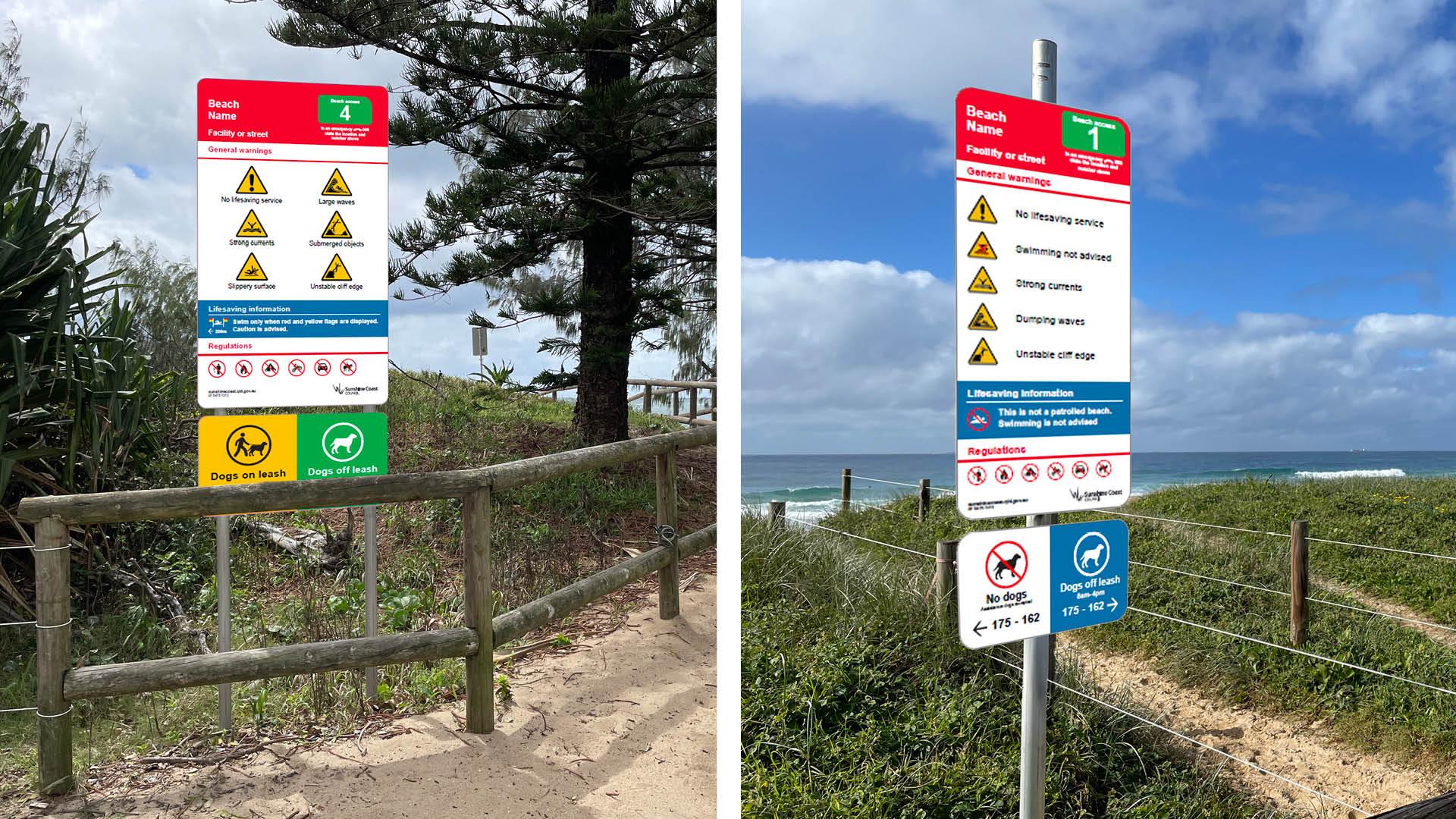
Regulatory signage - Beach access
Mandatory requirement at all beach accessways. Regulatory signs are typically located at the entry of the beach foreshore dunal pathway, as well as at the top of the sand dune prior to the entry onto the beach and at the nearest major parking area or other entrance point.
They also provide information about regulations relating to dogs - on and off leash.
See LIM Signage - Regulatory sign - Beach access for further guidance.
This component is currently in development