Beach infrastructure

Design
Requirements for the design, manufacture and installation of embellishments
Good design
See the following corporate documents to identify relevant project design requirements:
Sunshine Coast Planning Scheme regulates the way land, buildings and structures are used and developed on the Sunshine Coast.

Sunshine Coast Design contains 10 design principles that guide good project planning and design outcomes, that are appropriate for the Sunshine Coast.
The LIM provides further overarching design advice, refer:
- Introduction and Design Principles - e.g. sustainability, CPTED, accessibility
- Preliminaries - environmental management, tree sensitive design and site set up.
Embellishment requirements
- Universal access.
- Comfortable and suitable for the average person.
- See 'Positioning' and 'Equal access' sections for the corresponding LIM category.
- Made from materials that will be durable and can be suitably protected from exterior elements, such as salt spray and UV exposure.
- Robust and sturdy to withstand constant public use and be resistant to vandalism.
- Fixings are to be 316 marine grade stainless steel (unless otherwise stated).
- Tamper proof fixings should be used
- Graffiti protection coatings applied (where applicable)
- Fire retardant (where applicable).
- Warranties should be as listed below.
- Easily repairable or replaceable.
- Sourced locally and use standard fittings.
- Reputable suppliers should be used who keep a supply of stock parts on hand for the life of the product.
- Use sustainable materials, although sustainability needs to be considered over the lifetime of the embellishment.
- Install on paved, concrete or other hard surfaces (where applicable).
- Manufactured to engineering specifications (where applicable).
- See the 'Standards' section for the corresponding LIM category.
Warranty and asset life
Product/embellishment | Warranty (minimum) | Asset life (typical useful life) |
Knitted cloth (shade cloth) | 10 years | 10 years 2 |
Board and chain (timber) | N/A | 25 years 3 |
Treated pine (timber) | 15 years | 25 years |
Treated hardwood timber | 25 years | 25 years |
Waratah Stocksafe - T Longlife - coated mesh (or equivalent) | 10 years | Not available |
Waratah Tyeasy longlife - coated strand (or equivalent) | 10 years | Not available |
Bayco sighter wire - plastic filament (or equivalent) | 10 years | Not available |
Trackpad (or equivalent) | 1 year | Not available |
Source 2: Sunshine Coast Council Asset Management Plan 2017/18-2022/23 – Parks and Gardens (figure based on current data, subject to change).
Source 3: Sunshine Coast Council Asset Management Plan – Coastal and Environment Infrastructure (figure based on current data, subject to change)
Beach infrastructure
Once the location of the beach infrastructure has been decided, based on the Environment and Liveability Strategy (ELS) and Recreation Parks Plan (RPP) guidance, consider the appropriate embellishment level to suit the selected site.
Overarching design considerations:
Beach infrastructure enhances safe recreational use and enjoyment of coastal areas. The aim is to protect the local coastal environment, flora and fauna, and also to consider global issues such as climate change.
Select materials which are designed for exposed coastal, high energy environments. Also consider the modelled local impacts of climate change.
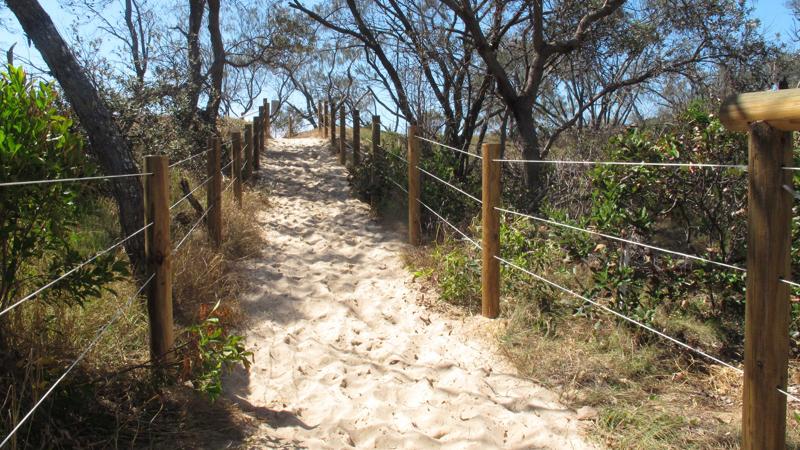
Create an access which directs recreational users to beachside areas. The shifting nature of wind blown sand requires consideration and careful fencing/surfacing selection. Consider wildlife movement and nesting patterns.
Design of beach infrastructure
Turtles
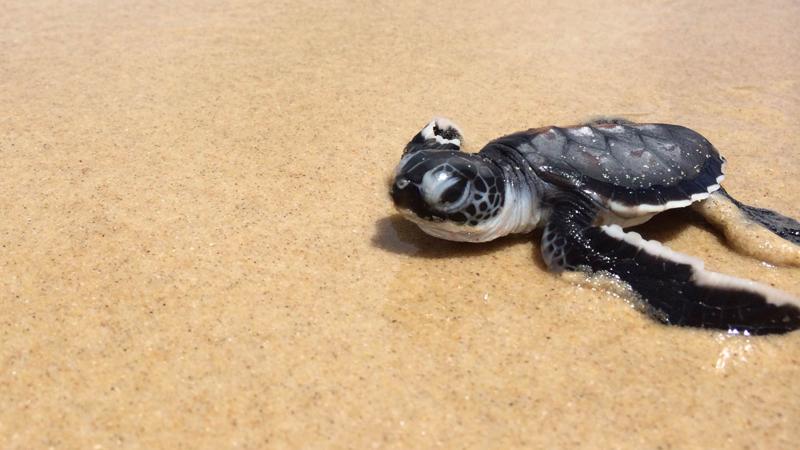
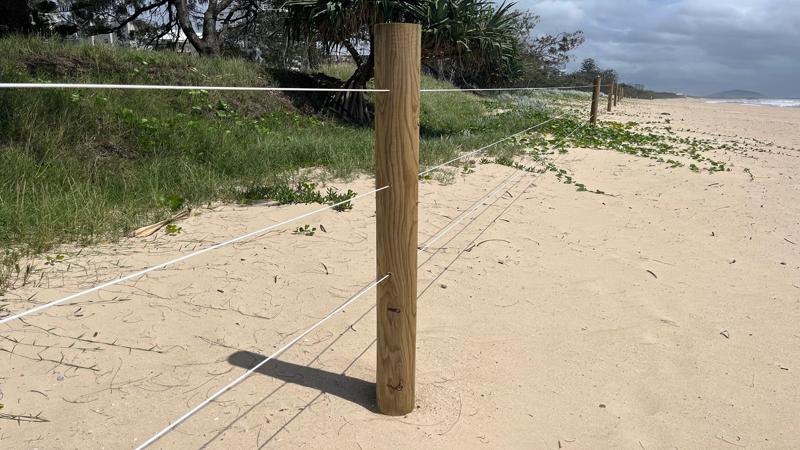
Beach infrastructure must be installed so that it does not interfere with a potential turtle path in known turtle nesting areas.
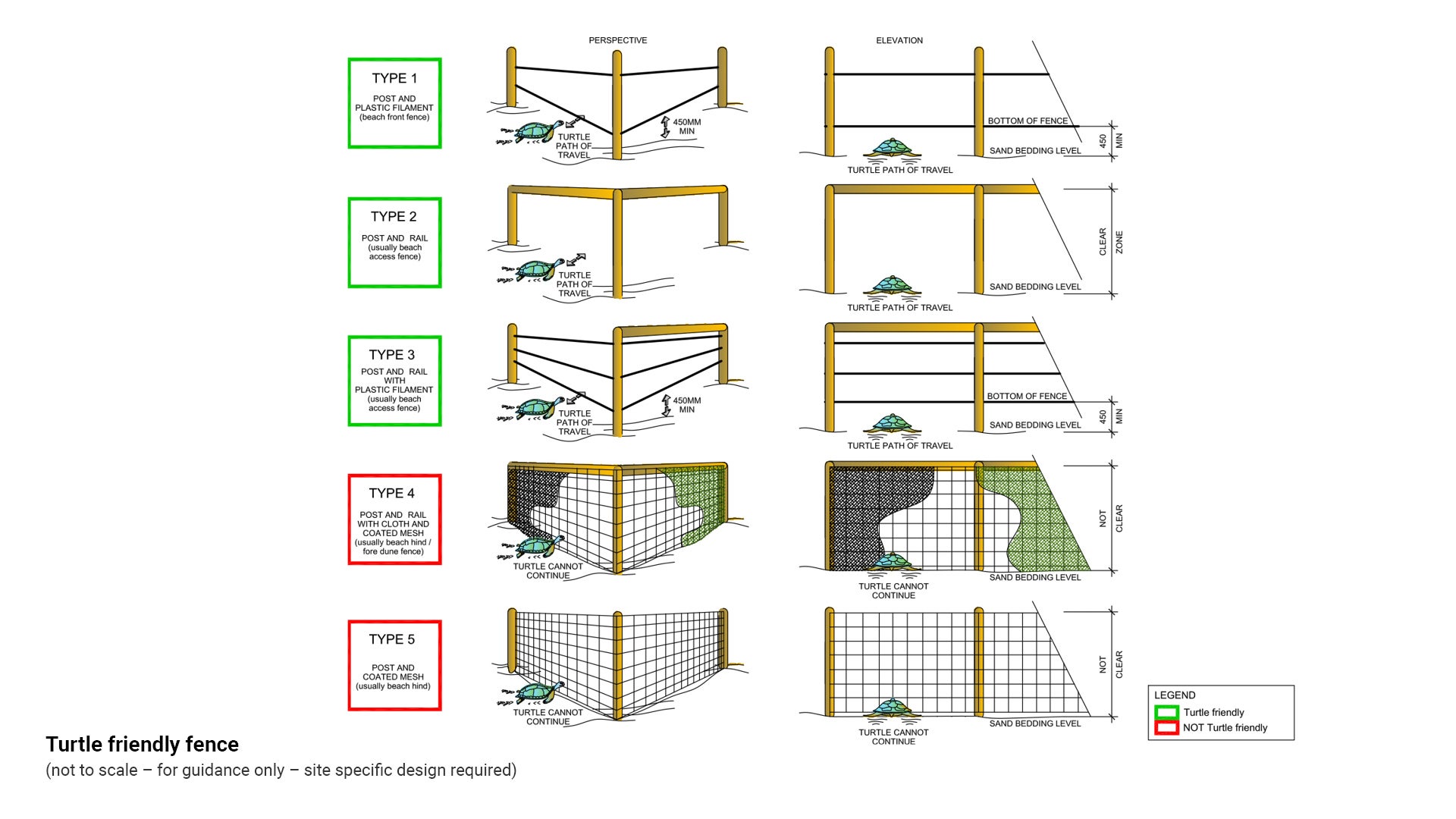
- Beach front and beach access fences must be turtle friendly – 450 mm gap between bottom of fence and sand bed.
See the following for further guidance:
- Figure 3: Coastal fence zones, fence types, turtle movement and nesting zones
- Figure 4: Turtle friendly fence.
See the following LIM categories for further guidance on designing for marine turtles:
- LIM Electrical - light management for marine turtles (Appendix D)
- LIM Environmental management of fauna and flora - local conservation species management of marine turtles.
Beach fence design
Sand dunes and coastal vegetation play an important part in protecting the coastline from erosion. Complex plant communities develop in areas protected from salt water inundation, sea spray and strong winds.
The dunal areas protect the land from salt water intrusion and buffer against damage during storms and wind erosion.
Vegetation loss or damage to the dunes can result in the area being less able to withstand attack from waves and high tides. Vegetation also ‘catches’ windblown sand and helps prevent wind erosion, which builds up the dunes.
Protection of dune vegetation is therefore vital to avoid diminished sand dunes, erosion and loss of coastal native flora.
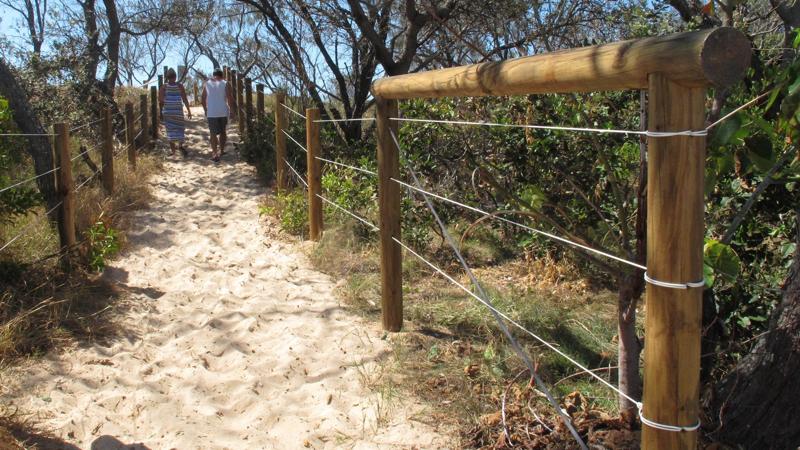
- Beach fences can control access and can be designed to assist in building dunes.
- The alignment relative to prevailing winds must be considered when positioning a beach fence.
- The installation and maintenance of beach fences can be expensive and should only be considered where necessary.
- The following low cost measures should be considered (to control access) before installing a beach fence:
- signs
- bollards
- vegetation barriers.
- The number of access points and paths/trails to a beach usually reflects the needs of the public.
- Access should be planned to protect the surrounding environment (usually with the aid of fencing) whilst providing a safe path/trail for the public.
- Beach fencing should have the following characteristics/objectives:
- low wind resistance so that sand will not build up against the fence OR sand catching fence which provides wind resistance to control sand movement.
- highly visible materials appropriate for the requirements of the location. 30% luminance contrast is recommended – vegetation behind a fence helps create luminance contrast between the fence and the background it is viewed against (mandatory AS requirements).
- to protect turtle sensitive areas, fences or boarder screens must be dog proof.
- low maintenance and low cost materials where possible.
- durable against the harsh elements of the beach environment.
See LIM Handrails and balustrades for further guidance.
Removal of beach fences
The removal of fences may occur for the following reasons, but is not limited to situations where:
- The beach fence is no longer serving its intended purpose such as, coastal vegetation has re-established and is no longer in need of protection
- A beach fence may have become buried by sand during a storm event.
An old beach fence requires repair or replacement.
- A beach fence or part of a fence has been damaged during a storm event.
- Removing a beach fence requires work health and safety considerations such as:
- Personal protective equipment (PPE) must be worn.
- Storage and disposal of construction materials must be in compliance with Council Work Health and Safety Procedure Demolition Work Management.
- CCA treated timbers should be disposed of at an approved landfill site.
When removing/relocating any fence material the following must occur:
- vegetation is to be protected at all times:
- during the removal and replacement of existing fences.
- during the installation of new fences.
- during maintenance operations for a fence.
For further guidance regarding dune vegetation protection techniques and removal/replacement of fence, consult Council Senior Natural Areas Operations Officer – Environmental Operations.
Note: Some areas may be controlled by SCC Parks and Gardens, consult here where applicable.
Coastal fence zones
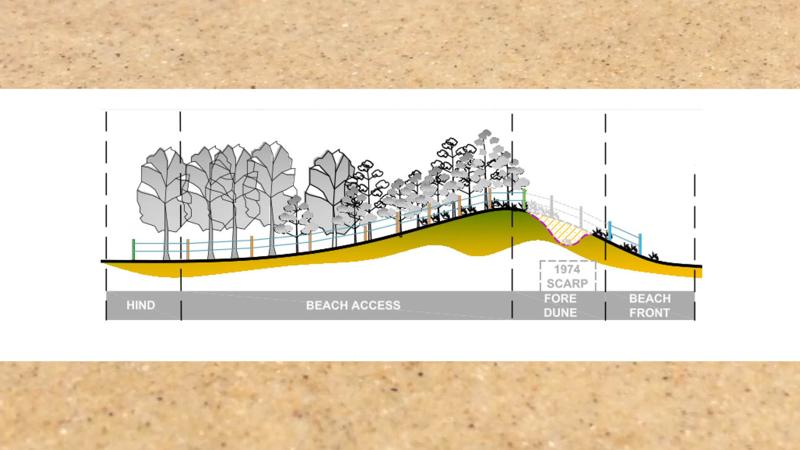
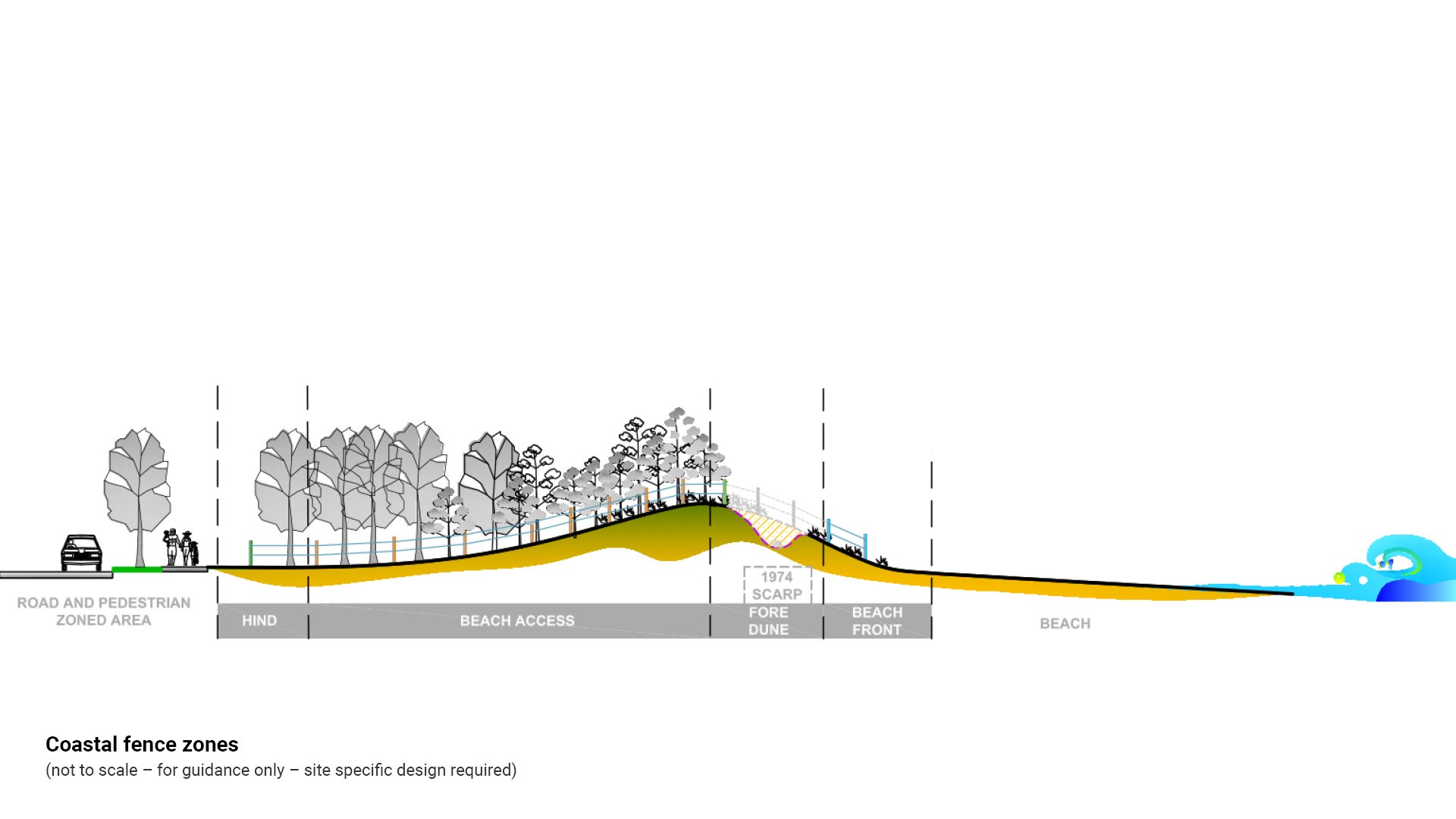
The following categories describe the zones which require specialist fences in coastal zones:
- Hind zone – separates dunal vegetation from pedestrian and road zones, and is also used to separate recreational parks from foreshore zones.
- Beach access zone – runs along each side of the beach access.
- Fore dune zone – the sand blow fence sits behind the beach front fence, in the fore dune zone. The following natural scarp may occur in this fence zone:
- 1974 erosion scarp zone – this area of the dune is where extreme erosion has historically occurred. This may vary from beach to beach. Dune fencing is restricted in this zone. The most recent storm erosion (recorded by Council) must be also considered. Contact Council Coastal Constructed Water and Planning before ANY construction is considered for this zone.
- Beach front zone – the area that fronts onto the beach.
See the following figures for further guidance:
- Figure 2: Coastal fence zones
- Table 2: Fence construction type and key consideration.
Hind fence
Hind fences are permanent structures that are constructed at the back of beaches where sand intersects with pedestrian coastal paths, parks, open spaces and car parks/roads. They help reduce/control pedestrian movement and the impacts on coastal vegetation. The shade cloth component of the fence operates as a sand catching device reducing sand build up on pathways and open spaces.
Beach access fence
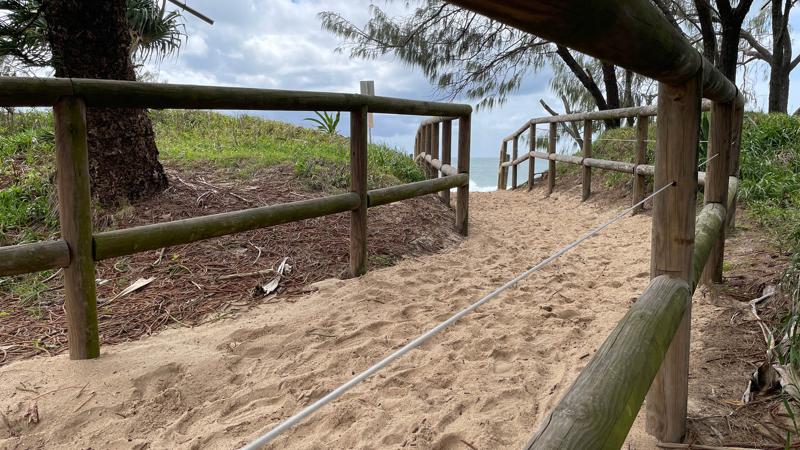
Beach access fences are a permanent structure which provides clear direction for pedestrians to access the beach. The fence also restricts pedestrians from accessing sensitive dune areas. Beach access fencing close to the front dune must be turtle friendly in known turtle areas.
Sand blow fence (constructed in the fore dune zone)
Sand blow fences are constructed in the fore dune (only installed in highly dynamic beach front areas – require a high level of maintenance). The fence is installed to control sand movement, helping maintain a suitable pathway for pedestrian access. Installing a sand blow fence, requires site specific investigation and approval to ensure the fence will not impact turtle populations.
Beach front fence
Beach front fences are a temporary structure which may need to be continually managed and adjusted as a result of sand movement. The fence is located along the beach front and separates coastal vegetation/dunes from the active beach area. This fence is not required on all beach fronts and is installed in the following instances:
- To protect the environmental values due to vegetation decline and or damage.
- To allow an area to re-establish after a storm event.
- To protect turtle nesting areas.
- To restrict pedestrian access to an area to allow natural sand build up.
- Beach front fences must be turtle friendly and allow turtle movement in turtle nesting areas.
Figure 2: Coastal fence zones
Coastal fence types and materials
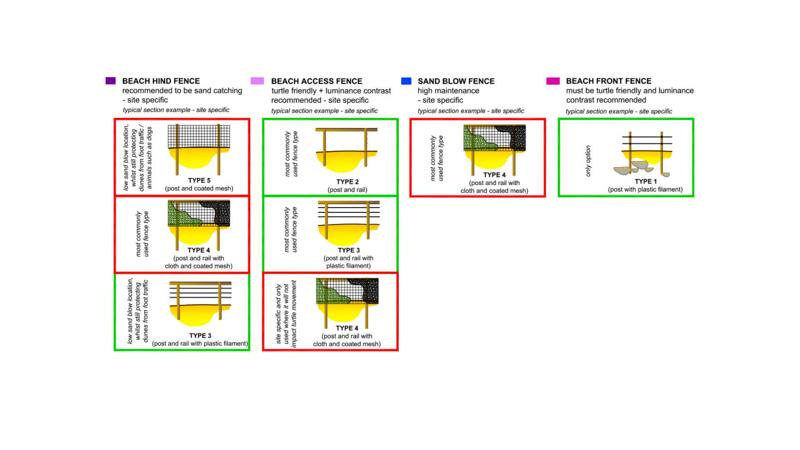
The following figures and tables outline the fence types that should be constructed in the appropriate coastal fence zones. It also outlines the key considerations for various material choices.
See the following figures and tables for further guidance:
- Figure 3: Coastal fence zones, fence types, turtle movement and nesting zones
- Table 1: Fence construction type and key considerations.
Figure 3: Coastal fence zones, fence types, turtle movement and nesting zones
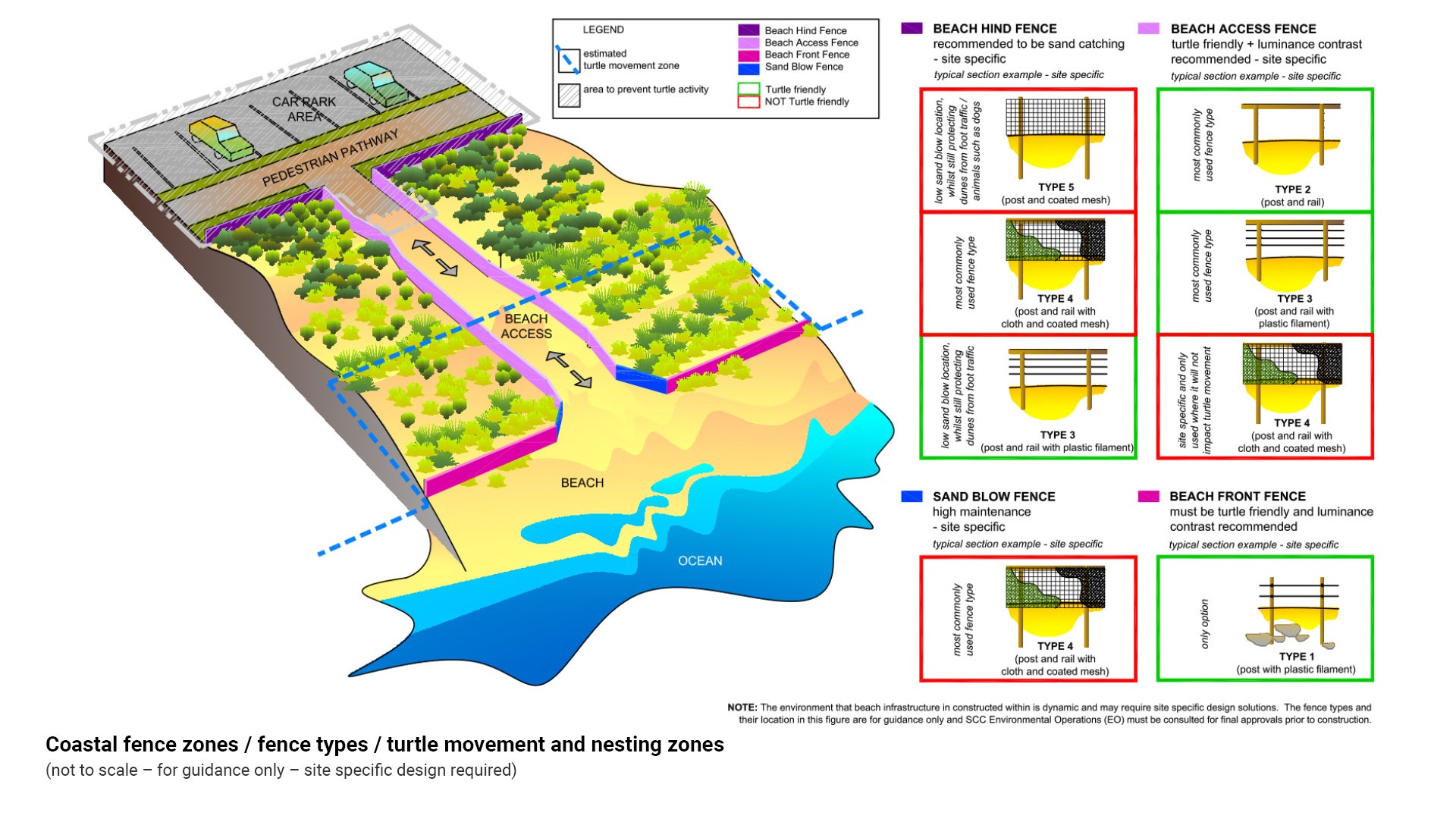
Table 1: Fence construction type and key considerations
Fence construction type | Key considerations |
Fence type 1 - Post and plastic filament Coastal fence zone: Beach front fence Turtle friendly: YES 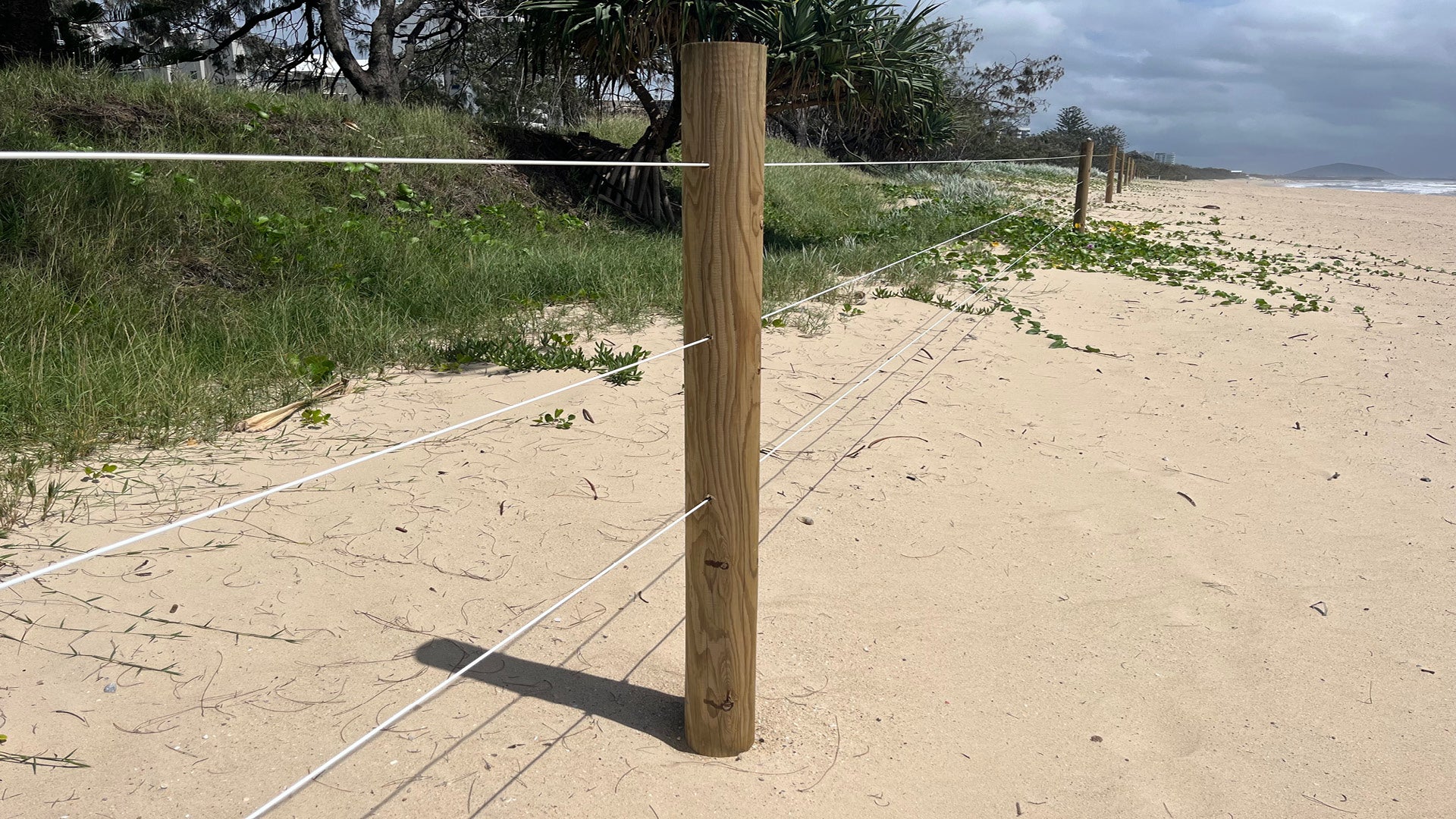 |
|
Fence type 2 - Post and rail Coastal fence zone: Beach access fence Turtle friendly: YES 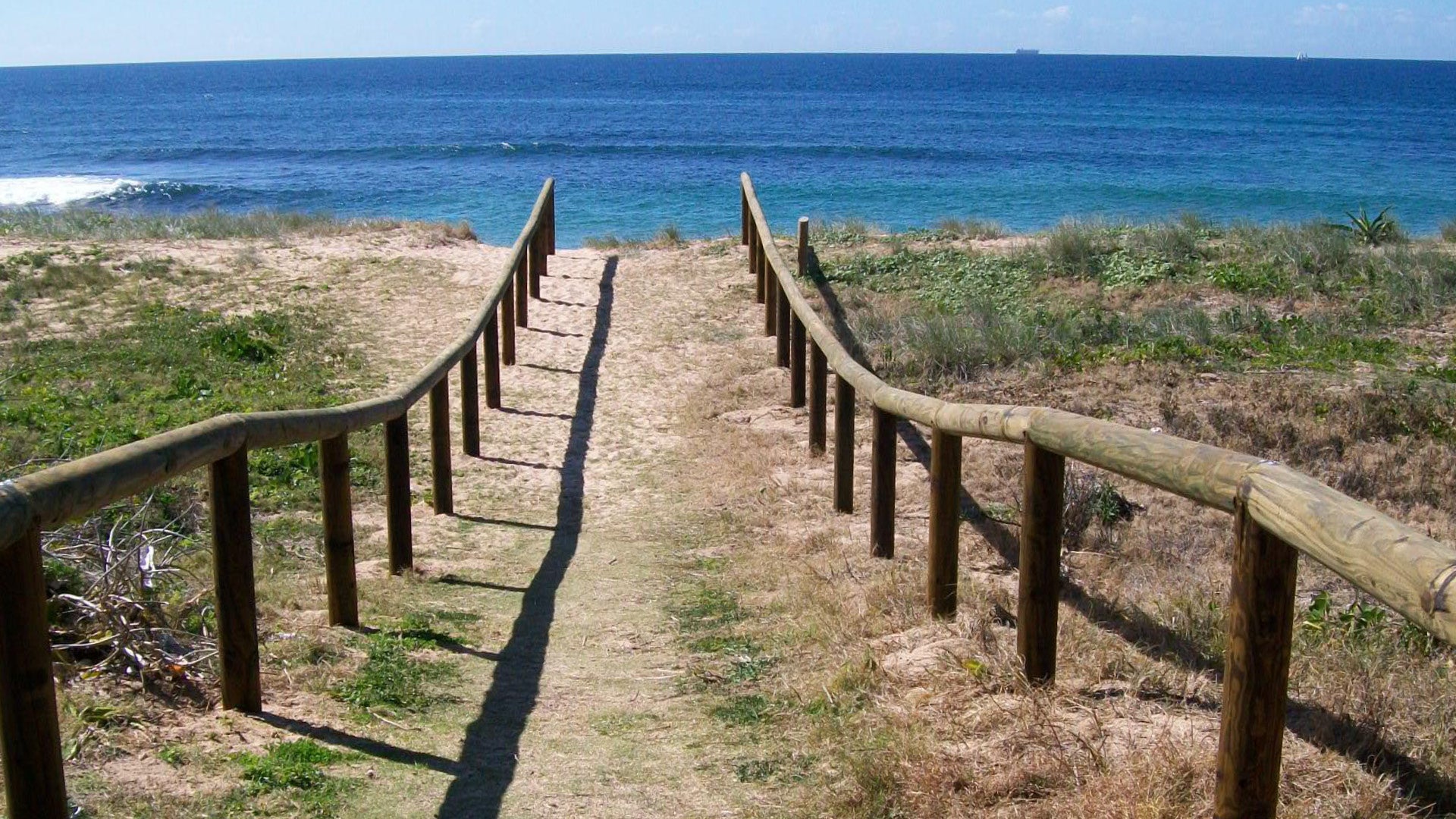 |
|
Fence type 3 - Post and rail with plastic filament Coastal fence zone: Beach hind fence Turtle friendly: YES 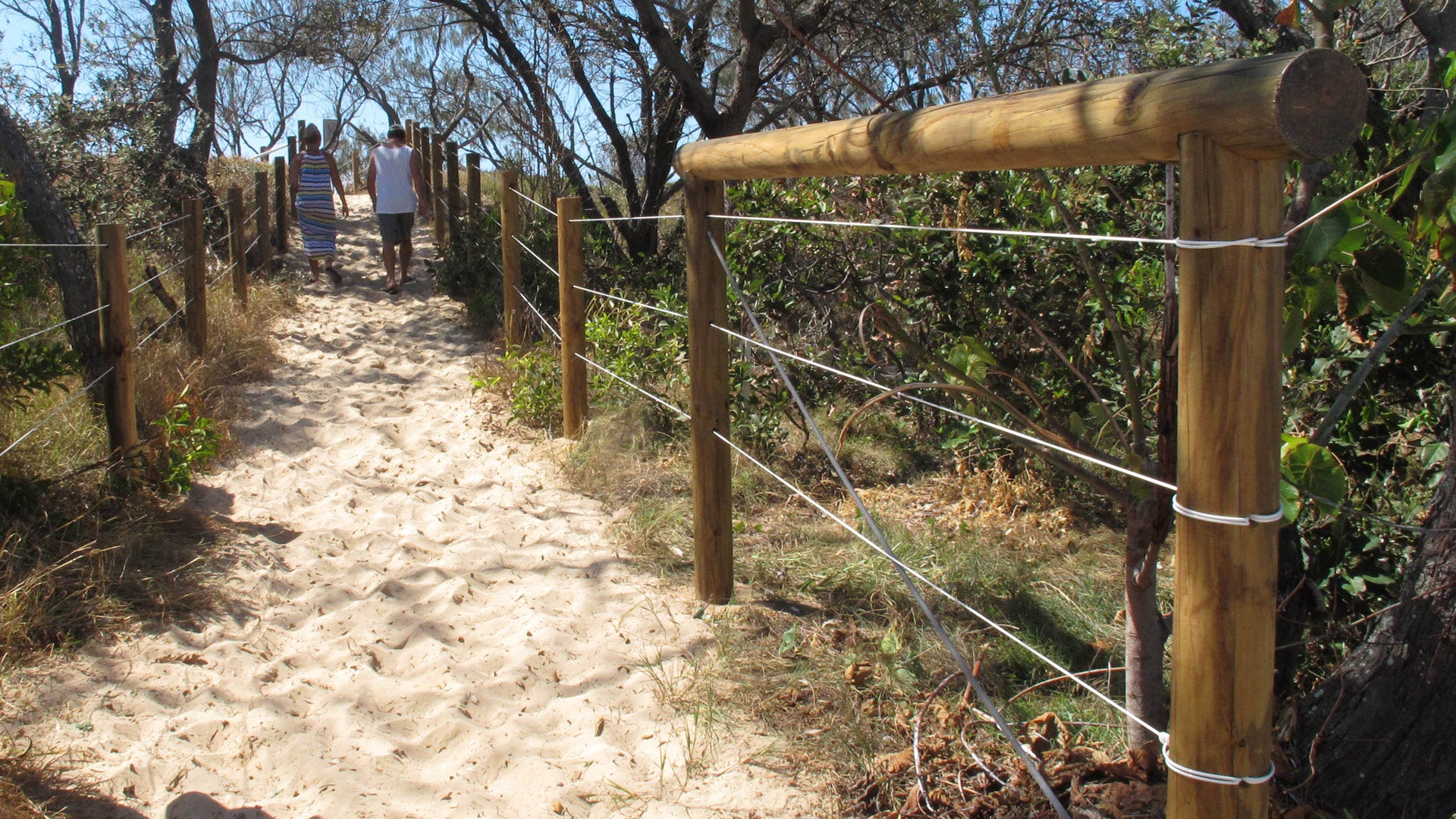 |
|
Fence type 4 - Post and rail with plastic filament Coastal fence zone: Beach hind fence and Sand blow fence Turtle friendly: NO 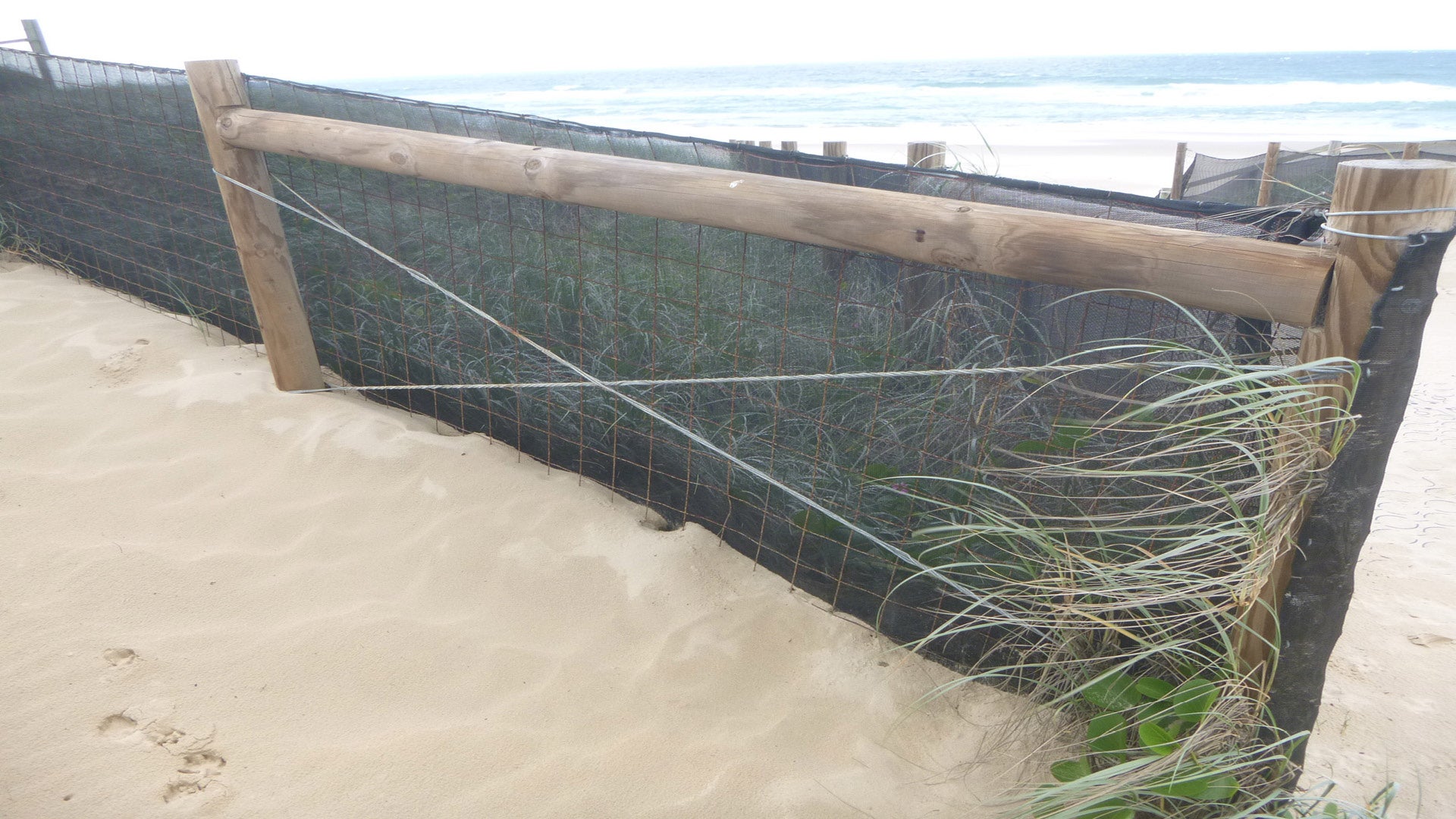 |
|
Fence type 5 - Post and coated mesh fencing Coastal fence zone: Beach hind fence Turtle friendly: NO 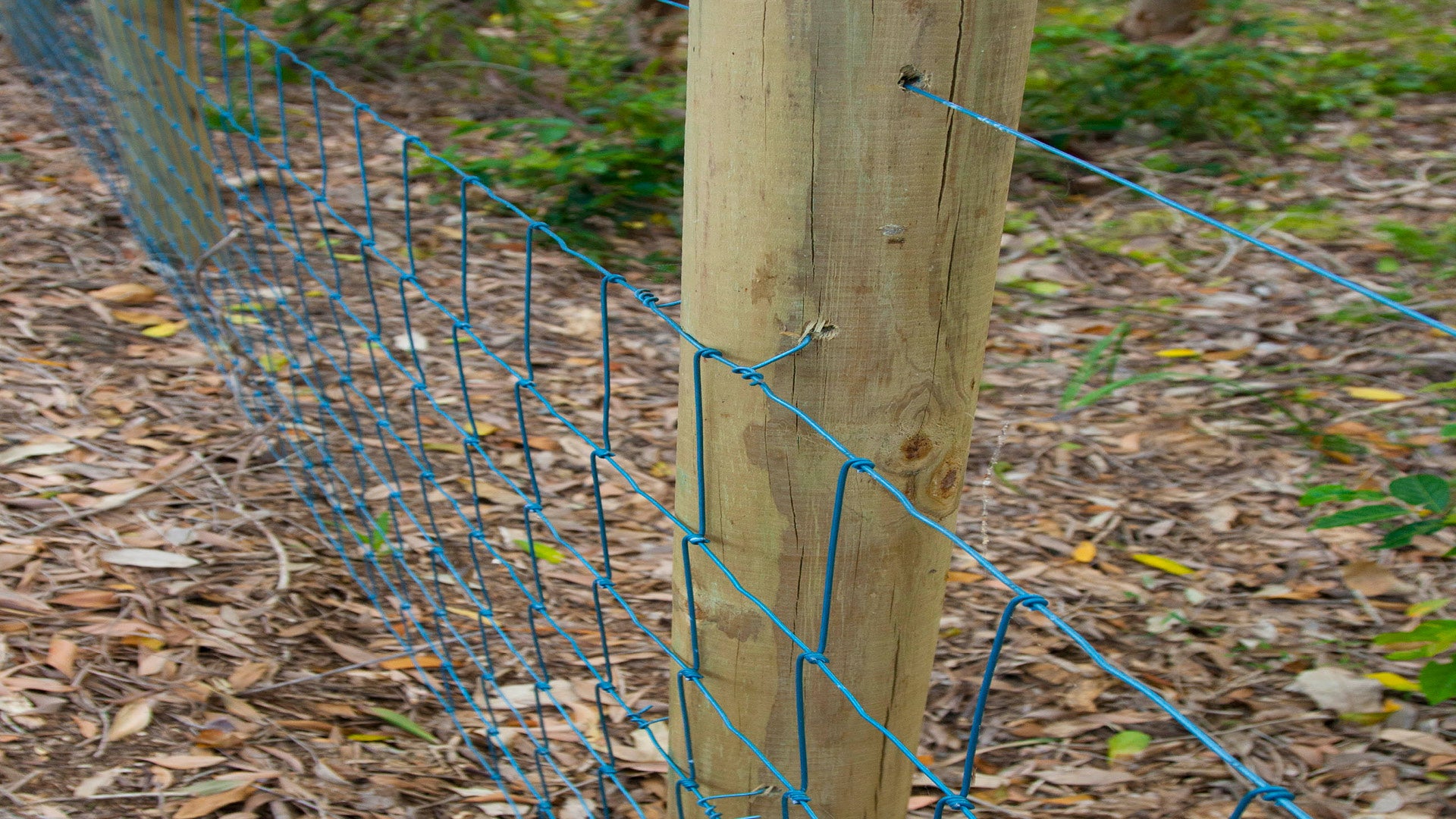 |
|
Figure 4: Turtle friendly fence
Fence materials
Any material used within the coastal zone, carries an inherent risk both in its construction and ongoing operation. Therefore, the material used must be constructed and manufactured to operate in exposed, high energy environments to benefit operation and maintenance. Careful consideration is required to avoid unsuitable materials and if in doubt advice from council’s coastal engineer should be obtained from Council Environmental Operations - Coastal Lakes and Wetlands team.
Beach fences are typically available in mesh or strand fences. (Health and safety issues have arisen with respect to the material choices and their potential hazards to users).
General
Marine structures require materials that are subject to severe coastal conditions. Material selection is dependent on the level of exposure at the site and the usage at the site:
- High profile areas require a higher level of finish and materials.
- Beach locations are subject to direct and severe weather conditions and corrosive environments.
To meet council requirements, most beach fences are constructed using CCA preferred (where the timber is not in frequent and intimate contact with the public), or ACQ treated pine posts, galvanised welded fence mesh and coated wire (Bayco or equivalent). Uncoated wire will rust and pose a safety risk for the public and for native fauna.
The following outlines council’s current direction:
Mesh
- Galvanised wire mesh (Waratah or equivalent) is the preferred material for beach fences. However, beach fences are installed in highly exposed locations which are constantly buried by sand, which decreases the useful life of the product.
- All beach infrastructure should be wire free.
- Trials of coated mesh wire (Waratah or equivalent), have proven successful with no signs of corrosion.
Strand
- Previous trials of plastic filament for all strand beach fences have proven to be successful. This will replace the historical use of galvanised wire.
- Plastic filament strand meets the performance criteria set by the LIM, therefore galvanised wire must not be used in any form of strand beach fence.
See the following further guidance:
- Table 2: Fence materials
- Table 3: Application for knitted shade cloth and supporting fence components.
- LIM Environmental management of fauna and flora.
Table 2: Fence materials
Fence component | Fence material | Key considerations |
Post/rails | Timber (new and recycled) |
|
Post/rails | Recycled plastic |
|
Wire and fixing methods 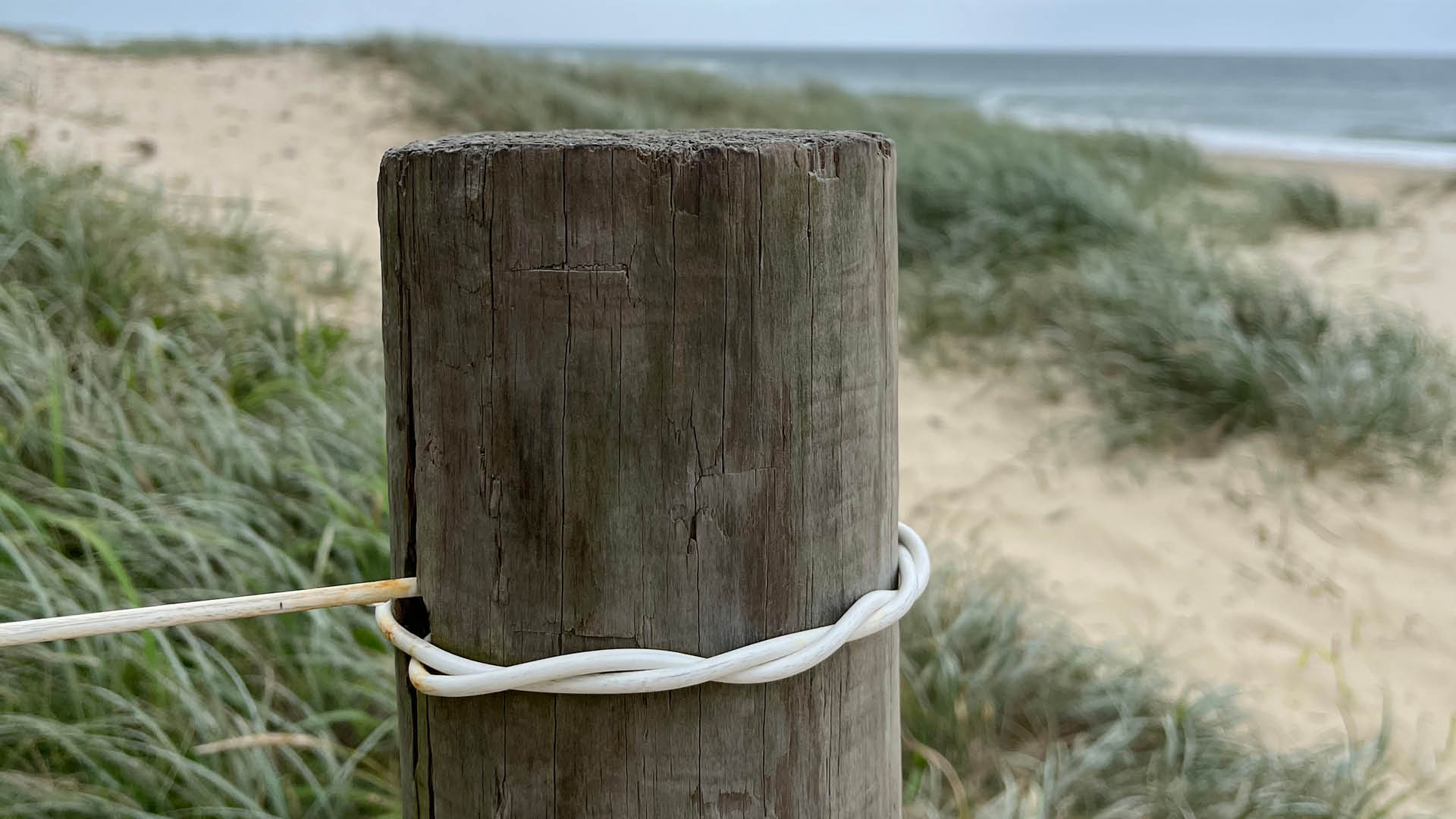 | Waratah Stocksafe –T Longlife blue coated wire mesh and Waratah Tyeasy Longlife blue coated strand wire (or equivalent) |
|
Wire and fixing methods | BAYCO (or equivalent) |
|
Wire and fixing methods | Drill and thread wire |
|
Wire and fixing methods | Fixings |
|
Shade cloth 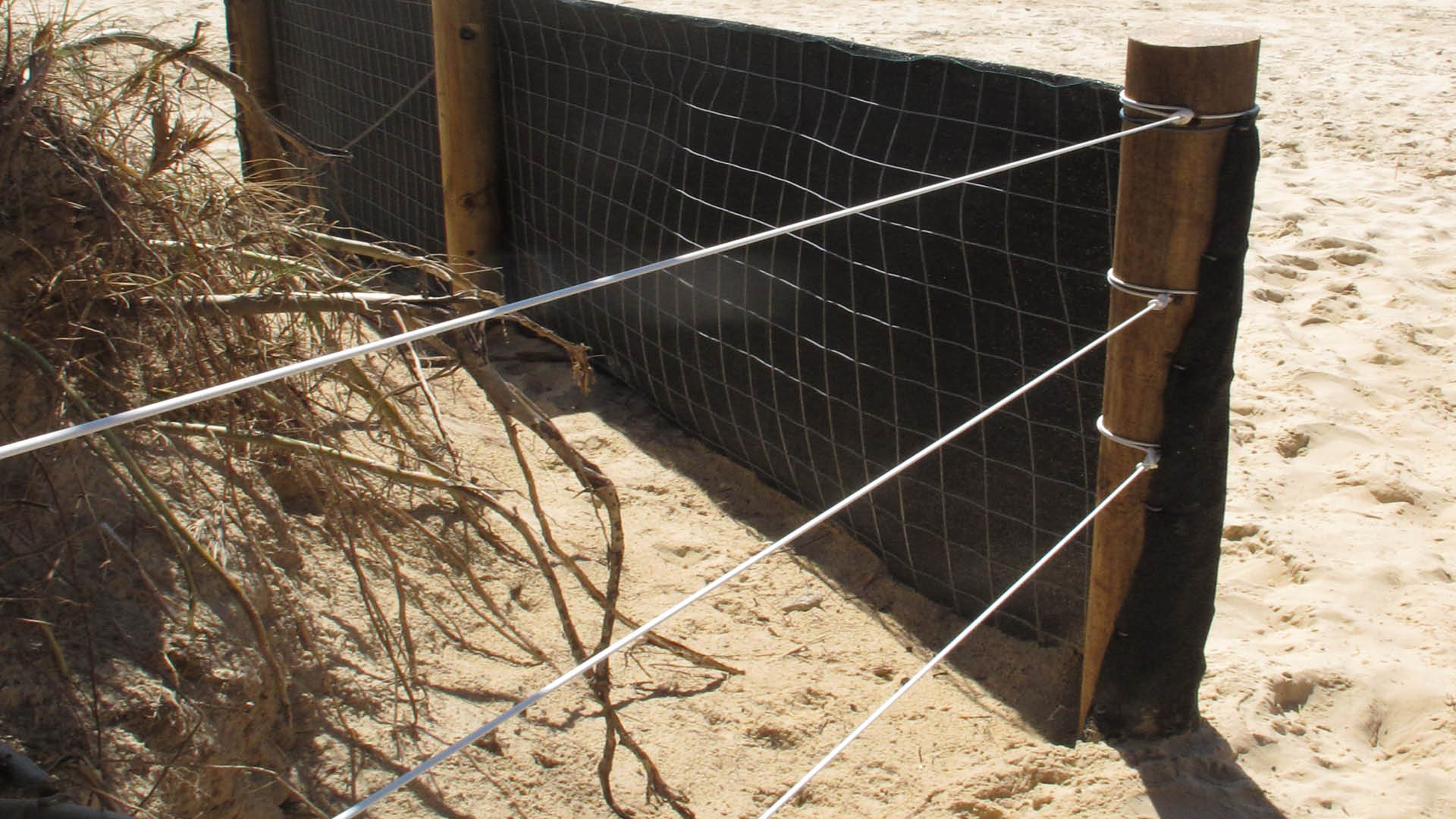 | Knitted shade cloth |
|
Bracing | Galvanised cyclone rod | 12 mm galvanised cyclone rod to be braced in the load direction. |
Handrail (see LIM Handrails and Balustrades) | Hot dip galvanised after manufacture | cost effective option for use in semi-formal or formal beach accesses where a high level finish is not required. |
Handrail (see LIM Handrails and Balustrades) | Aluminium | cost effective option for use in semi-formal or formal beach accesses where a high level finish is not required. |
Handrail (see LIM Handrails and Balustrades) | 316 marine grade stainless steel | Preferred in high use areas which are subject to corrosion. |
Table 3: Application for knitted shade cloth and supporting fence components
Application | Use of application | Key considerations |
Black knitted shade cloth |
|
|
Green knitted shade cloth |
|
|
Cloth pinned to top and bottom |
|
|
Trench dug along base of fence |
|
|
Waratah Stocksafe –T longlife coated wire mesh (or equivalent) |
|
|
Waratah Tyeasy longlife coated strand wire (or equivalent) |
|
|
Surfacing design
Beach access surface and materials
For the survival and protection of coastal dunes, interaction with pedestrians must be limited. In hind dune areas, paths/trails can usually be left as natural sand. If a path/trail is subject to frequent use and or erosion, it may become necessary to provide a surface such as, pine bark or woodchip, treated timber/aluminium ramps and stairs or a concrete path.
The existing environment must be protected and considered before any design development or construction is undertaken.
See LIM Paths, trails and tracks for further guidance for walking path/trail classes. Surfaces and material types vary depending on the level of use and type of location:
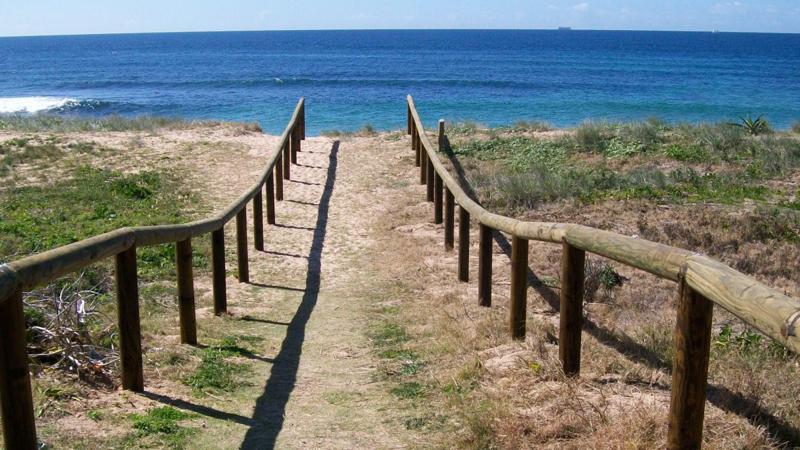
- LOW pedestrian usage beach access – usually a low profile location. Any construction is simple and the natural surface remains. A fence is installed where necessary on both sides of a natural grass or sand path.
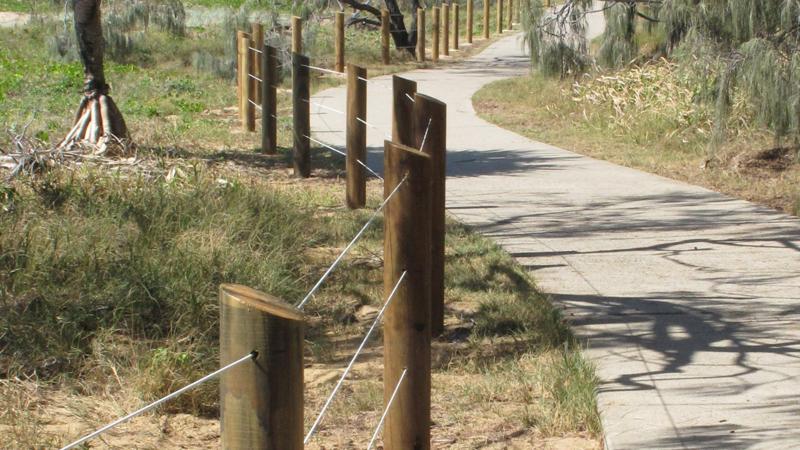
- MEDIUM pedestrian usage beach access – a medium to low profile location. A combination of constructed surfaces such as, a lead in concrete pathway from the road/pathway/car park, merging into a natural grass/sand path over the hind dunes. A board and chain path over the fore dune area with timber or aluminium stairs down to the beach front.
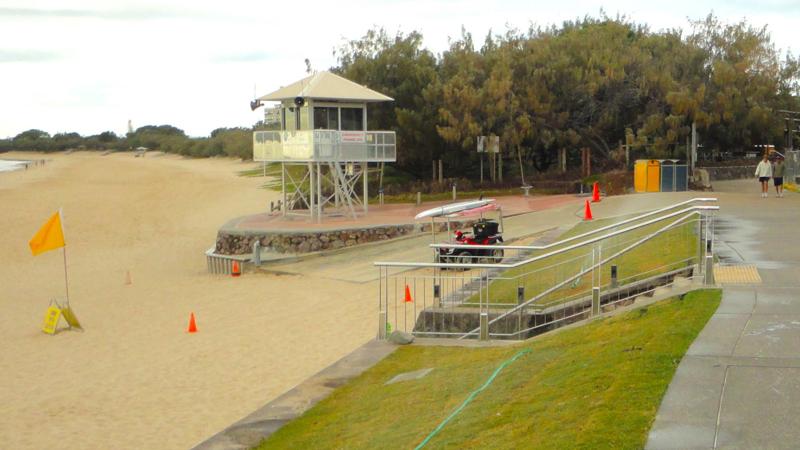
- HIGH pedestrian usage beach access – a high profile location such as a beach front of a town centre with a high volume of pedestrian movement (Sunshine Coast wide park). Construction is more permanent and requires equal access and vehicle access solutions. Construction may include viewing decks, ramps and pathways. Accessible handrails must be included. Surface finishes may include timber, recycled plastic, galvanised steel, aluminium or concrete.
- Vehicle usage beach access – generally required near designated lifesaving facilities for emergency and regulatory vehicles. Other vehicles access points may be required for regular beach maintenance.
See the following figures and categories for further guidance:
Surface materials
The crest and fore dune area is the most vulnerable part of the dune area. Providing the appropriate surface treatment will assist to minimise negative impacts on the coastal environment.
See the following table and figures for further guidance:
- Figure 5: Recommended surface treatments for dunal zones
- Table 4: Surface materials.
Figure 5: Recommended surface treatments for dunal zones
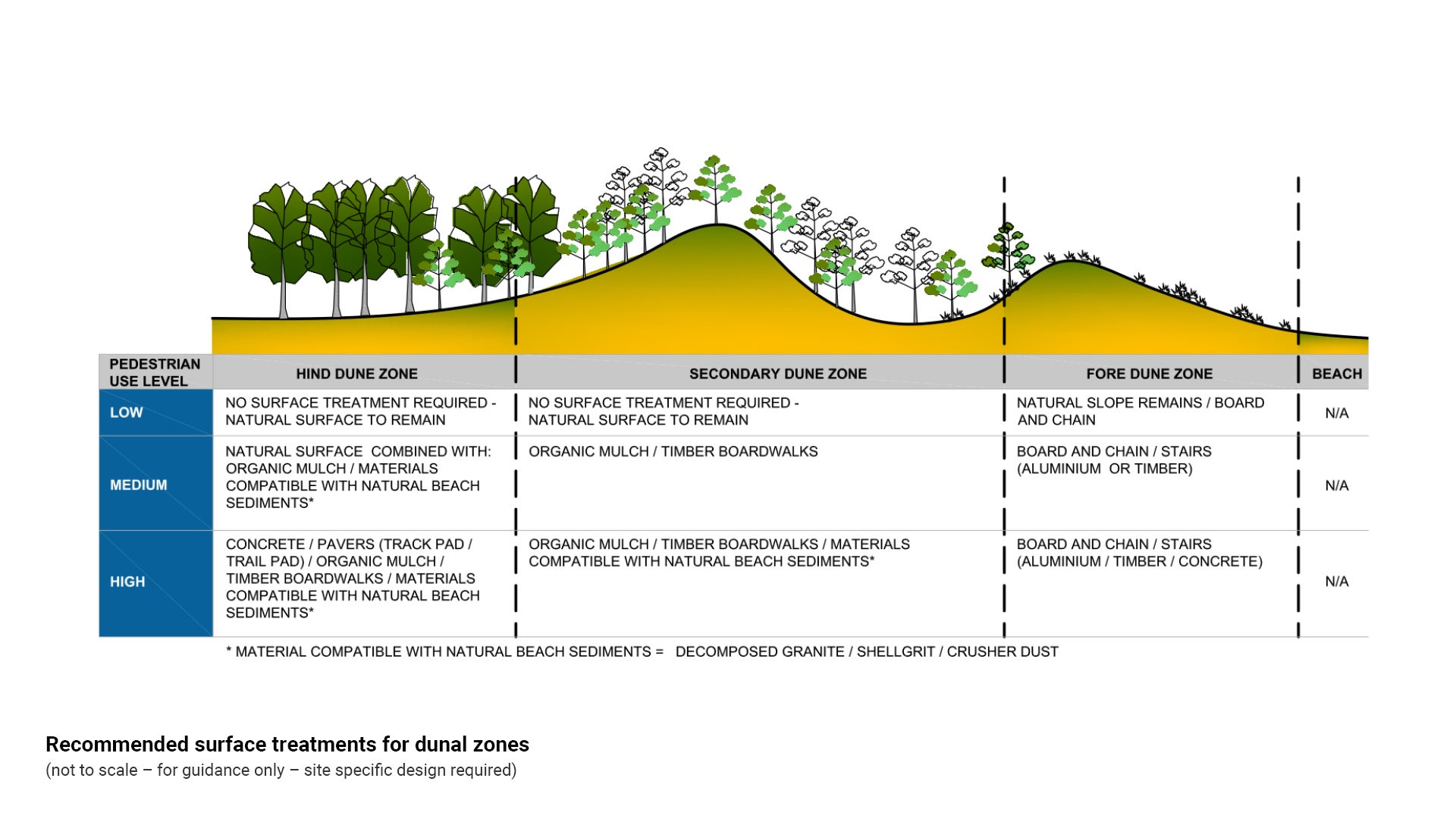
Table 4: Surface materials
Surface materials | Key considerations |
Timber/timber boardwalks |
|
Aluminium |
|
Recycled plastic |
|
Concrete |
|
Fine gravel/decomposed granite |
|
Board and chain (timber) | Saffordable option
|
Conveyor belt rubber |
|
Trackpad and Trailpad (or equivalent) |
|
Stairs (timber/aluminium) | Timber to be treated hardwood
|
Ancillary embellishments
Utilise the Environment and Liveability Strategy (ELS) and Recreation Parks Plan (RPP) as guidance, to determine what ancillary facilities should be provided with beach infrastructure.
Signage
Signs are to be positioned in suitable locations for the intended message. Where possible, consolidate information to fit onto one sign, avoiding multiple signs at each access. The sign may advise the following information, but are not limited to:
- Location of access paths/trails, beach number and beach name.
- Location of boardwalks/stairs/viewing platforms.
- Regulatory signs:
- general beach safety
- lifeguards on site
- dogs on a leash/dogs not allowed
- litter bin
- keep off dunes/no access to dune for re-vegetation.
Signs for beach access numbering system
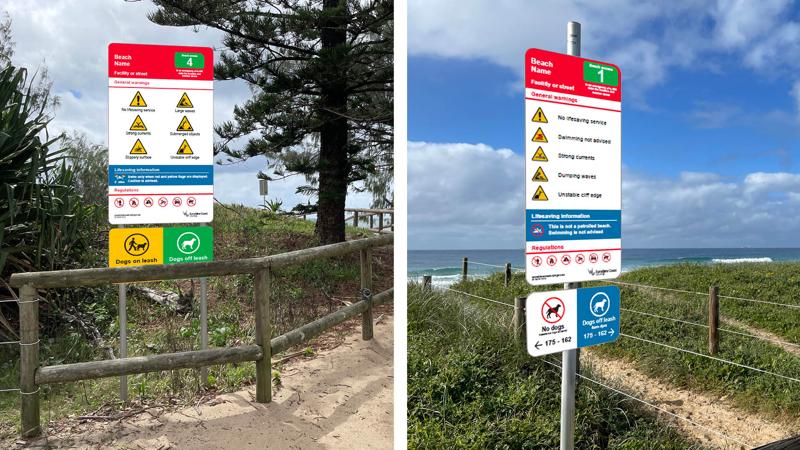
Council beach accesses are named and numbered (numbered from North to South of the Council region). If a new beach access is built, it will generally be given a name and a number (for example: Beach Access 80A). Consult the following Council departments before a new beach access sign is finalised:
- Council (Environmental Operations).
- Council (Civil Asset Management) (council’s in-house sign area).
- Council (Communication).
See LIM Signage - Regulatory signs. for further guidance.
Beach showers and taps
See the following LIM categories:
Bins
See the following LIM categories for further guidance:
- LIM Bins.
- LIM Dog exercise areas (DEAs) for guidance regarding dog related items such as, dog bowls, dog use, signage for dog use.
Handrails and balustrades
See LIM Handrails and balustrades for further guidance.
Lighting
Marine turtle safe lighting (where required) – Darkness is the best lighting management option at turtle nesting beaches. All designs within 100 m of a nesting beach must follow the four guiding principles to minimise light impacts on turtles - ‘keep it off, keep it shielded, keep it low, keep it long’.
See LIM Electrical for further guidance.
Ramps and stairs
Beach access stairs must comply with the following:
- Site specific design required by a structural specialist.
- Designed to be a sacrificial element - a requirement of the Department Environment and Resource Management (DERM).
- AS 1428 – Design for access and mobility – New building work, except tactile ground surface indicators are not required on beach-side approaches.
- Have a minimal construction footprint/site disturbance.
- Temporary structure for removal in storm events.
- Position must be approved by an Council (Environment Operations).
See LIM Ramps and stairs for further guidance for beach stairs requirements and considerations.
Other
Lifeguard towers
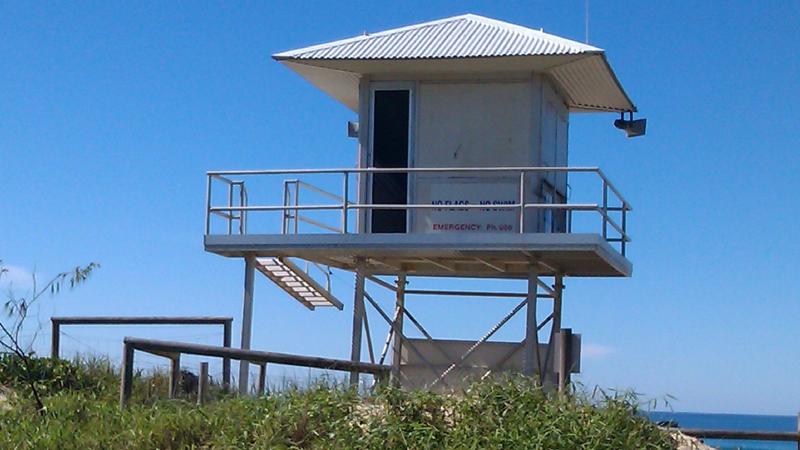
Lifeguard towers provide an important service to the community. The tower is used for lifeguards to watch and supervise swimmers, surfers and patrons using the beach. As well as preventing accidental drowning the lifeguards monitor the waters for sharks and any other danger to swimmers. The height of the tower enables lifeguards to scan a wide area with uninterrupted views.
Lifeguard towers are a council asset maintained by Council (Property Management) and are generally constructed to a standard design drawing. Council considers these structures are exempt from the access provisions of the National Construction Code (NCC) due to the nature of their use.
Selection of a site for a lifeguard tower should consider the following:
- Proximity to a designated bathing reserve.
- Beach access location near the tower position.
- Available car parking for lifeguards while on duty.
- Secure parking for:
- lifeguard boats
- surf skis
- beach vehicles.
- Beach patrons use and numbers.
- Sight distances from the tower.
- Beach erosion proximity to the proposed tower location.
- Potential impacts from coastal hazards.
- Potential impacts to coastal processes.
- Sufficient area to build a heavy duty concrete pad 300 mm thick with extra reinforcement to accommodate structural tower loads.
- Existing vegetation (both in consideration of lifeguard tower location and sight distances required from the tower).
See the Sunshine Coast Coastal Hazard Adaptation Strategy for further guidance.
This component is currently in development