Environmental management of fauna and flora
Conservation species management
Guidance for the management of threatened species
There are several threatened and common species that council have developed conservation or management plans. These may have planning and design implications.

Marine turtles
In Queensland, under the Nature Conservation Act 1992, loggerhead turtle is a protected species, and are listed as endangered across the state.
Under the Environment Protection and Biodiversity Conservation Act 1999, the Commonwealth Government lists the loggerhead turtle as ENDANGERED in Queensland.
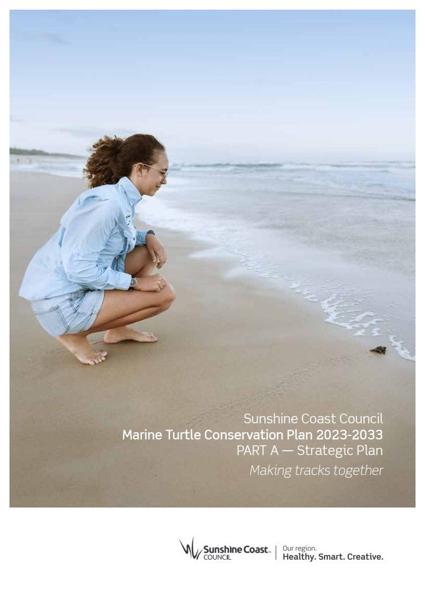
Marine Turtle Conservation Plan (Part A and Part B) 2023-2023
The plan identifies local threats to turtles, and actions that will support population recovery and co-management with the community and traditional owners.
Marine Turtle Conservation Plan (Part A and Part B) 2023-2023
text/html
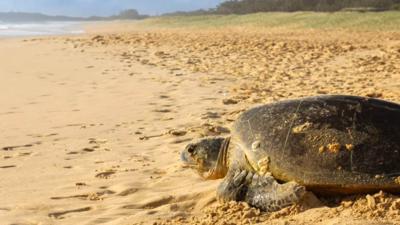
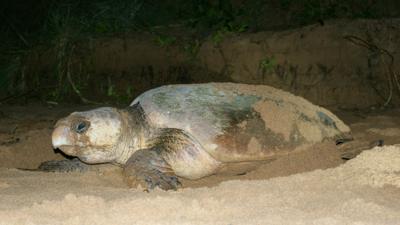
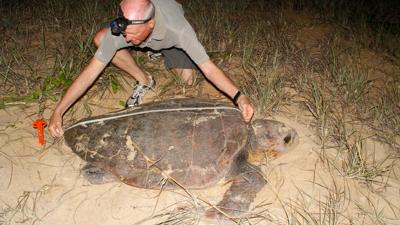
The endangered loggerhead turtle (Caretta caretta) is the main species of marine turtle nesting on Sunshine Coast beaches, making up 98% of nesting turtles. Occasionally, the vulnerable green turtle (Chelonia mydas) also nests on Sunshine Coast beaches.
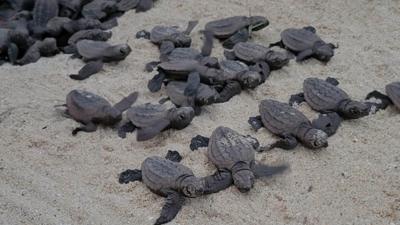
During nesting, turtles and their hatchlings are easily disturbed by light and movement, and are particularly vulnerable when leaving the water, crossing the beach and digging their nest. The following should be considered:
- Nesting can occur on ALL Sunshine Coast beaches from November to March.
- Hatchlings emerge from January to March.
- While ALL beaches on the Sunshine Coast require light mitigation, several are high priority nesting sites, including Buddina, Shelly, Yaroomba and North Bribie beaches, and require special consideration.
Design considerations:
- Start with natural darkness – light should only be added for a specific and defined purpose, and only in the required location and duration for human use.
- Use adaptive controls – smart controls, colour, timing, motion activation.
- Light only the intended object or area – keep light close to the ground, directed and shielded.
- Use appropriate lighting – use the minimum number and intensity required to meet the lighting objective.
- Use non-reflective, dark coloured surfaces.
- Artificial light impacts nesting beaches from as far away as 20 km. Any projects within this area should consider the following lighting principles to ensure compliance. (Source: National Light Pollution Guidelines for Wildlife Including Marine Turtles, Seabirds and Migratory Shorebirds, Commonwealth of Australia 2020).
- Use lights with reduced or filtered out blue – violet ultraviolet wavelengths (blue and green wavelength light scatters in the atmosphere and contributes heavily to sky glow).
- Use light with little or no short wavelength (400 mm - 500 mm) to avoid unintended impacts.
- Consider impacts that new infrastructure may have on the surrounding environment.
- Select beach infrastructure so it does not interfere with potential turtle paths within turtle nesting areas.
- Where new infrastructure increases patronage to an area, ensure negative impacts on turtle populations are minimised.
For further guidance about Marine turtle conversation, see the following:
- Recovery Plan for Marine Turtles in Australia - Australian Government in conjunction with the Queensland Government.
- National Light Pollution Guidelines for Wildlife including Marine Turtles, Seabirds and Migratory Shorebirds, Commonwealth of Australia 2020.
- Council, Environmental Operations Branch - Marine Turtle Conservation Plan 2023-2033.
- LIM Electrical (including lighting) - Turtle safe lighting.
- LIM Smart technologies for key considerations for the installation of turtle sensors and luminaries.
Koalas
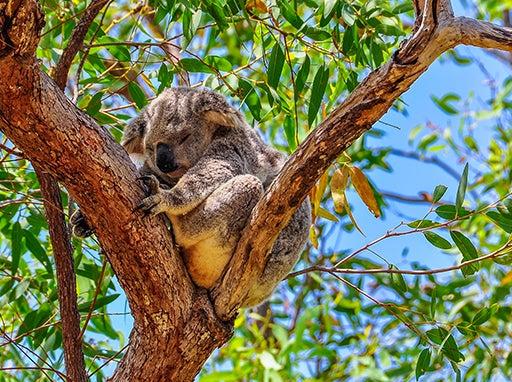
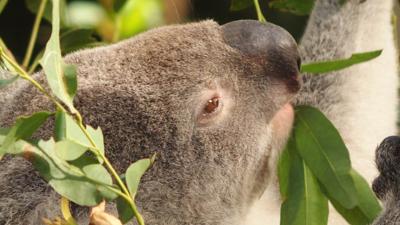
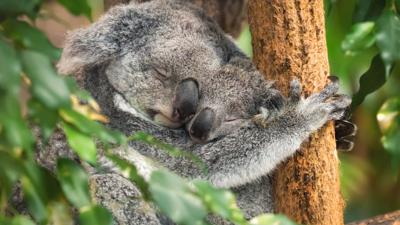
In Queensland, under the Nature Conservation Act 1992, koalas are a protected species, and are listed as vulnerable across the state.
Under the Environment Protection and Biodiversity Conservation Act 1999, the Commonwealth Government lists the koala as ENDANGERED in Queensland.
If you find sick or injured wildlife, call 1300 ANIMAL (1300 264 625).
Koala Conservation Plan 2022
The plan guides our efforts to preserve our local koala population by providing a range of clear and consistent management options.
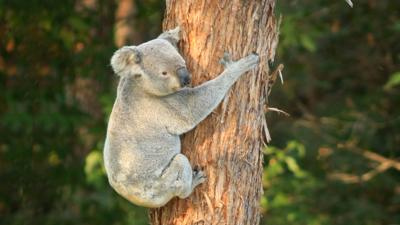
Koalas (Phascolarctus cinereus) live over a range of ecological communities, including open forests and woodlands, with higher densities where preferential food trees are located. Koalas occur in high densities on the Maleny plateau in fragmented agricultural land. Smaller populations occur east of the Bruce Highway.
Koala populations only occur if a suitable habitat is available, in combination with the koala's natural preference for particular types of eucalyptus leaves.
Design considerations:
- Restrict certain development.
- Preserve and enhance suitable habitat.
- Retain eucalypt forests that can support healthy koala population and allow for expansion.
- Clearing of koala habitat trees must be minimised. Where clearing cannot be avoided, it must be offset to provide future koala habitat.
- Improve connectivity via corridor linkages, enabling koalas to move safely from location to location.
- Install fauna fencing where appropriate.
- Feral dogs (and wild dog hybrids) are a key threatening process. Coordinated wild dog control programs aim to reduce the negative impacts of these pests.
- Minimise interaction with domestic animals (e.g. dogs) to prevent impact on koala populations.
For further guidance about Koala conversation, see the following:
- Koala conservation protections, see the South East Queensland Koala Conservation Strategy 2020-2025 and related koala habitat mapping.
- LIM Fences and gates.
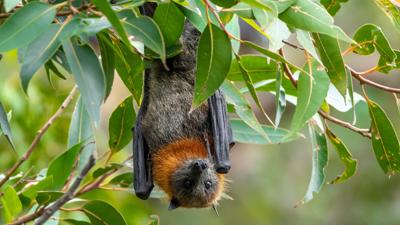
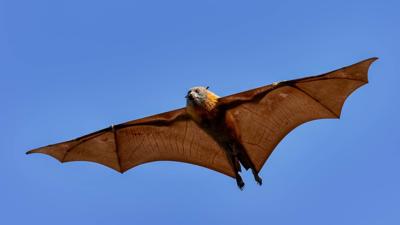
Flying-foxes
All flying-foxes are protected under the Nature Conservation Act 1992 and Environmental Protection and Other Legislation Amendment Act 2014 (EPOLA).
The grey-headed flying-fox is also nationally protected under the Environment Protection and Biodiversity Conservation Act 1999.
The Airports Act 1996 and the Sunshine Coast Planning Scheme establish a framework to minimise bird or bat strike in the airspace surrounding airports by providing a frame of reference to determine suitable plant species in these areas.
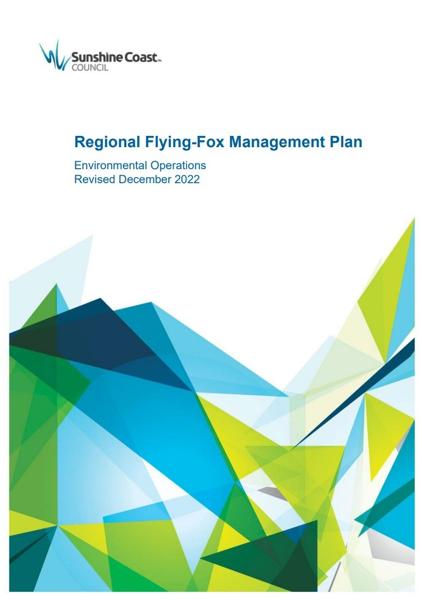
Regional Flying-Fox Management Plan 2022
The Plan provides a range of clear and consistent management options to respond to community concerns about flying-foxes.
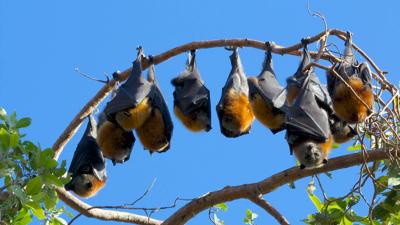
Flying-foxes are social animals that usually live in large colonies or camps. They play an essential role in maintaining the health and biodiversity of forests on the Sunshine Coast, by scattering pollen and seeds over thousands of kilometres during their night time feeding trips.
Some residents living near established or emerging flying-fox roosts may be impacted by the noise, smell and droppings of these animals. Health concerns associated with the droppings and living nearby a roost are also raised.
Design considerations:
- Restrict certain development.
- Human-animal conflicts may be minimised through selected plantings of low-fruiting or low nectar producing species to reduce the suitability of sites for foraging or roosting (see Table 24 of the Sunshine Coast Street Tree Master Plan (Part A) for recommended street tree species).
- Works nearby a roost may not be permitted under the codes of practice and permits may be required. To avoid impacts on a roost, it is recommended that works be scheduled at night or when flying-foxes seasonally vacate the roost.
Macropods
In Queensland, under the Nature Conservation Act 1992 macropods are listed as least concern species.
Macropod Conservation Plan 2023
Our community is growing and our native wildlife live here too. The Plan provides a range of clear and consistent management options to ensure macropods continue to thrive across the Sunshine Coast.
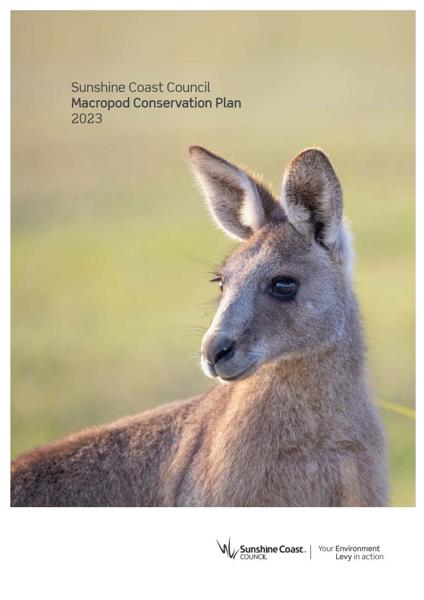
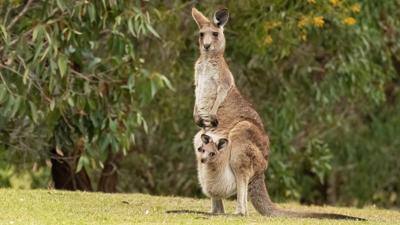
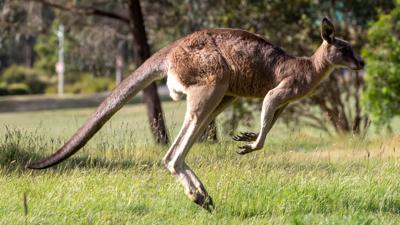
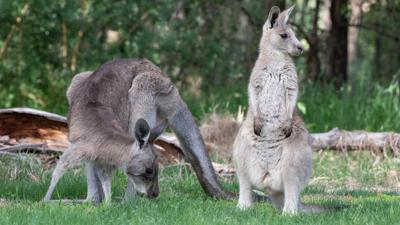
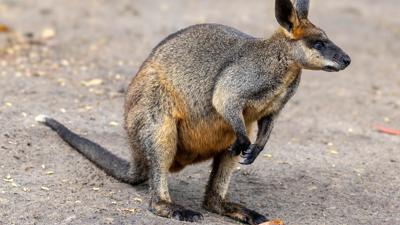
The Sunshine Coast region is home to seven macropod species of the genera Macropus, Thylogale and Wallabia (kangaroos and wallabies). Macropods are widespread across the region, in state protected areas, council reserves and on private land.
Design considerations:
- Maintain landscape permeability within design, to preserve connectivity between habitat areas
- Provide awareness and education (via signage) for recreational users near macropod habitat.
- Restrict dog activity/access.
- Install fauna fencing and signage where appropriate (i.e. utilise virtual fencing technology in an effort to reduce vehicle impact).
- Manage recreational activities where possible.
- Minimise removal of natural habitat and maintain waterways and vegetation where possible.
Shorebirds
In Queensland, under the Nature Conservation Act 1992 and the Marine Park (Moreton Bay) Zoning Plan 2019, migratory shorebirds are a protected species.
Under the Environment Protection and Biodiversity Conservation Act 1999, 37 international migratory shorebird species are classified as Matters of National Environmental Significance.
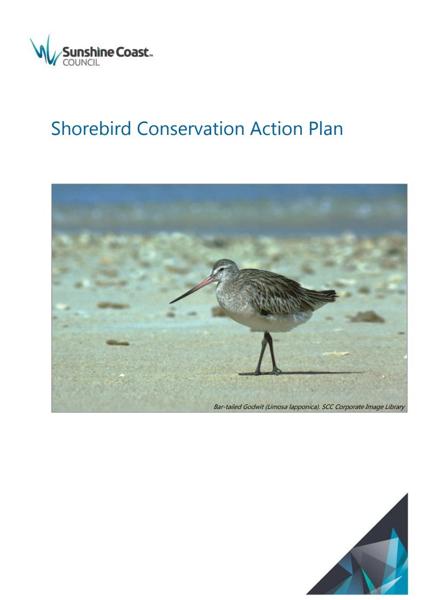
Shorebird Conservation Action Plan
The Plan provides a range of clear and consistent management options to ensure it guides Council’s actions to try and protect these threatened birds.
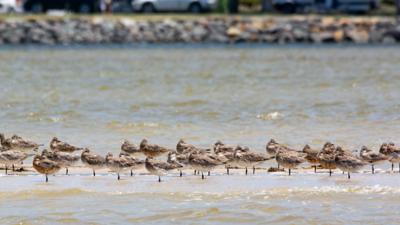
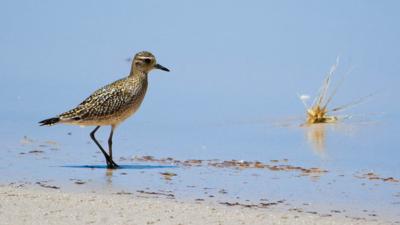
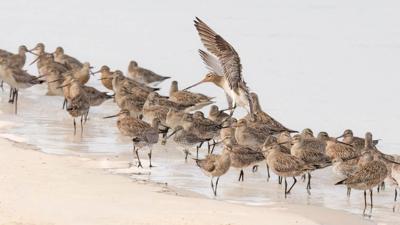
In the Sunshine Coast Local Government Area, migratory shorebirds mainly congregate on the banks and islands of the lower Maroochy River and in the Pumicestone Passage. The appearance of migratory shorebirds coincides with summer holidays, which regularly leads to a large increase of people using beaches and waterways around shorebird roosts, creating increased potential for disturbance.
Recreational use at lower Maroochy River and northern Pumicestone Passage is significant.
Design considerations:
- Provide awareness and education (via signage) for recreational users near shorebird habitats.
- Restrict dog activity/access.
- Install bird-hides.
- Provide interpretive trails.
- Install fauna friendly fencing where appropriate.
- Manage recreational activities where possible.
- Minimise removal of natural habitat and maintain waterways and vegetation where possible.
For further guidance about shorebird conservation, see the following:
- National Light Pollution Guidelines for Wildlife Including Marine Turtles, Seabirds and Migratory Shorebirds, Commonwealth of Australia 2020.
This component is currently in development