Environmental management of fauna and flora
Vegetation clearing & offsets
Guidance for vegetation clearing and environmental offsets
Environmental offsets compensate for unavoidable impacts onsite (e.g. vegetation clearing), by offsetting that "cost" with the improvement of another site with similar environmental values.
The clearing of native plants in Queensland is regulated by the Nature Conservation Act 1992, and the list of, endangered, vulnerable, near threatened plants and least concerned can be found in the Nature Conservation (Plants) Regulation 2020.
Clearing permits and species management programs approved by the state government may be required.
Other vegetation clearing requirements may include:
- approval under the Environment Protection and Biodiversity Conservation Act 1999
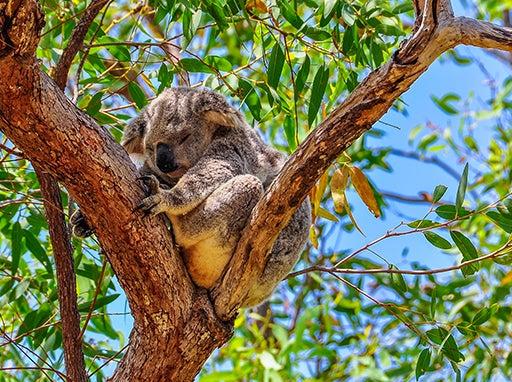
- where the property is in a mapped koala development area (KDA) or koala habitat area (under the Planning Act 2016), development approval may be required
- approvals under the following legislation.
- Coastal Management and Protection Act 1995
- Fisheries Act 1994
- Planning Act 2016
- Vegetation Management Act 1999
- Water Act 2000.
- State Policy for Vegetation Management (V4.00).
Incursion into, or clearing of, reserve boundaries, requires the permission of the landholder or manager.
For all projects, clearing is to be minimised, and ensure that all approvals are in place prior to commencement of works.
The clearing of vegetation for land use and development is jointly regulated by the Vegetation Management Act 1999 and the Planning Act 2016, under the Queensland vegetation management framework.
For further guidance see the Vegetation Management Act 1999 and the Planning Act 2016.
The Vegetation Management Code within the Sunshine Coast Planning Scheme 2014 contains information on the clearing of vegetation, including the management of protected vegetation, and to provide for the management of vegetation in a manner which protects and enhances the biodiversity and landscape values of the Sunshine Coast.
For further guidance see the Sunshine Coast Planning Scheme 2014.
Clearing exemptions
Queensland's vegetation management laws allow routine, low-risk clearing activities without a development approval. General clearing exemptions include:
- fire management (clearing for fire breaks)
- clearing to avoid building or property damage
- clearing to manage and install property boundary fencing
- clearing to avoid or reduce the risk of serious injury or death
- clearing to manage encroachment or invasive plants under the Vegetation Management Act 1999
- clearing for routine infrastructure maintenance.
Exemptions apply to some clearing activities permitted under other legislation.
Exemptions may not apply if the vegetation is subject to:
- Permit approval conditions
- An environmental offset
- Restrictions as a result of unlawful clearing.
A range of exemptions are available to assist with preparation, dealing with or recovering from a natural disaster such as flood or fire.
Contact the relevant State or Commonwealth agency for assessment, permits and approvals for vegetation clearing matters.
Accepted Development Requirements (ADR)
Some clearing activities can be undertaken using the ADR for vegetation clearing requirements. These requirements apply to particular vegetation categories and regional ecosystems.
Refer to the following government Departmental websites for further guidance:
- State
- Department of State Development, Manufacturing, Infrastructure and Planning (DSDMIP)
- Department of Environment and Science (DES)
- Department of Natural Resources, Mines and Energy (DNRME).
- Federal
- Department of Environment (DOE).
Environmental offsets
Environmental offsets compensate for unavoidable impacts on significant environmental matters on one site, by replacing the unavoidable impacts onsite and/or securing land at another site, and managing that land over a period of time, to replace those significant environmental matters which were lost.
According to the Sunshine Coast Environment and Liveability Strategy 2017, Council has a goal to maintain the 2016 extent of native vegetation (i.e. no net loss) by 2041.
Requirements for vegetation offsets are available in the following:
- State Development Assessment Provisions (SDAP), Queensland vegetation management state code Module 8: Native vegetation clearing.
- Queensland Environmental Offsets Policy
- Environmental Offset Act 2014
- Environment Protection and Biodiversity Act 1999.
These legislation, policies and supporting guidelines provide a framework for the consistent assessment, management and delivery of offsets in response to unavoidable and unmitigated impacts to natural assets.
For further guidance on internal offsets, advice should be sought from Council (Environmental Operations) and Council (Parks and Gardens).
Offsets are to be administered via the following hierarchy, (dependent on the level of clearing):
- Commonwealth Government
- State Government
- Council.
Prescribed activities
Instances where an environmental offset may be considered are called 'prescribed activities'. These activities are triggered for assessment under the relevant Federal, State and Local legislation.
Prescribed environmental measures are outlined in the Environmental Offsets Act 2014 and regulations. These matters are:
- Nationally significant matters - MNES (Matters of National Significance) - protected and regulated under the EPBC Act
- State significant matters - MSES (Matters of State Significance) - protected and regulated under Queensland legislation
- Locally significant matters - MLES (Matter of Local Significance) - a matter prescribed under a local planning instrument, e.g. the Sunshine Coast Planning Scheme, that is not the same or substantially not the same as a MNES or MSES.
For further guidance on prescribed activities, refer to the Environmental Offsets Act 2014 and regulations.
This component is currently in development