Environmental management of fauna and flora
Fauna management
Guidance for the management of fauna
Fauna management practices and plans are prepared to manage impacts and protect native fauna during clearing and construction

Fauna management practices and plans
To avoid and minimise negative impacts to fauna, flora and habitat features, monitoring and identification of existing features is crucial. Compliance with relevant legislation, regulations and approvals is required.
A qualified person must assess fauna and habitat values prior to works, and recommend appropriate mitigation measures to minimise impacts on feeding and breeding habitat.
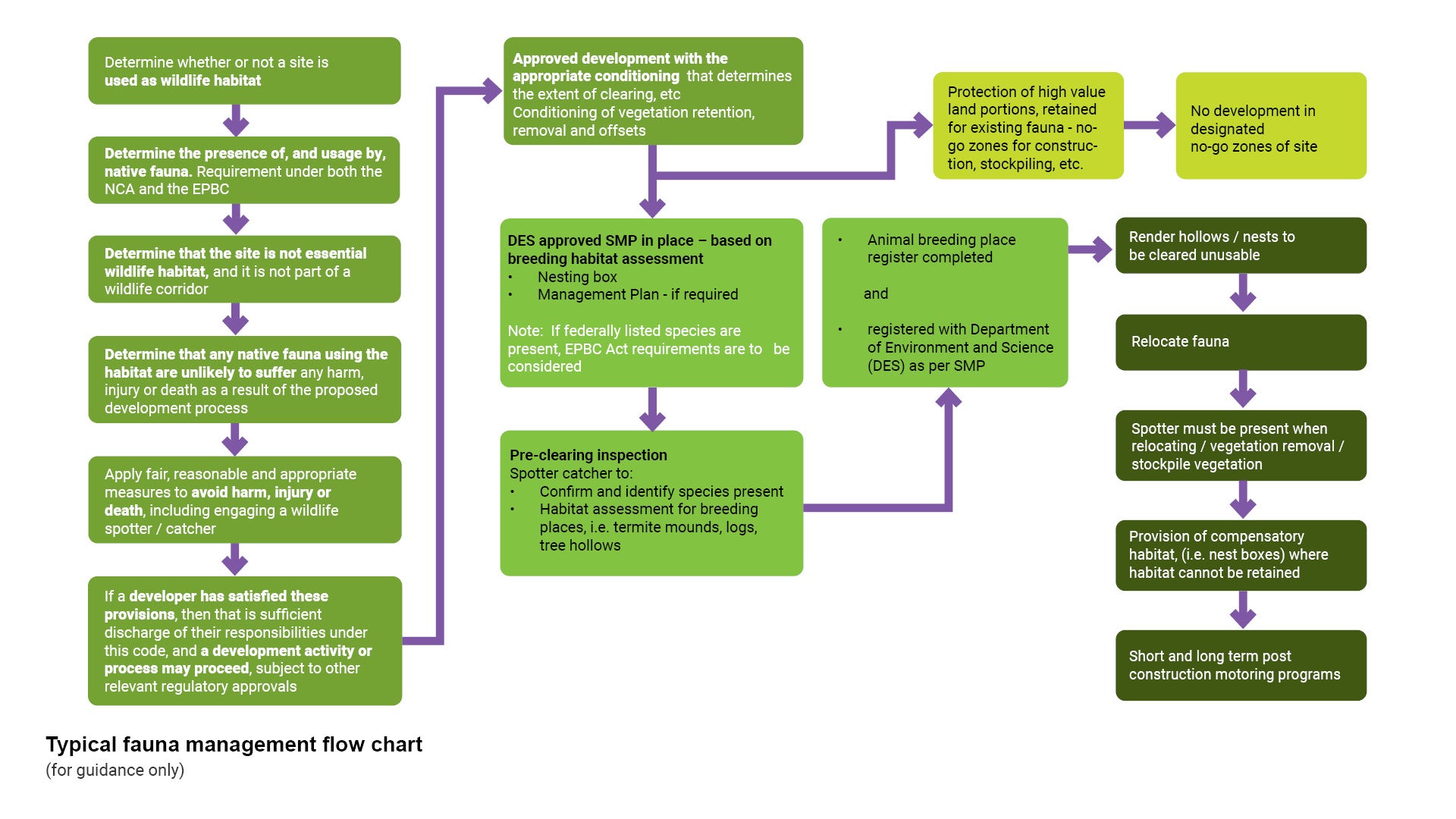
See Figure 3: Typical fauna management flow chart.
Figure 3: Typical fauna management flow chart
Native fauna management
Development within the Sunshine Coast region has the potential to adversely impact upon native fauna, flora and complementary habitat. These impacts may occur directly through clearing of habitat areas or indirectly via loss of connectivity between the remaining areas.
Native fauna management must be undertaken to protect and conserve significant species listed under Commonwealth or State legislation (e.g. Nature Conservation Act 1992 or Environment Protection and Biodiversity Conservation Act 1999), or species which have a significance within the context of the Sunshine Coast region. These works include, but are not limited to:
- undertaking pre-clearing inspections
- rendering vacant hollows and nests unusable, to prevent the return of fauna during works
- relocation of fauna as required
- be present for removal or chipping of stockpiled vegetation
- provision of compensatory habitat (e.g. nest boxes) where habitat cannot be retained.
The following native fauna management professionals, but not limited to these, may undertake these services:
- Wildlife spotter catchers
- Licensed snake removers
- Possum mitigation specialists.
All works are to be undertaken in accordance with the following:
- Queensland Code of Practice for the Welfare of Wild Animals Affected by Land-Clearing and Other Habitat Impacts and Wildlife Spotter/Catchers 2009 (Draft)
- Sunshine Coast Council Planning Scheme 2014
- Planning scheme policy for the biodiversity, waterways and wetlands overlay code
- Biodiversity, waterways and wetlands overlay code.
Fauna management practices and plans (FMP)
Fauna management practices and plans are prepared by suitably qualified professionals for species groups and individual species. They take into account existing and potential threats to target species, and provide actions to eliminate or reduce threats and impacts.
These management plans include, but are not limited to:
- ecological monitoring and management
- from simple species inventory to complex, statistically-based outcomes
- recommendations for both operational works phase and rehabilitation phase
- short and long term post-construction monitoring programs are basic to understanding the responses of species and ecological communities to project impacts, mitigation measures and management actions.
Species Management Program (SMP)
A fauna breeding place is a site that is used by native fauna for mating and to incubate or rear their offspring. It is unlawful to tamper with (damage, destroy, mark, move or dig up) a fauna breeding place without an approved Species Management Program.
Need a heading here
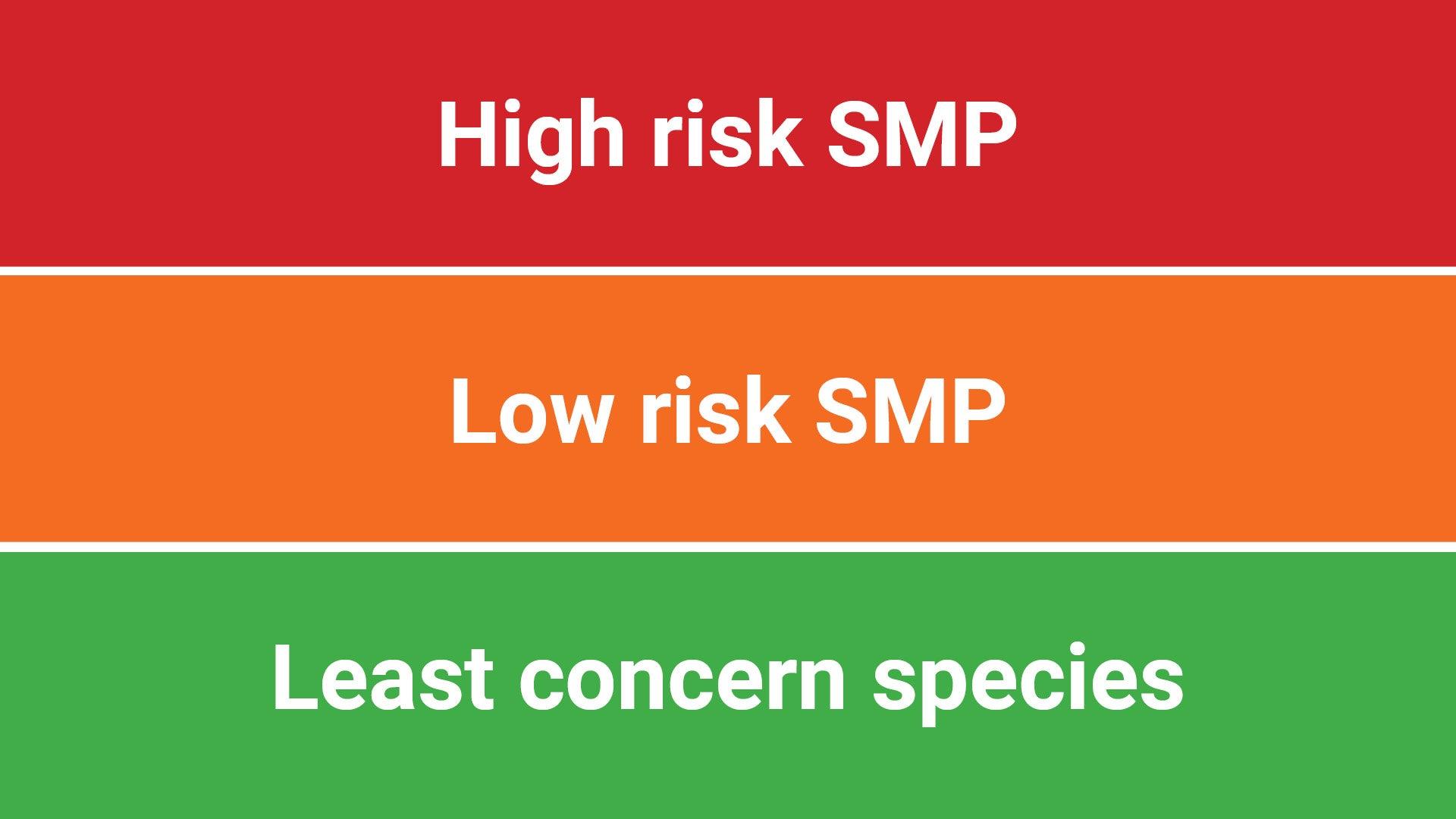
Sunshine Coast Council has various Species Management Programs for managing development impacts for high risk species. Consult Council for further advice.
A high-risk SMP approval is required from the Department of Environment and Science (DES) for threatened fauna described as:
- Extinct in the wild
- Endangered
- Vulnerable
- Near threatened
- Special least concern under the Animals Regulation
- Least concern fauna that are colonial breeding species.
Species that are not a threatened species, but are still of concern, can be put into groups of Near Threatened, Least Concern and Conservation Dependent.
A Queensland Government Department of Environment and Science (DES) species management plan (SMP) is required for tampering with fauna breeding places for ‘least concern’ species.
- This applies to activities that will or are likely to tamper with fauna breeding places of native fauna classed as "least concern wildlife" under the Nature Conservation (Animals) Regulation 2020.
Key requirements include:
- Prior to commencement of works, a suitably qualified and experienced person must undertake an assessment of fauna breeding places (all vegetated areas).
Where "least concern species" breeding places are identified, a licensed spotter/catcher must be engaged to manage the animals.
Department of Environment and Science register
Details of the animal breeding place or places must be recorded in the approved register (available on DES website).
The spotter/catcher is to complete the register.
Hollow bearing trees
Where a project may impact on hollow bearing trees, undertake a habitat tree assessment and nest box management plan:
- Undertake a survey and identify and mark hollow bearing trees in the project site
- Identify areas potentially suitable for nest box sites
- Develop a nest box management plan
- Record details on the approved register (available on the DES website).
This component is currently in development