Environmental management of fauna and flora
Conservation design
Guidance for the integration of conservation elements into design
Many design considerations can contribute to protecting and enhancing fauna and fauna habitat (flora), to come up with more effective strategies to promote human-fauna co-existence.

To protect existing fauna habitat and to create effective new fauna habitat, consider the following:
- It is critical to understand the needs of target native fauna species.
- Viability of populations of less mobile ground species is affected by habitat fragmentation.
- Mobile species can be exposed to threats from motor vehicles and domestic pets when habitat is fragmented
- Key arboreal connections must be maintained, allowing fauna to move naturally through the tree canopy, instead of forcing them down to ground level.
- Monitor the site in advance of construction, observing where fauna movement occurs, e.g. trees used by gliders to move through the area. Maintain these ranges to minimise disruption to existing fauna.
- Minimise removal and clearing of vegetation, to retain remnant vegetation and wildlife corridors
- Identify and remove invasive plants to protect and encourage native flora
- Plant native trees, grasses and shrubs to reconstruct and enhance fauna habitats
- Where appropriate, reinstate appropriate fire regimes
- Protect, enhance and connect natural areas
- Minimise the impacts of climate change.
Specialist advice
- Have an ecologist involved from early in the design, to look generally at the site, considering habitat for all fauna species, for example fauna movement, drainage areas for frog breeding.
- Utilise suitably qualified bush regeneration contractors to plan and undertake bush regeneration works.
Design elements
Design considerations – Vegetation
- Undertake weed removal to eradicate invasive species and encourage native fauna habitat.
- Replicate adjacent remnant vegetation.
- Landscape with native grasses and shrubs to enhance fauna habitat.
- Plant and retain appropriate fodder trees. Select species that provide all season range of foliage, fruit and flower for native fauna.
- Retain/recreate ephemeral landforms such as logs (ground habitat). Retain old trees with hollows for native fauna.
Design considerations – Construction methods
- See the LIM Site setup (including tree protection) for further guidance.
- Select construction methods and equipment to minimise noise and vibration disturbance to native fauna.
- Schedule construction works so that the noisiest activities occur during daylight hours (or, in the case of works near roosts, schedule works at night when flying-foxes are feeding).
- Install temporary noise barriers (where possible).
- Implement best practice erosion and sediment control to prevent impacts on fauna from dust and sediment in the environment.
- Seasonal timing of works to avoid breeding seasons, etc.
- All construction works should involve consultation with an ecologist, to monitor what is occurring and to deliver solutions to problems that may arise.
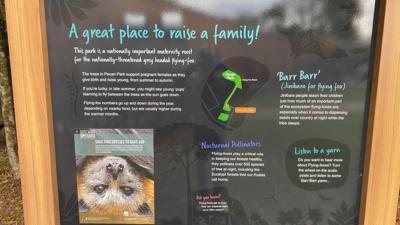
Educational signs
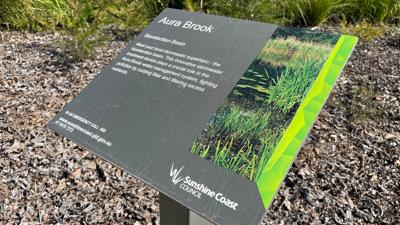
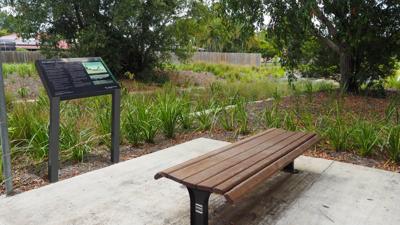
Educational, also referred to as interpretive signage assists with the management and protection of fauna. Signage communicates specific information and messages to users to help them better understand the importance of the subject and why it is important to be protected.
Design considerations:
- Interpretive sign designs and technical drawings are provided in detail, see LIM Signage - Interpretive signs.
- Messaging is to be clear, precise and consistent
- Avoid sites where the sign may interrupt or block a prominent view.
Examples of educational signs:
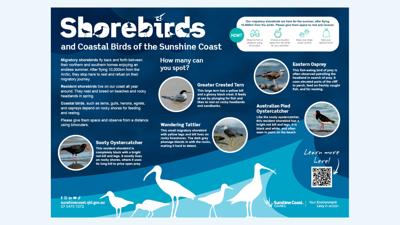
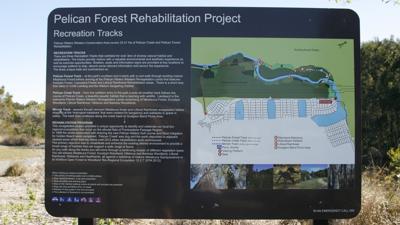
Fauna crossings
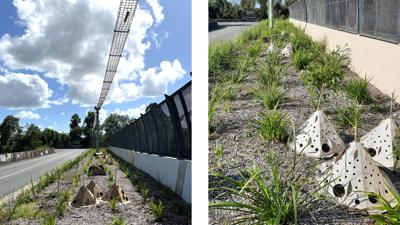
Fauna crossings are man-made structures allowing fauna to cross hazardous barriers (e.g. roads, rail corridors or canals) safely. They can also assist with reconnecting fragmented habitats and decrease the occurrence of fauna vehicle conflict.
Fauna crossing can include:
- land bridge overpass
- fauna tunnels
- rope bridges, ladders and tunnels
- culvert underpasses.
Design considerations:
- See Fauna Sensitive Road Design Manual – Department of Transport and Main Roads (DTMR) for design and construction solutions.
- May be used in situations where environment reserves are disconnected from wildlife corridors by man made infrastructure, e.g. roads, rail corridors.
- Include vegetation native to the area to provide food sources and habitat requirements for target species.
- Consider conflicts with adjacent powerlines and other utility infrastructure.
- Provide minimum clearances below rope bridges, tunnels, etc., to allow for traffic flow and sufficient height above traffic noise.
For further guidance and design specifications, contact: [email protected]
Examples of fauna crossings:
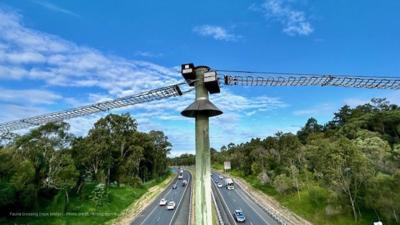
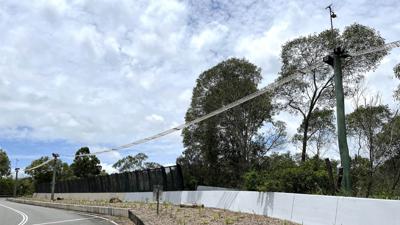

Glider poles
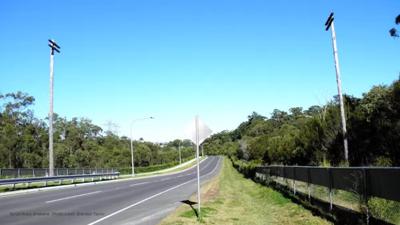
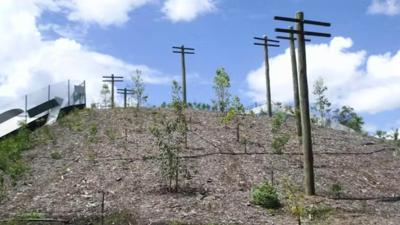
Glider poles are erected to assist with the movement of gliding mammals across roadways and other busy thoroughfares.
Glider species rarely come down to ground level, gliding between trees to move about their habitat.
Design considerations:
- See Fauna Sensitive Road Design Manual – Department of Transport and Main Roads (DTMR) for design and construction solutions.
- Consider placement to avoid conflicts with adjacent powerlines and other utility infrastructure.
- May be used as a temporary measure while canopy connectivity is increased.
- Must be of sufficient height to allow gliders to pass over trucks.
- Consider distances between poles to enable gliders to be able to utilise efficiently (ensure they are not positioned too far apart).
- May also incorporate rope ladder crossings, allowing rest periods between 'flights'.
For further guidance and design specifications, contact: [email protected]
Examples of glider poles:
Fish passage/movement
Waterway barriers (such as dams, weirs, box culverts, road crossings, pipes, floodways, bunds, floodgates and barrages) prevent connectivity throughout the landscape, and can impede the movement of native fish species throughout the Sunshine Coast LGA river systems.
Many fish species need to move along river systems, travelling from headwaters of streams to saline waters, and back again, to complete their lifecycle.
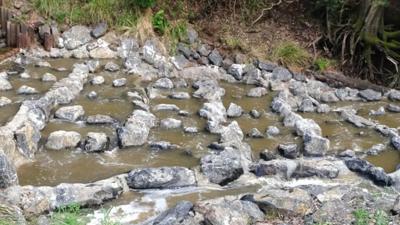
A fishway is a constructed ramp (either natural looking rock or concrete cones) with a minimal slope, to allow fish to negotiate a barrier. Baffles installed on the walls of a bed level culvert to slow flow and allow fish to pass in low and moderate flows.
Design considerations:
- Prior to design and install you must consult with the Department of Agriculture and Fisheries for design of structures for aquatic species.
- Projects may require a Development Approval under the Planning Act 2016, the Water Act 2000 and the Fisheries Act 1994. The proposed works will be either "accepted development" or "assessable development". If the proposed works meet the accepted development requirements, they are considered "accepted development", otherwise they are "assessable development" and require development approval. Any works that involve the following are regulated under the Fisheries Act 1994:
- disturbing the bed and banks of a waterway; or
- constructing or raising a waterway barrier (freshwater or tidal).
- Culvert crossings examples (with fish and fauna passage) are detailed further in LIM Landscape drainage.
Example of a fishway / 'staircase':
Crash barriers - fauna friendly and temporary
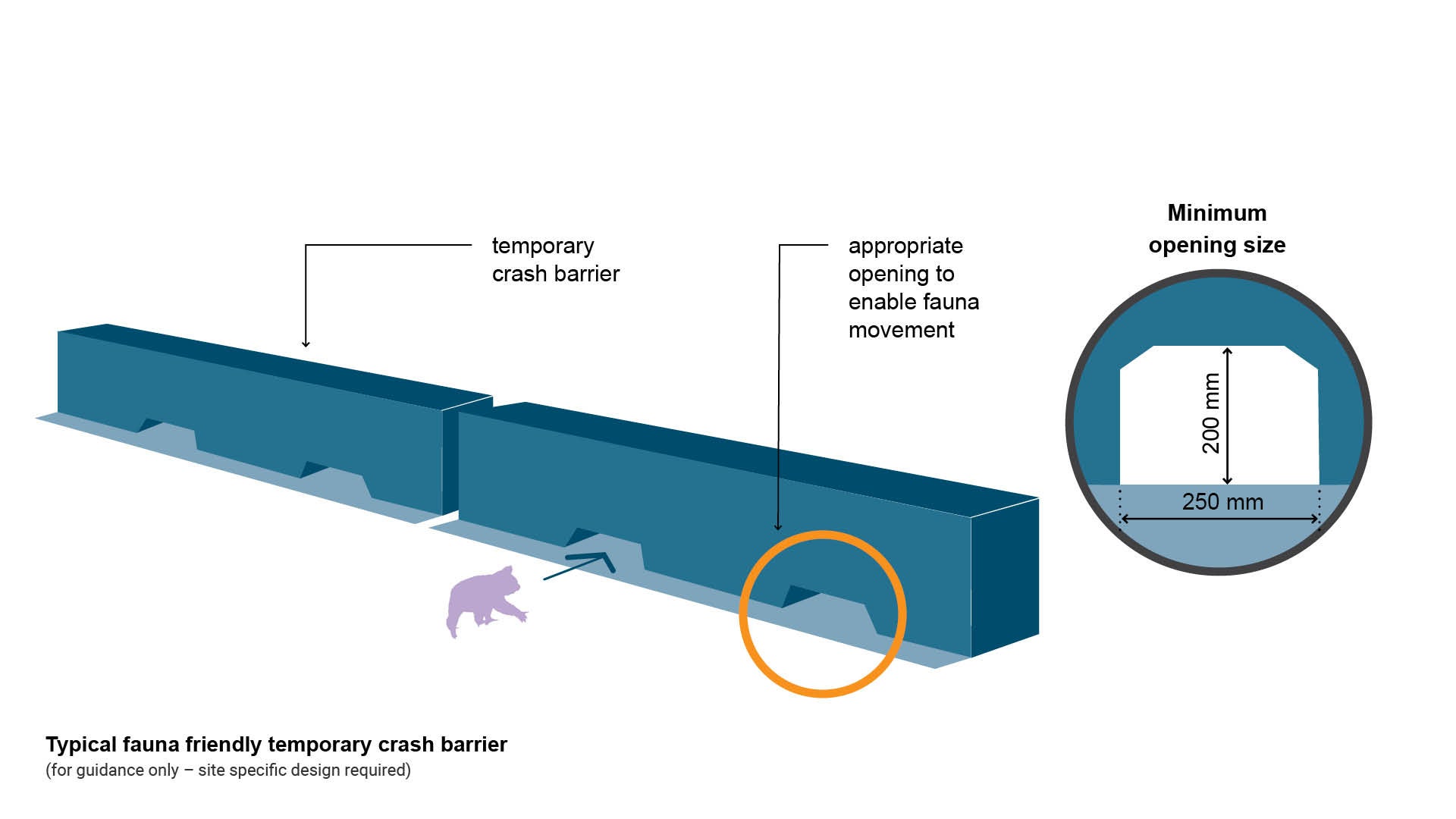
Temporary crash barriers are modular, relocatable safety systems installed along roadworks or short-term traffic management zones to provide vehicle containment and redirection during construction or maintenance activities.
The gap at the bottom of temporary crash barriers is often too small to allow for fauna movement, which can result in wildlife becoming entrapped in the road corridor.
Design considerations:
Crash barriers must allow fauna movement:
- To enable passage for animals such as koalas and also smaller mammals, the minimum acceptable gap size is 250 mm wide x 200 mm high.
For further guidance and design specifications, please contact: [email protected]
For further guidance see Figure X: Typical temporary fauna friendly crash barrier.
Figure X: Typical temporary fauna friendly crash barrier
Fauna friendly fences
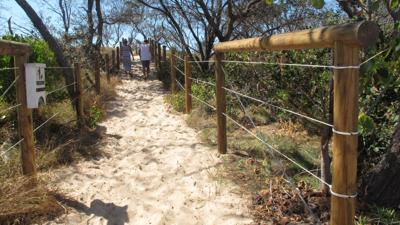
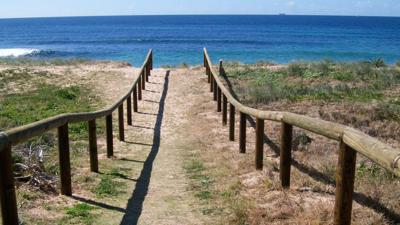
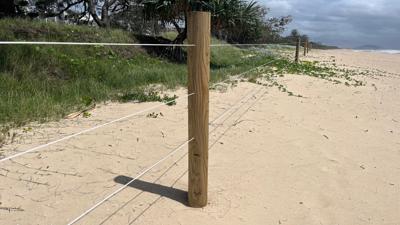
Installed to enabled fauna to pass through, over or under the fence. The fence does not disrupt the native wildlife feeding, breeding, social patterns or migration.
Design considerations:
- Fauna friendly fencing designs and technical drawings are provided in detail, see LIM Fences and gates. Fence design must:
- be determined by fauna species, surrounding landscape and risk factors.
- installed with considerations of all fauna species that may be impacted by fencing design.
- consider wildlife movements.
For further guidance and design specifications, contact: [email protected]
Examples of fauna friendly fences:
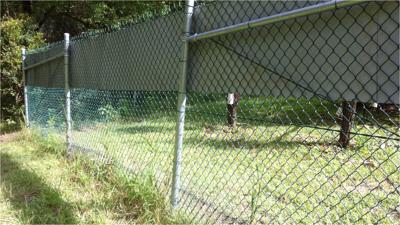
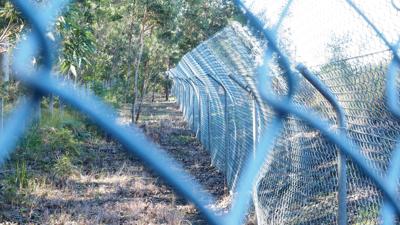
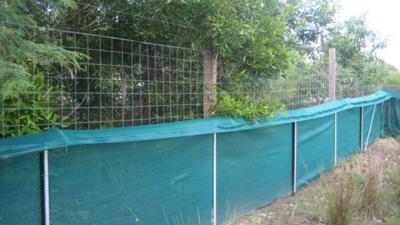
Fauna exclusion fences
Installed to keep fauna from entering harmful environments, such as road corridors, densely populated developments and land used for stock or crop farming.
Design considerations:
- Fauna exclusion fencing designs and technical drawings are provided in detail, see LIM Fences and gates. The following exclusion fences are detailed:
- Kangaroo exclusion fencing
- Frog exclusion fencing
- Koala exclusion fencing which is the most commonly installed as it can aid many animal species, not limited to the koala.
- Fence design must:
- be determined by fauna species, surrounding landscape and risk factors.
- installed with considerations of all fauna species that may be impacted by fencing design.
- consider wildlife movements.
- General
- Often used where bushland parcels are adjacent to major road corridors or urban development.
- Exclusion fencing is most effective when used in conjunction with culverts and land bridges.
- Maintenance of fencing is critical – fallen trees, erosion and vandalism can create breaches for fauna to enter the danger zone.
For further guidance and design specifications, contact: [email protected]
Examples of fauna exclusion fences:
Virtual fencing
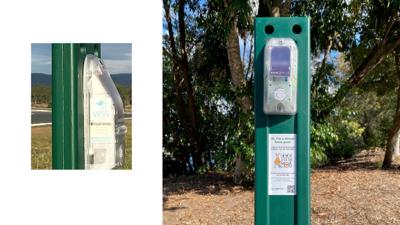
Virtual fencing includes technologies that may be installed at suitable road sites to minimise interactions between fauna and vehicles.
Virtual fencing typically consists of stand alone, electronic devices that emit an acoustic signal and flashing lights when activated by vehicle headlights.
Design considerations:
- Virtual fencing is only suitable in certain conditions. Constraints can include – only function at night, speed limits under 80 km/h, etc. Contact Council for advice on suitability.
- Installation requires minimal gaps or blackspots between posts.
- Pre-installation observations are to be used to determine correct positioning for virtual fencing systems.
- Maintenance requirements are far lower than static fencing or portable systems.
- Comparatively cheaper than physical fencing solutions.
See LIM Smart technologies for further guidance, including key considerations for installation.
For further guidance and design specifications, contact: [email protected]
Example of virtual fencing:
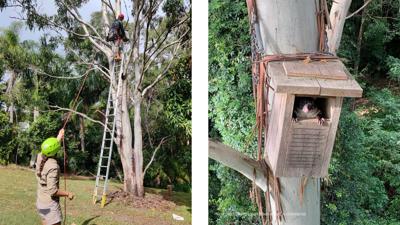
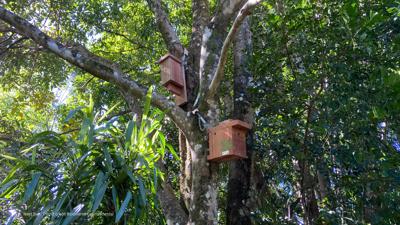
Nesting boxes
Nesting, or habitat boxes can be a viable substitute for tree hollows. They may provide shelter from weather and predators, as well as breeding, nesting and roosting opportunities for native fauna.
The installation of nesting/habitat boxes can help to address the loss of arboreal habitat. They should not be seen as a replacement for naturally occurring tree hollows.
Tree hollows are a valuable and essential resource for many native species, and are generally found in mature to over mature trees, in addition to dead trees.
Design considerations:
- Nesting boxes are designed for specific species. The size, shape and other design elements (hole size, ledges etc.) will vary. Consult Council for advice.
- A variety of nest box types should be used, as different species prefer different living conditions.
- Orientation of nest boxes are to take into account rainfall, sunlight (shade provision during summer) and possible human disturbance (avoid walking tracks).
- Nesting boxes are to be robust (must use hardwood), and able to withstand harsh, external conditions.
- Installation height and location should also be considered to suit particular species. Consult Council for advice.
- the location and position of nesting boxes can determine the chances of nest boxes being used, e.g. proximity to food and water resources.
- determine appropriate attachment methods to minimise harm to host tree. Retain old habitat trees where appropriate.
- different species prefer varying heights in a tree, e.g. cockatoos usually choose a hollow/nesting box that is quite high above the ground.
For further guidance and design specifications, contact: [email protected]
Examples of nesting boxes:

Osprey poles
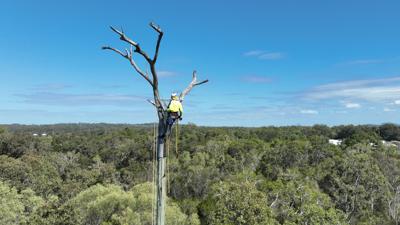
Artificially created, osprey poles and platforms/nest provide replacement habitat for nesting ospreys where the original nest has been destroyed naturally or through a development process.
Design considerations:
- The poles are to be the highest point in the landscape, typically required to be greater than 25 m high from ground level.
- Basket/platform structures are to be constructed from materials that are resistant to deterioration over time.
- Aluminium basket structures have recently been successful in creating nesting habitat, due to the reinforced edges preventing loss of nesting material during storm events.
- Platforms that are more open are not preferred. Such platforms leave the nest more susceptible to extreme weather.
Further design specifications are currently under development. For further details contact: [email protected]
Example of an osprey pole:
Habitat stacks
Habitat stacks acts as refugia for fauna, and are used to traverse and populate previously open spaces. They can be beneficial in accelerating habitat restoration in revegetation sites.
Habitat stack materials typically contain significant long term stores of carbon, which is slowly released as it decays. It also represents a long term source of nutrients.
Design considerations:
- Use existing tree stumps and other coarse woody debris (CWD) to create natural habitat for fauna. Consult Council for advice.
Example of a habitat stack:

For more information visit Habitat stacks on Council's website.
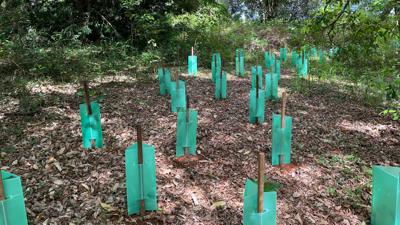
Plant selection for revegetation/rehabilitation sites
One of the primary aims of revegetation and rehabilitation is to establish plant species where they would have naturally grown. This in turn creates habitat for local native fauna. Plant selection for these sites should reflect the existing local native flora.
Specialist bush regeneration contractors are to be engaged to plan and undertake bush restoration works.
Design considerations:
- See the LIM Planting palette for suitable species.
- Composition of revegetation plant palette is to be identified from the pre-clear regional ecosystem flora species list.
- Ground-truthing of existing plant species on or near the revegetation site.
- Collect seed from as locally as possible from natural populations.
- Determine historically existing species.
- To improve the genetic diversity of rehabilitation sites, provenance of tubestock may extend from the Qld/NSW border to Gympie.
- Climatic and micro-climatic site conditions - matching of environmental conditions at the planting site with those of the collection location.
- Pioneer species for quick canopy formation, rapid growth, early senescence and atmospheric nitrogen fixing.
- Consideration of interface areas with developments and infrastructure to deliver appropriate plantings to avoid potential conflicts, e.g. tree root incursion, overhanging branches, attraction of flying-fox roosting or foraging, elevated fire risk.
- Fruiting species will attract birds and bats to the site, introducing seeds that promote natural regeneration.
- All structural vegetation layers should be included.
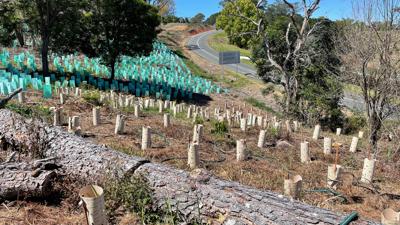
Examples of revegetation and rehabilitation of sites:

This component is currently in development