Environmental management of fauna and flora
Protected species
Guidance for the consideration of protected species
For early project planning consideration, it is important to understand what fauna, flora and habitats could be impacted.

Conservation legislation
Native fauna species are protected under Commonwealth and State legislation. The 'conservation status' is an indicator of how likely a species is to remain alive at present or in the near future, and is based on trends in population size, health, distribution and known threats, i.e. the level of risk it faces in the wild.
Throughout Queensland, there are more than 230 threatened fauna species (of which 40% are endemic to Queensland) and more than 770 threatened flora species (of which 70% are endemic to Queensland). Depending on the degree of risk of extinction, these threatened species are allocated differing conservation statuses.
Some of the species mentioned under this legislation occur in the Sunshine Coast region, and are subject to recovery plans and other conservation measures.
The current federal and state conservation classes, which are consistent with the International Union for Conservation of Nature (IUCN) species listing conventions, are as follows:
Federal

Environment Protection and Biodiversity Conservation Act (EPBC Act) 1999
- Critically endangered
- Endangered
- Vulnerable.
State
Nature Conservation Act (NCA)1992 and the Nature Conservation (Animal) Regulation 2020
- Critically endangered
- Endangered
- Vulnerable
- Near Threatened
- Least Concern.
These conservation classes are referenced in the Sunshine Coast Planning Scheme 2014 and the Sunshine Coast Biodiversity Report 2020 for the Sunshine Coast LGA.
For further guidance, refer to the following:
- Environment Protection and Biodiversity Conservation Act (EPBC Act) 1999
- Nature Conservation Act (NCA) 1992 and the Nature Conservation (Animal) Regulation 2020.
- Biodiversity Report 2020: Technical Background Report for the Sunshine Coast Local Government Area - Appendix B
- Queensland Government - Department of Environment and Science.
Species lists
For a full list of threatened flora and fauna species listed under both the State and Commonwealth legislation and occurring within the Sunshine Coast LGA, refer to Sunshine Coast Council's Biodiversity Report 2020: Technical Background Report for the Sunshine Coast Local Government Area - Appendix B.
Map requests for specific site information
Refer to Department of Environment and Science website for specific requests for:
- Request for threatened species records (EVNT) and essential habitat.
Local conservation significant species
Several fauna species within our region have specific management plans/programs:
- Marine turtles – refer to Sunshine Coast Marine Turtle Conservation Plan and State plans
- Koalas – refer to Sunshine Coast Koala Conservation Plan and State koala conservation plans
- Flying-foxes – refer to Sunshine Coast Regional Flying-fox Management Plan
- Shorebirds – refer to Sunshine Coast Shorebirds Conservation Action Plan.
- Macropods – refer to Sunshine Coast Macropod Conservation Plan.
Refer LIM Environmental management of fauna and flora - Conservation species management for further guidance.
Threatened Species Strategy 2021-2031
The Australian Government has developed the Threatened Species Strategy 2021-2031 as a forward plan for the recovery and protection of Australia's threatened plants, animals and ecological communities. This strategy includes:
- 2 high level objectives:
- to improve the trajectory of priority threatened species; and
- improve the condition of priority places by 2031.
- 6 prioritisation principles to select priority species and places, based on risk of extinction, multiple benefits, feasibility and effectiveness, importance to people, uniqueness and representativeness.
- 8 key action areas, including both on-ground and supporting actions, that are fundamental to the recovery of threatened species and where the Australian Government can make a difference.
Threatened species framework
The Queensland Government's Threatened Species Program 2020-2040 provides the framework for helping conserve Queensland's most vulnerable flora and fauna species. It aims to "deliver coordinated actions to identify, protect and recover threatened species across our terrestrial and aquatic environments and mitigate the threatening processes that impact them".
Several species within Sunshine Coast LGA are under direct threat from habitat clearing, through loss of nesting and breeding sites, removal of food sources and human – fauna conflicts. These include (but are not limited to):
- The Richmond birdwing butterfly (Ornithoptera richmondia)
- The koala (Phascolarctus cinereus)
- The glossy black cockatoo (Calyptorhynchus lathami)
- The little red flying-fox (Pteropus scapulatus), the black flying-fox (Pteropus alecto) and the grey-headed flying-fox (Pteropus poliocephalus).
Threatened ecological communities
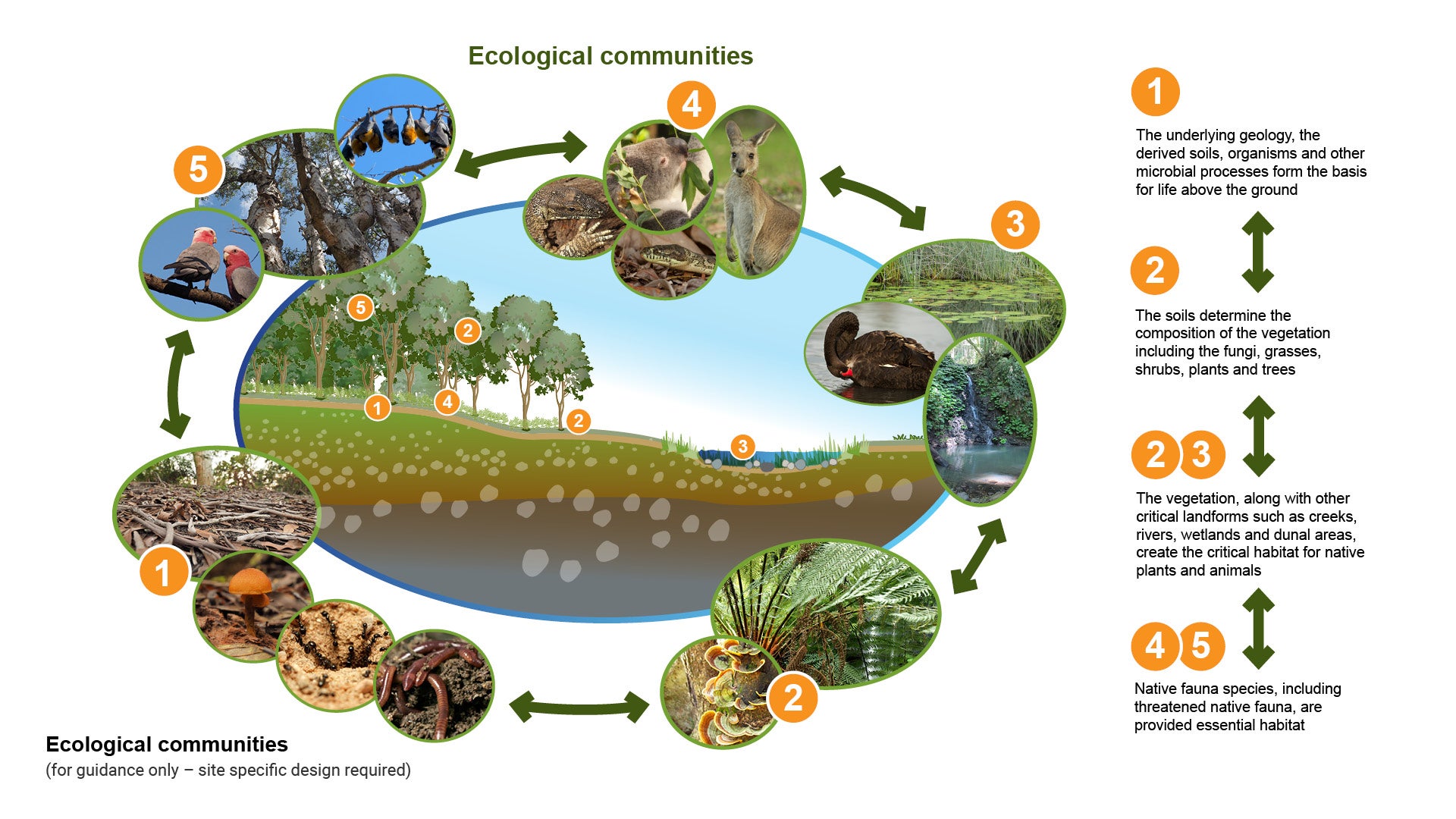
The Australian Government describes ecological communities as "a naturally occurring group of native plants, animals and other organisms that are interacting in a unique habitat. Its structure, composition and distribution are determined by environmental factors such as soil type, position in the landscape, altitude, climate and water availability".
The EPBC Act states "ecological community means the extent in nature in the Australian jurisdiction of an assemblage of native species that:
- (a) inhabits a particular area in nature; and
- (b) meets the additional criteria specified in the regulations (if any) made for the purposes of this definition."
These ecological communities contribute to the natural management of air, water and soil nutrients. They have the ability to reduce or control erosion and salinity, and can also provide breeding and feeding habitat for native species.
See the following for further guidance:
- Figure 1: Ecological communities
- Sunshine Coast Biodiversity Report 2020 for the Sunshine Coast Local Government Area.
Figure 1: Ecological communities
South East Queensland Ecological Restoration Framework Manual
The SEQ Ecological Restoration Framework Manual has been developed to "provide a systematic means of describing biodiversity across the variable environments of Queensland" (Queensland's regional ecosystems - Building and maintaining a biodiversity inventory, planning framework and information system for Queensland - Queensland Government, Department of Environment and Science (DES)).
One of the primary goals is the protection, maintenance and restoration of regional ecosystems (RE) within reserves for enhancing ecosystem resilience.
Regional ecosystems are vegetation communities in a bioregion that are consistently associated with a particular combination of geology, landform, soil and floristic composition. The regional ecosystem classification is an essential tool for natural resource management and conservation planning.
Regional significance is also important. There are a number of species which are uncommon locally, at distributional limits, or in disjunct populations on the Sunshine Coast.
This manual also provides a guide to species selection and the sourcing of plant stock, although site specific circumstances and objectives will determine the most appropriate species.
Projects should:
- protect native fauna habitat, e.g. food, roosting and breeding sites
- protect the environment (by reducing climate change effects)
- reduce flooding and soil loss
- provide refugia for fauna during climatic changes.
For further information see Sunshine Coast Biodiversity Report 2020 for the Sunshine Coast Local Government Area.
Retain, restore, expand and connect
Designing a sustainable built environment ensures we minimise our impact on the natural environment.
Design objectives should encompass the following principles:
- avoid or minimise removal and clearing of vegetation to retain habitat and native fauna corridors.
- integrate environmental design and construction within a development that retains, protects and enhances native fauna habitat and movement corridors.
- raise awareness of significant environmental areas to protect native flora habitat (e.g. signage).
- identify and remove invasive plants, to protect and encourage native flora.
- landscape or regenerate with native trees, grasses and shrubs to reconstruct and enhance fauna habitats.
- use low fire prone plants and plantings adjacent to bushland areas that are consistent with the regional ecosystems (vegetation types) contained within the reserve. See LIM Paths, trails and tracks for further guidance on fuel management zones.
- protect areas identified as feeding, roosting and breeding sites for native fauna.
- to minimise human conflict with fauna species (i.e. flying-foxes), planting of low-fruiting species to discourage the prevalence of animals in certain areas.
- where there is a need to remove existing hollows, look for opportunities to replace with nesting boxes (where an ecologist deems it appropriate).
- to enhance and connect natural areas.
- to facilitate appropriate fauna movement design elements.
- sustainable design for constructed waterbodies to ensure that water quality guidelines are adhered to and ecosystem health is maximised.
- consideration of the depth of water bodies to aid in the prevention of pest fish infestation.
See Figure 2: Key principles to achieve fauna and flora conservation.
For further information in regard to the operational management of Council's environment reserves, refer to the Sunshine Coast Council Environmental Reserves Network Management Plan (ERNMP).
Figure 2: Key principles to achieve fauna and flora conservation
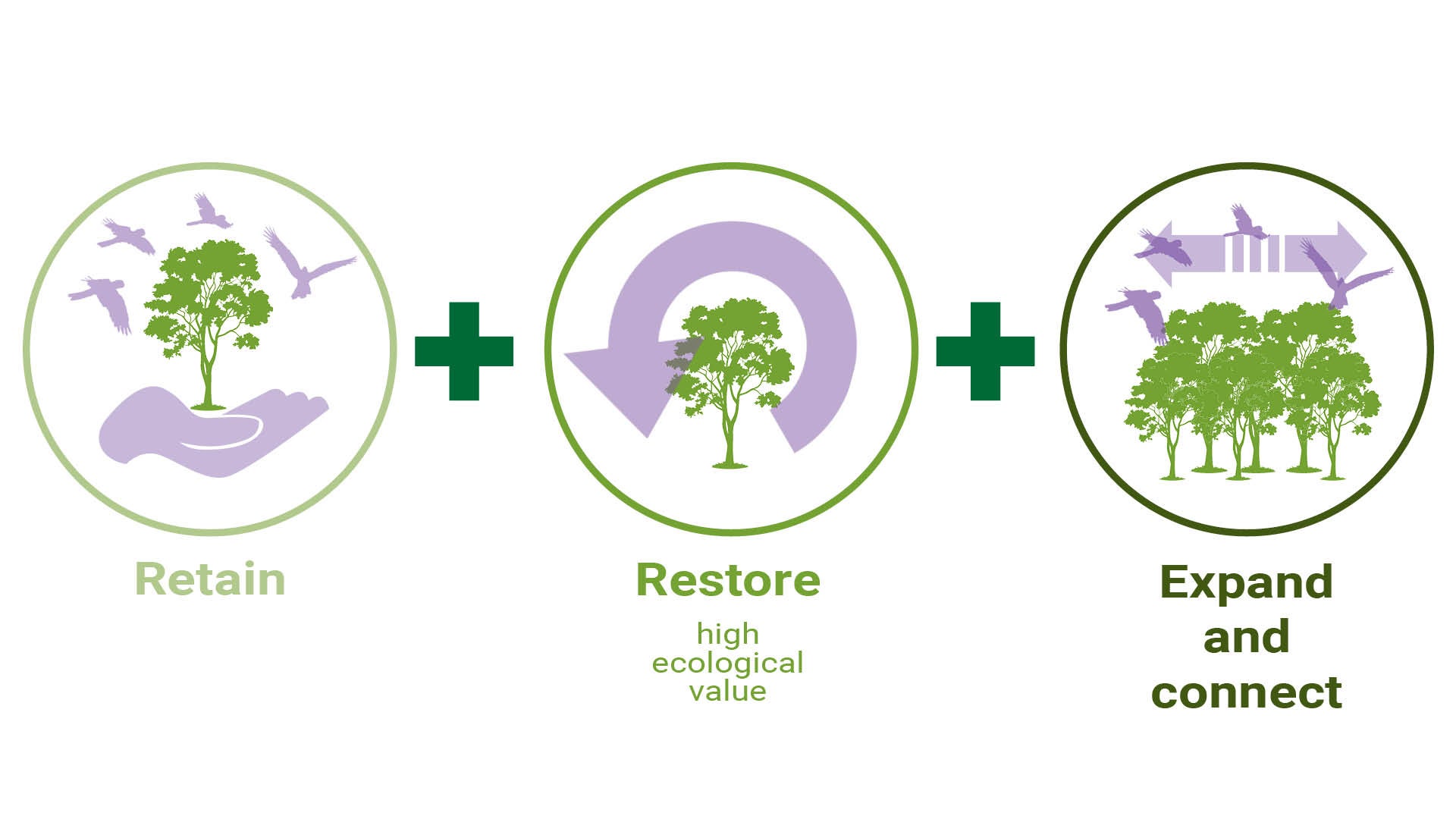
The retention of existing native vegetation is vitally important. However in situations where this is not achievable, rehabilitation and revegetation of previously cleared or degraded sites is an important component of sustainable land management, in order to supplement and connect to, areas of remnant vegetation.
Revegetation projects require careful planning, organisation and site specific analysis to deliver suitable environmental outcomes.
A wildlife corridor is an area of connectivity of habitat, typically used to connect isolated habitat areas which permit animal and plant species to migrate between these sites.
This allows an exchange of individuals between populations and may help facilitate the re-establishment of populations that have been reduced or eliminated due to events such as fire or disease. These corridors enable animals to move freely between habitats to find food, shelter or breeding opportunities.
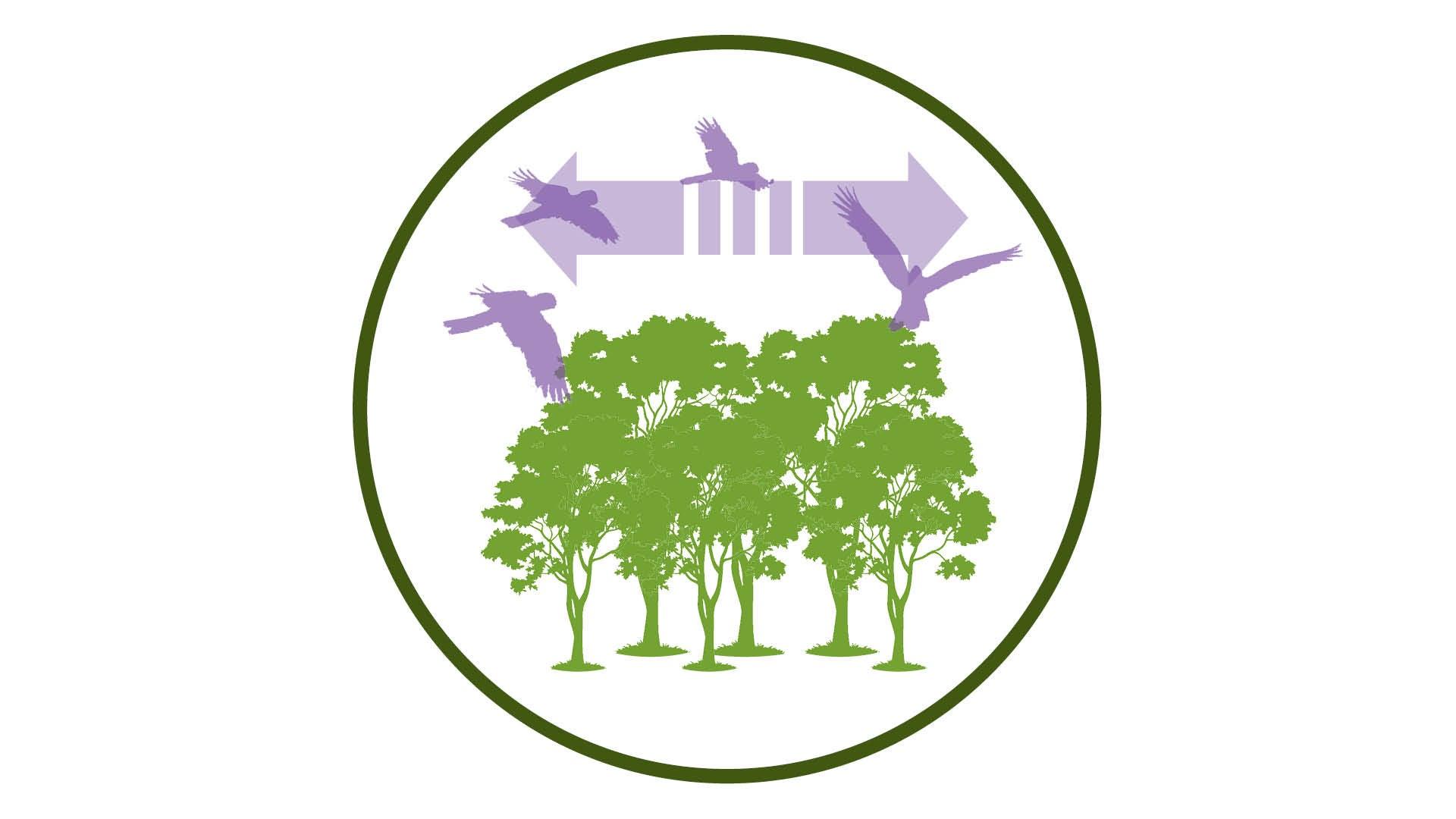
Strategic wildlife corridors are the important connecting habitat areas that provide important refugia and vegetated corridors that enable native fauna to move between core habitat areas.
Loss of habitat connectivity due to land clearing or development may result in a species being unable to disperse from isolated habitat, putting further strain on vulnerable populations. Wildlife corridors should be a priority area for targeted control and monitoring, to ensure our general biosecurity obligation (GBO) is fulfilled.
This component is currently in development