Paths, trails and tracks

Design
Requirements for the design, manufacture and installation of embellishments
Good design
See the following corporate documents to identify relevant project design requirements:
Sunshine Coast Planning Scheme regulates the way land, buildings and structures are used and developed on the Sunshine Coast.

Sunshine Coast Design contains 10 design principles that guide good project planning and design outcomes, that are appropriate for the Sunshine Coast.
The LIM provides further overarching design advice, refer:
- Introduction and Design Principles - e.g. sustainability, CPTED, accessibility
- Preliminaries - environmental management, tree sensitive design and site set up.
Embellishment requirements
- Universal access.
- Comfortable and suitable for the average person.
- See 'Positioning' and 'Equal access' sections for the corresponding LIM category.
- Made from materials that will be durable and can be suitably protected from exterior elements, such as salt spray and UV exposure.
- Robust and sturdy to withstand constant public use and be resistant to vandalism.
- Fixings are to be 316 marine grade stainless steel (unless otherwise stated).
- Tamper proof fixings should be used
- Graffiti protection coatings applied (where applicable)
- Fire retardant (where applicable).
- Warranties should be as listed below.
- Easily repairable or replaceable.
- Sourced locally and use standard fittings.
- Reputable suppliers should be used who keep a supply of stock parts on hand for the life of the product.
- Use sustainable materials, although sustainability needs to be considered over the lifetime of the embellishment.
- Install on paved, concrete or other hard surfaces (where applicable).
- Manufactured to engineering specifications (where applicable).
- See the 'Standards' section for the corresponding LIM category.
Warranty and asset life
Product/embellishment | Warranty (suggested minimum) | Asset life (typical useful life) |
timber | 15-25 years | 15 years 2 |
concrete | 10 years | 50 years 2 |
unit paver | 2 years | 20 years 2 |
asphalt (including coloured) | 2-4 years | 30 years 2 |
stabilised gravel | N/A | 10 years 2 |
recycled plastic | 10 years | 20 years 2 |
modular concrete system | 10 years | 40 years 2 |
Source 2: Sunshine Coast Council Asset Management Plan 2017/18-2022/23 – Parks and Gardens (figure based on current data, subject to change).
Paths, trails and tracks (PTT)
Once the location of the PTT has been decided, based on the Environment and Liveability Strategy (ELS) and Recreation Parks Plan (RPP) guidance, consider the appropriate embellishment level to suit the selected site.
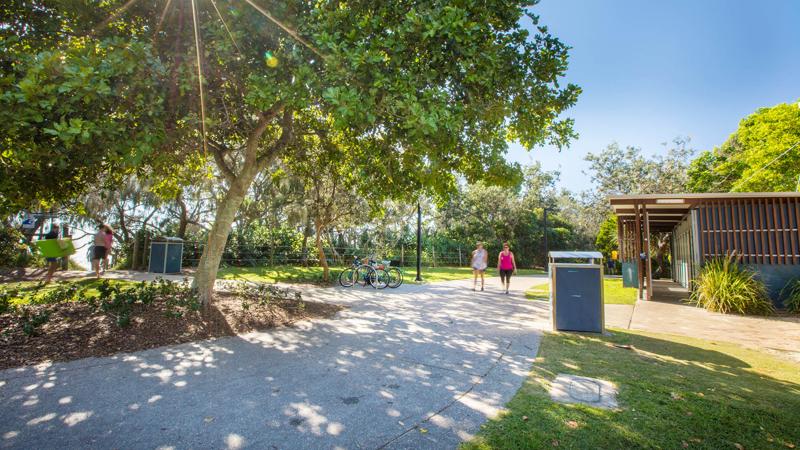
Overarching design considerations:
- See ‘Design process’ below, for guidance regarding the key design considerations for paths, trails and tracks.
Design process
After deciding the classification of a path/trail, consider the following phases to the design process:
- Recommended standards and planning – e.g. Land tenure, gradient, recreational and vehicular use, expected number of users, single/multi-use, community expectations, the potential for illegal use. Equal access for people with disabilities. Permit and permission requirements. Australian Standard path/trail class determines the level of embellishment. Austroads vehicle user class may determine pavement design requirements.
- Positioning guidance – pedestrian equal access, vehicle access, fire trails
- Equal access guidance – recreational users
- Access guidance vehicles – construction vehicles, recreational vehicles, regulatory vehicles, emergency vehicles
- Access guidance fire trail – fire trails
- Design development – e.g. soil types, load rating, materials suitability, drainage, vegetation protection, benching and batters.
- Surface materials – e.g. surface type (include whole-of-life cost) rigid concrete, flexible asphalt, modified and natural surfaces.
See Table 2: LIM Paths, trails and tracks design process for further guidance.
Other
- Design of paths/trails should include an assessment of the environmental and cultural values of the site. A new path/trail and subsequent use can impact on sensitive fauna and flora species such as, seabird nesting and roosting areas, frog habitat, turtle nesting sites, localised rare and endangered plant species or significant trees.
- Ensure any new path/trail construction causes no damage to indigenous cultural sites such as middens, scar trees and bora rings. Design any new path/trail to protect culturally sensitive and significant areas in consultation with appropriate indigenous representatives.
- Paths/trails provide an opportunity to educate visitors about these important values.
Table 2: LIM Paths, Trails and Tracks design process
INSERT TABLE . Delete FMZs from table if used.
This component is currently in development