Paths, trails and tracks
Vehicles
Best practice guidance for integrating vehicle access (emergency and maintenance)
Path/trail/track (PTT) road crossings
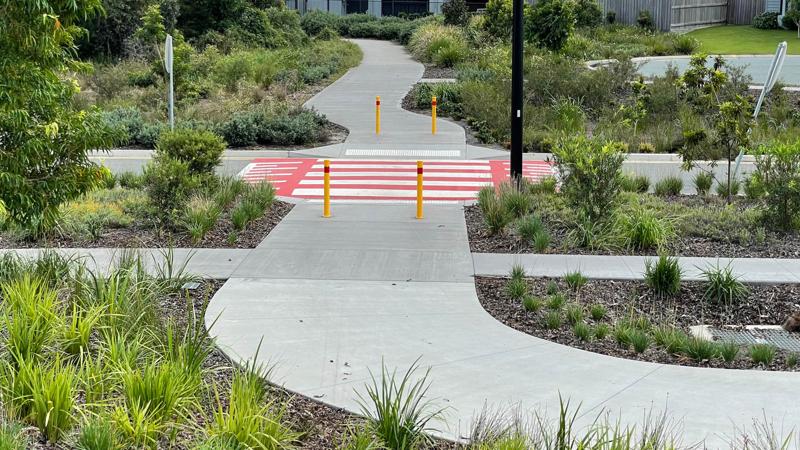
The design objectives at PTT road crossings are to slow down the user, making them aware of the approaching intersection, and to provide a safe crossing point. Road crossings also provide opportunities to promote a path/trail to passing motorists.
Siting guidelines
- For any PTT crossing a council controlled road, the designer is to consult with SCC Transport Infrastructure Management in the first instance.
- The approval of the Transport and Main Roads Department is required when a PTT is to cross a road under State control. See Transport and Main Roads – State Road Network of Queensland map available on their website.
- PTT road intersections should be placed in a location that maximises sightlines for both users and motorists. The crossing should ideally be at a straight, level area allowing a PTT user and a motorist good visibility, and the driver ample stopping distance (where possible). Pedestrian crossings should comply with:
- AS 1428.1 – Design for access and mobility Part 1: General requirements for access – New building work
- AS 1528.4.1 – Design for Access and Mobility Part 4.1: Means to assist the orientation of people with vision impairment – Tactile ground surface indicators.
- Ideally PTT should not cross multi-lane roads without any special provision such as an underpass.
- Avoid any changes in topography between the barrier and the road so that users do not have to negotiate a major rise or drop onto the road. A horse negotiating a major rise onto a road may arrive on the road with speed and little ability to stop for traffic.
- Motorists should be warned in advance of a PTT crossing the road through the use of appropriate signage. See Transport and Main Roads Manual of Uniform Traffic Control Devices Queensland and Austroads Guide to Traffic Management Part 6: Intersections, Interchanges and Crossings.
- Vegetation needs to be checked and pruned regularly at road crossings to ensure that sightlines and signage are not obscured.
- A number of barrier options could be used at a crossing (either singularly or in combination). Gates, restricted openings, chicane paths and fences are options that can be used to effectively slow PTT users down when approaching road crossings.
- The choice of barrier depends on a number of factors including road type, traffic volumes, path/trail capacity, crossing and path/trail visibility, potential illegal vehicle use (path/trail bike or car), nature of PTT (single, shared or multi-use), and location of PTT (urban or rural). The choice may be no barriers.
- PTT in rural and outer areas often cross roads carrying low to medium volumes of traffic at higher speeds.
- Drivers do not expect to encounter a crossing and so advanced warning signs should be provided.
- The crossing should be highly conspicuous.
- Holding rails should be provided where path volumes are high.
- Transport and Main Roads Queensland (DTMR) do NOT encourage the use of ‘banana bars’. See IPWEA standard drawings for alternatives.
See the following:
- Figure 22: Typical plan – path/trail road crossing
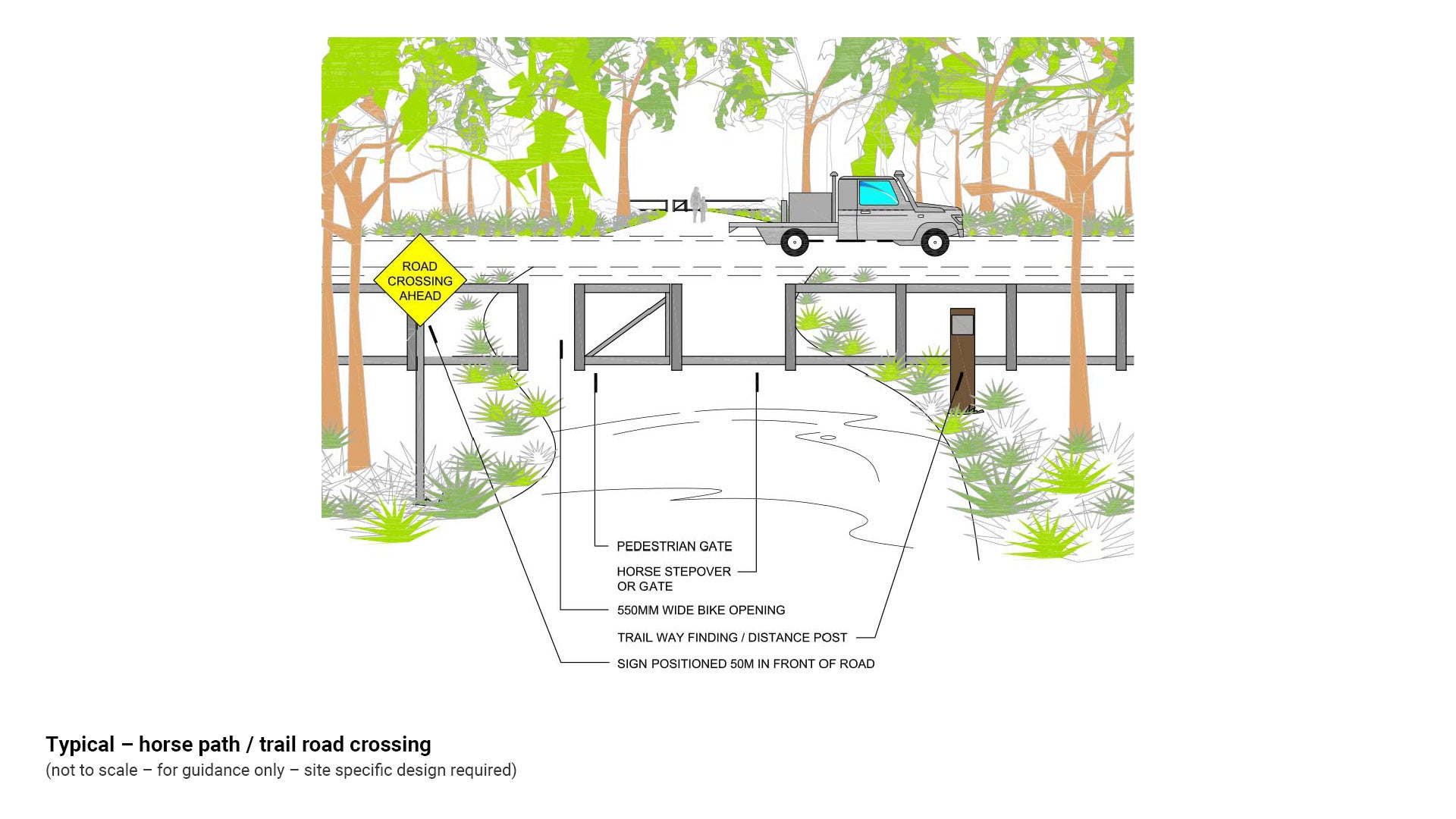
- Figure 23: Typical – horse path/trail road crossing.
Note: Any barrier treatment should be a minimum of 20 m from the road edge. A step-over within 20 m of the road would be not advisable as the horse rider may not have enough space to manage the horse. An alternative to a step-over is a horse gate.
Figure 22: Typical plan – path/trail road crossing
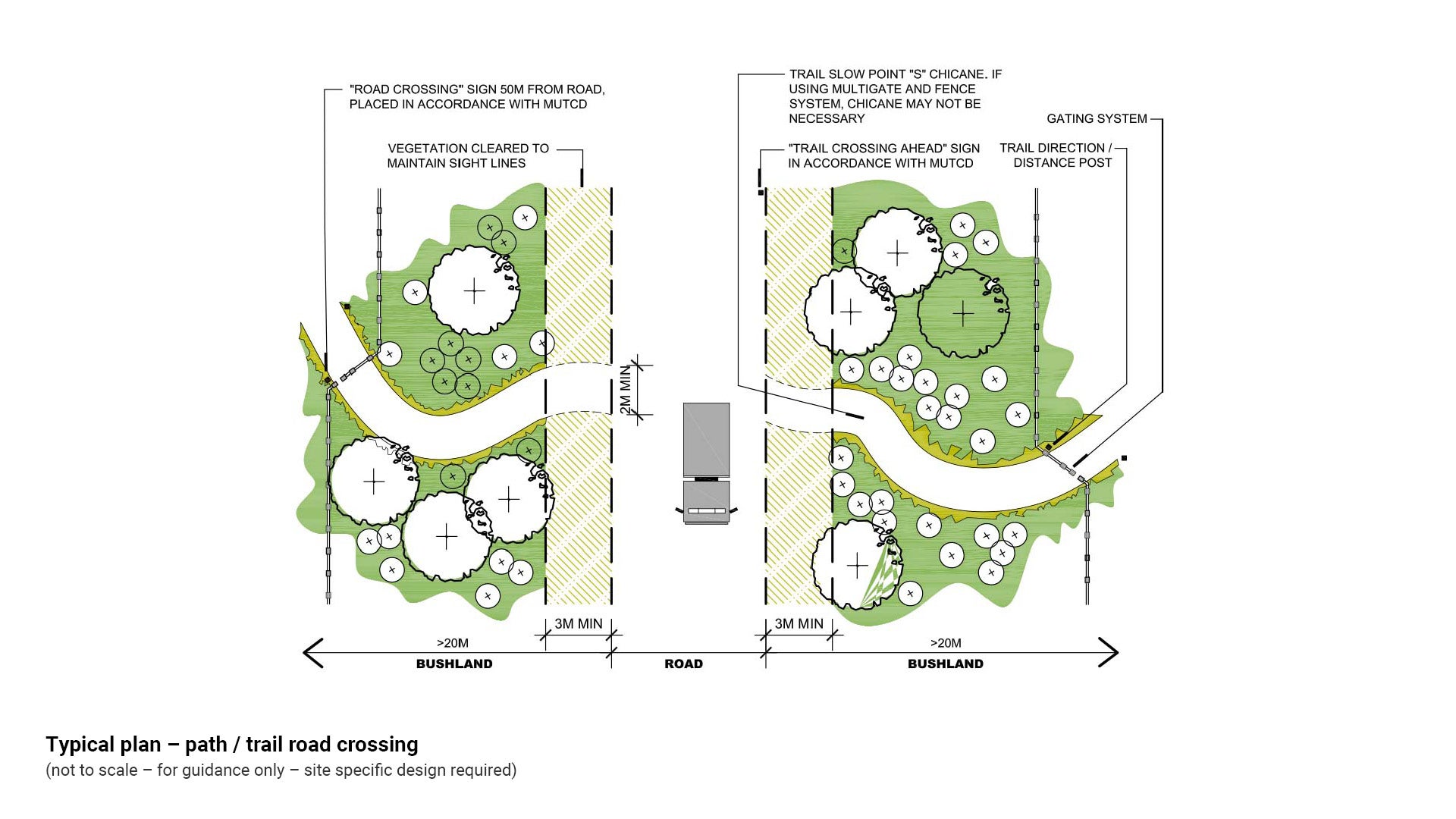
Figure 23: Typical – horse path/trail road crossing
Vehicle dimensions
The following vehicle types and figures are illustrative only and represent the average dimension for the purposes of estimating vehicle design clearance.
Maintenance and construction vehicles
- Four wheel drive (4WD)
- Truck towing chipper unit
- Utility vehicle (ute)
- Crane/excavator.
Regulatory vehicles
- Queensland Police Service – quad bikes, cars and 4WD’s.
- Council regulatory services.
Emergency vehicles
- Queensland Police Service – quad bikes, cars and 4WD’s
- Queensland Ambulance Service
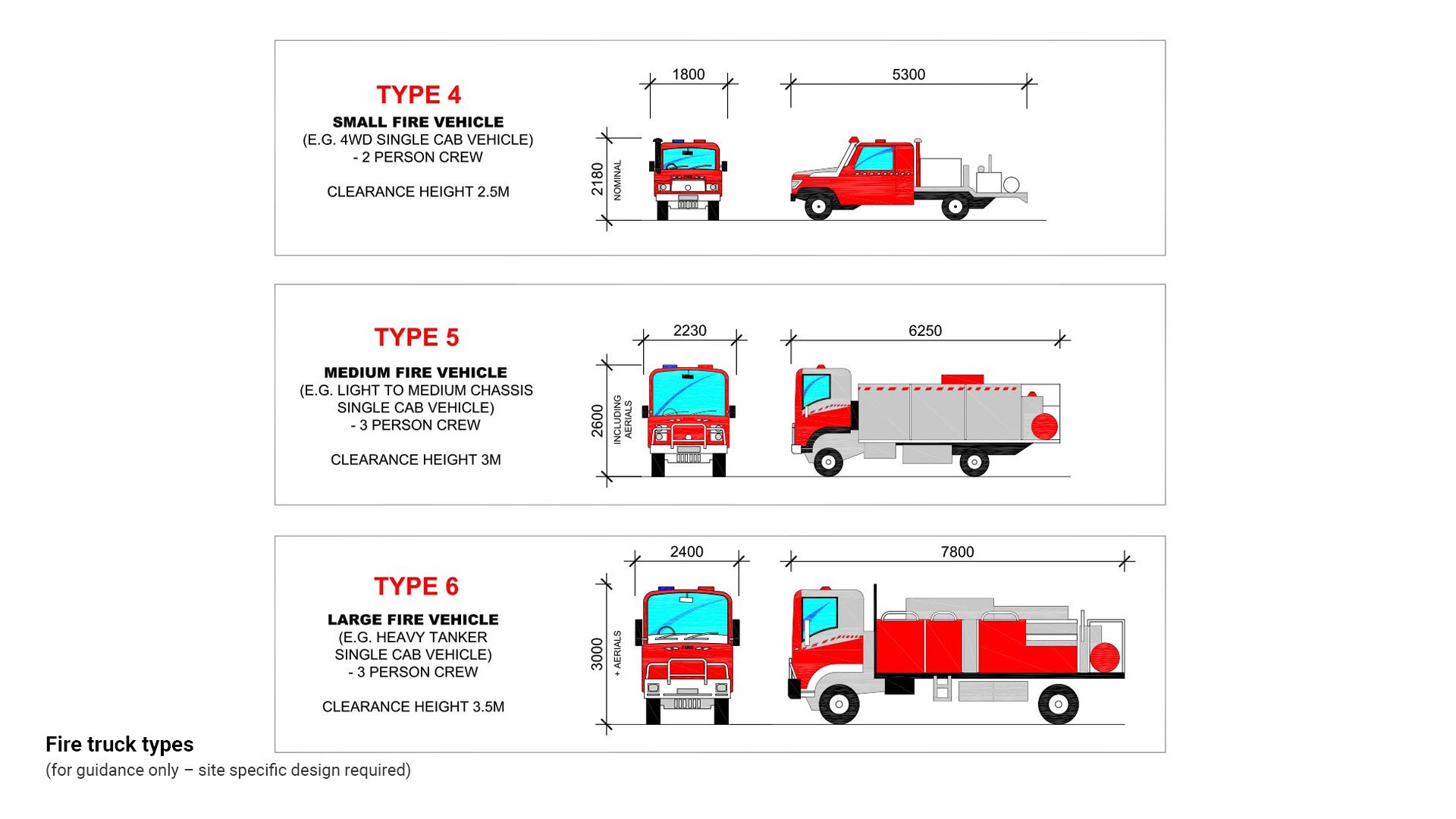
- Queensland Fire and Rescue Service – Fire trucks type 4, 5 and 6
- State emergency services (SES)
- Surf Life Saving Vehicles.
Public users
- Public users if traversing path (i.e. bus, vehicle towing a boat).
See the following figures for further guidance:
- Figure 24: Vehicle classes
- Figure 25: Fire truck types
- Austroads Design Vehicles and Turning Path Templates Guide.
Figure 24: Vehicle classes
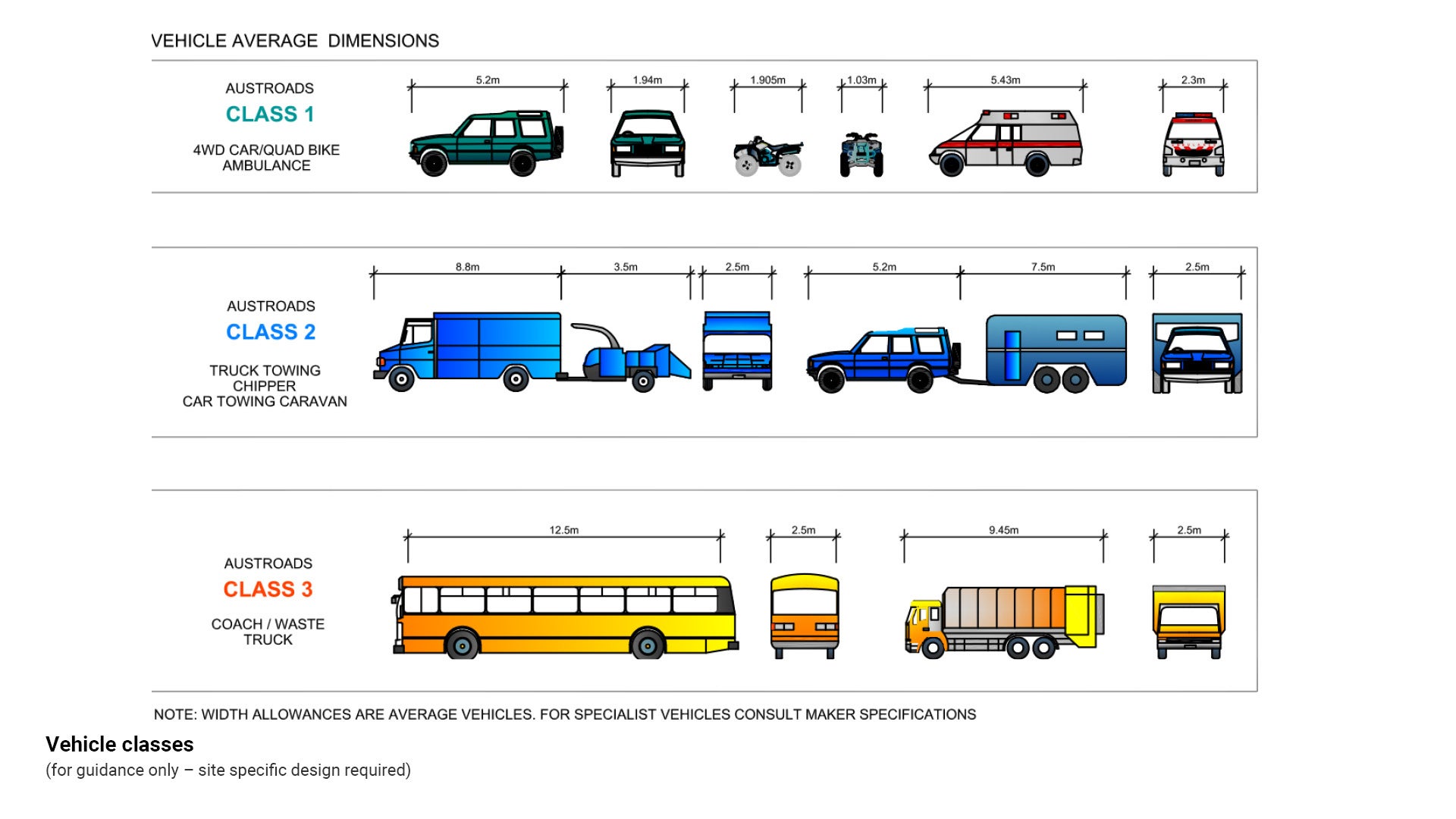
Figure 25: Fire truck types
This component is currently in development