Fences and gates
Materials, fixings and finishes
Best practice guidance for the selection of materials, fixings and finishes
Overview
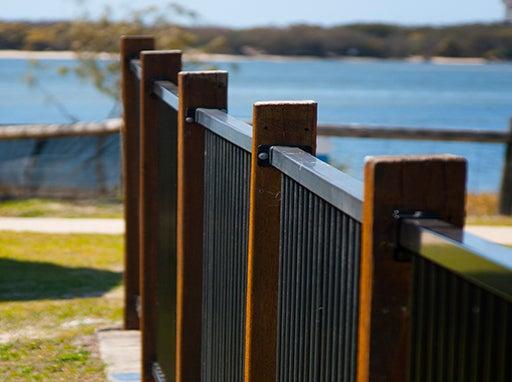
A fence may comprise posts of timber, concrete, bricks, metal or recycled materials connected by wire, netting, rails, or boards.
Fence structures may include embankment, strategic tree planting, hedge, creeks, cattle grids or anything that forms part of an enclosure.
Materials selection will reflect the following considerations:
- Open space classification to inform the design standard.
- Adjacent fence type.
- Level of use.
- Any potential unlawful entry.
All materials, fixings and finishes must be made from robust heavy duty materials (not standard residential pool fencing), vandal and corrosion resistant (particularly in coastal areas) and suitable for use in public places.
- All stainless steel
- Use high grade (extra heavy duty) commercial components to achieve a strong and resilient fence which resists bending deformation due to impact and repeated manipulation.
- All wire fences must be commercial grade, looped at each strand.
- Mesh and chain wire should be uniquely strung, so that if a section is damaged, it can be replaced without affecting the whole fence.
- Fences and gates which are located in aggressive coastal environments or waterlogged areas, require materials which provide operational and maintenance benefits.
- Materials must be manufactured and constructed to operate in exposed, high energy environments to achieve the required design life, and provide ‘very long term’ (ISO 12944-1) corrosion resistance.
- Steel coating systems must be in accordance with AS 2312 – Protection of structural steel against atmospheric corrosion for the CS-M Zone as per AS 4312 – Atmospheric corrosion zones.
- Match or exceed the requirements noted in Table SC6.14.8A of the Sunshine Coast Council Planning Scheme policy for development works.
- Where metallic surfaces are painted following the above treatment, this is to be done with a 2-pack epoxy paint.
- Powdercoating of steel work is not accepted.
- Council fences and gates are predominantly constructed from one or more of the following (specialised fauna fences may use other materials):
- 316 marine grade stainless steel East of the Bruce Highway.
- Supply is to be by an ASSDA (Australian Stainless Steel Development Association) SSSR (Stainless Steel Specialist Register) accredited business, or equivalent.
- For high use pedestrian areas or where a high level of finish is required.
- All stainless steel elements must be treated with a clear surface protectant to protect against discolouring and tea staining.
- 316 marine grade stainless steel East of the Bruce Highway.
- Galvanised steel (hot dip galvanised after fabrication) hinterland areas West of the Bruce Highway.
- Galvanised welded PVC coated wire mesh infill for fences and gates.
- For play spaces and environmental reserves.
- Marine grade aluminium, powder coated (not swimming pool fence) all areas.
- Extra heavy duty strength aluminium is required to prevent accidental damage and vandalism to fence components.
- To limit galvanic corrosion provide an insulating layer between different metals.
- Aluminium timber look posts may be used with gloss finish aluminium baluster.
- Hardwood timber (appropriate species and treatment) to approved areas.
- Approval is required from Council (Parks and Gardens) and / or Council (Environmental Operations), depending on the location.
- Recycled plastic bollard posts with horizontal rails made from recycled plastic or galvanised steel.
- Manufactured to engineering specifications (where applicable).
See the following for further guidance:
- LIM Bollards
- Table 15: Fences and gates materials key considerations for a full list of materials.
Table 15: Fences and gates materials key considerations for a full list of materials
Material and definition | Recommended installation sites | Key considerations |
316 Marine grade stainless steel Stainless steel refers to a group of corrosion resistant steels containing a minimum 10.5% chromium. Resistance to corrosion is due to the naturally occurring chromium rich oxide film present on the surface of the steel. 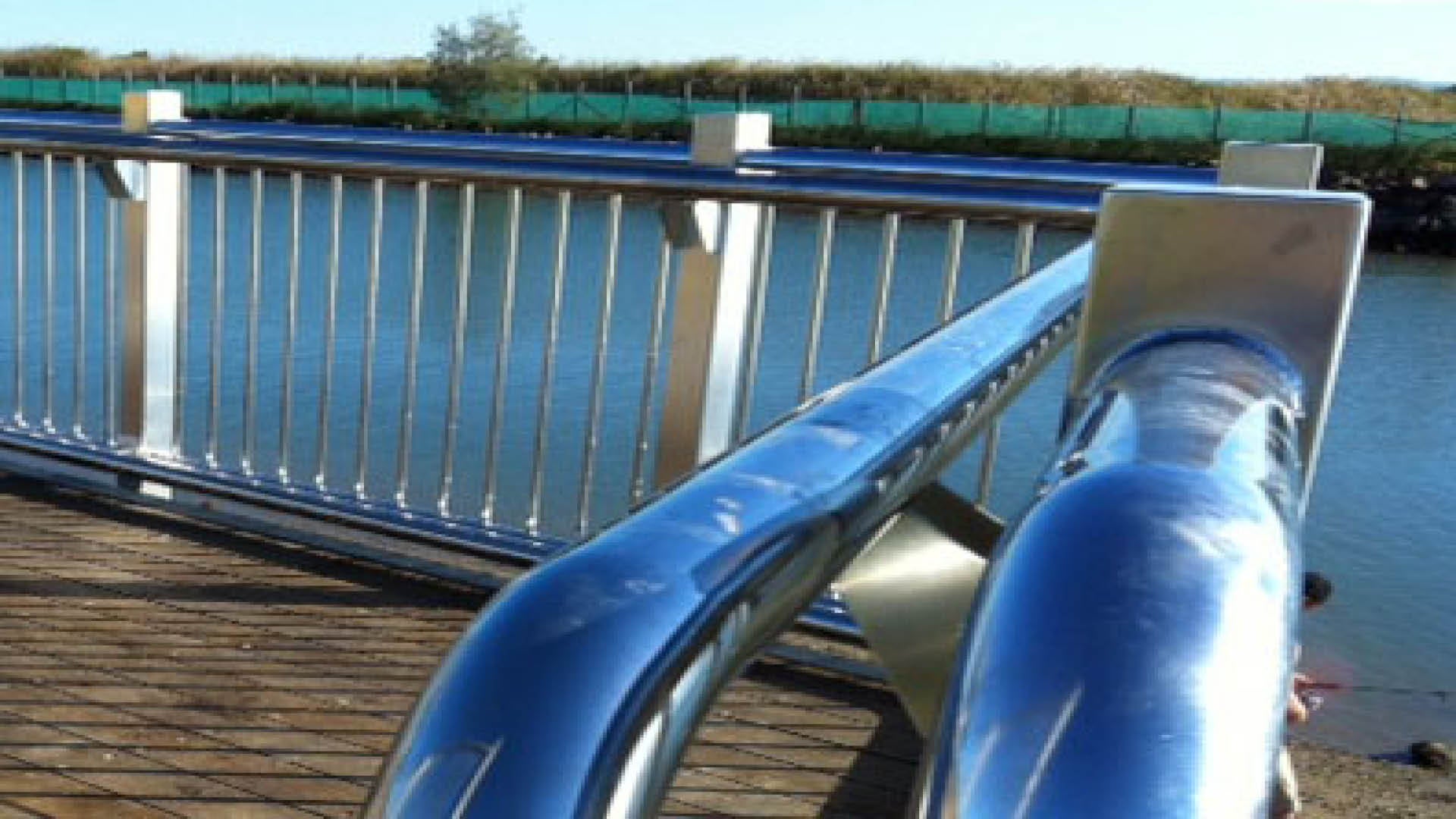 |
|
|
Aluminium (including wood look aluminium) Aluminium is a light malleable ductile silvery-white metallic element that resists corrosion. 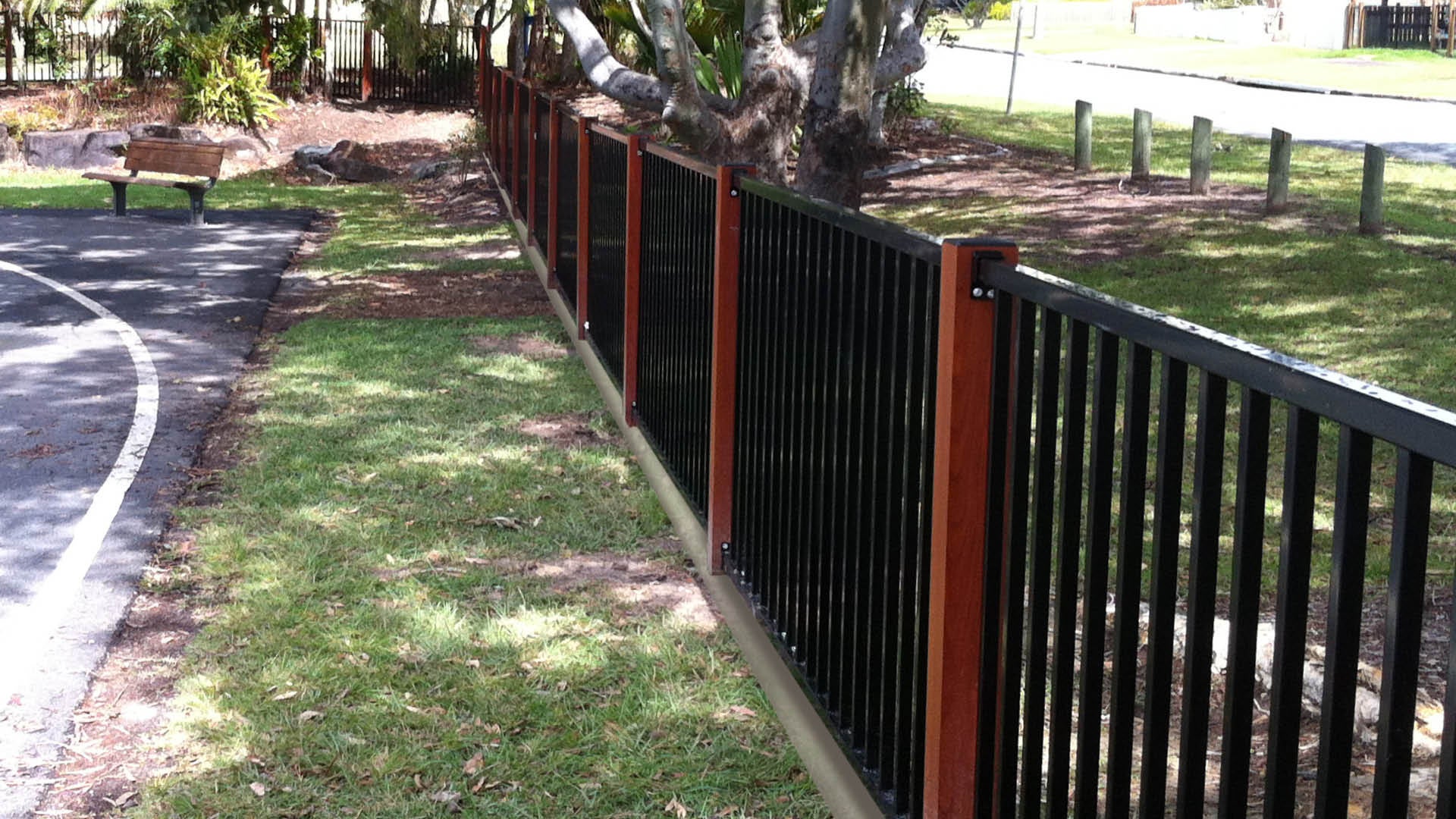 |
|
|
Galvanised steel Hot dipped galvanising (total immersion in molten zinc of all fabricated pieces after market) provides durability, longevity and sustainability. 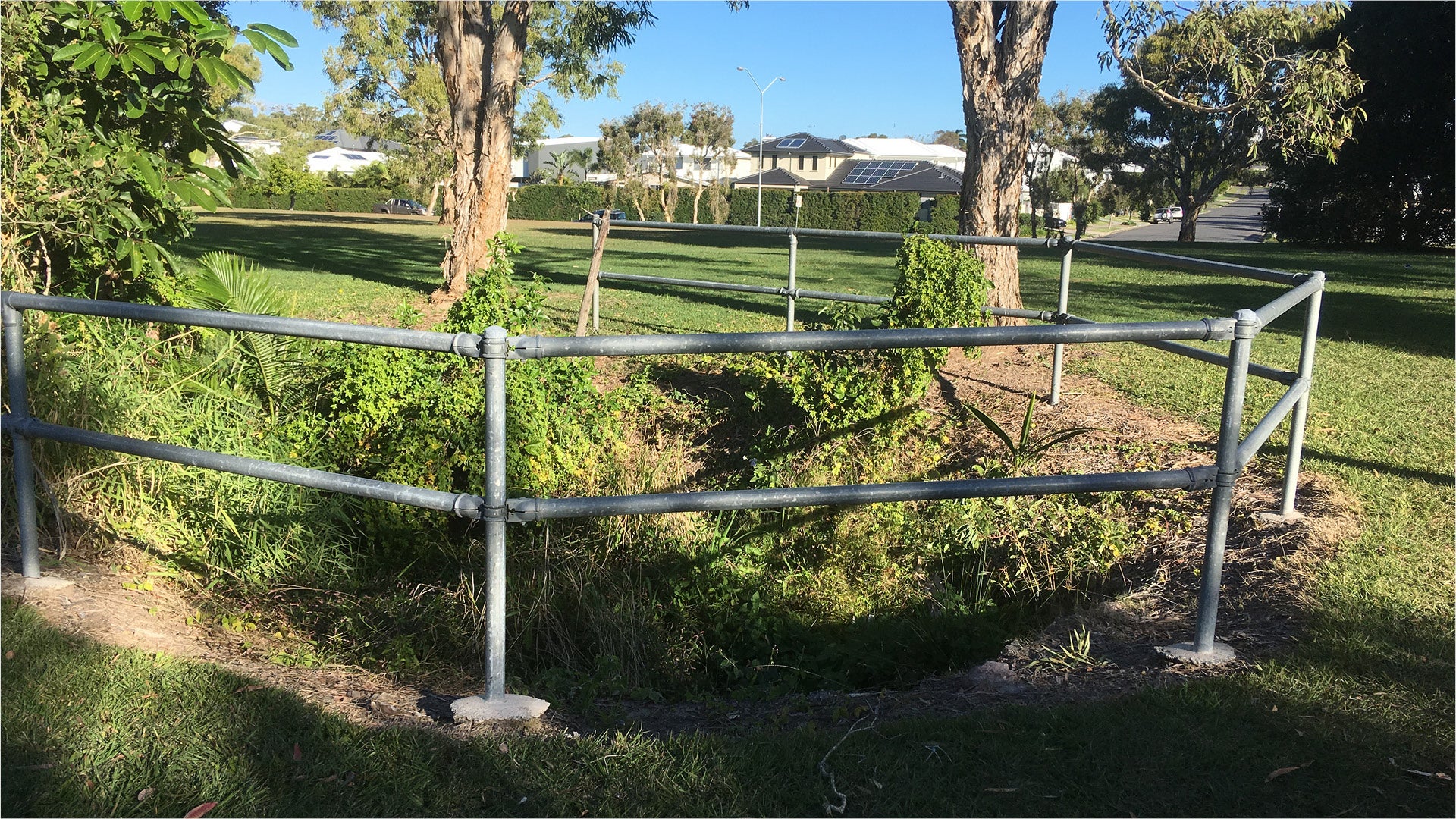 |
|
|
Timber (new and recycled) Timber is workable, readily available, rust and corrosion free, durable and easily repaired/replaced. 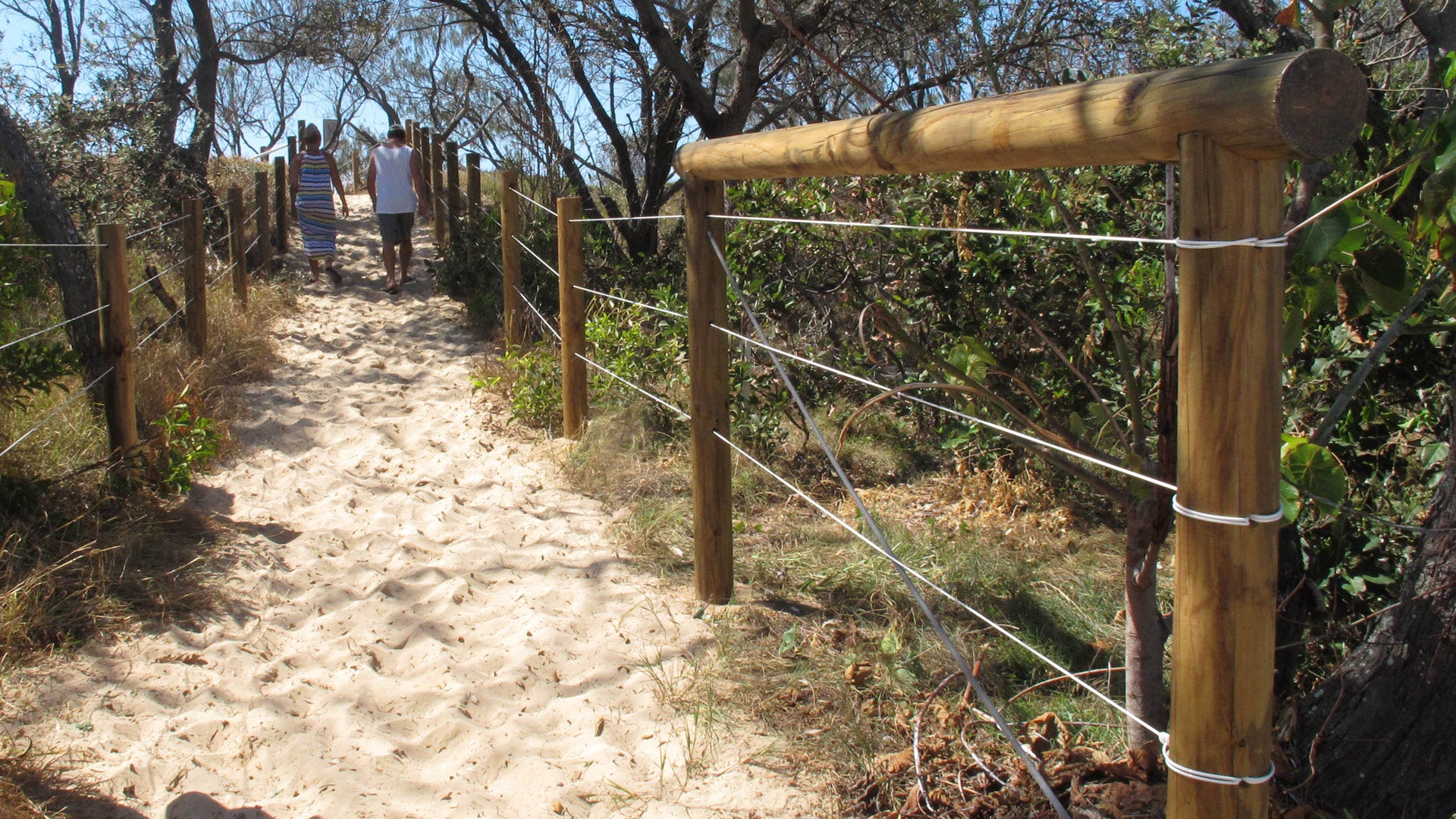 |
|
|
Recycled plastic Recycled plastic is ‘second use’ reprocessed waste plastic material. Sources include industrial waste, post consumer plastics and retail plastic waste. 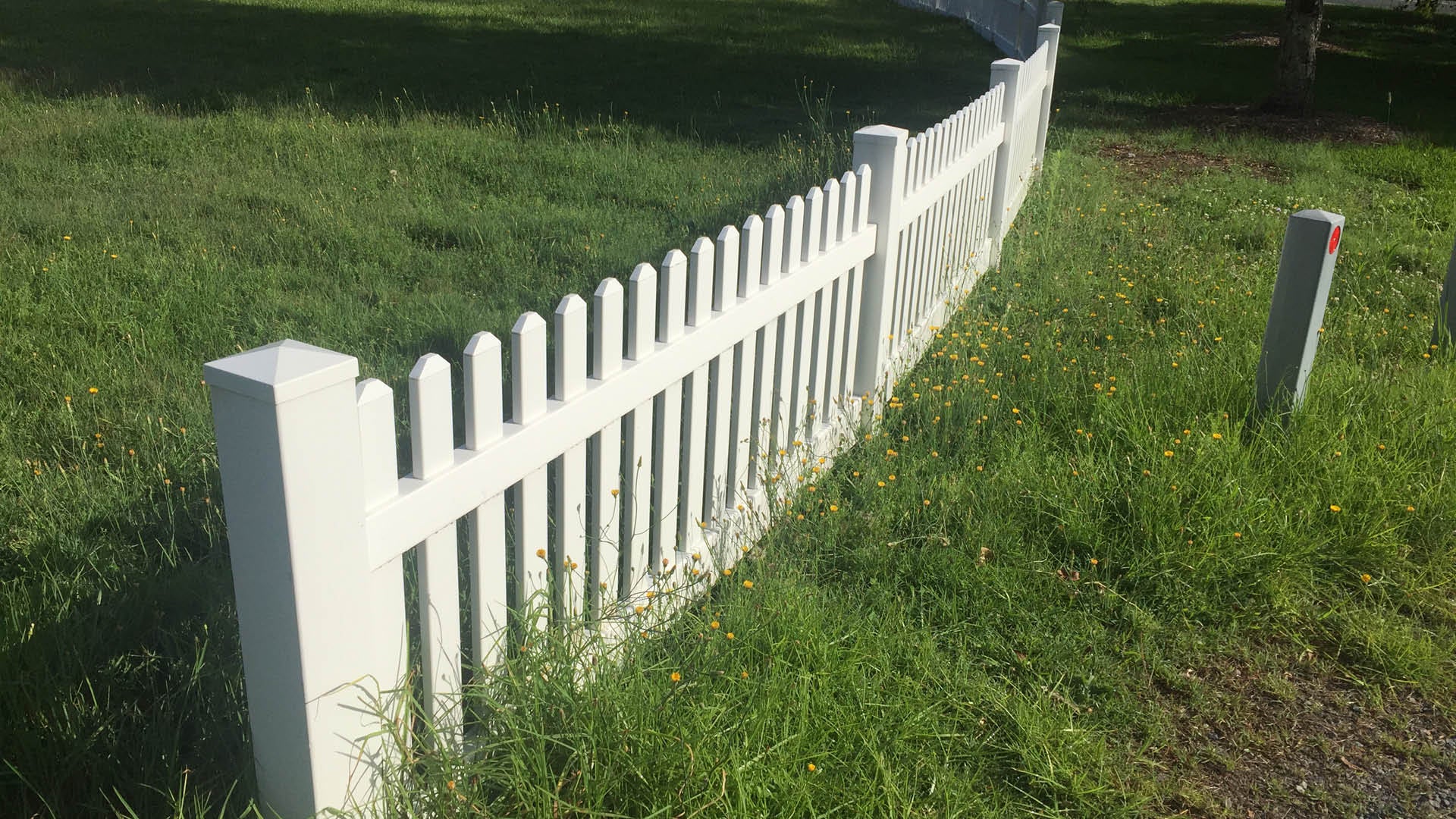 |
|
|
Fibre reinforced plastic (FRP) Recycled plastic compounded using reinforcing fillers such as resin and glass fibres to give load-bearing characteristics in certain circumstances. 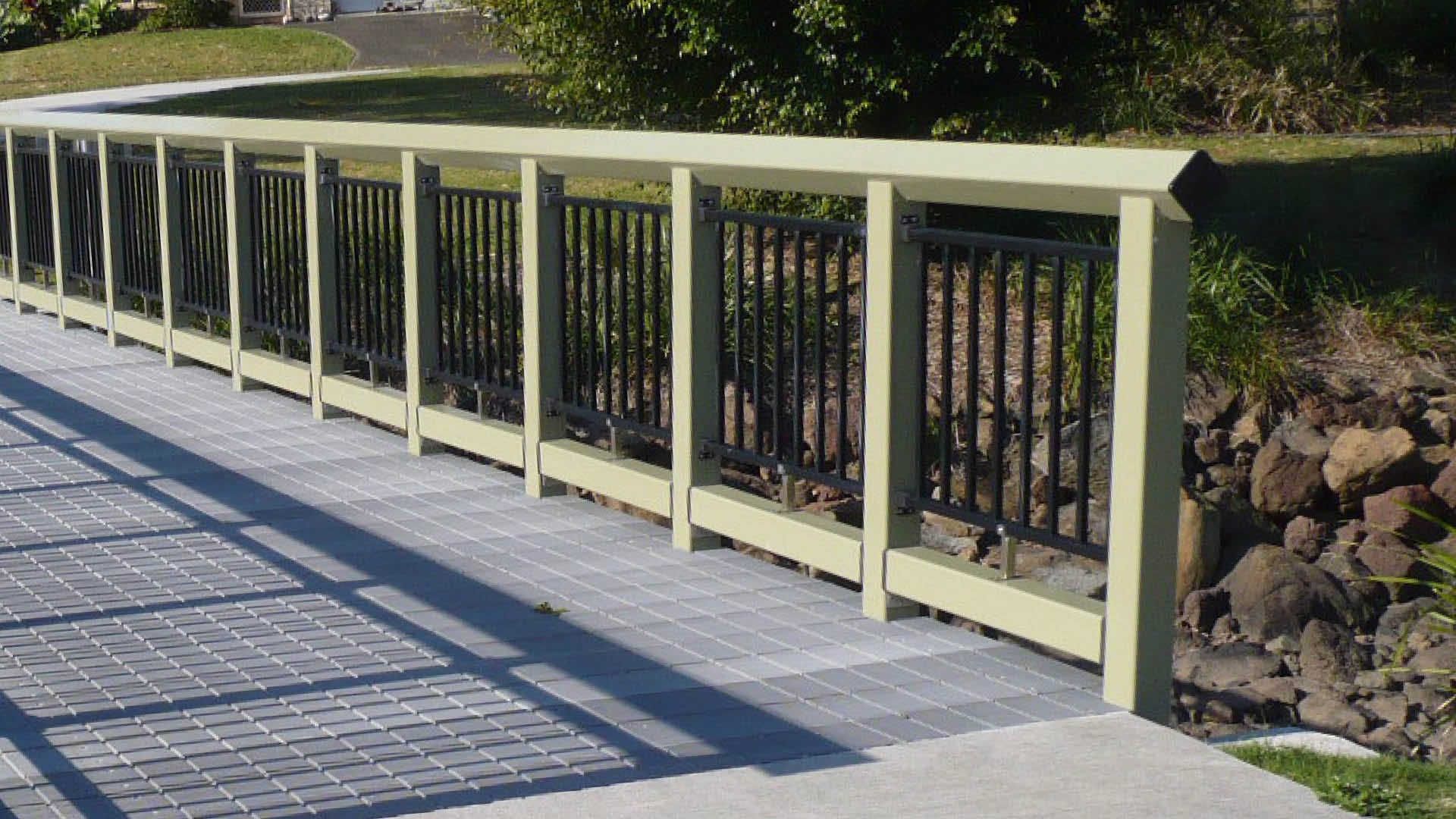 |
|
|
Wood plastic composite (WPC) Wood plastic composite is manufactured from a mixture of recycled wood-flour and recycled plastic (resins). 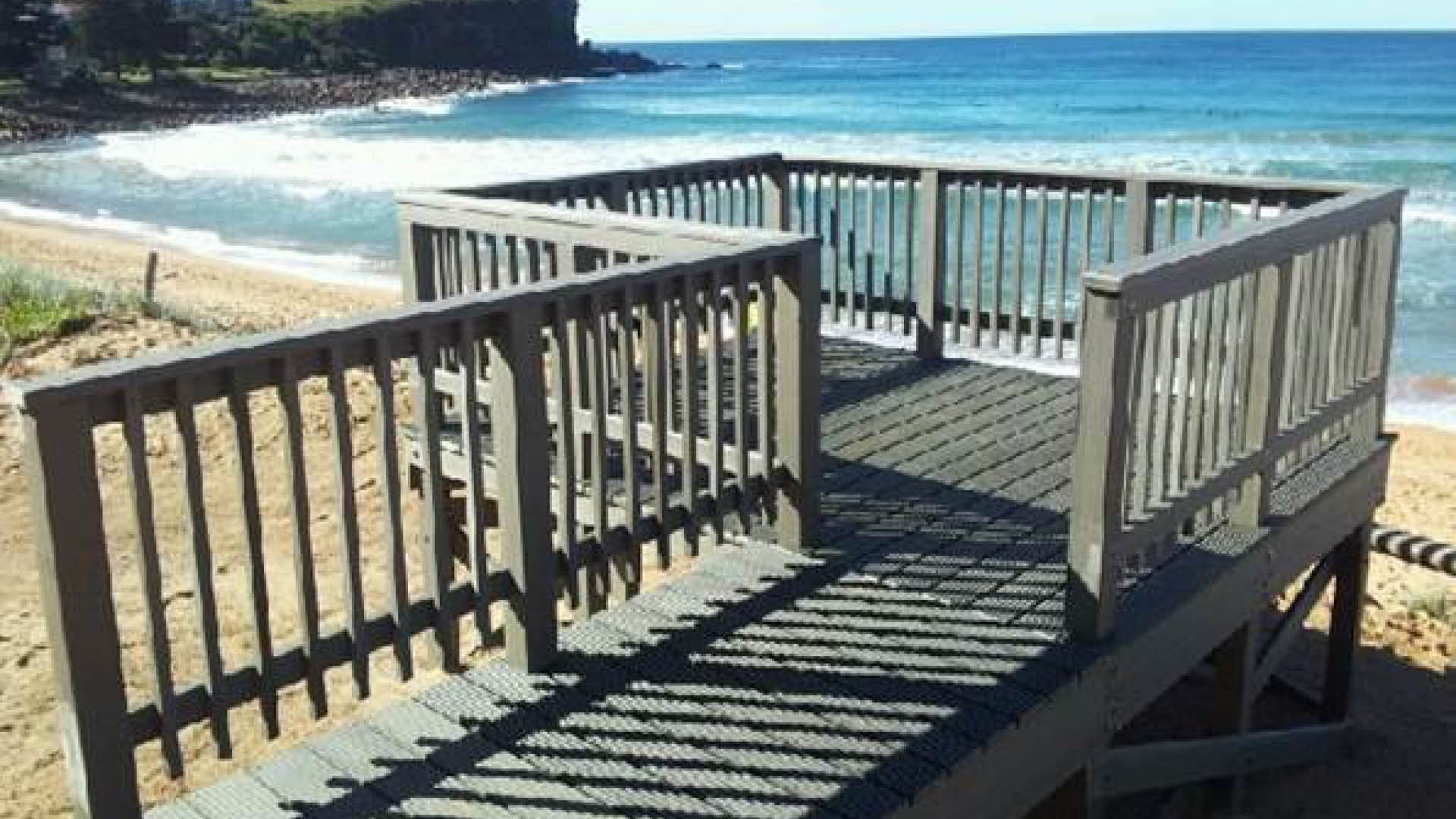 |
|
|
Knitted shade cloth Knitted shade fabric used for the control of shade, temperature, wind and windblown sand. 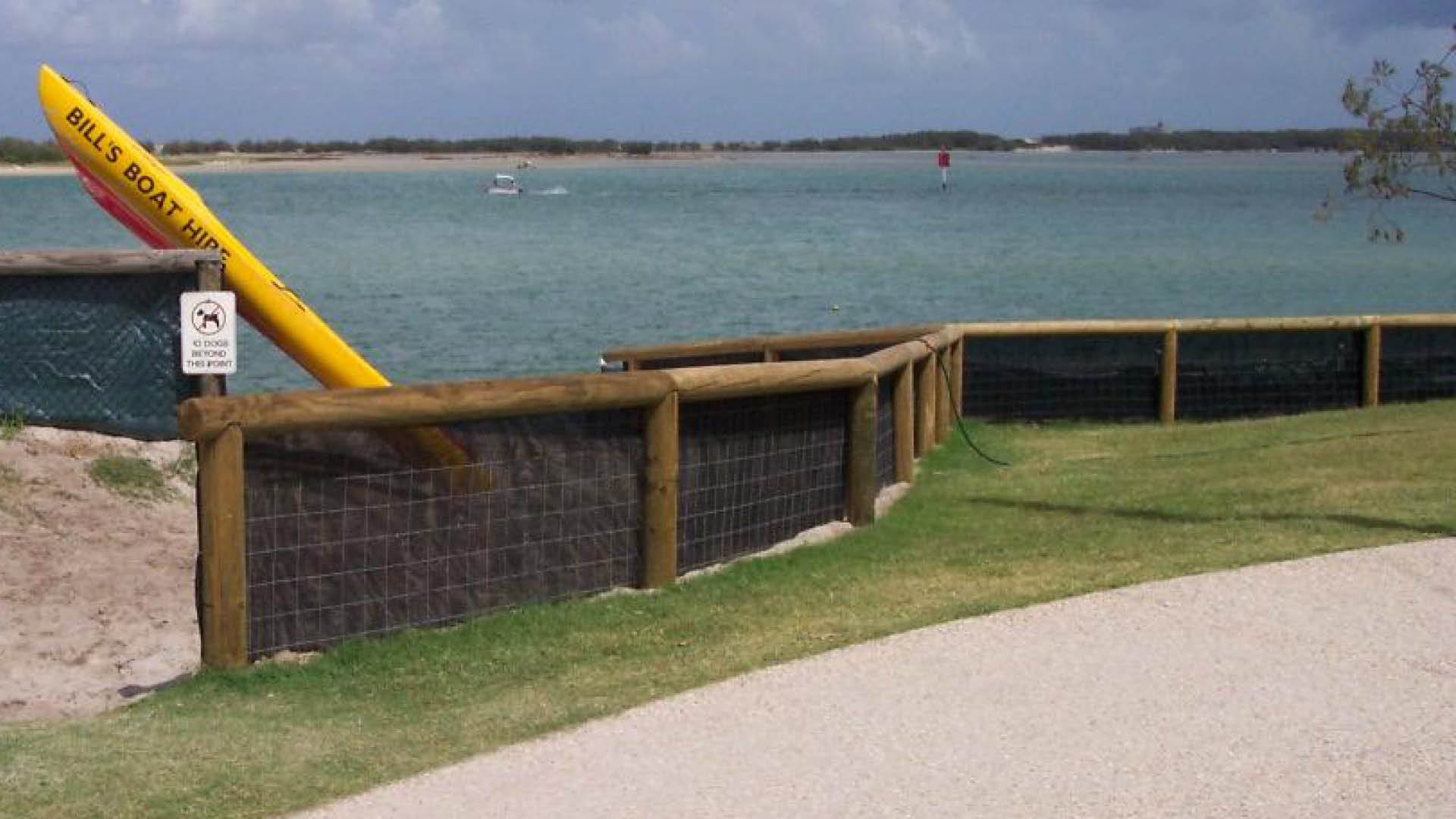 |
|
|
Barbed wire is NOT to be used
Council DOES NOT endorse the installation of barbed wire fences or electrification of fences.
Each year thousands of wildlife such as, gliders, owls, birds and bats, face permanent disability or death from entanglement on barbed wire fences. In many cases barbed wire does not perform an essential function and can be replaced with other types of animal friendly wire.
To prevent potential harmful impacts on fauna from barbed wire and electrified fences. The following is recommended:
- Removal is the most desired option, particular if it is not currently serving a purpose.
- Replacement of the top strand of barbed wire with Bayco sighter wire (or equivalent), as this is where most entanglement occurs.
- Alternative fences using Bayco sighter wire (or equivalent) unless it compromises stock containment.
- Consider glow in the dark fence materials.
Bayco sighter wire is a polymer monofilament which is light, strong, flexible and non-corrosive and is available in 4.0 mm to 5.2 mm diameter.
This component is currently in development